Indonesia says gas export cuts to Singapore within contractual limits, pledges to honour obligations
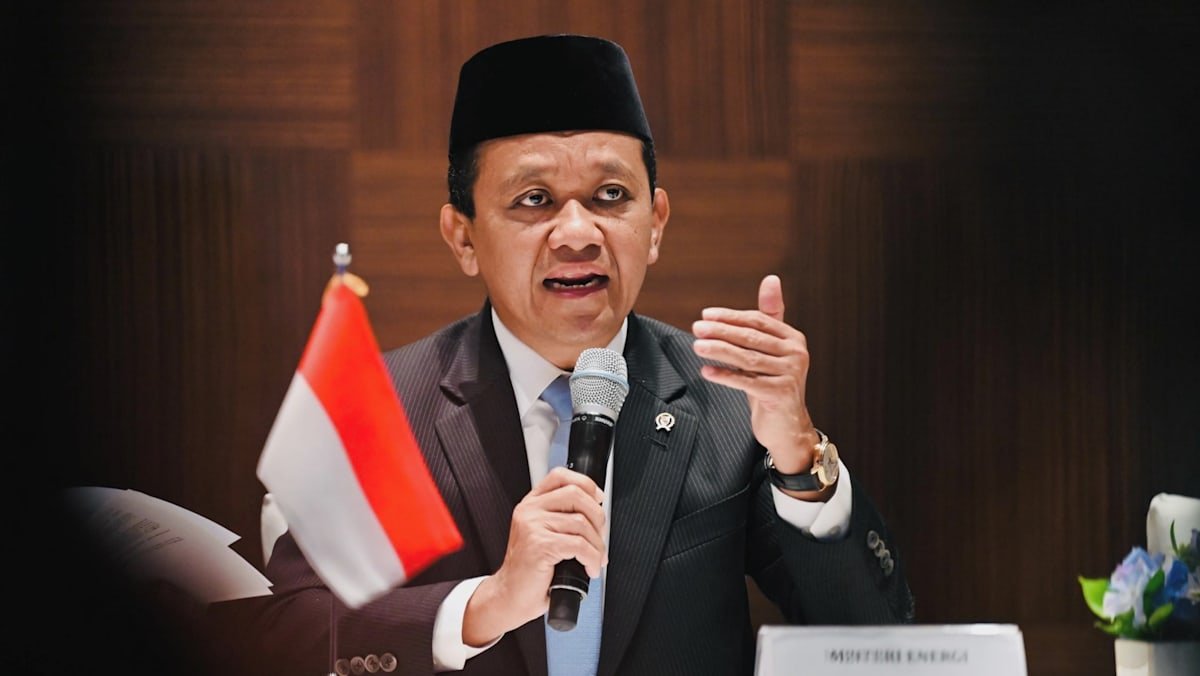
The cuts fall within the minimum contractual limits of around 91 to 92 per cent of exports, says Coordinating Minister for Downstreaming and Energy Transition Bahlil Lahadalia.
New: You can now listen to articles.

This audio is generated by an AI tool.

Read a summary of this article on FAST.
Get bite-sized news via a new
cards interface. Give it a try.
Click here to return to FAST
Tap here to return to FAST
FAST
JAKARTA: Indonesia’s gas export cuts to Singapore are within contractual limits, said the country’s Coordinating Minister for Downstreaming and Energy Transition Bahlil Lahadalia on Monday (Oct 26).
The export cut, which Indonesia said it was implementing to divert more supplies to domestic electricity needs, started last Saturday and involves 31 million standard cubic feet of gas a day, comprising 15 million from Natuna and 16 million from Sumatra.
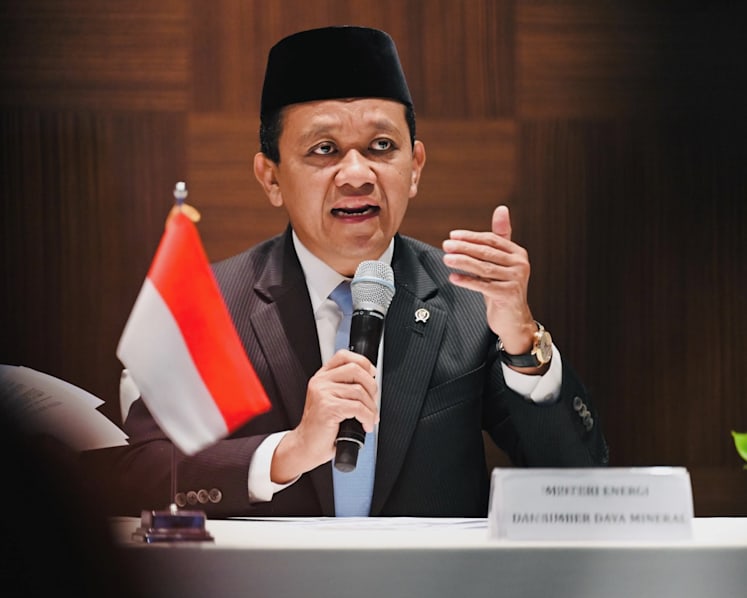
Bahlil said at a press conference that the cuts fall within the minimum contractual limits of around 91 to 92 per cent of exports.
“We have only reduced it by about 8 per cent. We would only be in breach of contract if we were to cut by 10 per cent,” said Bahlil, who is also minister of energy and mineral resources.
“This situation arose partly due to maintenance requirements, but also because of domestic demand. And that is just for the gas — not even accounting for the LNG (liquefied natural gas) we supply,” he added.
CNA has contacted Singapore’s Ministry of Energy, Trade and Industry for comment.

Guess Word
Crack the word, one row at a time

Buzzword
Create words using the given letters

Mini Sudoku
Tiny puzzle, mighty brain teaser

Mini Crossword
Small grid, big challenge

Word Search
Spot as many words as you can


Bahlil’s remarks on Monday came after Singapore Prime Minister Lawrence Wong said Singapore expects all parties that have signed commercial contracts for gas supplies to honour their commitments.
“The gas supplies are covered by commercial contracts. We expect all parties to honour their commitments, and Singapore’s gas importer will take the necessary steps to protect its rights and interests under these contracts,” said the prime minister on Sunday.
Singapore has been readying itself for such risks, and has invested in LNG terminals to import natural gas from different countries, without having to rely on pipelines, providing more options to manage any disruptions to supply, he said.
Singapore must look beyond natural gas to cleaner sources of power that can provide reliable electricity around the clock, added the prime minister. That is why local authorities are studying the potential of nuclear energy.
Singapore’s Energy Market Authority said the reduction of 31 million standard cubic feet of gas a day amounts to less than 2 per cent of Singapore’s total daily gas demand.
Singapore’s electricity prices in the short term are unlikely to be affected by Indonesia’s reduced natural gas exports, said Minister for Energy, Trade and Industry (Energy and Industry) Tan See Leng on Sunday.
“In fact, if anything at all, we should be looking at the world prices because a lot of our gas, the unit price is actually pegged to the movement of some of the key global index itself,” he said.
“We have always looked at energy as a very critical part of our entire country’s economy, sustainability, and also our survival. Energy is existential for all of us, so we have put in place contingency measures, insurance measures, to ensure that our energy supply is diversified,” he said.
Singapore imports natural gas through pipelines from Indonesia and Malaysia, as well as LNG shipped in from international suppliers.
In 2025, piped natural gas accounted for 43 per cent of Singapore’s total gas imports, while LNG made up the remaining 57 per cent.
On Monday, Bahlil reiterated that countries must respect one another and cooperate.
“This is where the principle of mutual cooperation comes in. We must ensure equal treatment. Indonesia is perhaps too kind, too committed to honouring its contracts,” he said.
“But international relations must be built on mutual respect among all parties.”
To meet Indonesia’s energy needs amid a global supply shortage triggered by the war in the Middle East, Bahlil said Indonesia is considering building a nuclear power plant, with possible locations in Batam or the Riau Islands province, as well as Halmahera and Kalimantan.
Indonesia’s upstream oil and gas regulator SKK Migas, which announced the export cut, said the gas from Natuna was being diverted to PLN Batam through the WNTS–Pulau Pemping–Batam pipeline.
Supplies from Sumatra were being redirected through the TGI pipeline to meet electricity needs in Batam, Bintan and Sumatra.
Source: CNA/cc
Sign up for our newsletters

Get the CNA app
Stay updated with notifications for breaking news and our best stories
Get WhatsApp alerts
Join our channel for the top reads for the day on your preferred chat app

Get bite-sized news via a new
cards interface. Give it a try.
Click here to return to FAST
Tap here to return to FAST
FAST