South Korean TV drama industry seeks US$746 million in support as output declines
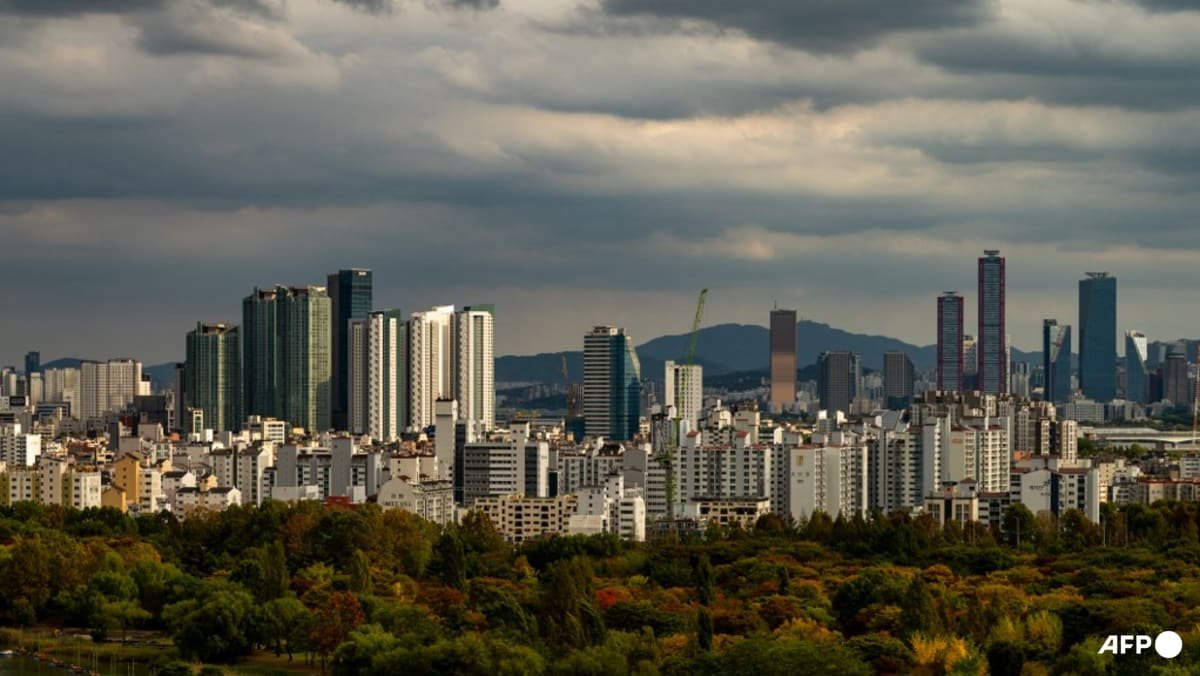
The downtown skyline is pictured from Haneul park in Seoul on Oct 15, 2026. (Photo: AFP/Philip Fong)
Read a summary of this article on FAST.
Get bite-sized news via a new
cards interface. Give it a try.
Click here to return to FAST
Tap here to return to FAST
FAST
SEOUL: Twelve South Korean industry groups warned on Wednesday (Nov 4) that the country’s television drama production base was at risk and called on the government to set up a 1 trillion won (US$746 million) investment fund to support production of Korean dramas, known as K-dramas.
K-dramas have been hugely popular globally, but the number produced has fallen from 141 titles in 2022 to about 115 in 2025, according to research by Korea IR Service.
Three domestic broadcast networks cut drama output from 91 titles in 2012 to 32 in 2023, and some channels have stopped airing weekday dramas altogether, the groups said.
Such an environment makes it difficult for “a new writer’s second work, a supporting actor’s first lead role and an assistant crew member’s directing debut”, said Song Byeong-joon, chairman of the Korea Drama Production Association.

Guess Word
Crack the word, one row at a time

Buzzword
Create words using the given letters

Mini Sudoku
Tiny puzzle, mighty brain teaser

Mini Crossword
Small grid, big challenge

Word Search
Spot as many words as you can
The groups, which represent industry workers including TV drama producers, directors, writers, actors, cinematographers and crew, attributed the decline in long-form drama production to rising production costs, which they linked to competition with global streaming platforms such as Netflix, and broadcasters’ reduced capacity to invest.

They also cited competition from short-form content and AI for audiences and production.
Pay for top-billed stars was the main driver of production costs, Korea IR Service said in a 2025 report, with pay climbing as streaming services competed for audience-drawing talent.
Kim Yong-hee, a professor of business administration at Sun Moon University, said the difficulties the groups cited largely reflected the decline of terrestrial broadcasting rather than the sector as a whole.
Official data showed employment across the content industry edged up to 693,090 in 2025 from 688,122 a year earlier, according to the Korea Creative Content Agency.
Broadcasting employment, however, fell 2.3 per cent in 2024, according to a government survey.
A Netflix Korea spokesperson was reached but did not have an immediate comment.
Netflix launched in South Korea in 2016 and in 2023 pledged to invest US$2.5 billion in the market over four years.
Source: Reuters/nh/lk
Sign up for our newsletters

Get the CNA app
Stay updated with notifications for breaking news and our best stories
Get WhatsApp alerts
Join our channel for the top reads for the day on your preferred chat app

Get bite-sized news via a new
cards interface. Give it a try.
Click here to return to FAST
Tap here to return to FAST
FAST