


ASEAN, China reach provisional agreement on 80% of South China Sea code, says Philippines
Negotiations on the long-awaited South China Sea Code of Conduct remain unfinished despite substantial progress, as ASEAN leaders also discuss Myanmar’s political crisis and transboundary haze.
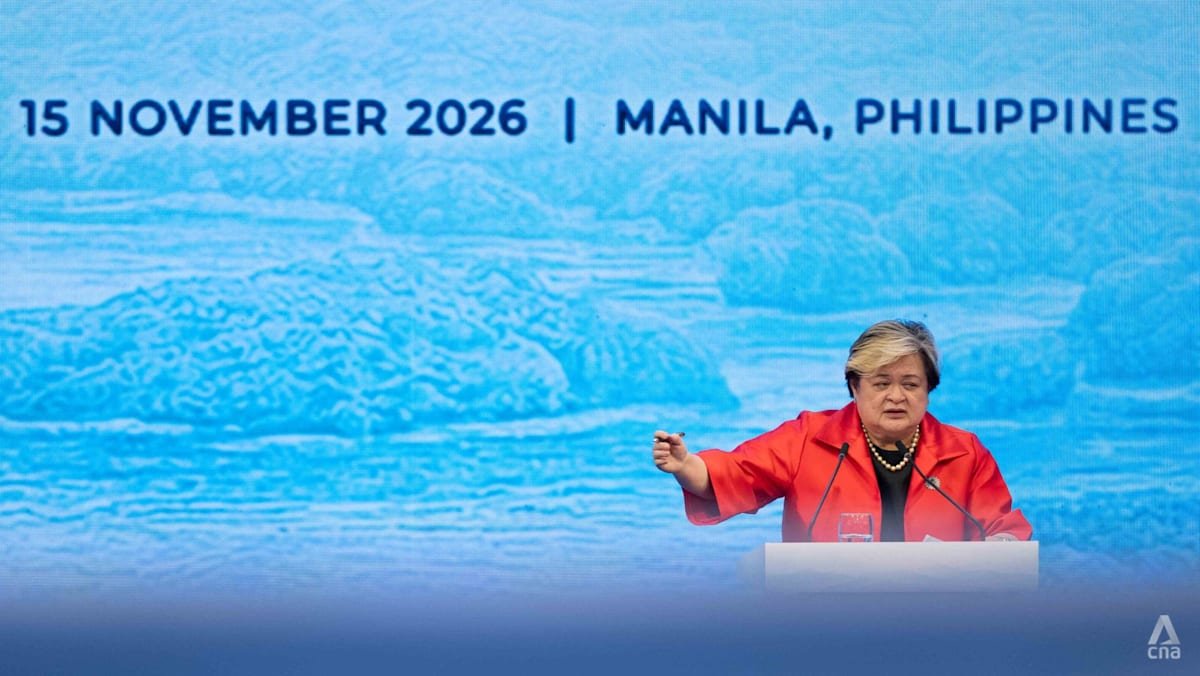
Philippine Foreign Affairs Secretary Maria Theresa Lazaro delivers remarks during an event held on the sidelines of the 49th ASEAN Summit in Manila, Philippines, on Nov 15, 2026. (Photo: CNA/Ridhwan Siregar)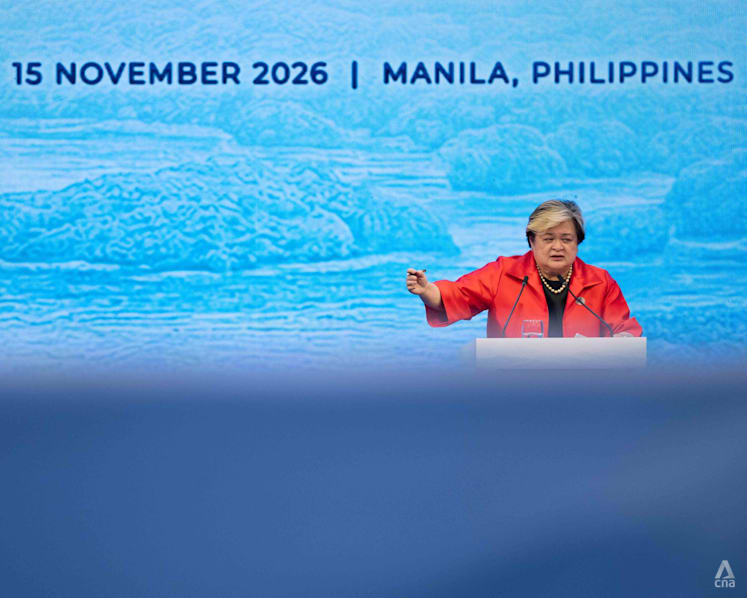
New: You can now listen to articles.

This audio is generated by an AI tool.

Read a summary of this article on FAST.
Get bite-sized news via a new
cards interface. Give it a try.
Click here to return to FAST
Tap here to return to FAST
FAST
MANILA: ASEAN and China have reached provisional agreement on about 80 per cent of the negotiating text for a long-awaited South China Sea Code of Conduct, Philippine Foreign Secretary Theresa Lazaro said on Sunday (Nov 15).
Speaking at a press conference after the first day of the 49th ASEAN Leaders’ Summit in Manila, Lazaro said the parties had agreed to continue working constructively to conclude negotiations on an effective and substantive code as soon as possible.
“Definitely, there is no conclusion yet,” Lazaro told reporters.
Lazaro said differing positions among ASEAN member states and China, as well as the time needed for negotiations, had prevented the agreement from being finalised this year.
“If we were given probably another five to six months, we can finish that,” she said.
The Philippines, which holds ASEAN’s rotating chairmanship this year, had made concluding the negotiations by the end of 2026 a key priority.
Lazaro noted that the Philippines had made substantial progress, raising the proportion of agreed text from about 50 per cent to 80 per cent.
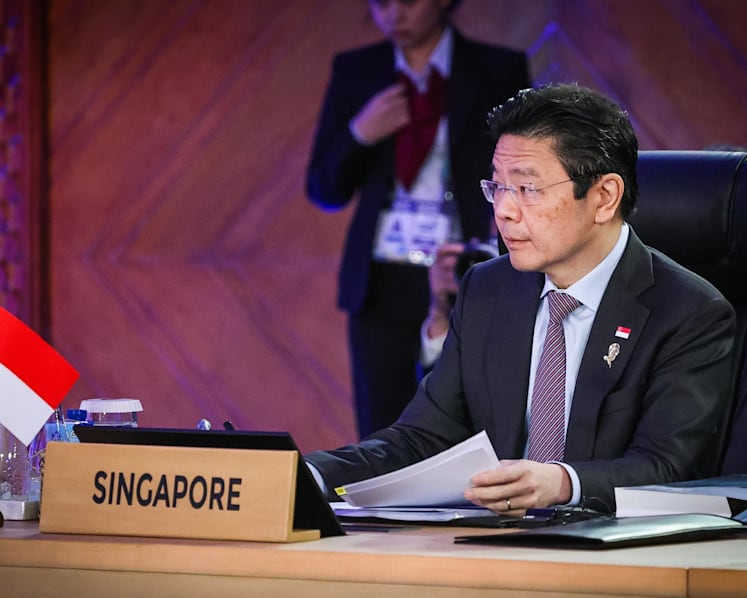
Singapore takes over the bloc’s chairmanship in 2027, and Lazaro expressed confidence that negotiations could be concluded next year.
“I trust that Singapore will be able to finish the discussions,” she said.
The Code of Conduct is intended to establish rules to manage tensions in the disputed South China Sea, where Beijing’s expansive maritime claims overlap with those of several Southeast Asian nations.
The Philippines and China have repeatedly clashed in the waterway, one of the world’s major shipping routes.
Other ASEAN countries, namely Malaysia, Vietnam and Brunei, also have overlapping claims with China. While Indonesia is not a claimant state, its North Natuna waters, which lie on the edge of the South China Sea, have also seen clashes between the Indonesian coast guard and Chinese fishing boats.
Lazaro said negotiators had reached a provisional agreement on how the existing 2002 Declaration on the Conduct of Parties in the South China Sea (DOC) relates to the proposed Code of Conduct.
Under the agreement, the declaration would provide the foundation for the new code, which would establish more substantive provisions to guide the conduct of parties in the waterway.
The parties also agreed that the code would serve as a platform for practical maritime cooperation and a mechanism to manage differences at sea, rather than settle competing territorial claims, Lazaro said.
The Philippines oversaw nine rounds of negotiations and two senior officials’ meetings this year, with Malaysia and China co-chairing the Code of Conduct negotiations.

Guess Word
Crack the word, one row at a time

Buzzword
Create words using the given letters

Mini Sudoku
Tiny puzzle, mighty brain teaser

Mini Crossword
Small grid, big challenge

Word Search
Spot as many words as you can
MYANMAR’S POLITICAL REPRESENTATION
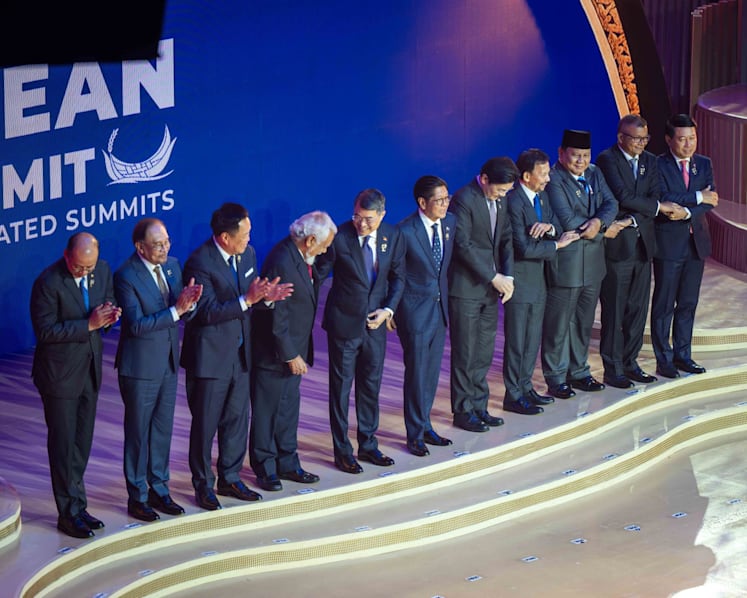
ASEAN leaders also agreed to pursue calibrated engagement with Myanmar through a phased, progress-based approach, taking into account developments on the ground, Lazaro said.
This is subject to sustained, concrete progress in implementing the bloc’s Five-Point Consensus, and ASEAN may consider gradually restoring Myanmar’s full political representation, she added.
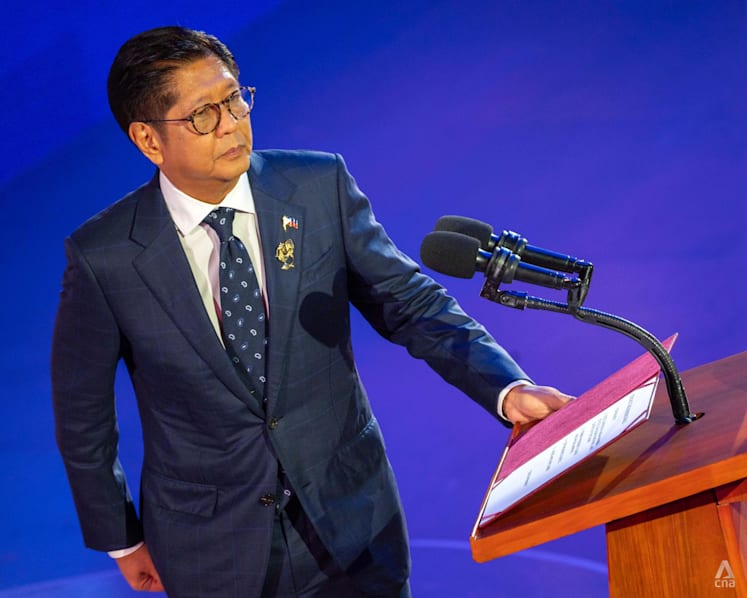
Philippine President Ferdinand Marcos Jr said earlier in the day that the groups’ leaders had agreed to continue “constructive and principled engagement” with Myanmar while staying true to the principles of the Five-Point Consensus.
“But we need to ask ourselves, what more can we do for Myanmar? Ultimately, the crisis in Myanmar is about people, families who have been displaced, communities that need humanitarian assistance, and young people whose future has been interrupted by conflict and instability,” said Marcos.
Lazaro said at the press conference later in the day that ASEAN leaders had agreed on a “calibrated engagement, step-by-step and progress-based approach” to restoring Myanmar’s participation.
The Five-Point Consensus, agreed in April 2021 following the military coup in Myanmar in February 2021, calls for an immediate cessation of violence, dialogue among all parties, the delivery of humanitarian assistance and a special envoy of the ASEAN chair to facilitate mediation of the dialogues. Lazaro is the current special envoy.
ASEAN’s Five-Point Consensus
Following a 2021 military coup, ASEAN has excluded Myanmar from high-level meetings as it has yet to make meaningful progress on the bloc’s Five-Point Consensus to end hostilities.
During a meeting in April 2021, all ASEAN leaders reached a consensus about the situation in Myanmar.
The five points are:
First, there shall be immediate cessation of violence in Myanmar and all parties shall exercise utmost restraint.
Second, constructive dialogue among all parties concerned shall commence to seek a peaceful solution in the interests of the people.
Third, a special envoy of the ASEAN chair shall facilitate mediation of the dialogue process, with the assistance of the secretary-general of ASEAN.
Fourth, ASEAN shall provide humanitarian assistance through the AHA Centre.
Fifth, the special envoy and delegation shall visit Myanmar to meet with all parties concerned.
Collapse
Expand
She said ASEAN would monitor Myanmar’s progress, particularly in ending hostilities, before considering restoring political representation.
“We want to see how Myanmar responds to that, because right now there are still certain bombings and displacement of Myanmar people,” she said.
Myanmar’s military leadership has been excluded from ASEAN’s high-level meetings since 2021 for failing to implement the peace plan.
A director-general responsible for ASEAN affairs, rather than a political representative, represented the country at Sunday’s summit.
Lazaro said Myanmar’s representative outlined steps the country had taken, but other ASEAN members believed more was needed before its foreign minister could return to formal meetings.
TRANSBOUNDARY HAZE
Lazaro said ASEAN leaders also called for stronger action against companies and individuals responsible for forest fires contributing to transboundary haze that affected Singapore, parts of Malaysia, Brunei and the Philippines.
Indonesia had been frank and candid about the efforts it has undertaken to tackle forest fires within its borders, said Lazaro, without revealing details.
She said the leaders also encouraged ASEAN member states to prioritise ratifying the agreement establishing the ASEAN Coordinating Centre for Transboundary Haze Pollution Control.
The proposed centre, to be based in Indonesia, is intended to strengthen regional coordination in monitoring, preventing, and responding to transboundary haze.
ASEAN has sought to address the problem through its Agreement on Transboundary Haze Pollution, which entered into force in 2003.
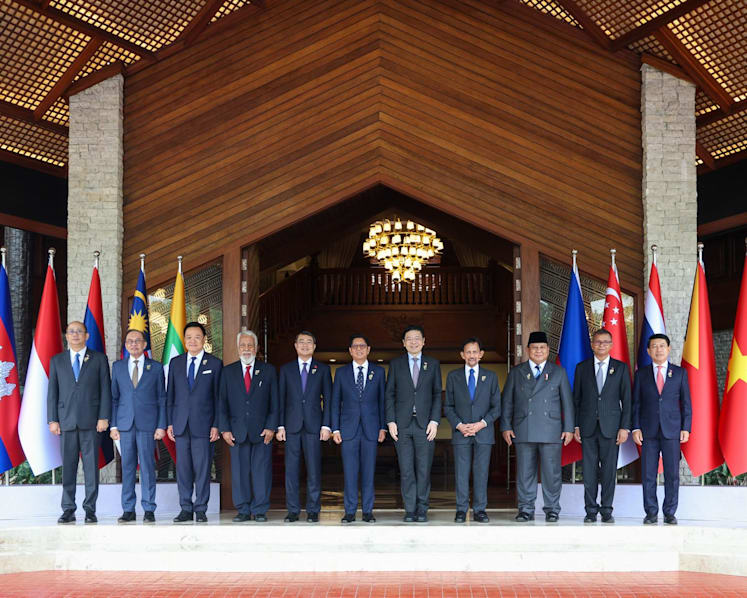
The ASEAN Leaders’ Summit will continue until Tuesday, as the bloc holds separate summits with partners such as China, India and Japan.
China’s Premier Li Qiang is scheduled to attend the summit, and US President Donald Trump will attend an ASEAN-US summit on Tuesday evening.
Source: CNA/ks(ac)
Sign up for our newsletters

Get the CNA app
Stay updated with notifications for breaking news and our best stories
Get WhatsApp alerts
Join our channel for the top reads for the day on your preferred chat app

Get bite-sized news via a new
cards interface. Give it a try.
Click here to return to FAST
Tap here to return to FAST
FAST







