Climate change threatens livelihoods of India’s traditional artisans
From potters in Mumbai to textile printers in Gujarat state, artisans say increasingly erratic weather is making it harder to earn a living.
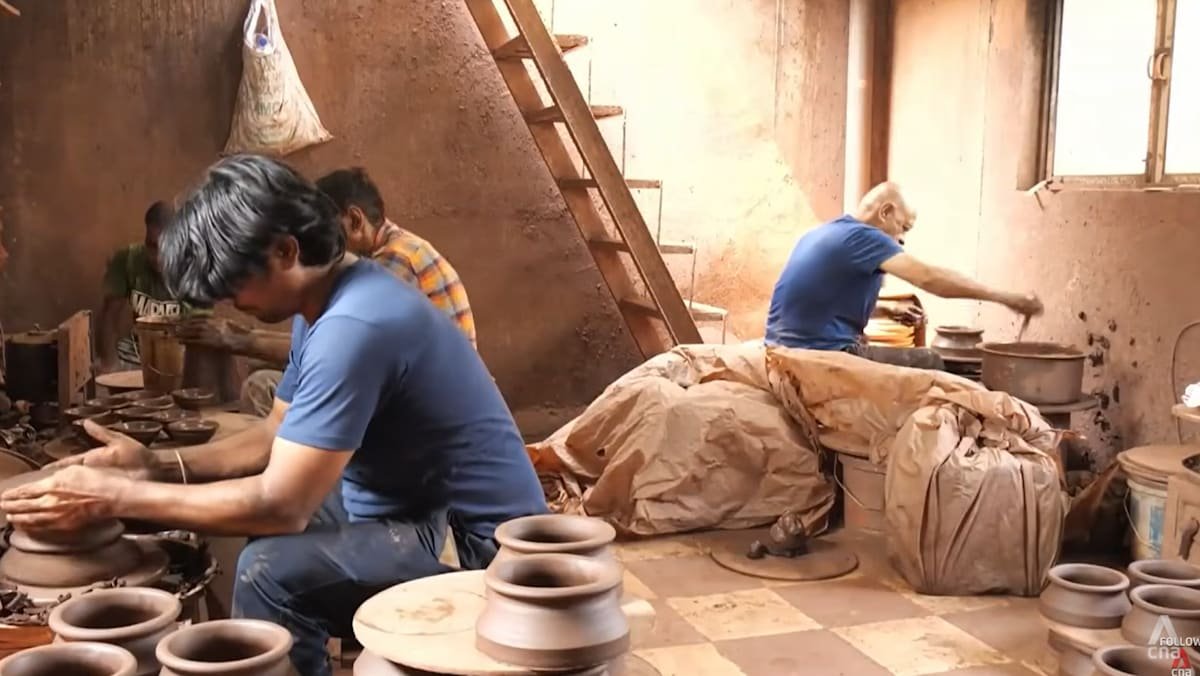
Potters at work in Mumbai’s Dharavi neighbourhood. (Image: CNA)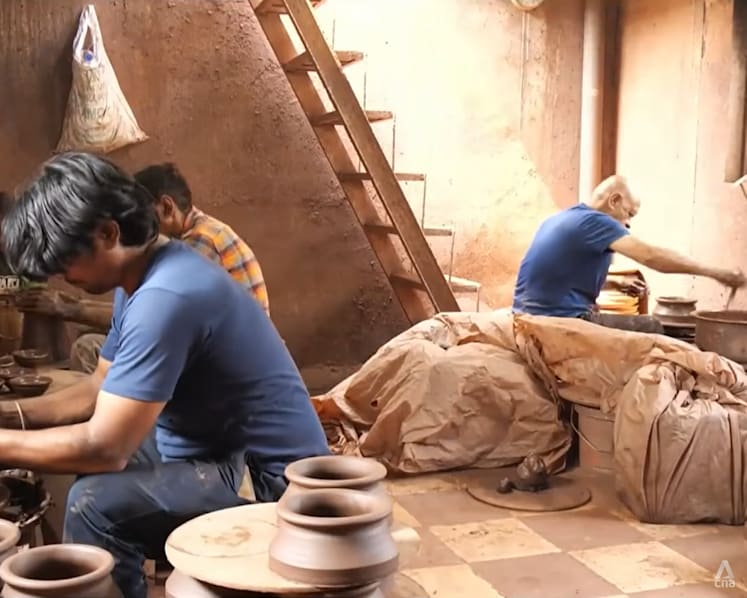
New: You can now listen to articles.

This audio is generated by an AI tool.
Read a summary of this article on FAST.
Get bite-sized news via a new
cards interface. Give it a try.
Click here to return to FAST
Tap here to return to FAST
FAST
MUMBAI: Pottery has provided a livelihood for families in Mumbai’s Dharavi neighbourhood for generations.
But increasingly erratic weather is making their work more difficult, threatening both production and incomes.
Mumbai has seen a rise in extremely heavy rainfall events, with scientists warning that global warming could make such downpours even more intense.
The city exceeded its average seasonal rainfall quota between June and September this year, with the Santacruz weather station recording 2,442.6mm during the monsoon period.
“Our work comes to a complete halt during heavy rains,” said Devji Jetha Chitroda, secretary of the Dharavi Potters Association.
“It’s a loss for us during these three or four months.”

Guess Word
Crack the word, one row at a time

Buzzword
Create words using the given letters

Mini Sudoku
Tiny puzzle, mighty brain teaser

Mini Crossword
Small grid, big challenge

Word Search
Spot as many words as you can
Flooding can disturb soil layers and alter the composition of clay deposits – the raw material that potters rely on – introducing more sand and other impurities that can affect the quality of finished products.
Potters say rising temperatures also pose another challenge, as excessive heat can cause clay to crack.
A 2024 study by the Centre for Science and Environment found that Mumbai’s average summer temperature was 0.6°C higher between 2014 and 2023, compared with the period from 2001 to 2010.

VULNERABLE WORKERS
Experts say many traditional artisans are particularly vulnerable to climate change because their livelihoods depend heavily on natural materials and weather conditions.
Many also work from home or in informal settings.
“Unlike in other more developed markets, we don’t necessarily have a strong culture where we see artisans and craftspeople having dedicated workshops,” said Deepa Bhatia, chief executive and co-founder of research firm Ek Kutumb Solutions.
“Very often they are working within their home environment. So the working conditions are already not necessarily ideal even without the stress of climate change.”
SIMILAR CHALLENGES IN TEXTILE PRINTING
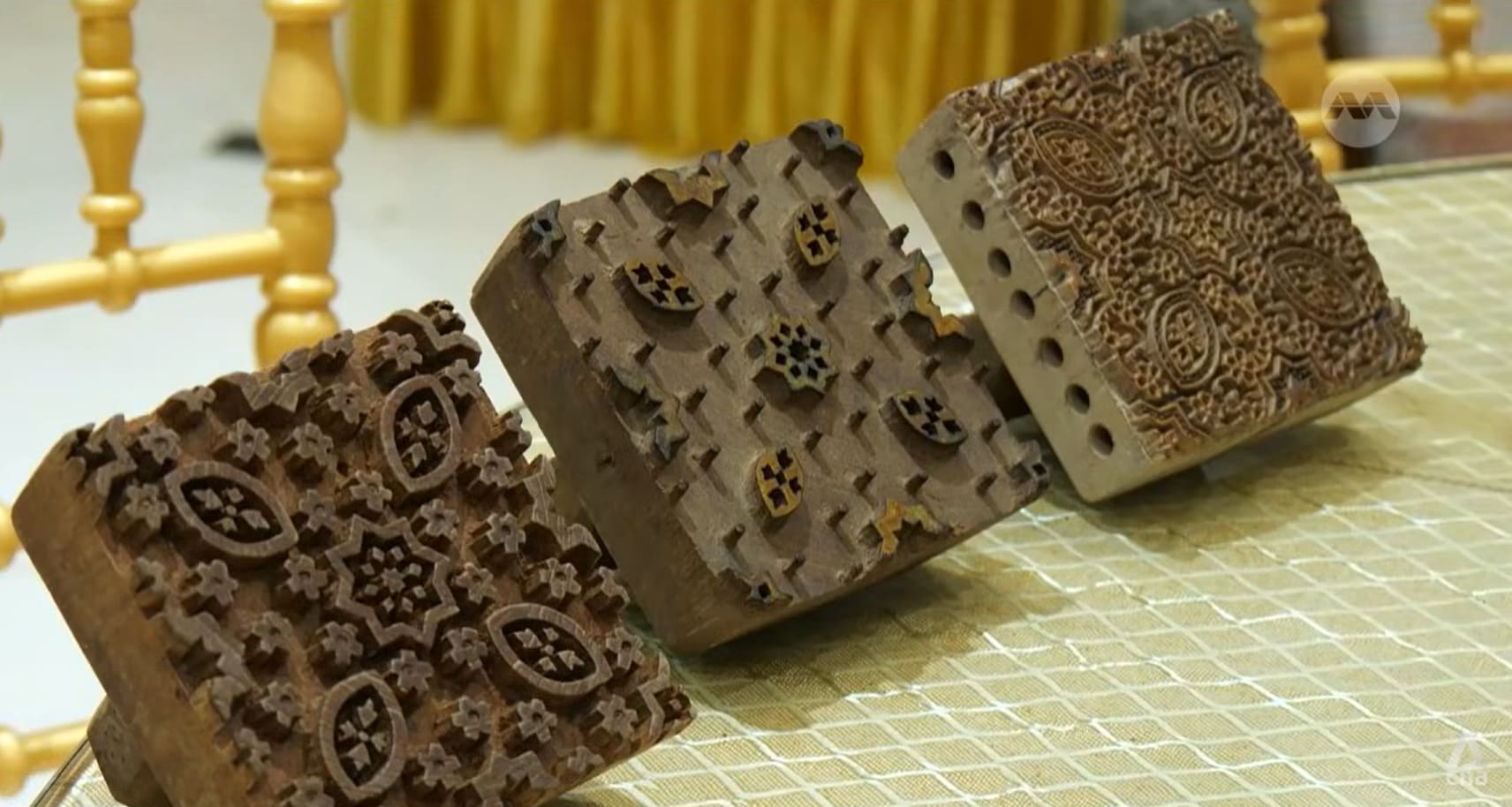
Artisans in Gujarat’s Kutch region are facing similar challenges, with erratic weather also affecting those who practise Ajrakh, a centuries-old form of hand-block textile printing.
The craft involves repeated washing, dyeing and printing to create intricate patterns, a process that can take more than two weeks.
It requires large amounts of water as well as suitable weather conditions for drying.
Varying rainfall can disrupt multiple drying stages in the production process, delaying work and slowing output.
According to artisan Ismail Khatri, climate change is making it increasingly difficult to achieve consistent results.
“We could not make the quality of materials that customers expected,” he said.
“Earlier, we used to do our job and never worry about the climatic conditions. Now we can’t rely on it.”
Falling groundwater levels are another issue in the region.
Khatri said some craftsmen have had to dig deeper wells, only to find water with high salt and iron content, affecting dyes and the quality of finished prints.
India has schemes to support traditional artisans, including financial assistance through programmes such as PM Vishwakarma, which offers subsidised loans and other forms of support.
However, experts say more measures will be needed to help such workers adapt to changing environmental conditions.
“We need to find a way to support them,” said Bhatia.
“There could be a competitive advantage for India because we can export these items. So let’s protect them.”

Source: CNA/sn(mp)
Sign up for our newsletters

Get the CNA app
Stay updated with notifications for breaking news and our best stories
Get WhatsApp alerts
Join our channel for the top reads for the day on your preferred chat app

Get bite-sized news via a new
cards interface. Give it a try.
Click here to return to FAST
Tap here to return to FAST
FAST