


Retailers face rising AI cyberattack threat ahead of Black Friday, many uninsured
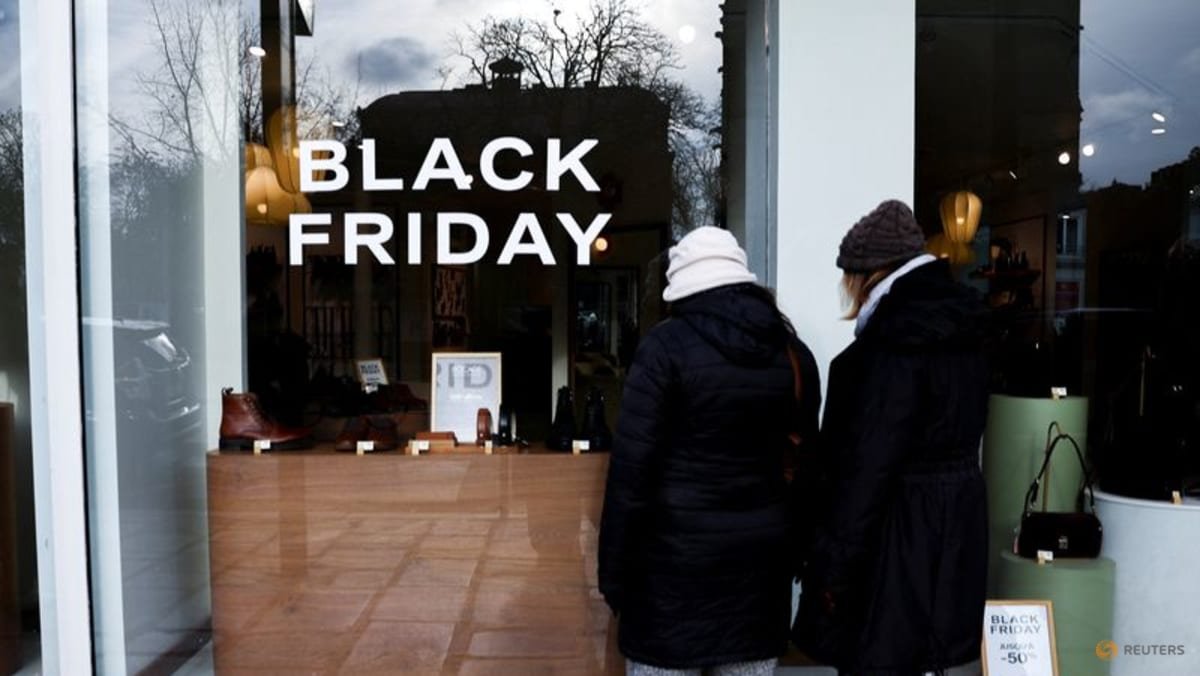
Women look through the window of a shop displaying a Black Friday sale sign in Paris, France, November 24, 2026. REUTERS/Sarah Meyssonnier
Read a summary of this article on FAST.
Get bite-sized news via a new
cards interface. Give it a try.
Click here to return to FAST
Tap here to return to FAST
FAST
LONDON, Nov 25 : Retailers heading into the Black Friday shopping period face growing cyber threats as artificial intelligence makes attacks faster and more potent, at a time when the sector has some of the lowest levels of cyber insurance protection.
The post-Thanksgiving spree has long represented a lucrative sales opportunity, but more frequent and sophisticated cyberattacks are increasingly testing retailers’ cyber resilience.
Ransomware attacks on retail, leisure and hospitality businesses are 50 per cent more frequent in November than the monthly average, according to claims data from insurer CFC. Only 43 per cent of small and medium-sized retailers carry cyber insurance, compared with 81 per cent in financial services and 71 per cent in technology.
“Retailers spend months making sure their websites, stock and logistics can withstand the surge in customers. But Black Friday should be treated as a resilience exercise as much as a revenue opportunity,” said Lindsey Maher, CFC’s head of global cyber development.

Guess Word
Crack the word, one row at a time

Buzzword
Create words using the given letters

Mini Sudoku
Tiny puzzle, mighty brain teaser

Mini Crossword
Small grid, big challenge

Word Search
Spot as many words as you can
Black Friday and Cyber Monday bookend one of the retail sector’s busiest periods of the year, with consumers searching for deals and retailers often offering hefty discounts.
UK shoppers looking to snap up bargains are set to spend £235 ($307) each this Black Friday, with UK spending expected to reach its highest since 2022, research from PwC shows.
Retailers don’t generally buy additional cyber insurance for a weekend and focus instead on testing and strengthening resilience, said David Molony, Europe, Middle East and Africa head of cyber and financial sponsors at Aon. That matters most at a time of year when revenue depends heavily on technology, he said.
“A cyber incident that interrupts the ability to trade during peak season can move very quickly from an operational issue to a material financial loss,” he said.
US retailer Target incurred net cumulative expenses of $202 million after a 2013 breach during the holiday shopping season that compromised at least 40 million credit cards, the company has said.
Complex retail supply chains, copious credit card records and the busy shopping period mean retailers are primed for maximum chaos and interruption, said Sydonie Williams, head of international cyber risks at Beazley. While AI increases the threat risk, it also improves defence mechanisms, she said.
Francisco Donoso, chief product and technology officer at Beazley Security, said AI was speeding up attacks and the number of vulnerabilities being exposed was almost six times higher than a year ago.
“It’s really hard for organisations to keep up,” Donoso said.
($1 = 0.7639 pounds)
Source: Reuters
Sign up for our newsletters

Get the CNA app
Stay updated with notifications for breaking news and our best stories
Get WhatsApp alerts
Join our channel for the top reads for the day on your preferred chat app

Get bite-sized news via a new
cards interface. Give it a try.
Click here to return to FAST
Tap here to return to FAST
FAST







