Tunnelling under an overpass, preserving a monument: The engineering challenges behind the Circle Line Loop
The three new stations – Prince Edward Road, Cantonment and Keppel – open for public preview on Jul 4 and enter service on Jul 12.
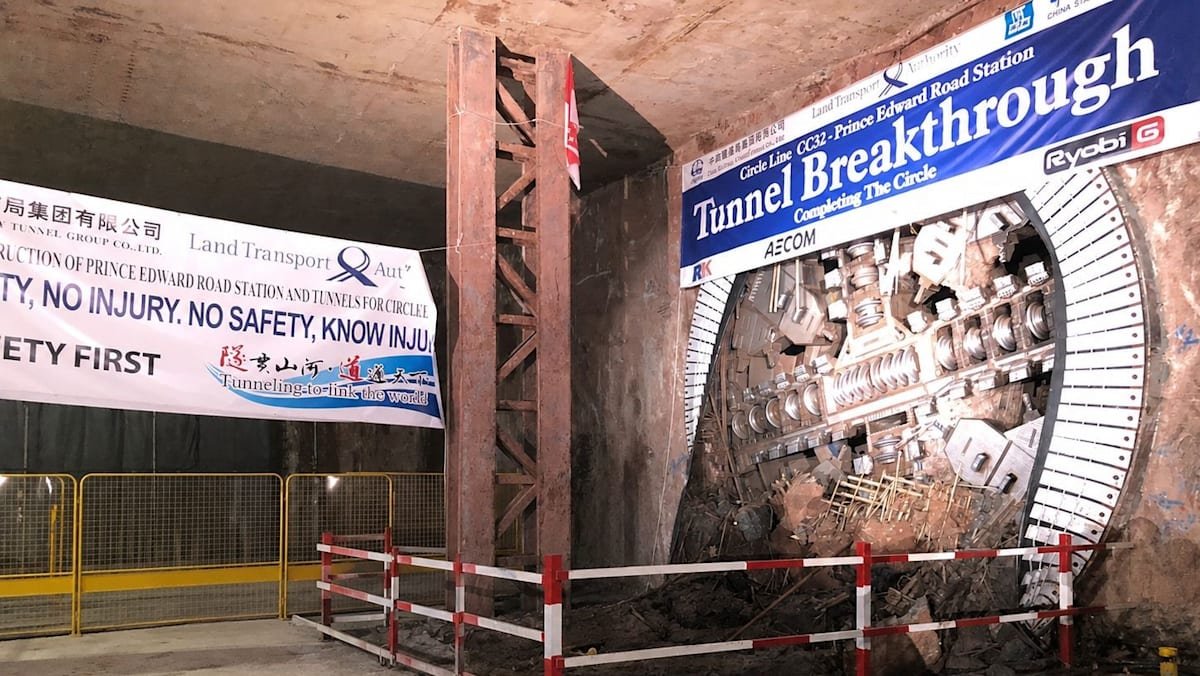
The tunnel boring machine used to complete the loop for the Circle Line. (Photo: LTA)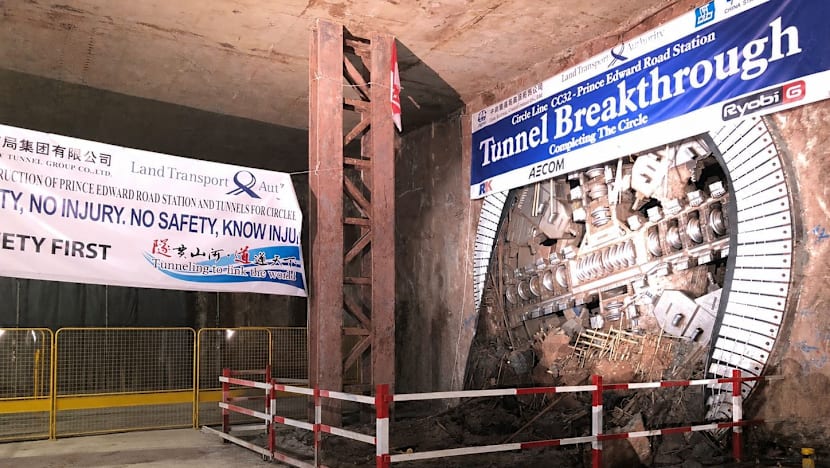
New: You can now listen to articles.

This audio is generated by an AI tool.

Read a summary of this article on FAST.
Get bite-sized news via a new
cards interface. Give it a try.
Click here to return to FAST
Tap here to return to FAST
FAST
SINGAPORE: Cars continued passing along the Keppel Viaduct as a tunnel that would complete the Circle Line (CCL) loop was being bored directly beneath it.
It was one of several engineering challenges involved in building the three new CCL stations – Prince Edward Road, Cantonment and Keppel – which open for public preview on Jul 4 and enter service on Jul 12.
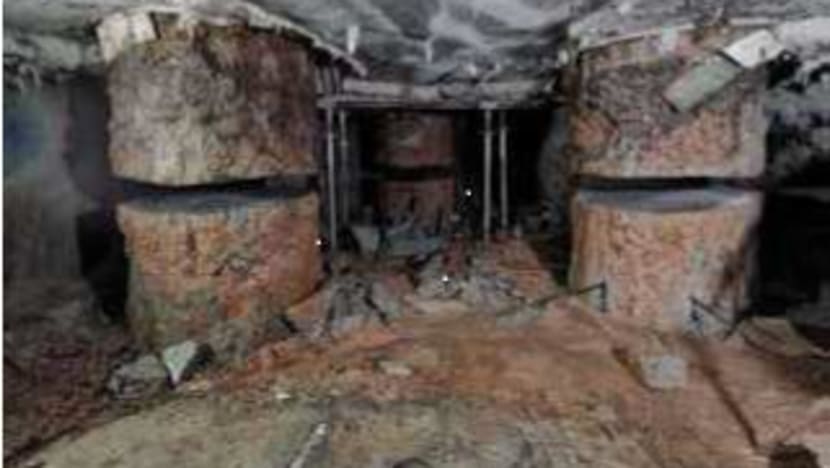
The tunnel between Cantonment and Keppel stations had to pass through the pile foundations of two viaduct piers while traffic continued flowing above, the Land Transport Authority (LTA) said on Thursday (Jun 18). Pile foundations are long columns drilled into the ground to support a structure’s weight.
To carry out the works safely, smaller micropiles were drilled next to the planned tunnel alignment to serve as a new foundation for the viaduct. Its weight was transferred from the original piles to the micropiles using hydraulic jacks.

Guess Word
Crack the word, one row at a time

Buzzword
Create words using the given letters

Mini Sudoku
Tiny puzzle, mighty brain teaser

Mini Crossword
Small grid, big challenge

Word Search
Spot as many words as you can
Once the original piles were no longer load-bearing, they were disconnected and the tunnel boring machine excavated through the space.
The procedure took about eight months in 2021, with vehicles passing overhead throughout, unaffected.
TUNNELLING UNDER A NATIONAL MONUMENT
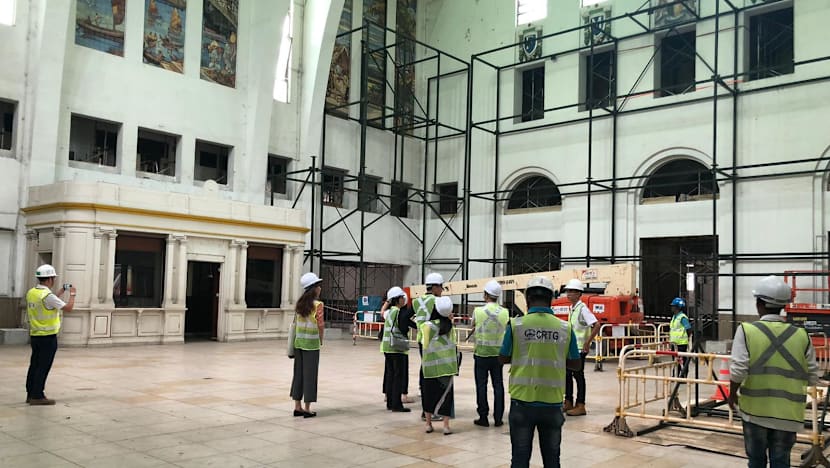
Tunnelling under the former Tanjong Pagar Railway Station posed a different challenge: ensuring the 94-year-old structure could withstand underground works.
The tunnel boring machine passed 6.7m below the railway station’s pile foundations, and protection measures were needed to safeguard heritage elements including the building’s clock, marble statues and mural tile artworks in the main hall.
The station’s platform canopy was cut into 63 pieces and relocated in 2017, then fully restored in 2024. Each panel weighed about 60 tonnes and had to be carefully transported from storage before all 63 pieces were reconnected.
Cantonment station will feature a curved platform ceiling with stained glass murals, a nod to the curved ceiling and murals inside the historic railway station.

At Prince Edward Road station, the tunnels had to be stacked one above the other – rather than running side by side as in a conventional station – because of the station’s close proximity to high-rise office buildings and the Keppel Viaduct.
Tunnel boring machines came within about 3m of the nearest building’s foundations.
Building linkways to connect the platform to station exits presented another challenge, as many ran beneath busy roads.
Engineers installed a protective roof of heavy steel pipes underground to stabilise the ground, then used smaller boring machines to excavate beneath it.
“This avoided traffic disruption, diversion of underground utilities and minimised disturbance to stakeholders,” said LTA.
The Kim Chuan Depot extension will also open on Jul 12, allowing it to house and maintain more CCL trains. An additional 23 trains will be progressively rolled out with the new stations.
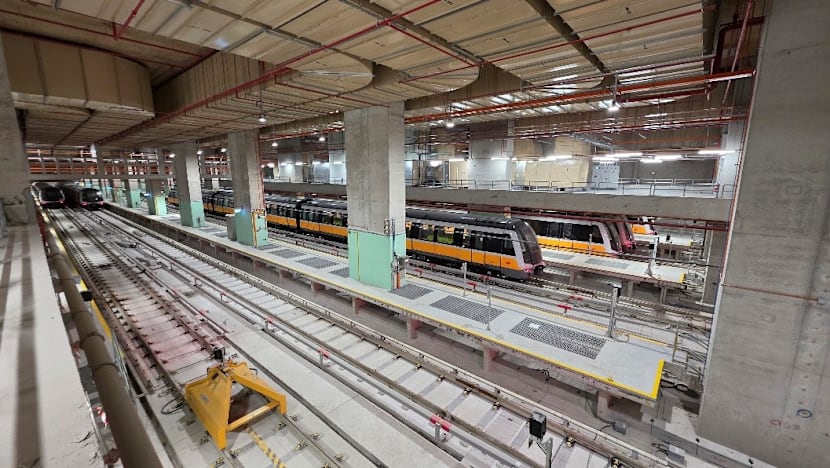
Systems integration for the CCL – coordinating technologies such as train signalling, power supply and platform screen doors – was more complex than for other rail extensions.
Completing the loop required testing continuous operations in both clockwise and anti-clockwise directions across a range of service patterns and scenarios. Conventional lines typically operate between two terminal stations.
The added complexity meant systems integration and testing took longer than for other rail projects, LTA said, reflecting the wider scope of validation needed for full-loop operations.
Source: CNA/jx(cy)
Sign up for our newsletters

Get the CNA app
Stay updated with notifications for breaking news and our best stories
Get WhatsApp alerts
Join our channel for the top reads for the day on your preferred chat app

Get bite-sized news via a new
cards interface. Give it a try.
Click here to return to FAST
Tap here to return to FAST
FAST
About The Author