Hong Kong turns to AI to tackle persistent rat infestations, but challenges remain
Experts say the city’s rat problem remains an environmental management challenge that artificial intelligence can help monitor, but not solve on its own.
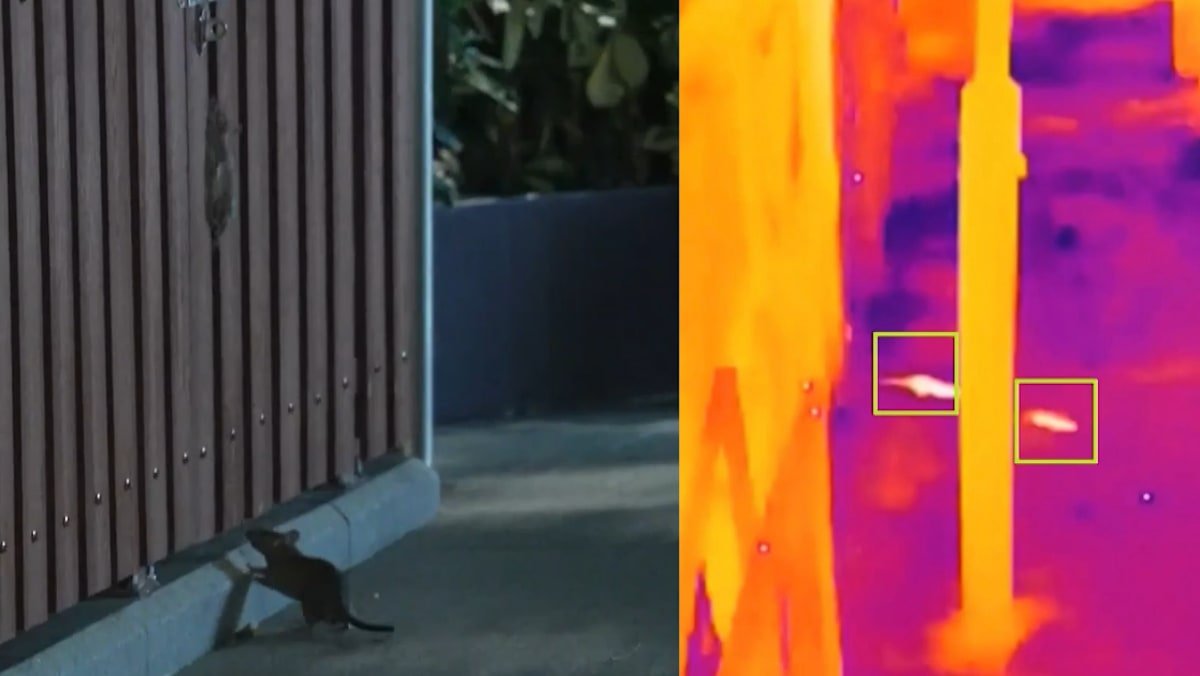
A composite image of rats on the streets of Hong Kong, and a scan of rats captured by thermal imaging cameras.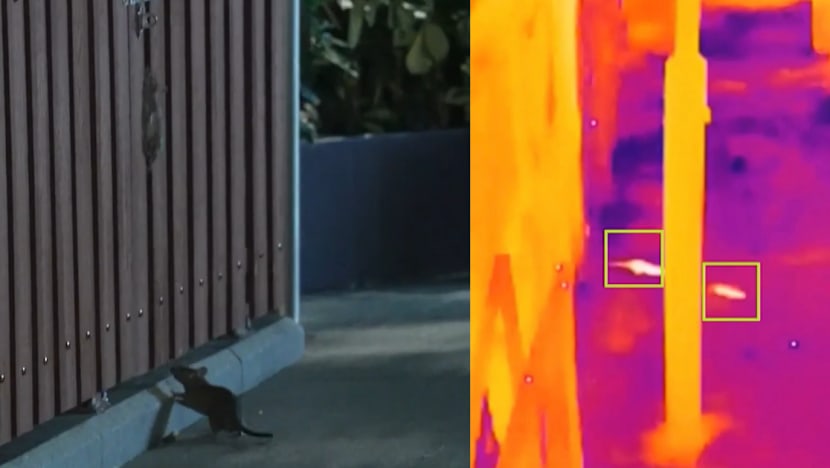
New: You can now listen to articles.

This audio is generated by an AI tool.


Read a summary of this article on FAST.
Get bite-sized news via a new
cards interface. Give it a try.
Click here to return to FAST
Tap here to return to FAST
FAST
HONG KONG: Rats have long thrived in Hong Kong’s crowded streets, parks and back alleys despite years of pest control efforts and complaints about widespread infestations.
“I used to live in one area and there were a lot of rats – and then when I moved to a new place, (there were) still a lot of rats. They are huge,” said a Hong Kong resident who gave her name as Rain.
Now, the densely populated city is turning to artificial intelligence, using thermal imaging cameras to monitor rodent activity primarily at night.
The AI-powered surveillance system, introduced in 2024, analyses these thermal images to generate a “Rodent Absence Rate” (RAR) – the percentage of images captured at a location that show no rats – to help authorities target infestations more effectively.
According to Hong Kong’s Food and Environmental Hygiene Department, data collected last year showed “significant improvement” in more infested areas.
However, government data also showed dozens of survey locations recorded an RAR of below 80 per cent. This means more than one in five images captured at those locations still showed rats.

Guess Word
Crack the word, one row at a time

Buzzword
Create words using the given letters

Mini Sudoku
Tiny puzzle, mighty brain teaser

Mini Crossword
Small grid, big challenge

Word Search
Spot as many words as you can
AI CANNOT FULLY SOLVE THE ISSUE
For a city of more than 7 million people, experts say Hong Kong’s rat problem remains an environmental management challenge that AI can help monitor, but not solve on its own.
“It’s one measurement that has to be added to several other measurements. We measure food sources, how available food is, and does that increase or decrease?” said New York-based urban rodentologist Bobby Corrigan.
“We measure how many rat signs we see in a park – rats love parks. And so, we will count all their rat burrows … and put all these things in a formula, if you will, to add up to the big picture,” added Corrigan, who has designed rodent control programmes for cities in the United States and Canada for about 20 years.
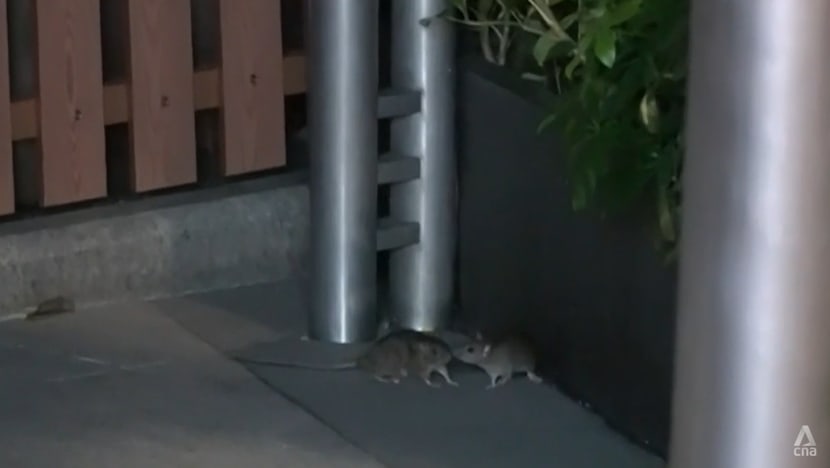
Researchers also said authorities should be more transparent about what the data shows.
“I must recognise the efforts the government departments are putting in combating the rodent population and helping with the improving the hygiene situation of some of the districts in Hong Kong,” noted Brian Wong from Liber Research Community – a non-governmental organisation in Hong Kong that focuses on researching land and development policies.
“But it is also very important for a government to communicate honestly. Where are we now at the moment?” he added.
PUBLIC HEALTH IMPLICATIONS
The city’s rodent problem has drawn attention as well due to the public health implications.
In May, Hong Kong recorded its first human case of rat hepatitis E for the year.
About one in five rats carry the virus. While human infections are rare, people can potentially contract the virus through food or water contaminated by rat waste.
Symptoms may include fever, nausea and vomiting, though some infected people show no symptoms. Severe cases can result in liver failure.
Cases have been on the rise globally, with more than 50 recorded so far, said Dr Siddharth Sridhar, a clinical associate professor at the University of Hong Kong’s microbiology department.
“In Hong Kong, this has become the most common rodent-to-human kind of virus,” he added.
“That does not mean there are a large number of cases, but every time there is a case, it makes us take notice. It makes public health officials take notice about what is going on with the rodent infestation.”
Despite advances in surveillance technology, experts say eliminating rats entirely is unrealistic.
Rats thrive in Hong Kong’s extensive drainage and sewer systems, making it impossible to accurately determine the city’s total rodent population.
Instead, experts argue that lasting improvements will depend as much on human behaviour as technology.
“We need to just look in the mirror and say: ‘We can do better with our own behaviour in our own nest’. Rats are a predictor of (how well we take) care of our own nest,” said Corrigan.
“They’re telling us, if there’s many rats, you are not taking care of this area.”
Source: CNA/lt(ca)
Sign up for our newsletters

Get the CNA app
Stay updated with notifications for breaking news and our best stories
Get WhatsApp alerts
Join our channel for the top reads for the day on your preferred chat app

Get bite-sized news via a new
cards interface. Give it a try.
Click here to return to FAST
Tap here to return to FAST
FAST
About The Author