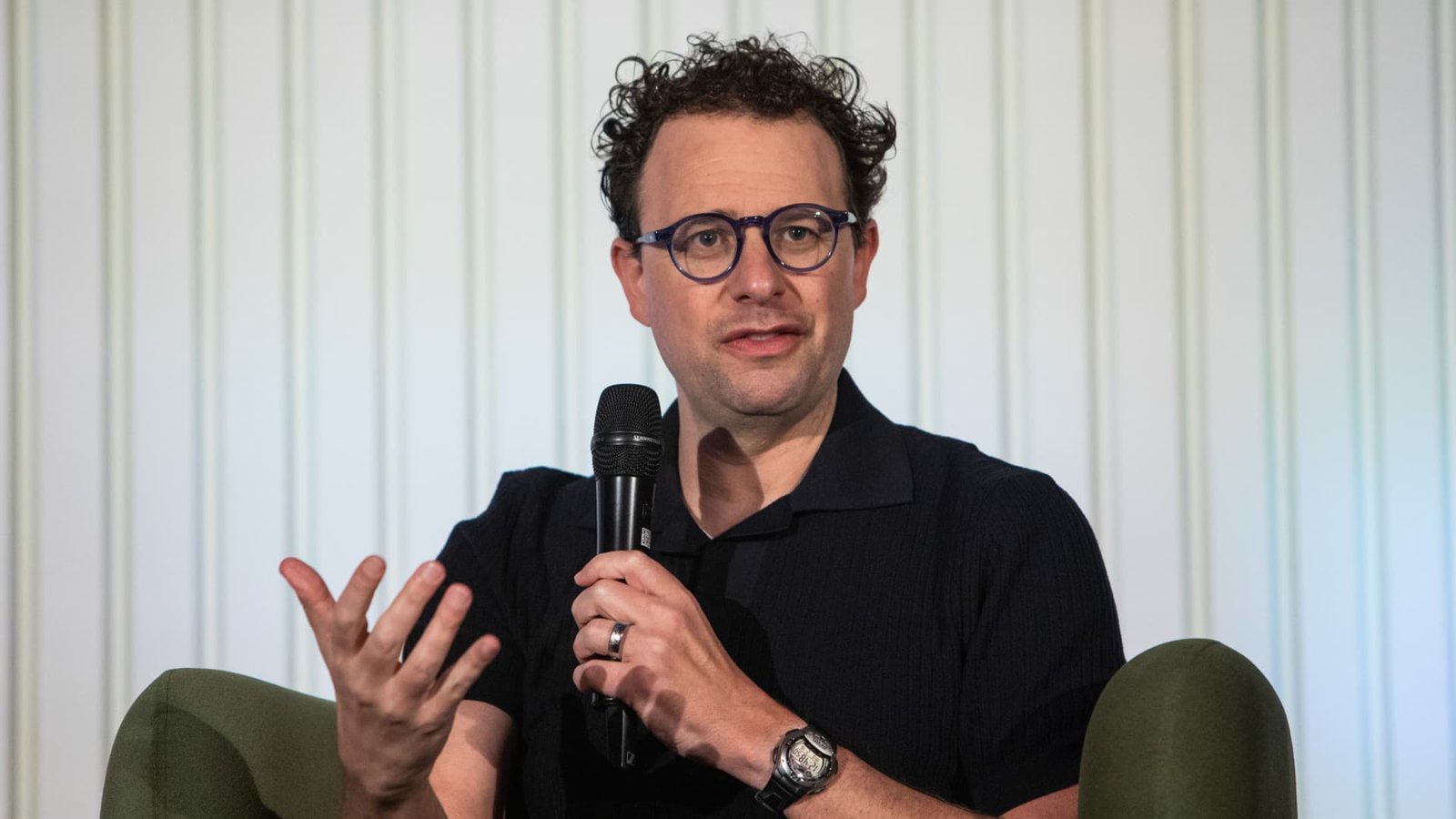
Skip NavigationDario Amodei, co-founder and chief executive officer of Anthropic, during the company’s Builder Summit in Bengaluru, India, on Monday, Feb. 16, 2026. Samyukta Lakshmi | Bloomberg | Getty Images
Artificial intelligence company Anthropic filed an S-1 prospectus with the Securities and Exchange Commission on Monday, indicating it will go public in the near future. The five-year-old company behind AI assistant Claude is expected to be one of the biggest initial public offerings in history. It could take the top spot if it exceeds SpaceX’s $75 billion debut in June.
Retail investors may be excited to get a piece of what looks to be one of the big winners of the AI era. But as with any investment, they’d be wise to do some research before just buying into the hype.
Since no one can truly predict the future, there’s no certainty as to what will happen to a company’s stock price after its IPO. Anthropic in particular outlined numerous risks in its filing, including shifting regulatory and political landscapes, the existential threat of AI to humanity and the need for massive amounts of power to fuel Anthropic’s computing.
Plus, for better or worse, a company’s immediate IPO performance may not determine its long-term success. Robinhood, for example, had a fairly lackluster IPO on July 29, 2021, debuting at $38 a share. It closed that day well below opening price and fell below $7 a share in June 2022. But the stock climbed to a peak of $143 in July 2025 and closed at around $95 on Tuesday. Uber had a similar market debut in 2019, with shares falling more than 7% after its debut, but now trading about 46% higher than its initial price.
The good news for prospective Anthropic investors is that stocks with a proven sales track record have typically found their footing. From 1980 through 2024, companies that did $1 billion or more in sales in the previous 12 months have, on average, nearly matched the return of the broad stock market in the three years following their IPO, according to research by Jay Ritter, director of the IPO Initiative at the University of Florida.
“Bigger companies, as measured by sales, whether it’s $100 million or a billion, on average have pretty much matched the market,” he says. “In other words, once it starts trading, the institutional investors setting the price on average have gotten it right.”
Anthropic brought in nearly $16.3 billion in revenue in the first half of 2026, according to its S-1 filing.
Still, that recent success doesn’t mean investors should go all in on a brand-new stock.
‘Upside is limited’
Especially with buzzy companies, it’s common for share prices to jump after the IPO. From 1980 through 2025, stocks have risen by an average of 19% from their offering price, the pre-opening price set by the offering’s underwriters, on the first day of trading, per Ritter’s analysis.
But retail investors may not reap that benefit because most offering-priced shares are typically reserved for institutional investors. Anthropic is considering offering 15% to 20% of IPO shares to retail investors through JPMorgan Chase & Co., Bloomberg reports. Anyone unable to buy at that opportunity will have to wait until shares hit the public market.
Even if Anthropic shares pop after the IPO and stay elevated for some time after, Ritter says that since the company’s valuation is already so high, “the upside is limited.”
Anthropic is reportedly aiming to go public at a valuation between $1.5 trillion to over $2 trillion. Currently, chipmaker Nvidia holds the title of most valuable public company, with a market cap — found by multiplying a stock’s share price by the number of shares outstanding — of $5.2 trillion. While Anthropic could theoretically exceed that, doing so wouldn’t offer as much upside for investors as one may hope, Ritter says.
“When you’re going public at a $1.5 trillion valuation, the possibility of making more than 10x is really limited,” he says.
There are indicators Anthropic could maintain a strong business, like the fact that its revenue is growing much faster than costs, Ritter adds. Still, as with any public company, he warns against “putting all your eggs in one basket.” He recommends making bets on any individual stock with “play money” you can afford to lose, rather than a major portion of your core portfolio. Overall, he encourages investors to keep their investment strategy boring.
His best advice for almost all investors is to buy and hold in low-cost index funds. If you do, you likely won’t even need to buy individual Anthropic shares to get some exposure to it in your portfolio. Given its potential post-IPO market size, Anthropic stock may soon be included in funds, like the Vanguard Morningstar Total Stock Market Fund, that aim to track the performance of the broad U.S. stock market, Ritter says.
 VIDEO09:36I quit my $250K/year tech job–now I make $33K/year selling matchaMillennial Money