BOJ may face pressure to ramp up bond-buying if yields spike, ex-central bank policymaker says
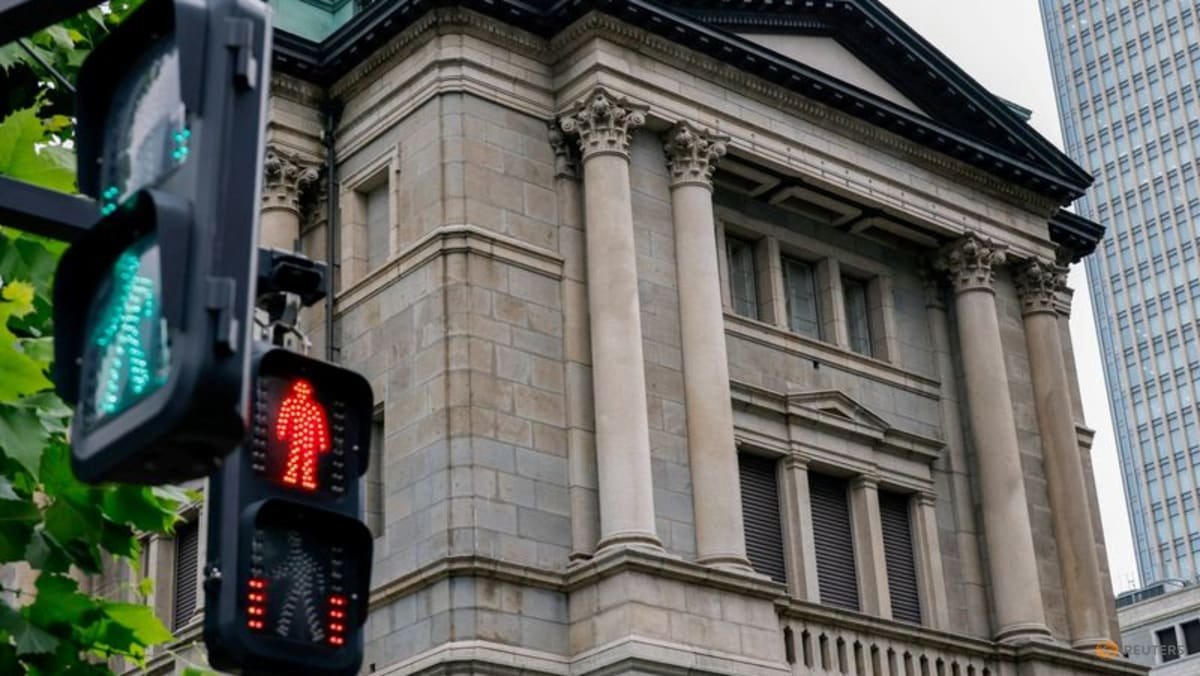
Traffic signs in front of the Bank of Japan building in Tokyo, Japan, June 15, 2026. REUTERS/Kim Kyung-Hoon
Read a summary of this article on FAST.
Get bite-sized news via a new
cards interface. Give it a try.
Click here to return to FAST
Tap here to return to FAST
FAST
TOKYO, July 16 : The Bank of Japan may face political pressure to ramp up bond buying if the benchmark 10-year yield breaks above the key 3 per cent threshold and puts Premier Sanae Takaichi’s fiscal policy on the line, former central bank policymaker Seiji Adachi told Reuters.
The stakes are high for the Takaichi administration, as her government’s case for increased spending rests on the belief that economic growth will exceed long-term interest rates, allowing Japan to manage its debt load without undermining fiscal health.
That premise would come under doubt if the 10-year Japanese government bond (JGB) yield exceeds 3 per cent with inflation running at 2 per cent and real growth seen hovering around 1 per cent at best, Adachi said.
“If the 10-year yield rises above 3 per cent, it would cast doubt on Japan’s fiscal sustainability,” he said, adding the government likely sees the 3 per cent-3.5 per cent range as a critical line of defence.

Guess Word
Crack the word, one row at a time

Buzzword
Create words using the given letters

Mini Sudoku
Tiny puzzle, mighty brain teaser

Mini Crossword
Small grid, big challenge

Word Search
Spot as many words as you can
“Depending on how fast yields rise from here, the government may pressure the BOJ to ramp up bond buying,” Adachi said in an interview on Wednesday.
The 10-year yield hit a 30-year high of 2.865 per cent last week as investors interpreted Takaichi’s draft economic blueprint as watering down Japan’s commitment to fiscal discipline. The benchmark yield stood around 2.675 per cent on Thursday.
“Japan’s debt-to-GDP ratio may be falling now. But what’s driving up yields is not about its current fiscal state but concern over whether the country will protect future fiscal discipline,” said Adachi, who retains contact with incumbent policymakers and some of Takaichi’s economic advisers.
Aside from raising its short-term policy rate, the BOJ has been slowing bond buying since 2024 to slash its balance sheet that has ballooned from a decade-long massive monetary stimulus.
INFLATION CONUNDRUM
With bond markets on edge, the BOJ last month decided to pause bond taper from next fiscal year and reiterated its readiness to counter any sharp rise in long-term yields through emergency bond-buying operations.
Having scrapped yield curve control, the BOJ no longer regards bond purchases as a monetary policy tool. But any emergency buying would complicate its efforts to dismantle the remnants of former Governor Haruhiko Kuroda’s radical stimulus programme.
While the administration may pressure the BOJ to increase bond buying, it is unlikely to openly advocate delaying rate hikes, as that could stoke fears of runaway inflation and drive yields higher, Adachi said.
With inflation expected to creep up in coming months, the BOJ is likely to raise its short-term policy rate to 1.25 per cent anytime between October and January next year, he said.
A hike to 1.25 per cent will bring the BOJ’s policy rate to levels deemed neutral to the economy, Adachi said.
“After rates are brought to 1.25 per cent, the BOJ’s rate-hike decisions will be guided on the degree of inflation risk. The purpose of rate hikes will change from adjusting the degree of monetary support, to fighting inflation,” he said.
Depending on how crude oil prices move reflecting Middle East developments, the BOJ could push up interest rates to 1.5 per cent or 1.75 per cent sometime next year, said Adachi, who served at the BOJ board until March last year.
The BOJ raised interest rates to a 31-year high in June in a landmark step in its policy normalisation. Most analysts polled by Reuters expect the central bank to hike again to 1.25 per cent by year-end.
Sources have told Reuters the BOJ will keep rates steady this month but keep its focus on the risk of an inflation overshoot, as rising costs from a weak yen and strong AI demand offset some of the declines in oil prices.
Source: Reuters
Sign up for our newsletters

Get the CNA app
Stay updated with notifications for breaking news and our best stories
Get WhatsApp alerts
Join our channel for the top reads for the day on your preferred chat app

Get bite-sized news via a new
cards interface. Give it a try.
Click here to return to FAST
Tap here to return to FAST
FAST