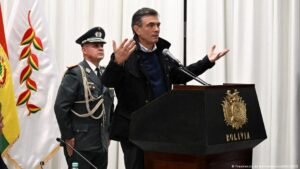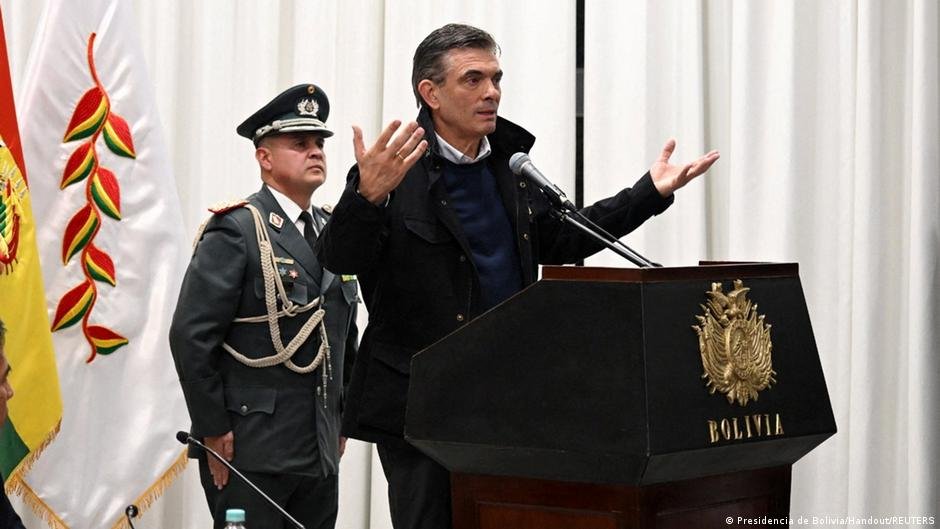
Bolivia‘s President Rodrigo Paz declared a state of emergency early on Saturday, after more than six weeks of road blockades and protests demanding the president’s resignation.
“This is not a state of emergency to restrict people’s lives … It is a state of emergency to give freedom back to the people, to free Bolivia from those who use political conflict to block roads and harm the population,” he said in a televised speech.
Paz, who called the situation an organized attempt to destabilize democracy, also said that the decision to declare a state of emergency was made “after exhausting all avenues of dialogue.”
The move comes just hours after Paz announced on Friday that he had reached a deal with the country’s main trade union, the Bolivian Workers’ Confederation (COB).
Bolivia’s blockade crisis
The conflict erupted in May after Paz scrapped two-decade-old fuel subsidies, causing gas prices to spike.
Anti-government protests escalated into roadblocks on key routes nationwide, choking off access to Bolivia’s main cities, including La Paz and neighboring El Alto.
Demonstrators, including labor unions and groups loyal to former leftist President Evo Morales, reject Paz’s economic reforms.
They are demanding wage increases, a rollback of austerity measures, and Paz’s resignation.
Rodrigo Paz ends two decades of socialist rule in Bolivia
Paz, whose election victory ended nearly 20 years of rule by the leftist Movement for Socialism (Mas) party in the South American country, has been in power for only seven months.
He took office in November 2025, promising to tackle the country’s worst economic crisis in four decades.
Edited by: Wesley Dockery
Don’t let the algorithm hide the news. If you rely on our team for trusted reporting, please take a moment to select us as your Preferred Source on Google by clicking here and hitting the “star” or “preferred” button, so you’ll always see our verified news first.
About The Author