Skip NavigationMarketsBusinessInvestingTechPolitics & PolicyVideoWatchlistInvesting Club PRO
PRO LivestreamMenu
- Resurging fears about inflation are pushing longer-maturity bond yields to multi-decade highs.
- The rate on the 10-year Treasury note is the main benchmark for mortgages, auto loans and student debt.
- In some cases, consumers could see their monthly payments increase immediately.
 watch nowVIDEO03:17The market is ‘really relaxed’ about the Fed expectation at this point, says Neuberger’s BhatiaSquawk on the Street
Against a backdrop of persisting inflationary pressures, yields on longer-term bonds have been climbing, which experts say is likely to keep borrowing costs elevated — particularly for long-term fixed-rate loans such as mortgages.
The yield on the U.S. 30-year Treasury bond hit 5.323% on Tuesday, a 19-year high, before edging down to just below 5.3%. The 10-year Treasury yield — a key benchmark for fixed mortgage rates and other longer-term loans — is above 4.7%. That compares to below 4% before the start of the Iran War at the end of February.
Stock Chart IconStock chart icon U.S. Treasury yields
“The higher bond yields on long-dated securities, like the 30-year Treasury, clearly indicate discomfort over persistently high inflation in the future,” said Lawrence Yun, chief economist for the National Association of Realtors.
The annual rate of inflation was 3.4% in July as measured by the consumer price index, far above the Federal Reserve’s target of 2%. Before the war, in January, the annual inflation rate was 2.4%.
What bond yields mean for mortgage rates
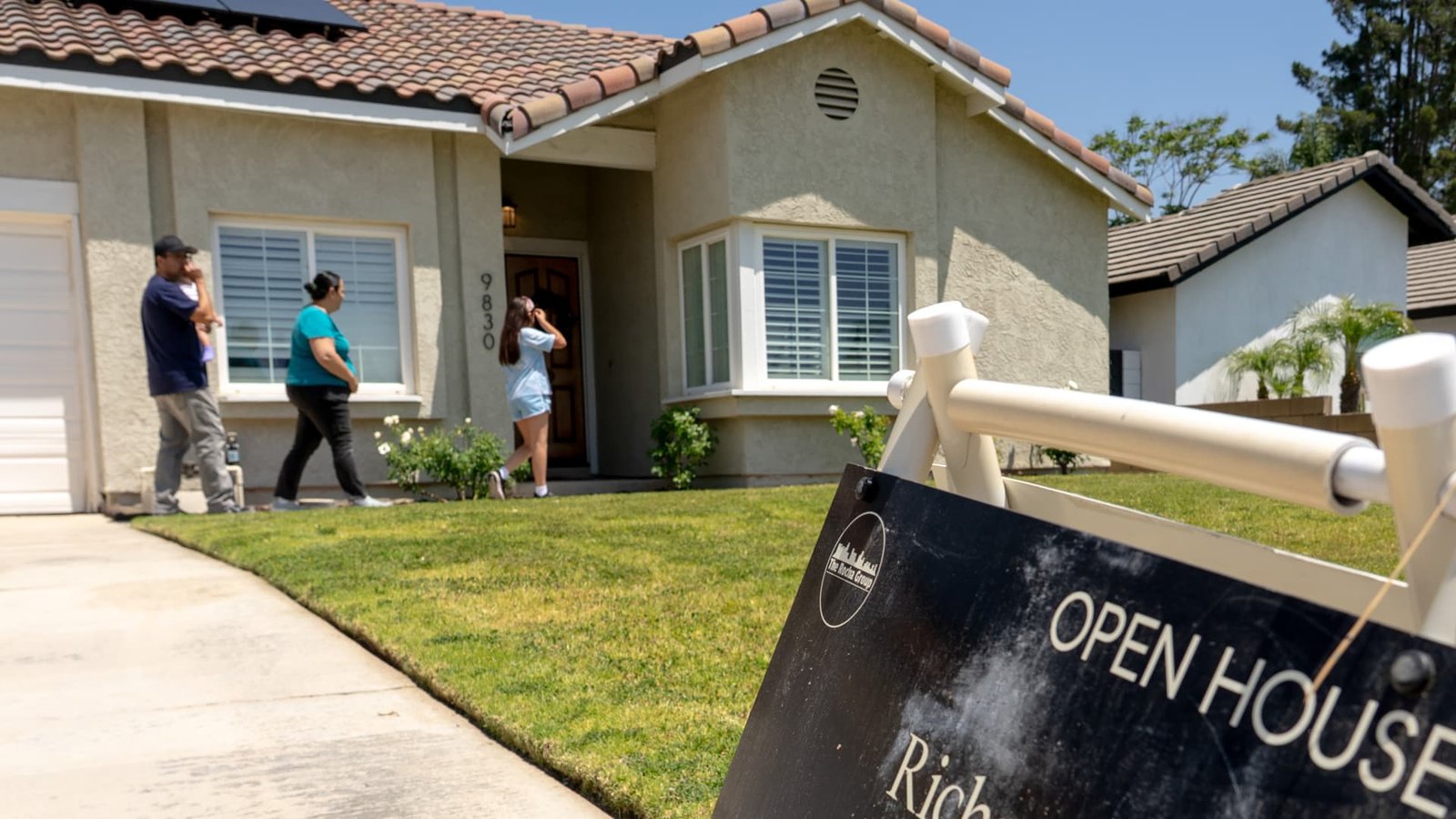
Since 15- and 30-year fixed-rate mortgages typically follow the lead of Treasury rates, higher yields have already been pushing up mortgage rates. The average rate for a 30-year, fixed-rate mortgage was 6.75% as of Tuesday, after finishing last week at 6.69%, according to Mortgage News Daily.
“The impact on mortgage rates is directly related to higher bond yields,” Yun said. “Independent of the Federal Reserve policy, higher inflation and higher overall long-term borrowing costs will mean higher mortgage rates.”
He said consumers should not expect any meaningful decline in mortgage rates.
Last week’s “favorable economic data provided only temporary relief,” said Jeff DerGurahian, LoanDepot’s chief investment officer and head economist. Higher energy prices stemming from the Iran conflict remain “an important part of the inflation picture,” he said.
“Longer-term bond investors may need more evidence that the post-pandemic inflation cycle is truly behind us and that the economy is returning to a slower-growth, slower-inflation environment before 10- and 30-year Treasury yields move meaningfully lower,” DerGurahian said.
 watch nowVIDEO02:1230-year fixed mortgage rate inches up to 6.75%Halftime Report
In the meantime, there are ways to offset today’s higher rates, experts say.
“Some may want to consider shorter-term mortgage rates, like seven-year [adjustable-rate mortgages], which lock in fixed mortgage payments for the first seven years of the loan before readjusting,” Yun said. “These shorter-duration loans are ideal for those who are more certain they will move to another home within that seven-year timeframe.”
What bond yields mean for other consumer loans
Rates on car loans, credit cards and student debt are also directly or indirectly tied to bond yields, meaning those monthly payments could increase as well.
“It typically is an immediate pass-through to some consumer rates,” said Brett House, an economics professor at Columbia Business School. “Variable and some fixed-rate borrowing will reset rates on a daily basis.”
Renewed worries about the trajectory of Fed interest rate policy could weigh on variable credit card rates, which are closely pegged to the prime rate and influence inflation expectations.
Auto loan rates are also susceptible to broader economic factors.
“Auto loan rates don’t move in a vacuum, but sustained pressure on Treasury yields inevitably pushes up borrowing costs across the financing spectrum,” said Jessica Caldwell, head of insights at Edmunds.
“With average new-vehicle APRs already stuck around 7% and used vehicles at 10.6%, consumers are already paying heightened interest,” she said. “If higher bond yields keep interest rates elevated, auto lenders will have little choice but to maintain or even bump up APRs, further stretching consumer budgets.”
Although federal student loan rates are fixed for the life of the loan, rates rose for new borrowers in the year ahead based on the last 10-year Treasury note auction in May.
“Of course, higher borrowing costs are meant to fight inflation, but there’s a potential double whammy for consumers,” said Ted Rossman, a principal consumer finance analyst at Money Management International, a nonprofit credit counseling agency. “When prices are high, and borrowing costs are high — as they are now — you feel like you’re getting squeezed from all sides.”