
Box office hit Dear You is fuelling heritage tours to China’s Chaoshan. How are villages responding?
The Chinese box office hit is drawing overseas visitors to the Chaoshan region, transforming filming locations into heritage tourism hotspots and raising questions about preservation and privacy.
Tourists take photos with a qiaopi model on display in Xiqi Village, Jieyang, on Jul 14, 2026. (Photo: CNA/Hu Chushi)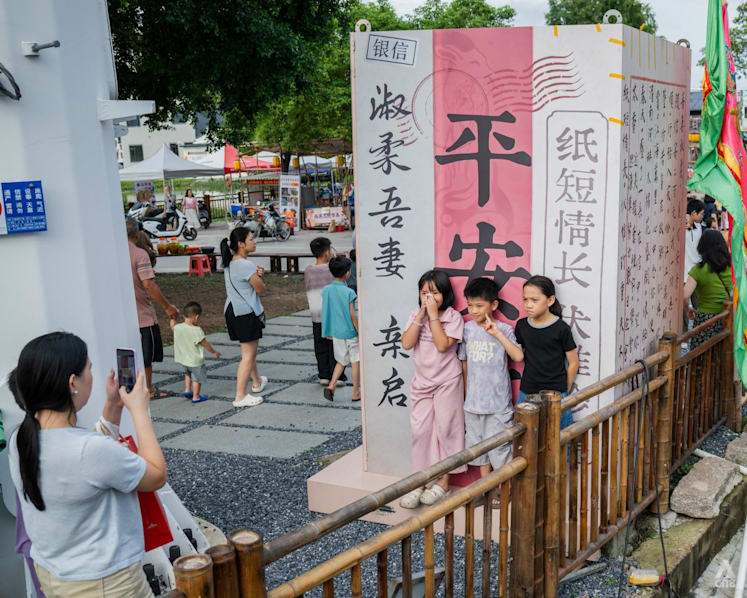
New: You can now listen to articles.

This audio is generated by an AI tool.

Read a summary of this article on FAST.
Get bite-sized news via a new
cards interface. Give it a try.
Click here to return to FAST
Tap here to return to FAST
FAST
CHAOSHAN, GUANGDONG: For Singaporean human resource professional Jennie Lim and her 69-year-old mother, Dear You was more than just a movie – it became the push for a trip they had long wanted to make.
Filmed almost entirely in Teochew, a language widely spoken in China’s Chaoshan region, the film tells the story of a young Chinese villager named Zheng Xiaowei, who travels to Thailand in search of his grandfather, Musheng, who fled in 1948 to escape conscription during the civil war.
Set against the backdrop of the mass migration of Teochew people from Chaoshan to Southeast Asia during the 1940s, the film explores themes of family, identity and homecoming.
Its success has also inspired descendants of Teochew migrants across Southeast Asia to visit Chaoshan and reconnect with their roots.

Guess Word
Crack the word, one row at a time

Buzzword
Create words using the given letters

Mini Sudoku
Tiny puzzle, mighty brain teaser

Mini Crossword
Small grid, big challenge

Word Search
Spot as many words as you can
“We actually wanted to come here already,” Lim, 43, told CNA.
“But the movie was what made my mother decide to do the trip.”
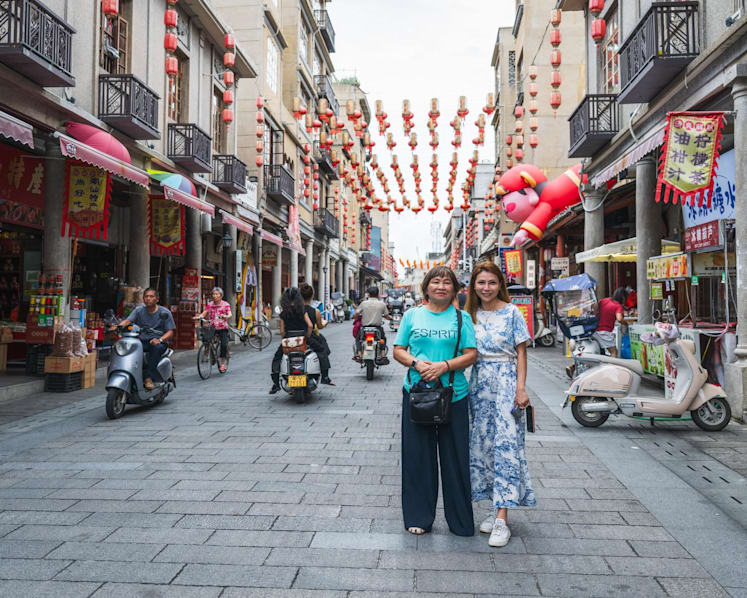
Lim’s mother, a Hainanese woman named Tan, who married into a Teochew family, saw the trip as an opportunity to introduce her to important places tied to their family’s history.
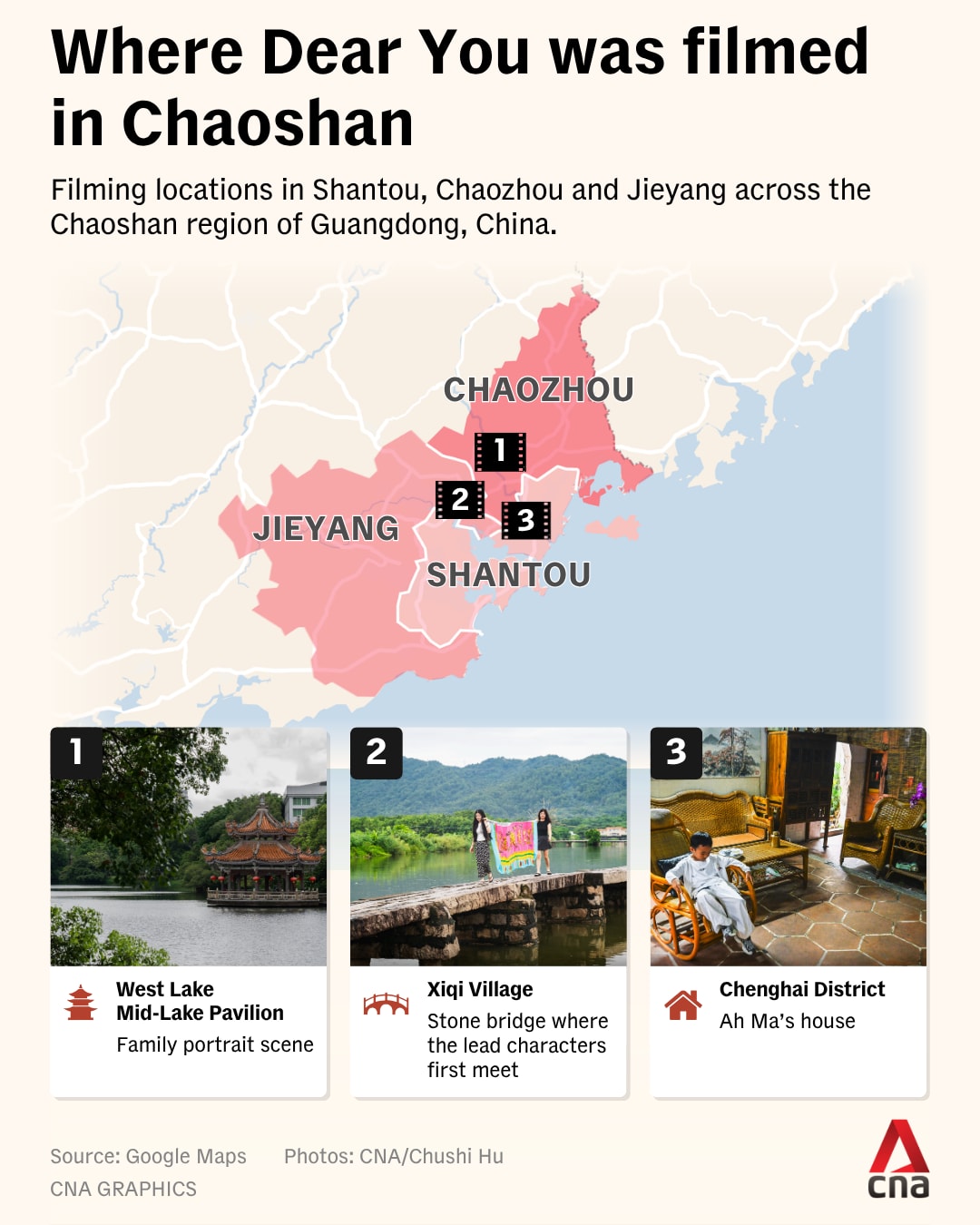
Over eight days and seven nights, they explored Chaozhou, Shantou and Jieyang, Chaoshan’s core cities where most of the movie was filmed – retracing key scenes while discovering local culture and history that shaped their own family’s roots.
They even made it a point to watch the film in Chaozhou.
“The main purpose was to come and look at heritage, (places) and what actually brought our ancestors to Singapore,” Lim said.
BOX OFFICE SUCCESS
Released in China in April, Dear You has become one of the country’s highest-grossing films of 2026.
As of July, it has earned nearly 2 billion yuan (US$296 million) at the mainland Chinese box office, with overseas takings pushing its total global gross past 2.1 billion yuan.
A Mandarin-dubbed version premiered in Singapore in June, but overwhelming demand for the original Teochew language version prompted the Infocomm Media Development Authority (IMDA) to approve more than 200 screenings to date.
After a preview screening in Bangkok on Tuesday (Jul 21), a Thai-dubbed version is set for a nationwide release on Aug 6.
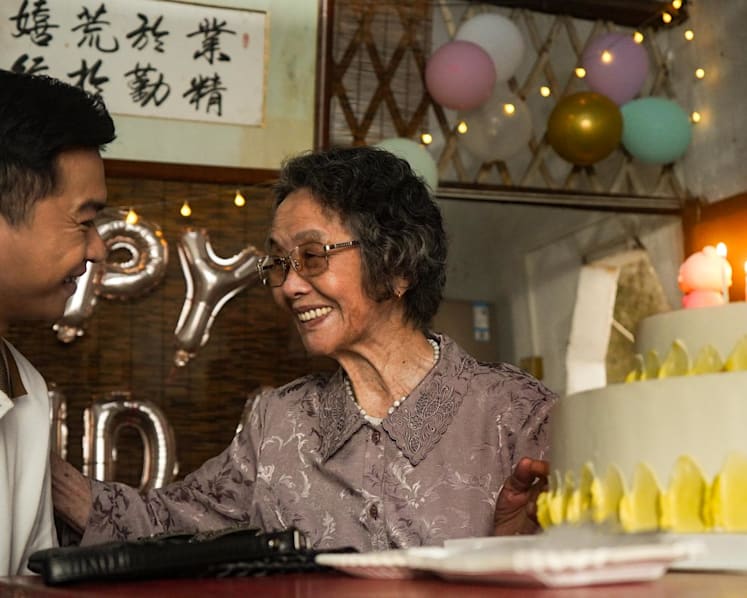
The movie has also notably fuelled growing interest in Chaoshan heritage tours.
Following its release in Singapore and Malaysia, flight bookings from Singapore to Jieyang Chaoshan International Airport rose 23 per cent year-on-year between Jun 18 and Jul 19, while bookings from Malaysia increased 6 per cent over the same period, according to Trip.com Group.
Travel agencies say the film has reshaped how they package trips to the region.
Wong Yew Hoong, director of EU Holidays, said the company launched a new itinerary centred entirely on Chaoshan’s Teochew heritage – after interest grew.
“We always had itineraries going to that region,” Wong told CNA.
“Now the itinerary focuses solely on the eight clans of Teochew.”
HOW DEAR YOU TRANSFORMED A VILLAGE
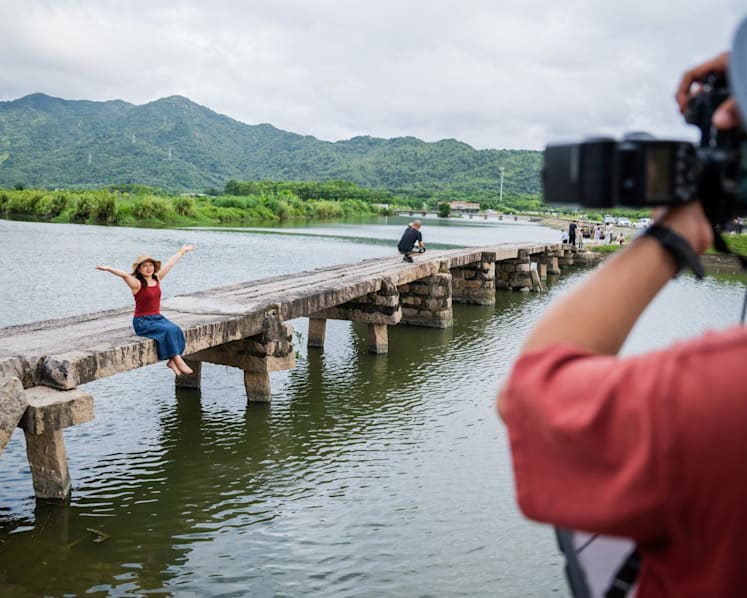
The clearest sign of Dear You’s unexpected influence is not found inside a cinema, but on a small stone arch bridge in Xiqi Village, a farming community in Jieyang city, home to around 11,400 residents.
For years, the old bridge was largely forgotten. After a new one was built nearby in 2011, it gradually fell out of use.
Few imagined that it would one day become an iconic film location.
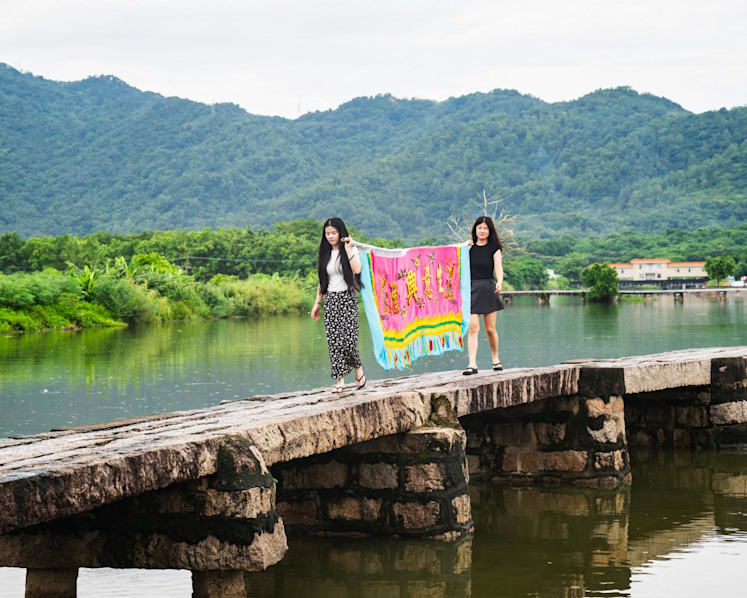
Under the summer sun, visitors patiently wait their turns to hold up a traditional silk banner and pose with props like a vintage bicycle to recreate one of the film’s most memorable scenes.
In the movie, it is where main characters, Musheng and Shurou, first meet during a Teochew “Ying Laoye” spring parade – after Musheng nervously approaches her and falls into the stream below.
“It’s unbelievable. I never imagined this place would suddenly become popular,” said 50-year-old Chen Youbo, who grew up in Xiqi before moving away eight years ago.
He still remembers how his once sleepy village transformed into an unlikely tourist destination.
“I (was) wondering why cars couldn’t pass through,” Chen said.
“Why were there so many people taking photos here? That was when I realised.”
His son even played Musheng’s stunt double in the bridge scene.
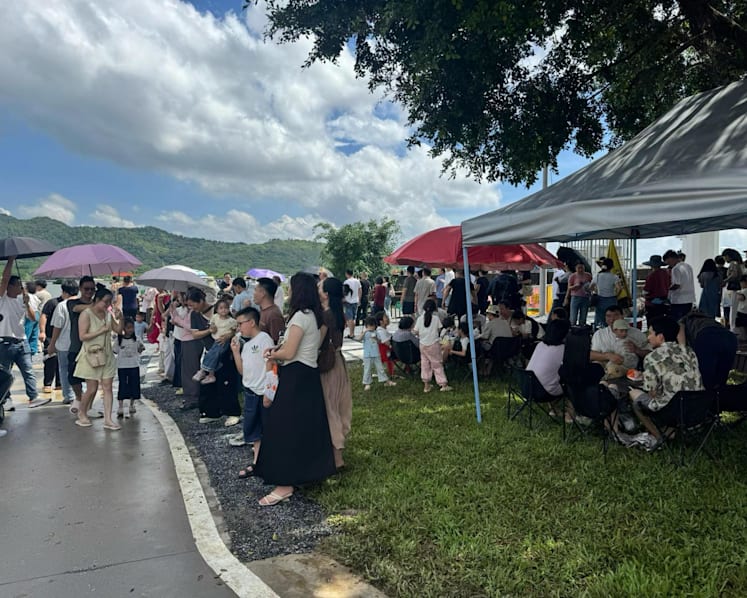
Seeing crowds gather, Chen returned to set up a stall nearby selling kungfu tea – a Chaoshan staple. “The weather was hot (and) there were many tourists here … so I thought, why not set up some tea tables and let people drink kungfu tea? We could earn a little.”
His stall was fleeting and lasted about a month, Chen said.
After the area around the filming site was renovated with new lawns and visitor facilities, Chen stopped operations.

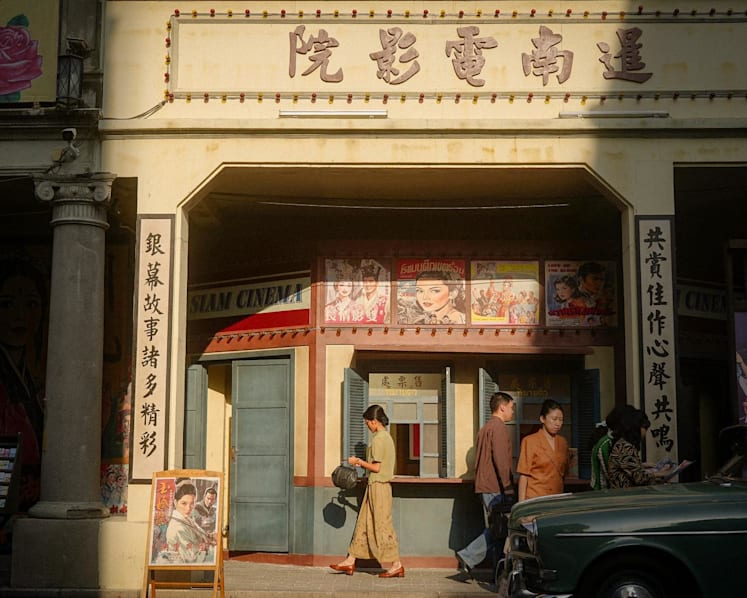
Sixty-year-old Chen Hanlong became one of Xiqi’s first roadside vendors, turning the sudden influx of visitors into a small source of income.
Alongside selling drinks and other goods, he offered visitors the chance to pose with the movie’s iconic silk banner – and rather than charging a fixed price, he lets them decide how to pay.
“They pay whatever they want,” he told CNA, adding that customers have paid anything between 1.5 yuan to 10 yuan.
At the height of the movie’s summer box office boom, Chen recalled seeing as many as 18 tour buses arriving each day.
“Business has not been bad. I earn enough to cover my daily expenses,” he said.

For village leaders, however, the bigger challenge is turning a movie boom into something more lasting.
Village secretary Chen Youkun said the influx of visitors accelerated long-planned efforts to improve Xiqi’s infrastructure.
Three parking areas have since been added, while several million yuan has been invested in road widening, drainage works, landscaping and public spaces.
“The infrastructure here was previously quite weak, so we invested more in this area,” he said.
Plans to develop agricultural tourism were already underway before Dear You was released, but the film accelerated those ambitions.
“We already had plans to develop agricultural tourism. But this film brought visitors faster and helped raise attention,” Chen said.
The village now hopes to build on that momentum with fruit-picking experiences and farm activities while pursuing AAA-rated scenic status, one of China’s official tourism classifications.
PRESERVING THE OLD WHILE EMBRACING CHANGE
But not every village is rushing to transform.
A short drive from Xiqi, Yangqi Village has taken a different path.
Unlike its neighbour, it has largely left its best-known filming location untouched.
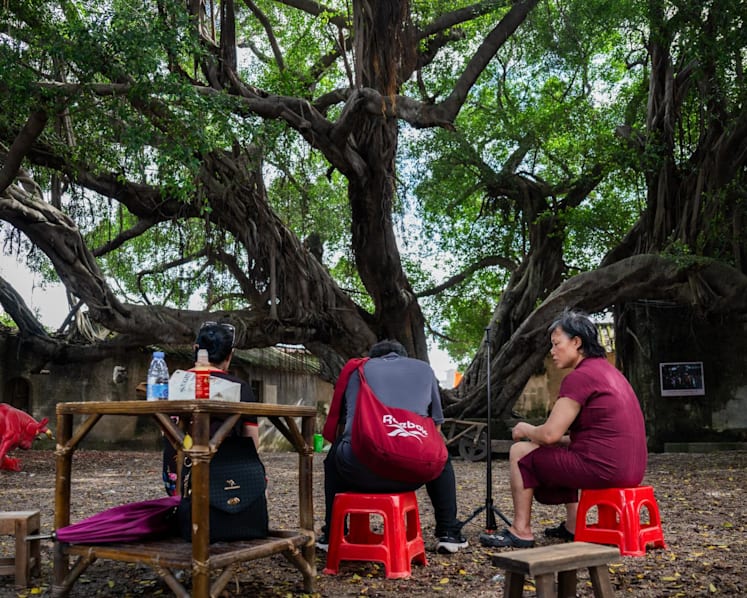
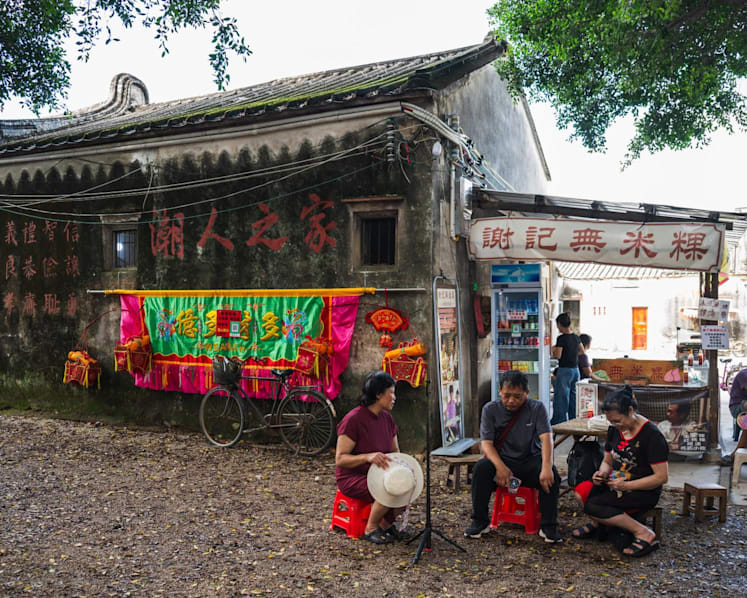
Beneath a towering banyan tree, chickens still roam dirt paths and village life continues at an unhurried pace.
The tree serves as the backdrop for many of Dear You’s most intimate moments, where the relationship between Shurou and Musheng quietly unfolds.
Following the film’s success, Yangqi began promoting itself as “Good Luck Village” – but residents said preserving its original character remains the priority.
Yang Weisen, who leads a cultural tourism revitalisation project in the village, said authenticity was precisely what attracted the film’s producers.
“There are many banyan trees across Chaoshan, but it is rare to find one that still has its original surroundings,” he said.
“Most places have already been covered with concrete.”
For Yang, it isn’t about resisting change.
Preserving and protecting what we have is what makes Yangqi unique, he said.
The challenge is finding a balance between keeping the landscapes and rhythms that attracted visitors, while allowing residents’ lives to improve.
“Some people think new things look better, but we feel these old things match the scene better,” he said.
MORE THAN A MOVIE PILGRIMAGE: A JOURNEY BACK TO THEIR ROOTS
Dear You’s appeal has extended beyond just filming locations.
For some overseas visitors, the journey to Chaoshan is less about recreating scenes from the movie and more about reconnecting with their family roots and histories, passed down through generations.
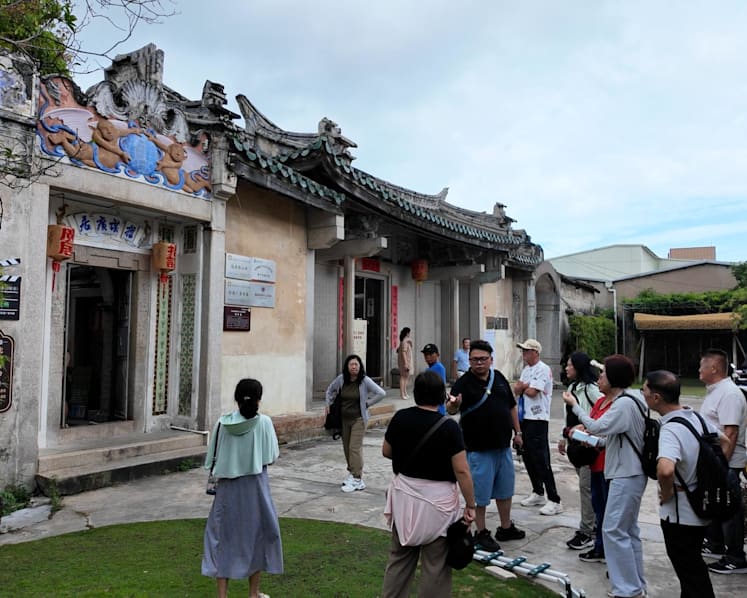
Outside the Chenghai house in Shantou, a historic landmark featured in the film, a group from Malaysia, made up of 14 relatives and friends, were on a five-day trip to explore Chaoshan. Two had watched the film.
“There is a certain emotion behind the story,” said Lee Mei Ha, 53.
“Many of us who left our hometowns (in China) can understand that feeling.”
“Young people can come and see their hometowns (in China),” she added.
“They can understand how their grandparents and ancestors once lived.”
The film’s significance lies not only in bringing in visitors to Chaoshan, but also to encourage a deeper understanding of its languages, culture and history, said Zeng Jianpeng, co-founder of the Chaozhou Volunteer Association for Reuniting Overseas Chinese Families.
“Dear You has brought greater attention to Chaoshan culture and encouraged more people to understand the culture behind the food and scenery,” Zeng told CNA.
“But real change is not just short-term traffic,” he added.
“It is whether (or not) this attention can become lasting cultural preservation and understanding.”
AFTER THE CAMERAS STOPPED ROLLING
Filming for Dear You began in October 2024 and wrapped in January 2025.
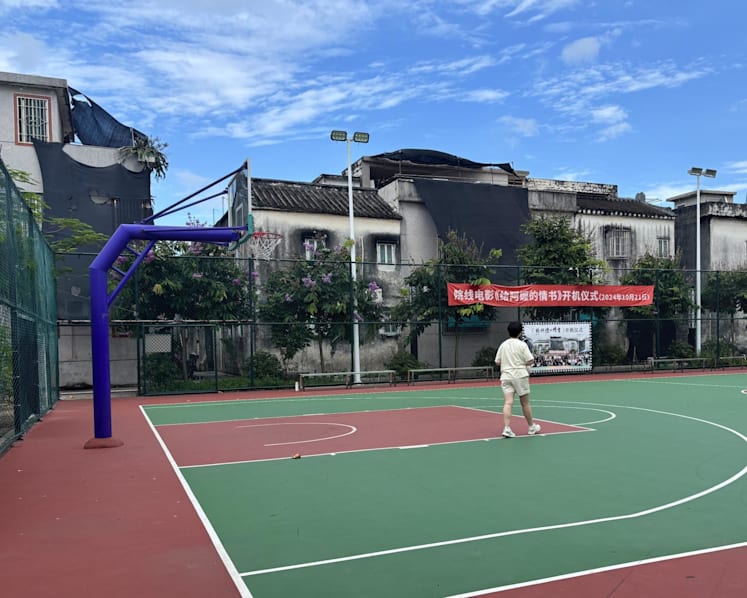
Inside an old house in Shantou’s Chenghai district, little has changed since the crew left.
A wok full of preserved olive leaves and mustard greens still sits where it appeared in one scene, while furniture and props remain exactly as they were during filming.
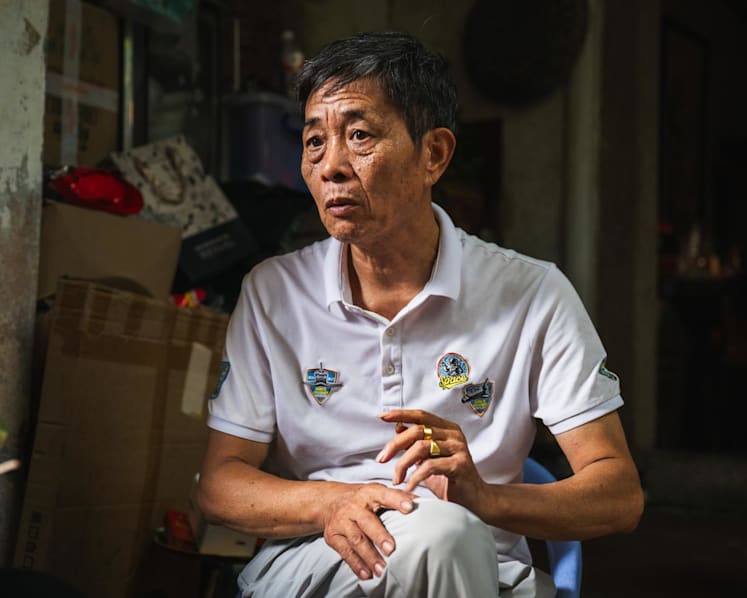
Its 66-year-old caretaker Zhang Mian has kept the house intact rather than returning it to its original layout.
When Dear You became a box office hit during the Labour Day holiday back in May, visitors began arriving at Zhang’s door.
Under guidance from local cultural tourism authorities, the house is opened to visitors between 2pm and 5pm daily.
For Zhang, however, welcoming visitors is about more than tourism.
Sometimes, he reopens his home after official hours – to visitors who have travelled a long way.
“If they are from nearby, I tell them to come back tomorrow or later. But if they tell me they came from far away, I will open the door again.”
“The movie talks about loyalty and kindness, so I follow that spirit.”
But not everyone has embraced the attention.
A short distance away in Tangxi Village, a traditional Nanyang-style building used to depict scenes set in Thailand remains a private residence and tea business.
Signs reminding visitors that the house remains a private residence are plastered throughout the property.
“It used to be peaceful here. Now there are too many people,” said its caretaker Zheng Zhouqiang.
Business has fallen, he said, because customers have been “afraid to come” after the movie’s popularity.
“My situation is different,” he said. “I cannot (simply) close the door because I run my business here.”
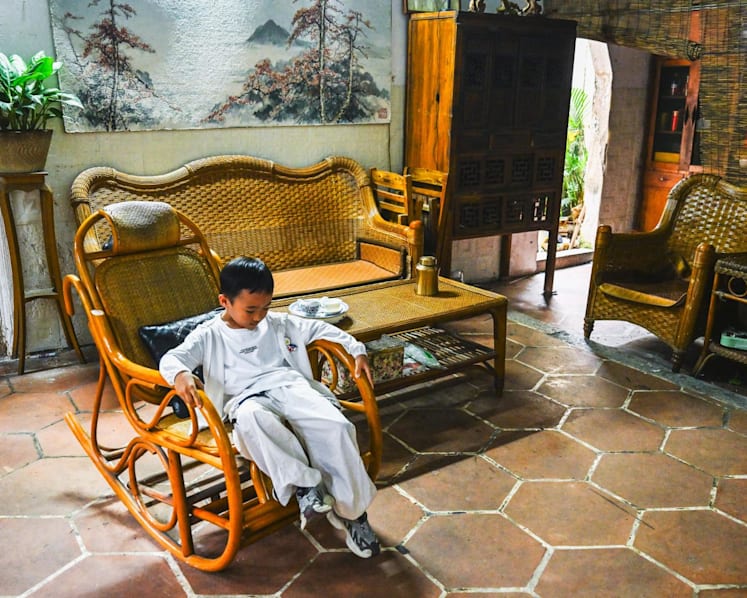
Next door, another heritage building featured in the film has kept its doors closed to visitors to avoid attracting huge crowds.
At Jieyang’s centuries-old Mianhu Blacksmith Street, the attention has also brought visibility – but not necessarily revival.
Tourists now arrive to photograph scenes associated with Dear You, but for 58-year-old resident Li Shaoxiong, the attention has done little to revive blacksmithing.
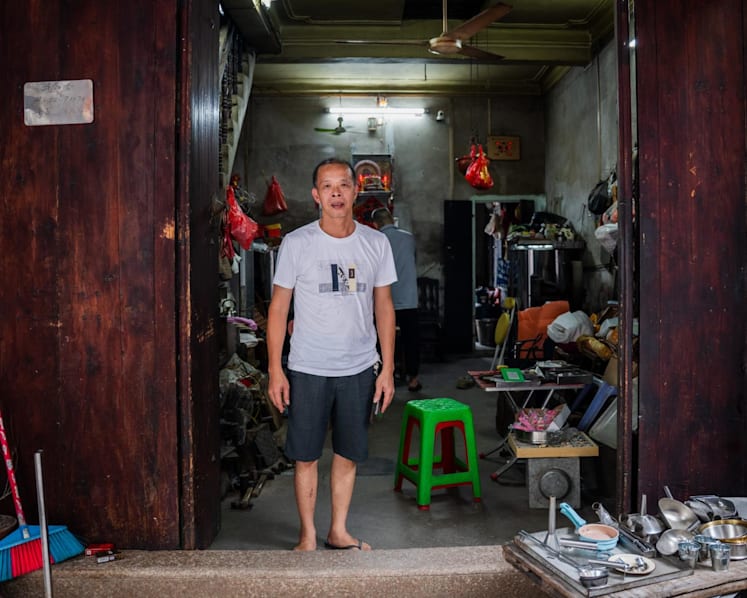
“When the movie became popular, everyone came here to take photos. It was no longer a ‘datie’ (blacksmith) street – it became a ‘daka’ (photo) street.”
The tools made here are designed for practical farm work, not souvenirs.
“Tourists come to look, but they cannot really buy our products. Our tools have specific uses,” he said.
Back in Xiqi Village, the first wave of film excitement has begun to settle.
Crowds that once flocked to filming sites have now thinned, and roadside vendors who appeared during the movie’s peak now see significantly fewer visitors.
For 44-year-old Fang Sanmei, a mobile vendor who previously sold goods only at temple fairs and village events, the film brought a modest new opportunity.
She now sells fresh juice made from local jambu and sugar cane to visitors.
Her earnings remain small and unpredictable – around 200 to 300 yuan on busy days, and only a few yuan on quieter ones – but she said the visitors have given villagers another way to share what they grow.
“If I want to come out and sell, I come out. If I don’t want to, I stay home and drink tea.”
For village official Chen Youbo, who watched Xiqi transform almost overnight, the biggest change is not the crowds themselves.
“At the very least, we villagers have truly gained something,” he said.
“The government has cleaned up the area and given us such a nice environment. That’s what we’ve received.”
Source: CNA/mc(ht)
Sign up for our newsletters

Get the CNA app
Stay updated with notifications for breaking news and our best stories
Get WhatsApp alerts
Join our channel for the top reads for the day on your preferred chat app

Get bite-sized news via a new
cards interface. Give it a try.
Click here to return to FAST
Tap here to return to FAST
FAST