analysis
China is building more legal tools for foreign-related disputes. What does it mean for companies, individuals?
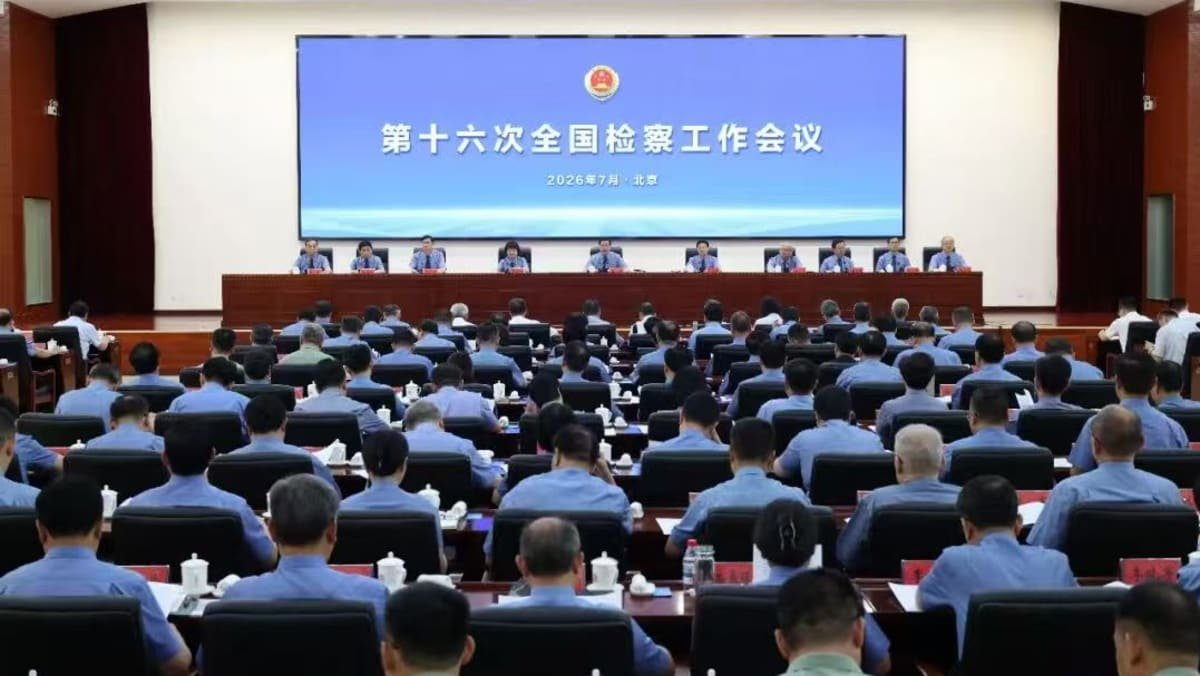
A draft law submitted for second reading in June would allow China’s public prosecutors to sue foreign organisations and individuals deemed to have harmed national or public interests.
New: You can now listen to articles.

This audio is generated by an AI tool.

Read a summary of this article on FAST.
Get bite-sized news via a new
cards interface. Give it a try.
Click here to return to FAST
Tap here to return to FAST
FAST
BEIJING: As geopolitical tensions deepen, China is expanding the role of domestic law in responding to foreign sanctions, export controls and other forms of external pressure, say analysts.
The latest example is a clause in a draft law, submitted for second reading in June, that would allow public prosecutors to sue foreign organisations and individuals deemed to have harmed China’s national or public interests.
The provision could become the latest addition to the country’s growing body of foreign-related laws and regulations.
The broader effort reflects Beijing’s push to make its legal system “ready and able to handle a variety of international and cross-border disputes”, Jeremy Daum, a senior fellow at the Paul Tsai China Center at Yale Law School, told CNA.

Guess Word
Crack the word, one row at a time

Buzzword
Create words using the given letters

Mini Sudoku
Tiny puzzle, mighty brain teaser

Mini Crossword
Small grid, big challenge

Word Search
Spot as many words as you can
The final scope and application of the draft law remain unclear as it is still under legislative review.
But analysts said it could add another layer of legal risk for foreign actors, further complicating compliance for companies operating across jurisdictions while potentially increasing the exposure of individuals involved in disputes with Beijing.
A CLAUSE WITH A SIGNAL
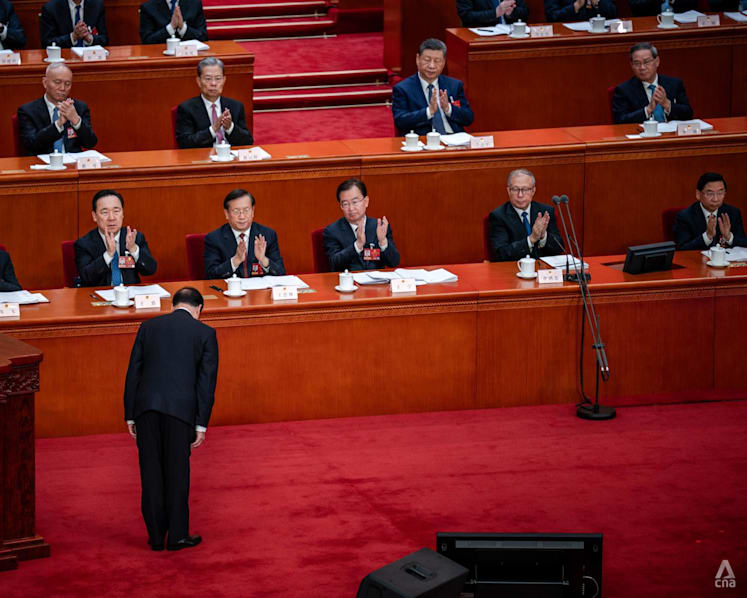
The draft Procuratorial Public Interest Litigation Law was submitted on Jun 23 to the Standing Committee of the 14th National People’s Congress for its second reading.
The revised draft seeks to expand the scope of public interest litigation and add provisions covering foreign-related cases, according to state news agency Xinhua.
“Specifically, the draft stipulates that procuratorial agencies shall, in accordance with the law, bring public interest litigation against illegal acts committed by foreign organisations and individuals that infringe upon China’s national and public interests,” Xinhua said in a report that same day.
The clause essentially clarifies that the procuratorate, in its obligation to protect the public interest, can pursue foreign defendants, said Daum, who is also a Beijing-based senior research scholar in law.
“It is absolutely part of the broader foreign-related rule of law, which is generally viewed here as part of China asserting its sovereignty.”
The draft law is included in the National People’s Congress Standing Committee’s 2026 legislative plan, although authorities have not announced when it will be put to a vote.
Any use of the provision would likely be selective and shaped by political considerations, said Carolin Kautz, founder of geopolitical risk and China advisory firm SinoVise.
“The vagueness of the legal formulation allows for that,” she told CNA, adding that such broadly defined terms have long allowed Beijing to bring political issues – both domestic and international – within the legal system.
“Bracing itself against an increasingly challenging global environment has been a long-term priority, and an expanding foreign-related legal toolkit is part of this process.”
Donald Clarke, professor of law emeritus at George Washington University Law School, highlighted how the proposed clause broadly references China’s “national interests” and “social public interests”.
Asked how much discretion the wording could give prosecutors and courts, he said: “Limitless.”
MANAGING FOREIGN-RELATED DISPUTES
The draft law fits into a wider effort by Beijing to build a more institutionalised legal framework for managing foreign-related disputes.
China’s response to foreign sanctions and restrictions has gradually moved beyond diplomatic protests and case-by-case countermeasures towards a standing body of laws and procedures, analysts said.
In 2021, China introduced rules allowing it to prohibit compliance with foreign measures it considers improperly applied beyond their jurisdiction. Chinese citizens and organisations harmed by compliance with such measures may seek compensation through the courts.
Months later, China enacted the Anti-Foreign Sanctions Law, authorising measures including entry restrictions, asset freezes and bans on transactions or cooperation with targeted individuals and organisations.
It also allows Chinese citizens and organisations to sue those who implement or assist discriminatory foreign measures targeting them.
China’s foreign-related legal toolkit widened further this year with regulations covering industrial and supply-chain security and what Beijing considers the improper overseas application of foreign laws.
Together, the regulations provide for investigations, prohibition orders and restrictions on activities such as trade and investment. In certain circumstances, Chinese citizens and organisations that suffer losses may also seek compensation in court.

The building of this policy infrastructure “has been underway for a while”, said Kautz of SinoVise, pointing also to the unreliable entity list, introduced in 2020, under which China can restrict foreign entities’ trade, investment and other activities if they are deemed harmful to its national interests.
The expansion continues strategies “that we have seen for a long time”, she said. At the same time, she stressed that China was not alone in using national-security legislation to address geopolitical concerns, pointing to measures adopted in the United States and European Union countries.
On the latest draft law, some lawyers in China have taken a more hawkish view, even as other legal specialists caution against overstating the clause’s immediate impact.
In a joint commentary published on the WeChat account of Guangxi-based law firm Lv Zheng Wen Yuan, lawyers Tang Haitao and Wei Dong described the proposed provision as another expansion of China’s anti-sanctions legal toolkit, arguing it marked a shift from “passive response” to “proactive rights protection”.
They also cited an article in China Procurator, a journal published by the National Prosecutors College under the Supreme People’s Procuratorate, as suggesting procuratorates could explore public interest litigation where foreign measures threaten China’s critical industrial and supply chains or impose important technological blockades.
Beijing has also begun activating the legal tools more visibly.
On May 2, the commerce ministry barred compliance with US sanctions against five Chinese companies accused by Washington of involvement in Iranian oil trading, saying the measures improperly extended US jurisdiction and harmed Chinese firms’ rights.
Later that month, Chinese technology company Wingtech said a Guangdong court had accepted a lawsuit it and a subsidiary filed under the Anti-Foreign Sanctions Law against entities and executives linked to Dutch chipmaker Nexperia.

Patrick McCarthy, chairman of the Europe Sino Institute, a research and advisory organisation focused on Europe-China relations, said the moves reflect China’s effort to establish formal legal mechanisms to defend what it regards as its economic sovereignty.
He said the deterrent effect was central because companies would be more likely to factor Chinese legal risks into their decisions when complying with foreign restrictions.
RISK OF GETTING CAUGHT IN BETWEEN
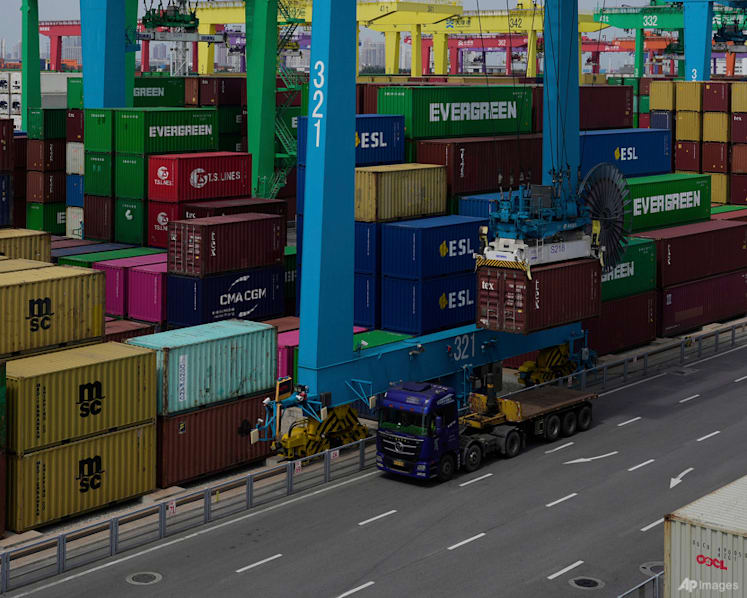
Multinational companies therefore face a difficult question: how to comply with foreign sanctions and export controls without falling foul of Chinese countermeasures.
European companies, for instance, were becoming more alert to the possibility that complying with US restrictions could expose them to consequences under Chinese law, said McCarthy.
Following the introduction of China’s industrial and supply-chain security regulations, McCarthy said some European companies reviewing their supply chains in China had begun reassessing their practices to ensure compliance with Chinese data and security laws.
“Multinationals realise that blindly rubber-stamping US compliance carries real consequences,” he said, asserting that US secondary sanctions and other forms of long-arm jurisdiction were pushing companies into “unfair compliance traps”.
The level of risk, however, differs significantly by sector, business model and country of origin, said SinoVise’s Kautz.
Technology-dependent manufacturers are among the businesses responding more cautiously, she said, with some pursuing “in China for China” strategies that separate production for the Chinese market from their wider international operations, particularly exports to the US.
Consumer-facing businesses, by contrast, generally remain less concerned and continue to view China’s large market as attractive without fundamentally changing their strategies, added Kautz.
“While companies, especially Western companies, are increasingly at least aware of potential legal risks, this frequently does not result in immediate action, let alone withdrawal from the Chinese market,” she said.
Daum of Yale Law School similarly noted that businesses had continued operating in China despite legal risks extending well beyond civil litigation.
Beijing has also sought to reassure foreign investors that its measures will be used selectively.
After placing US clothing group PVH and biotechnology company Illumina on its unreliable entity list in February 2025, China’s commerce ministry said the mechanism targeted only a small number of foreign entities and that law-abiding companies had “no need to worry”.
The ministry accused both firms of disrupting normal transactions and discriminating against Chinese businesses. PVH had previously been investigated over its alleged boycott of Xinjiang cotton and other products.
In Beijing’s view, there is no contradiction between reassuring foreign investors and expanding its legal toolkit, Kautz said.
“The message for them is clear: as long as a company complies with their political directives, the company is safe.”

Individuals may face a different calculation.
On the draft Procuratorial Public Interest Litigation Law, Clarke from George Washington University Law School said he was more concerned about the implications for foreign individuals who have criticised the Chinese government.
“I doubt that businesses have a reason to be particularly worried,” he said. “I think it’s more likely that this clause would be used against individuals.”
A civil judgment may be difficult to enforce against someone with no assets in China, Clarke said. But Chinese law allows courts to impose exit restrictions on defendants in pending civil cases.
An individual who is in China when a public interest lawsuit is filed could therefore potentially be prevented from leaving until the case is resolved and any damages are paid, he said.
“This is one more reason for people who have ever been publicly critical of Chinese government actions to be very leery about going to China.”
BROAD IN SCOPE, UNCERTAIN IN PRACTICE
Despite its broad wording, legal specialists said the clause may be more limited in practice.
Because the foreign-related clause appears in the draft’s supplemental provisions, Daum from Yale Law School said it likely applies existing categories of public interest litigation to foreign defendants rather than creating a free-standing power to sue them over any conduct Beijing opposes.
Likely cases could include environmental pollution, large-scale personal-information violations, unfair competition, food and drug safety, workplace safety and telecommunications fraud, he said.
Daum also cautioned against assuming the clause could automatically be used to enforce China’s counter-sanctions or anti-extraterritorial jurisdiction measures.
“This would require those rules authorising litigation, and the harm involved reaching the level of national (or) societal harm,” he said. Even then, the clause would need clearer wording to authorise such lawsuits, he added.

Building a body of foreign-related cases could present separate practical difficulties.
A May 15 article in China Procurator magazine identified cross-border evidence gathering as a key obstacle, citing lengthy judicial-assistance procedures and restrictions on obtaining electronic data held overseas.
The authors also highlighted shortages of personnel familiar with both foreign laws and specialist fields such as cross-border data and intellectual property.
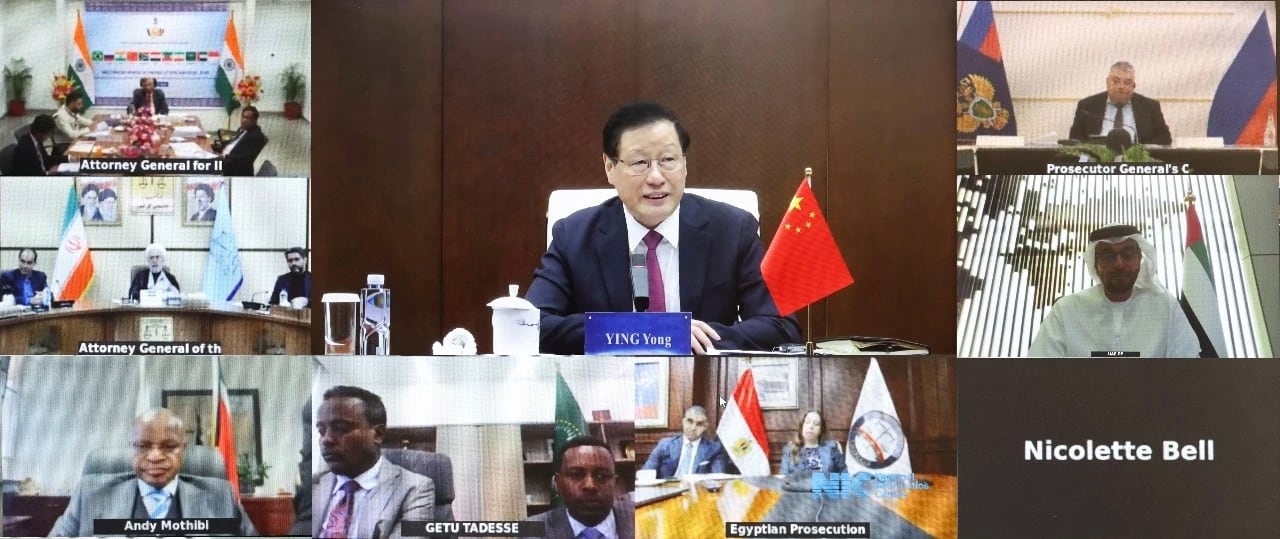
Susan Finder, a distinguished scholar in residence at the Peking University School of Transnational Law in Shenzhen, said procuratorates’ foreign-related responsibilities remain narrower than those of China’s courts.
Their foreign-related work has largely centred on criminal prosecution, extradition, treaty negotiations and exchanges or training involving overseas prosecutors, she said.
“My understanding is that public interest litigation and related matters have become more important, although their most important function remains criminal prosecution,” Finder said.
Still, Clarke from George Washington University Law School doesn’t see institutional capacity as a major restraint, particularly in politically sensitive cases.
“I don’t see why the cases would be particularly complex,” he said.
In his view, proceedings involving conduct that had angered Chinese authorities could be relatively straightforward to initiate, even if questions over jurisdiction or enforcement remained unresolved.
The clause’s practical reach will depend on its final wording, the cases procuratorates select and how courts interpret its relationship with existing laws, legal specialists said.
But even if the provision does not create as sweeping a power as its wording might imply, Daum said its explicit inclusion would already be significant.
“I would never have suspected that foreign (organisations) weren’t eligible public interest defendants,” he said.
“But they expressly stated it here to emphasise it as part of the overall foreign-related law push.”
Source: CNA/lg(ws)
Sign up for our newsletters

Get the CNA app
Stay updated with notifications for breaking news and our best stories
Get WhatsApp alerts
Join our channel for the top reads for the day on your preferred chat app

Get bite-sized news via a new
cards interface. Give it a try.
Click here to return to FAST
Tap here to return to FAST
FAST
About The Author