Climate cost of expanded World Cup under scrutiny as emissions set to soar

Read a summary of this article on FAST.
Get bite-sized news via a new
cards interface. Give it a try.
Click here to return to FAST
Tap here to return to FAST
FAST
MANCHESTER, England, June 9 : The World Cup kicks off on Thursday as a celebration of goals, drama and global fandom, but it is also expected to carry a climate cost more than double that of Qatar 2022, throwing a harsh spotlight on the environmental price of football’s expanding showpiece.
The tournament’s enlarged footprint will see 48 teams and venues scattered across North America and an assessment published last week by global carbon accounting platform Greenly estimates it could generate 7.8 million metric tons of carbon dioxide.
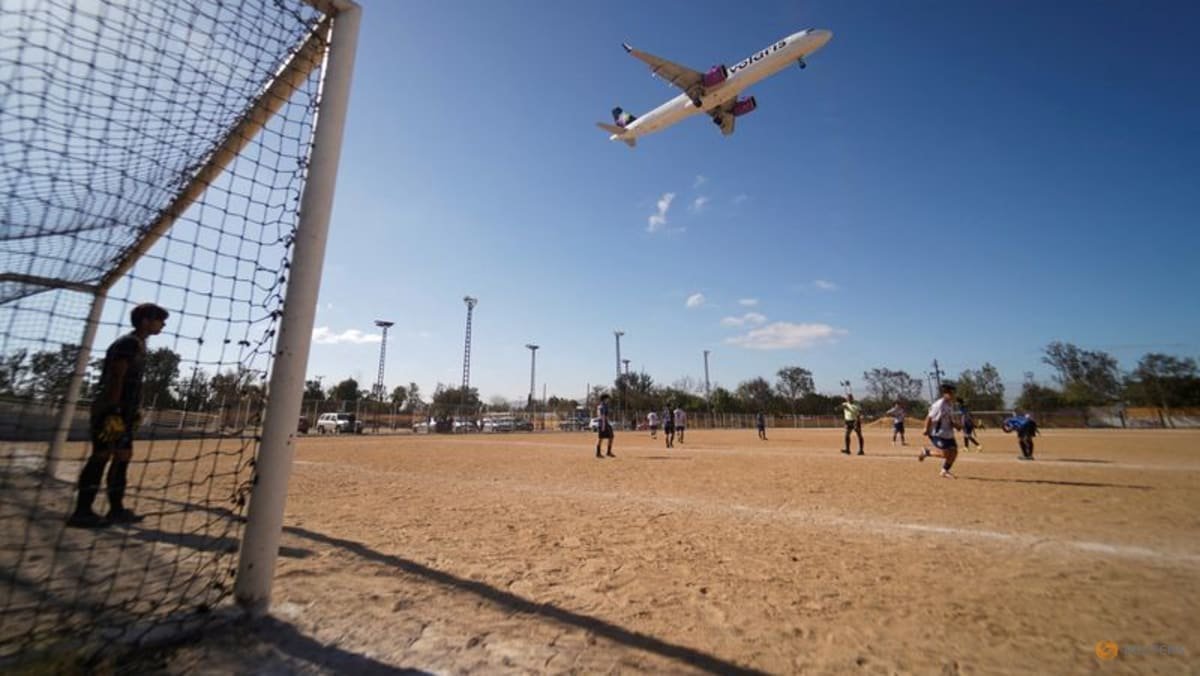
That is roughly equivalent to the annual emissions of 1.7 million cars, or the yearly emissions of Sierra Leone, making it the most polluting World Cup ever staged, according to academics and campaigners, driven mostly by the vast distances that teams, fans and media will travel across the three-country, 16-city format.
“I think the World Cup, in theory, is really fun for the sport and for visibility – but bad from a climate standpoint,” author and sports ecologist Madeleine Orr told Reuters.

Guess Word
Crack the word, one row at a time

Buzzword
Create words using the given letters

Mini Sudoku
Tiny puzzle, mighty brain teaser

Mini Crossword
Small grid, big challenge

Word Search
Spot as many words as you can
The numbers underline that concern. Researchers estimate that as much as 87 per cent of the tournament’s emissions will come from travel – chiefly flights – as millions of fans criss-cross a continent to follow their teams.
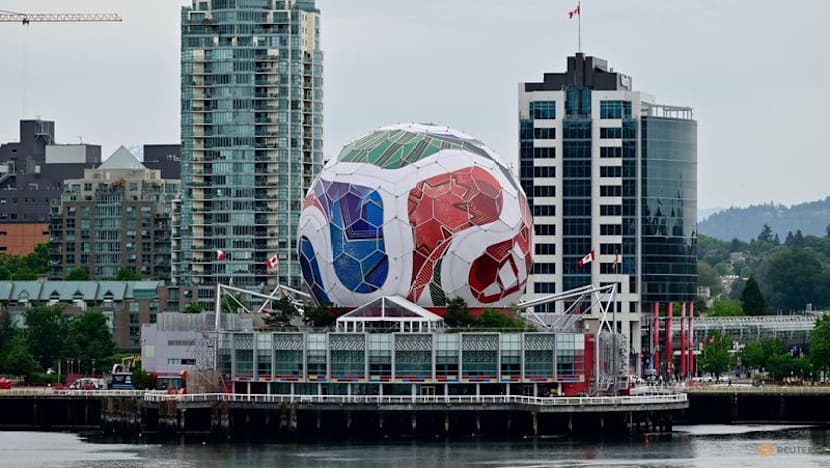
The sheer geographical spread of the tournament that stretches 2,800 miles from Vancouver to Miami makes it inherently more carbon-intensive than the compact Qatar event, which was criticised for building seven new stadiums. Greenhouse gas emissions from Qatar were calculated at approximately 3.8 million tons.
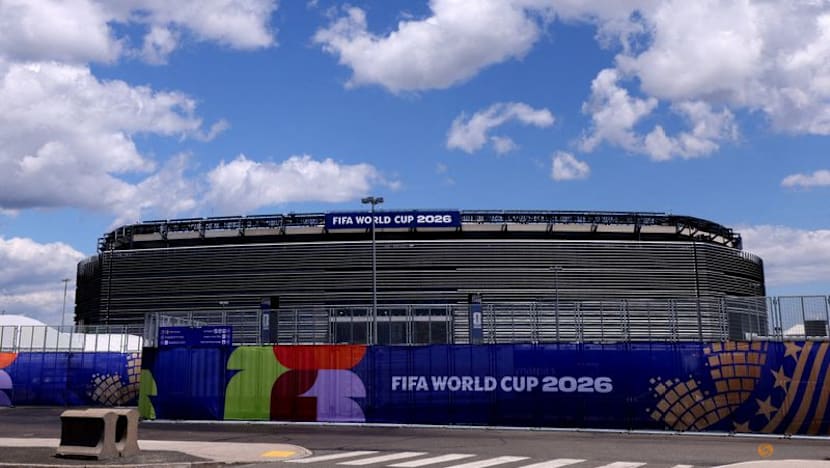
While no new stadiums were built this time around, expanding to more teams and spreading matches across distant host cities simply shifted the overall environmental cost, according to David Gogishvili, a geographer at the University of Lausanne.
“Increase the number of the teams and then put them in a country where there needs to be significant travel first to get there by air, and then significant travel between the host locations, okay, we’re getting rid of one source of negative environmental influence, but then we are increasing it in another,” Gogishvili told Reuters.
The World Cup venues are divided into three regional clusters – Western, Central and Eastern – in an effort to reduce travel distances.
England and their fans have the heaviest travel burden among the tournament favourites, with their three group games in Dallas, Boston and New Jersey covering 1,721 miles.
At the United Nations COP26 climate summit in 2021, FIFA pledged to halve its carbon emissions by 2030, and reach net zero by 2040 as part of the U.N. Sports for Climate Action Framework.
FIFA has not set a specific carbon target for the World Cup.
Gogishvili compared football’s global body to the International Olympic Committee, which is “more or less actually following the reduction target” to halve the carbon footprint by 2050.
“At least they are on the right path,” Gogishvili said.
FIFA said it welcomed scrutiny.
“Numerous environmental initiatives related to the tournament are being implemented by FIFA and the Host Cities before, during and after the tournament,” the body said in a statement to Reuters.
FIFA pointed to the use of existing stadiums, encouraging fans to use public transport, reducing reliance on diesel generators, and recycling and food waste initiatives.
MODERN VIEWING HABITS CREATE VAST EMISSIONS FOOTPRINT
The expansion means an extra 16 teams, including four debutants: Cape Verde, Curacao, Jordan and Uzbekistan.
“That’s great (for those countries), but at what cost?” said Orr, who wrote “Warming Up: How Climate Change is Changing Sport.”
The competition is not only growing, how fans consume it – through multiple devices and platforms – is also changing. And that shift points to an often overlooked slice of the tournament’s carbon footprint: the digital ecosystem that underpins modern sport.
“The part of the carbon footprint that never gets discussed, but is massive, massive, massive, is the digital footprint,” Orr said.
Broadcasting, streaming, data feeds and betting platforms all require enormous energy inputs, from data centres to satellites to the billions of devices fans use to follow matches, the Canadian explained.
The cumulative effect is vast, particularly in an era of multi-screen viewing.
The United Kingdom’s National Energy System Operator estimated each of Scotland and England’s group games could see 600 megawatts more electricity being used nationally, the equivalent of the total electricity demand for Glasgow and Leeds combined.
“You have to consider that everybody watching in every place all around the world is part of this,” Orr said. “And the vast majority of them are watching on two screens, they’re watching on their TV, and then they’re following on their phone.”
Unlike flights or stadium construction, those emissions are rarely factored into official sustainability calculations.
“When we think about the impact of these events, we do actually have to think about the whole scope,” Orr said.
FIFA said it was committed to integrating sustainability into the World Cup “guided by a comprehensive Sustainability and Human Rights Strategy that focuses on addressing emissions, improving resource efficiency and creating a positive legacy across host communities”.
Gogishvili pointed to what he sees as a lack of urgency within the governing body.
“I love football, by the way,” said the Georgian and lifelong Manchester United fan.
“(But) FIFA clearly does not prioritize reduction of its negative environmental influence … there needs to be pressure on them from media, from players, and association countries, from researchers, from the governments, from the public.”
Source: Reuters
Sign up for our newsletters

Get the CNA app
Stay updated with notifications for breaking news and our best stories
Get WhatsApp alerts
Join our channel for the top reads for the day on your preferred chat app

Get bite-sized news via a new
cards interface. Give it a try.
Click here to return to FAST
Tap here to return to FAST
FAST