CNA Explains: Where the US and Iran agree on the peace deal – and what remains unresolved
Though the memorandum of understanding is scheduled to be officially signed on Friday (Jun 19) in Switzerland, the precise terms of the deal are still not known, with both parties releasing conflicting information during negotiations.
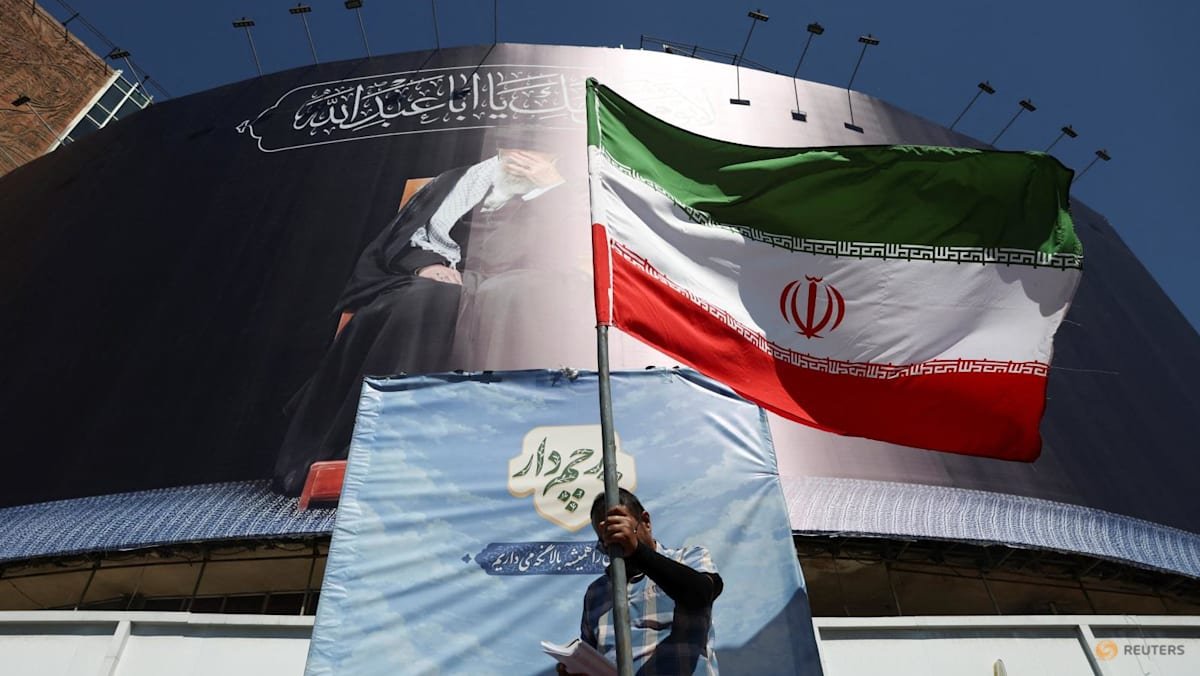
A man holds an Iranian flag on a street, after US and Iranian officials said they had reached a deal to end their war and reopen the Strait of Hormuz, in Tehran, Iran, on Jun 15, 2026. (Photo: Majid Asgaripour/WANA (West Asia News Agency) via REUTERS)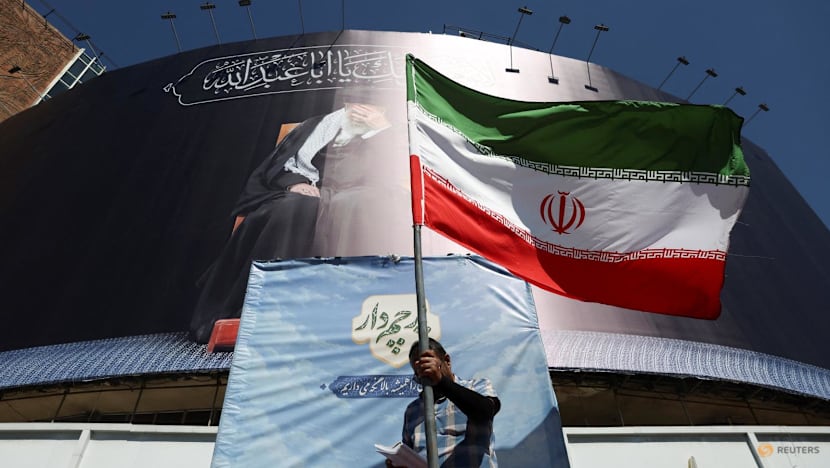
New: You can now listen to articles.

This audio is generated by an AI tool.

Read a summary of this article on FAST.
Get bite-sized news via a new
cards interface. Give it a try.
Click here to return to FAST
Tap here to return to FAST
FAST
SINGAPORE: The United States and Iran announced on Sunday (Jun 14) a preliminary agreement aimed at ending their war and reopening the Strait of Hormuz.
The war, which started on Feb 28 with the US and its ally Israel attacking Iran, has killed thousands of people, while global energy prices skyrocketed after Tehran effectively blockaded the Strait of Hormuz in retaliation.
The US responded by blockading ship traffic to Iranian ports.
Previous attempts at a deal had fallen through, and during negotiations, the warring parties had released conflicting information about the contents of the agreement, as each sought to portray itself as emerging from the war with the upper hand.
Though the memorandum of understanding is scheduled to be officially signed on Friday in Switzerland, the precise terms of the deal remain unclear.
Iran’s deputy foreign minister, Kazem Gharibabadi, said a more expansive agreement would be negotiated after the memorandum of understanding is signed. It would trigger a 60-day period during which the US and Iran are expected to negotiate the fate of Tehran’s nuclear programme and stockpile of enriched uranium.
CNA takes a look at what the deal might contain.
Reopening the Strait of Hormuz
The closure of the Strait of Hormuz, a critical artery for oil and gas, has disrupted world energy supplies and driven up fuel prices.
US President Donald Trump said that the strait would reopen on Friday, and that he had ordered the end of a US blockade of Iranian ports. Iran’s Gharibabadi confirmed the agreement on state TV.
The US had previously said that Strait of Hormuz should reopen “toll free”. However, Iran wants a deal under which the waterway would be reopened under its terms, with Tehran charging ships when they transit the strait despite it being considered international waters.
Iran has charged ships for passage during the war, something other countries deem to be a violation of international law.
It is also unclear who would handle the demining of the straits, though a US official has indicated that the G7 countries could have a role in this.
Even with a deal, it will take months for oil and gas supplies to flow freely enough for the world’s needs to be met because shipping and insurance companies want to be confident the agreement will last, energy experts said.
“The lack of details, especially on freedom of shipping, is a concern but not one that should constrain markets today as the surge in risk appetite plays out,” said Sean Callow, a senior FX analyst at ITC Markets.
Stephen Innes of SPI Asset Management said in a report that “the reopening of Hormuz is a relief valve, not a full peace dividend. The market can remove some crude panic, but it still has to price the gap between a headline, a signature, and a regime that actually complies.”
Iran’s nuclear programme
Fears that Iran’s nuclear programme could eventually result in Tehran possessing an atomic weapon were a key reason cited by the US and Israel for going to war.
Iran has insisted that its enrichment of uranium is peaceful, though it has produced more than 400kg of material at close to bomb-grade purity.
Both the US and Iran agree the 60 days following the signing of the peace deal will be used to thrash out the finer details of the fate of Tehran’s nuclear programme and its uranium stockpile.
However, that is where the agreement ends, with the most difficult questions far from resolved.
A US official, speaking before the peace deal announcement, said the agreement would ultimately lead to the dismantling of Iran’s nuclear programme, with its stockpile of highly enriched uranium to be destroyed and removed.
Trump had also said before the announcement that, under the deal, “Iran will never have a nuclear weapon”.
However, a senior Iranian official has said the draft deal would allow Iran to dilute and retain its enriched uranium within the country.
The US official did not say who Washington envisions taking charge of removing the uranium, which is believed to be entombed beneath three nuclear sites damaged by US strikes last year. It is also unclear who would verify Iran’s compliance, or whether the International Atomic Energy Agency (IAEA) would gain access to Tehran’s nuclear programme.
Speaking to CNA938, Jessica Genauer, associate professor of International Relations at the University of New South Wales, said there was a “deafening silence” on the nuclear issue, noting that the framework appears to defer negotiations for another 60 days rather than resolve them.
While Trump has declared that Iran will never obtain a nuclear weapon, she said the agreement contains no details on whether Tehran would stop enriching uranium or accept new restrictions on its nuclear activities.
Genauer suggested Trump was keen to secure an agreement he could present as a diplomatic success while leaving the most difficult nuclear questions for future talks.
The framework is likely to be signed, she said, but remains far from a comprehensive settlement.
Matthew Miller, a former State Department spokesperson under the Biden administration, said Trump had made important concessions to Iran to achieve the status quo that existed before he launched the war.
“We have no assurances the nuclear programme will ever be addressed, but Iran has shown the world it can take the global economy hostage and get something from the US in return,” said Miller.
Sanctions relief and Israel
Draft terms described to Reuters by multiple sources indicate that the US would begin releasing billions of dollars in frozen Iranian assets and waive sanctions on its oil exports, in return for Iran opening the Strait of Hormuz.
Iran’s Fars news agency quoted foreign ministry spokesperson Esmaeil Baghaei as saying the release of Iran’s frozen assets was an integral part of the peace agreement.
However, the US says that any sanctions relief would be done in phases as Tehran limits its nuclear programme, and not as upfront payment for reopening the strait.
In a joint statement, the United Kingdom, Germany, France and Italy said on Monday they were prepared to lift sanctions on Iran in response to “clear, verifiable steps” to limit its nuclear programme.
Disagreements also remain on possible war reparations for Tehran and how the agreement would address the conflict in Lebanon.
Iran has insisted that any deal must include a ceasefire in Lebanon, where Israel has been fighting the Iranian-backed Hezbollah militant group.
Israeli Defense Minister Israel Katz warned last Friday that Israel could still act independently toward Iran and that it would not pull out of the zones it is occupying in Lebanon, Syria and Gaza, nor would it withdraw from the northern refugee camps of the Israeli-occupied West Bank.
Barbara Slavin, distinguished fellow for the Middle East and North Africa at the Stimson Center, told CNA it is “not entirely clear” that the deal will hold, based on developments over the past four months.
“I’m worried very much about the Israelis trying to jeopardise this,” she said.
Slavin noted that Lebanon is part of the agreement, but said Israel had continued striking the country and had hit Beirut just hours prior to the announcement.
“The Iranians were prepared to retaliate for that, and then were persuaded not to,” she said.
While there is still hope that the agreement will hold, Slavin warned that Israel remains “a potential spoiler in this, very much so”.
Source: CNA/ec(sn)
Sign up for our newsletters

Get the CNA app
Stay updated with notifications for breaking news and our best stories
Get WhatsApp alerts
Join our channel for the top reads for the day on your preferred chat app

Get bite-sized news via a new
cards interface. Give it a try.
Click here to return to FAST
Tap here to return to FAST
FAST
About The Author