Commentary: AI is changing how films are made, not what makes them worth watching
The controversy over AI-generated local movies actually tells us something useful about AI, says The Teenage Textbook Movie director Phillip Lim.
New: You can now listen to articles.

This audio is generated by an AI tool.

Read a summary of this article on FAST.
Get bite-sized news via a new
cards interface. Give it a try.
Click here to return to FAST
Tap here to return to FAST
FAST
SINGAPORE: I get why many people are uncomfortable with artificial intelligence entering the creative industries.
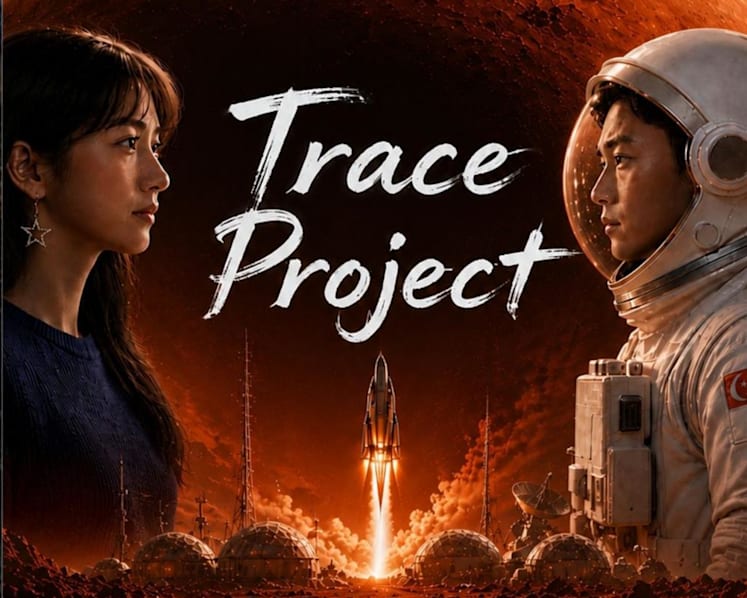
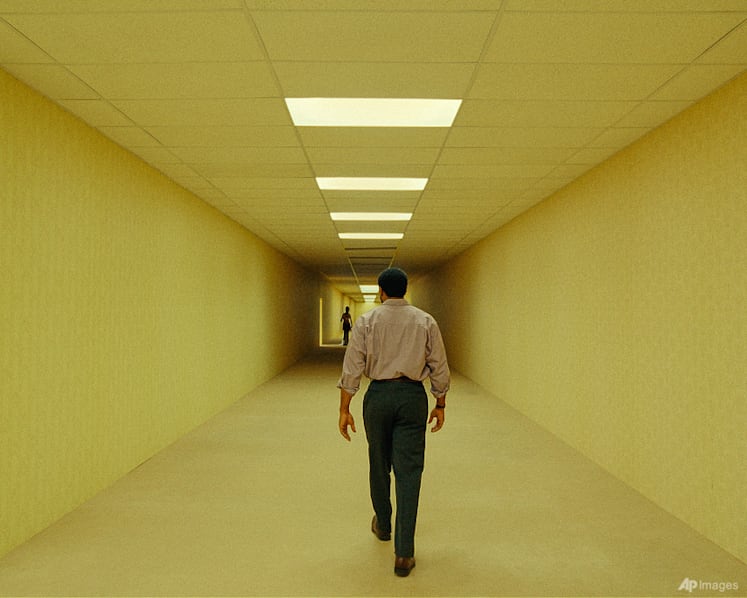
So when a Singapore AI-generated film such as Trace Project – screened on National Day and dismissed online as “AI slop” – comes along, it is tempting to see if as proof that the sceptics were right all along.
But as a filmmaker, I think we should be careful not to turn criticism of an AI-generated film into a rejection of AI in filmmaking altogether.
A bad film does not suddenly become a good film because it was made with new technology. If anything, the controversy tells us something useful: AI can make it much easier to produce something – but not necessarily something good.

Guess Word
Crack the word, one row at a time

Buzzword
Create words using the given letters

Mini Sudoku
Tiny puzzle, mighty brain teaser

Mini Crossword
Small grid, big challenge

Word Search
Spot as many words as you can
NOT EVERY TASK IS A JOB
I have spent more than three decades working in film and television, and I am currently making a short film. And yes, I use AI.
My film is not AI-generated. We will be shooting it next month with real actors inside a virtual production studio.
For most of my career, I rarely worked with complete storyboards. I generally knew how I wanted to shoot a scene when I got to the set.
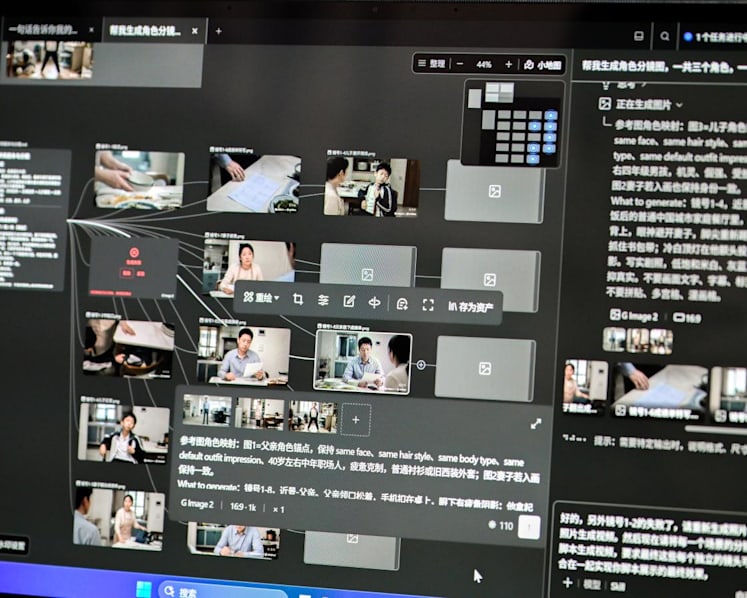
Virtual production does not quite work that way. There are too many departments involved, and everyone needs to know what I intend to shoot before we enter the studio.
The virtual environment has to be built. Camera positions and lenses have to be considered. Art direction, cinematography and the virtual production team all need to be working towards the same frame, months ahead.
So my assistant director created the boards based on my directions, with the help of AI.
Did AI take away a storyboard artist’s job? In this case, probably not. I was unlikely to hire one since that would mean spending a considerable amount of my time explaining every shot. Most likely, I would have ended up doing it myself with stick figures.
That distinction is worth making. Fears about jobs lost to AI are legitimate, but not every task performed by AI automatically represents a job that would otherwise have gone to someone.
KNOWING WHAT IS WORTH PURSUING
A deeper discomfort with AI in film is also about the value of human creativity. And for me, this is where the debate sometimes becomes too simplistic.
AI can give me ideas. It cannot make the creative decision for me.
I used AI to look for inconsistencies in the screenplay I wrote. It pointed out that something a character said earlier seemed to contradict something said later.
But AI does not know what is beyond the page: whether the contradiction is intentional, what it tells the audience about the character, how I intend to address it later, or whether the resolution comes visually.
The same limitation became clearer when I asked AI to help with a creative problem. There was one transition shot in my script that bothered me for weeks. My team kept asking how I wanted to shoot it, and I did not have an answer.
AI gave me plenty of suggestions. Some were ridiculous. Others were technically possible but completely wrong for the film.
The solution eventually came to me on my own.
Where did that decision come from? Probably from more than three decades of directing, editing, working with actors, making mistakes and slowly developing an instinct for what belongs in a scene and what does not.
We often call that creativity. Increasingly, I think the more useful word is judgement. The filmmaker still has to know which of the many AI-generated possibilities is worth pursuing. And sometimes the correct answer is: None of them.
FILMMAKING HAS CHANGED MANY TIMES
Perhaps I am less alarmed by technological change because new technology has always changed how films are made. I have lived through several waves of it.
In film school, I shot actual 16mm film and edited on a Steenbeck flatbed machine. Film was physically cut and joined together. By the time I entered television, editing was already moving into electronic and digital systems.
I worked in editing suites the size of an HDB living room. Then nonlinear computer editing arrived. Today, much of what once required an room full of expensive equipment can be done on a laptop. Some of it can even be done on a phone.
Editing did not disappear. The way we edited changed.
Animation went through something similar. Toy Story became the first fully computer-animated feature film in 1995. Today, few people would argue that computer animation is somehow less legitimate than traditional cel animation simply because the production method is different.
AI may prove more disruptive. Many jobs will shrink. Some may disappear entirely, other jobs will emerge. So when production crew members worry about what AI might mean for their livelihoods, I do not dismiss those concerns. Questions surrounding copyright, training data, consent and the use of actors’ likenesses are serious issues that the industry still has to address.
But those concerns are separate from whether a work is worth watching. The history of the medium reminds us that in the end, audiences do not care very much how something was made if the characters and story move them.
My short film will be shot in a studio. The set itself will be built, but the world beyond it will be displayed on an LED wall. But if audiences leave the film talking mainly about my LED wall, I have probably failed.
MAKING CONTENT IS NOT ENOUGH
I suspect AI will eventually reach the same point.
Instead of judging a work by whether it was made with AI, I would rather ask: Who made the creative decisions? Was the technology used responsibly? And most importantly, does the work connect with an audience?
When almost anyone can generate an image, a song or even an entire film, simply producing content is no longer impressive.
What becomes valuable then is the ability to choose. What story is worth telling? Which shot should stay or go? When is something technically impressive but emotionally empty?
Those decisions require filmmakers to have taste, experience and judgment. Once almost anybody can make the pictures, we will have fewer excuses.
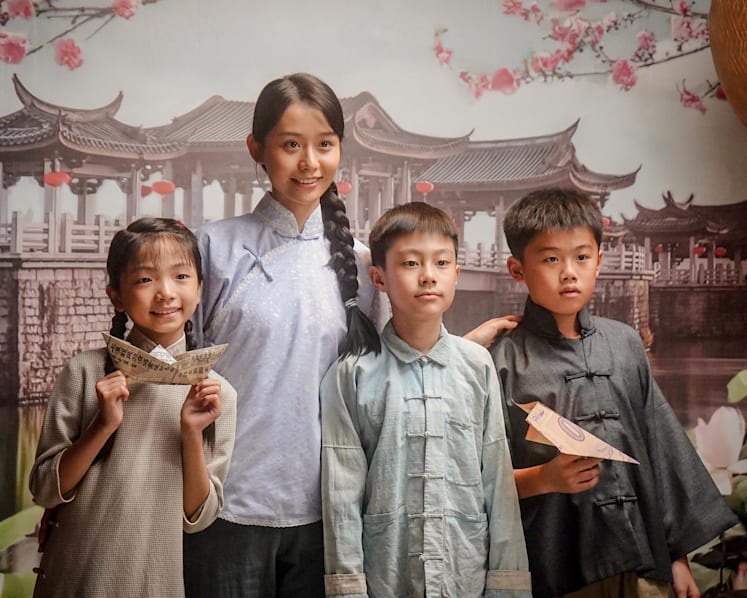
Phillip Lim is a veteran Singapore filmmaker, producer and writer with more than three decades of experience across film and television that includes The Teenage Textbook and Homecoming.
Source: CNA/ch
Sign up for our newsletters

Get the CNA app
Stay updated with notifications for breaking news and our best stories
Get WhatsApp alerts
Join our channel for the top reads for the day on your preferred chat app

Get bite-sized news via a new
cards interface. Give it a try.
Click here to return to FAST
Tap here to return to FAST
FAST