Commentary: Fast fashion is about to get caught up in Hormuz
The ripples from a petroleum shock have been quietly spreading into the apparel trade, says David Fickling for Bloomberg Opinion.
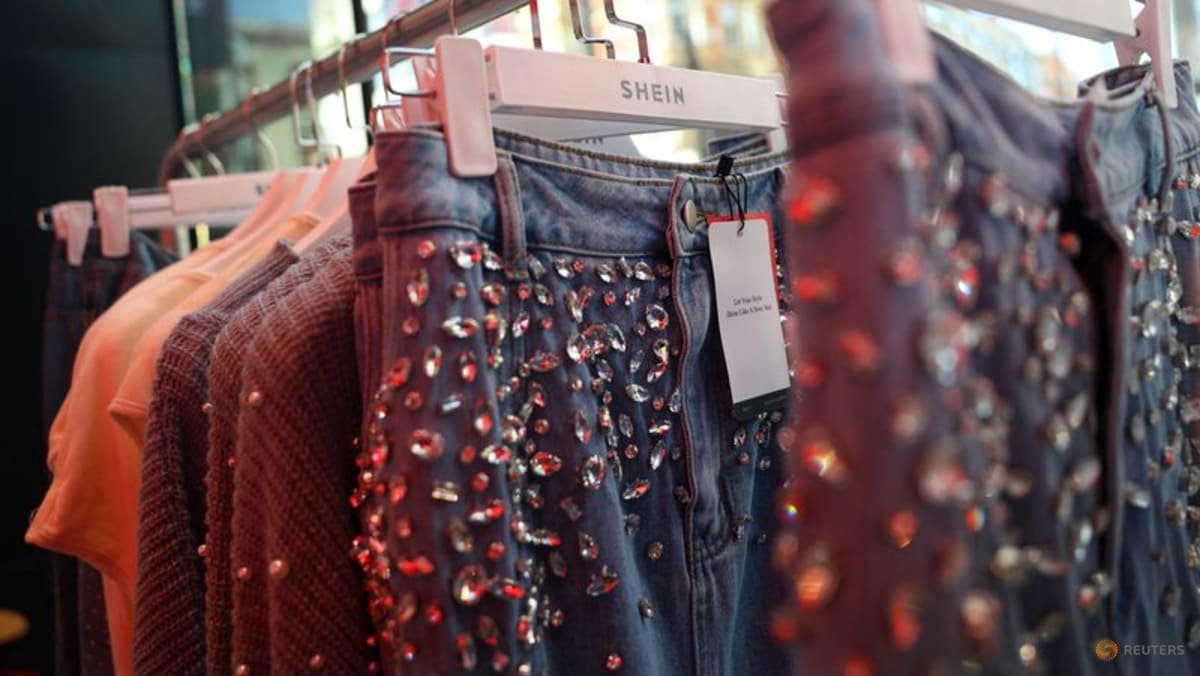
Clothes are displayed in the Shein’s pop-up store at immersive retail space Future Stores, ahead of its opening on September 26, in London, Britain, September 24, 2025. REUTERS/Isabel Infantes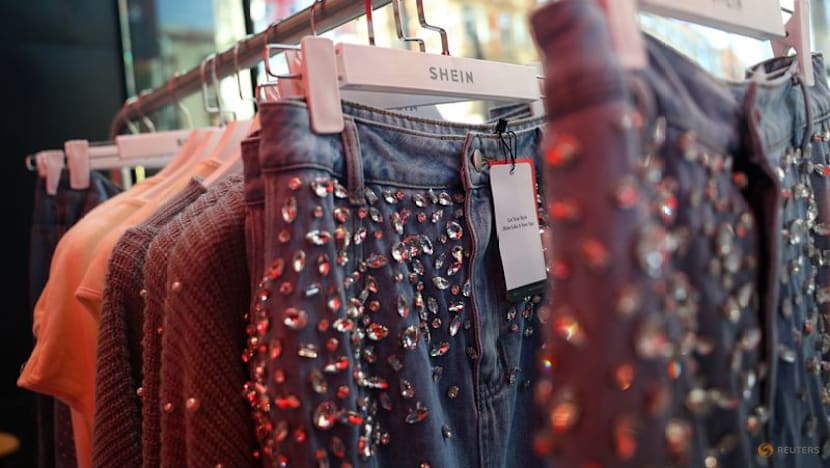
Read a summary of this article on FAST.
Get bite-sized news via a new
cards interface. Give it a try.
Click here to return to FAST
Tap here to return to FAST
FAST
SYDNEY: You might think that missiles flying over the waters of the Strait of Hormuz were a world away from your closet full of fleece jackets, leggings and trainers.
In fact, that couldn’t be further from the truth. Most of your wardrobe is made of oil, in the form of polyester, nylon, spandex and other synthetic fibres. Though the ripples from a petroleum shock propagate more quickly to the prices of gasoline, diesel and air tickets, they have been quietly spreading into the apparel trade, too. The best-value clothes – think that US$1 pair of tights from Shien, or US$15 coat from Temu – may suffer the biggest impacts.
THE IMPACT
As with the toilet-paper frenzy at the start of the COVID-19 pandemic, and drivers pre-emptively filling their tanks on reports of the US-Israel attacks on the Middle East, the first sign of a supply shock is often panic buying.
So far, that’s been good news for some of the petrochemical companies that supply the fashion trade.

Guess Word
Crack the word, one row at a time

Buzzword
Create words using the given letters

Mini Sudoku
Tiny puzzle, mighty brain teaser

Mini Crossword
Small grid, big challenge

Word Search
Spot as many words as you can
Tongkun Group, which produces about 18 per cent of the world’s polyester yarn, expects net income to triple from a year earlier in the six months through June. That’s likely because apparel firms, fearful of disruption, are bidding up the cost of its products, even as it works through raw materials purchased when oil prices were lower. Polyester futures in China rose 25 per cent in March to their highest level in nearly four years.
Others are doing worse. Shares in Hengli Petrochemical have fallen nearly a third so far this year. The company refines crude oil into polymer resins and fibres, supplying other companies such as Tongkun, and has been idling production as supplies have dwindled. Chinese output of synthetic fibres in April fell 11 per cent from the previous month to its lowest level since 2024. Even Tongkun is skating on thin ice. Using short-term bank loans and quick payments from customers to finance its working capital, it counts on a flawlessly smooth supply chain to avoid a cash crunch. The conflict in Iran risks throwing a spanner in that mechanism.
These issues are likely to get worse before they get better. Compared to gasoline and diesel, primary plastics are relatively easy to store, in warehouses, spools and sacks. That means there’s slack in the system to absorb shocks, at least in the short term. A retrenchment of Chinese polymer production has been one of the main levers by which the global economy managed to survive the loss of roughly 20 per cent of crude supplies. But with shipments through the strait still at low levels and releases from government petroleum reserves running down, that respite won’t last forever.

ANY ALTERNATIVES?
Those who dismissed ESG initiatives as meaningless fluff may now be wishing they’d been more pro-active on the issue. The best defence against a disruption in oil supplies is to depend on an alternative materials chain, such as recycled fibres.
That means Zara-owner Inditex and Hennes & Mauritz may be better-placed than Uniqlo-owner Fast Retailing to ride out disruptions. Almost all of their polyester is derived from recycled materials, compared to less than half of the highly engineered functional fabrics in which Uniqlo specialises.
Using natural fibres like cotton is another alternative, but that industry is hardly immune from the conflict in the strait.
India is the second-biggest producer of the fiber, and depends on the Gulf for supplies of natural gas and urea to make fertiliser. Though that’s yet to hit production, conditions in the market are already tight: Cotton prices hit a two-year high in May, and world inventories are heading to their lowest levels in at least a decade.
Fashion brands aren’t just using petroleum to make their clothes and grow natural fibres. They’re also burning it to move materials and finished products around the globe. Every time you order an item from Asos or PDD-owned Temu, you’re essentially booking it a spot on one of the planes that connect rag trade manufacturing hubs in Asia with the world.
Zaragoza, a city in northern Spain whose airport barely sees passenger traffic, is Spain’s third-biggest air-freight hub, thanks to Zara’s nearby logistics centers. Transport expenses have “potentially a bigger impact” on margins than the cost of plastic resin materials, Crocs Chief Executive Officer Andrew Rees told investors in April – and Crocs are likely to be at the extreme end of plastic dependence.
It may be some time before the prices displayed on hangers are affected. Squeezed margins will be more likely to show up in the year through March 2028 than the 2027 fiscal year, according to Paul Vogel, Chief Financial Officer of VF, which owns the Timberland and North Face labels.
When they do, though, it’s likely to be long-lasting. Shoppers who are striving to reduce their consumption of disposable plastics ought to have a look in their wardrobes. Your biggest pile of single-use polymers might well be those clothes you bought online and never wore again.
Source: Bloomberg/zw(sk)
Sign up for our newsletters

Get the CNA app
Stay updated with notifications for breaking news and our best stories
Get WhatsApp alerts
Join our channel for the top reads for the day on your preferred chat app

Get bite-sized news via a new
cards interface. Give it a try.
Click here to return to FAST
Tap here to return to FAST
FAST
About The Author