Commentary: The other recession risk that Singapore should be wary of
Weaker social ties and community involvement can contribute to the risk of a social recession in Singapore, say Nicholas Thomas, Wong Kang Li and Wilson Goh from the Institute of Policy Studies.



Read a summary of this article on FAST.
Get bite-sized news via a new
cards interface. Give it a try.
Click here to return to FAST
Tap here to return to FAST
FAST
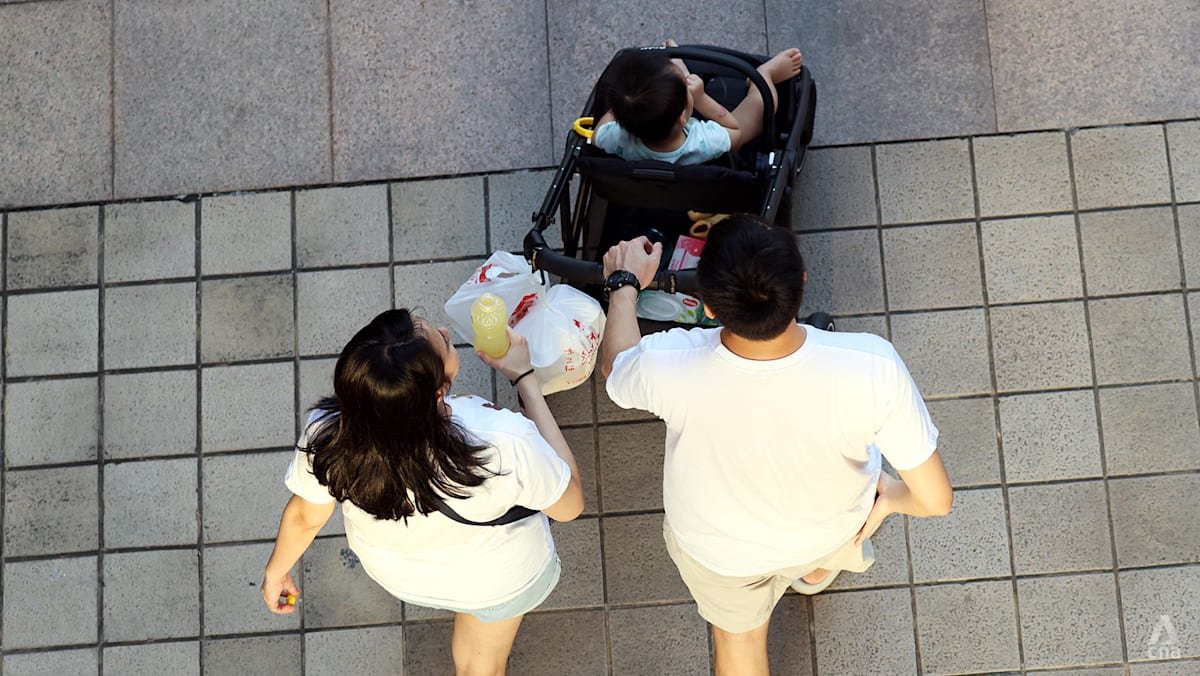
SINGAPORE: For the first time, married couples living with children make up less than half of Singapore’s households. The finding, from the latest General Household Survey released on Jun 30, sits alongside two others: More young residents are staying single and families are getting smaller.
These shifts, usually discussed through the lenses of marriage, fertility and ageing, can be parsed through a different perspective. As households shrink and fewer people live within family networks, more of the weight of connection shifts to ties beyond the family, such as friends, neighbours, community groups and civic life.
This hints at the risk of another kind of downturn – not the kind that shows up in GDP figures. Instead, this is revealed in the form of fewer friendships, weaker community ties and a creeping sense that we are living beside one another rather than with one another.
This is what researchers sometimes call a social recession, loosely defined as a decline in communal bonds that keep people supported and well, or the erosion of social capital where people lose trust and socially recede from one another.

Guess Word
Crack the word, one row at a time

Buzzword
Create words using the given letters

Mini Sudoku
Tiny puzzle, mighty brain teaser

Mini Crossword
Small grid, big challenge

Word Search
Spot as many words as you can
The possibility of a social recession in Singapore was first flagged in 2012 by then Nominated MP Laurence Lien who pointed to weakening individual resilience, looser family bonds and declining community cohesion. More than a decade on, this deserves a fresh look.
A MIXED PICTURE
Social ties in Singapore are thinning, especially among the young. Surveys by the National Youth Council found the share of youths with no close friends doubled from 4 per cent in 2013 to 8 per cent in 2022, while those with more than five close friends fell from 26 to 16 per cent.
Likewise for adults, data from the Institute of Policy Studies (IPS) showed the average number of close friends for Singaporeans dropping from 10.67 in 2018 to 6.49 in 2024.
As ties thin, isolation and loneliness grow. Another IPS survey found that young adults aged 21 to 34 report the highest loneliness of any age group, with roughly one in three often feeling isolated or left out.
Participation in community life is weakening too. National Youth Council data showed the share of young people involved in no social group rose from 35 per cent in 2013 to 41 per cent in 2022.
Volunteering, which mostly happens face-to-face and fosters the kind of repeated contact that builds wider and more diverse networks, tells a similar story. An annual study by the National Volunteer And Philanthropy Centre (NVPC) found median volunteer hours down from 24 in 2018 to just over 9 in 2023.
While COVID-19 and safe-distancing measures likely affected some of these findings, the broader pattern predates the pandemic. National Youth Council data already showed declines in the number of close friends and participation in social groups between 2013 and 2019. The subsequent deterioration during the pandemic therefore appears to have accelerated an existing trend rather than created it. Likewise, the post-pandemic IPS and NVPC findings also suggest that weaker social ties and less sustained participation have not fully reversed.
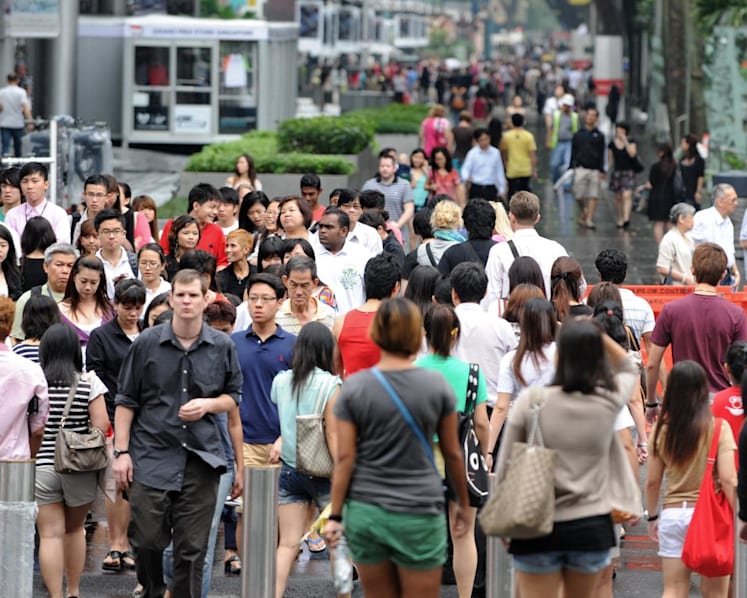
Institutional trust is where Singapore stands apart. The 2025 Edelman Trust Barometer put trust in the Singapore government at 77 per cent, against a global average of 52 per cent, and other civic indicators remain comparatively healthy.
This is welcome news, though it also points to where the vulnerability lies. A society can hold firm trust in its institutions even as wariness towards people with different values or backgrounds grows.
THE CATALYSTS
These losses do not fall evenly, and a social recession deepens with inequality.
In Singapore, 20.5 per cent of people with secondary education or below report having no close friends, compared with 7.6 per cent of degree holders. Friendship circles also follow class and housing lines. Those with the least resources tend to have the fewest social ties and the weakest bridges across social divides.
Technology accelerates the drift when people work, dine and stream shows alone, while arguing over public issues through personalised feeds.
If a fracture comes, it will not announce itself. Other countries show us the shape of the drift.
Since 1990, the share of Americans with no close friends has quadrupled. Over roughly the same period, Americans’ hostility towards supporters of the other political party grew more than in any of the 11 other developed democracies researchers have tracked. No one has settled which drives which, whether losing ties breeds the hostility or the hostility costs people their ties. But the two have risen together, each plausibly feeding the other.
Britain and Japan have read their own data grimly enough to appoint ministers for loneliness. Singapore is nowhere near these outcomes, for now. But the early indicators, thinning friendships, retreat from groups, ties sorting along class lines, are the same ones those societies recorded a decade or two before us.
EVERYDAY OPPORTUNITIES
This is why Prime Minister Lawrence Wong’s call for a “we first” society matters, as it puts the strength of our social fabric on the national agenda.
Some efforts are under way. For example, the Singapore Government Partnerships Office, set up after the Forward Singapore exercise, aims to turn civic energy into working partnerships among citizens, and between citizens and the state.
But a “we first” society cannot be built by the state alone. It needs everyday chances for people to meet, help and solve problems with others unlike themselves.
For instance, we can foster neighbourly mutual aid via what is known as a time bank, an initiative that is already available in other countries like New Zealand where members swop their skills and services using time as a currency instead of money. Imagine an hour spent helping a neighbour earns you an hour of help in return. This can help turn goodwill into regular contact across generations.
Existing ground-up efforts already show that the principle of matching neighbours works. Take Kampung Kaki as an example – an initiative founded by residents during the pandemic that matches volunteers with isolated seniors living nearby. Such schemes do not replace professional care; they catch the everyday needs that never become formal cases. They also give neighbours reasons to see one another regularly, not only when a crisis hits.
Second, give residents a genuine hand in shaping their own neighbourhoods. Today that usually means joining a residents’ committee, a standing commitment not everyone wants to make.
An alternative is to convene small rotating citizens’ assemblies alongside them. Each assembly might have about 20 residents drawn at random across age, race, housing and income, sitting for three months on actual local problems, with a real say in the outcome: from neighbour disputes and second-hand smoke to how a slice of the estate budget is spent.
The aim is to make this a civic duty everyone takes a turn at, randomly selected, not left to the willing few, so the assembly reflects the whole estate rather than the usual joiners. The mixing matters too, and can help build what a fraying society often lacks: the habit of working with people unlike ourselves, and the challenges and opportunities it brings. This is bridging social capital in action.
Third, we need more everyday, low-stakes spaces where strangers can meet. These can include neighbourhood tours that connect seniors, youths and newcomers through the void decks, hawker centres and markets, and informal groups formed over shared interests.
These settings work because the stakes are low. People first meet as neighbours, readers or fellow enthusiasts. And by putting them alongside others they would otherwise never meet, this helps to build what a fraying society needs most: trust across difference.
Are we in a social recession? Perhaps not yet. But the data should worry us because this kind of loss arrives without alarm.
Singapore has spent decades building economic, human and physical capital. The next bound is relational: the trust, ties and everyday habits that keep a social recession at bay. Building them is work for all of us, not the government alone.
Nicholas Thomas, Wong Kang Li and Wilson Goh are from the Institute of Policy Studies Policy Lab at the National University of Singapore.
Source: CNA/zw(sk)
Sign up for our newsletters

Get the CNA app
Stay updated with notifications for breaking news and our best stories
Get WhatsApp alerts
Join our channel for the top reads for the day on your preferred chat app

Get bite-sized news via a new
cards interface. Give it a try.
Click here to return to FAST
Tap here to return to FAST
FAST