Commentary: Trump’s ‘57 nukes’ assessment and the hollowing out of North Korean denuclearisation
If Trump treats North Korea’s arsenal as a baseline fact, he hands Beijing the outcome it wants, says an academic.
A rocket launcher fires a munition during tests in North Korea, Jun 25, 2026, in this picture released by North Korea’s official Korean Central News Agency. KCNA via REUTERS/File Photo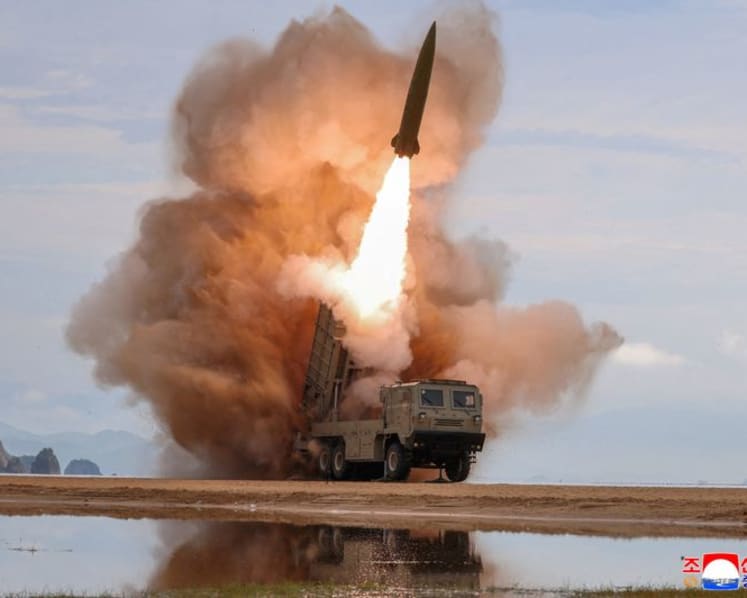
Read a summary of this article on FAST.
Get bite-sized news via a new
cards interface. Give it a try.
Click here to return to FAST
Tap here to return to FAST
FAST
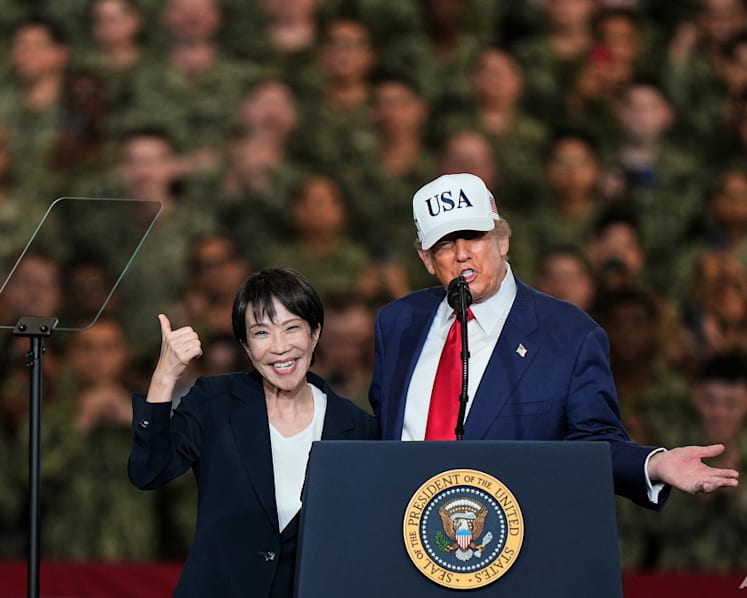
BOSTON, Massachusetts: Donald Trump’s recent public acknowledgement that North Korea possesses “57 very powerful nuclear weapons” was framed by the United States president himself as evidence of his pragmatic ability to manage the threat.
Yet, coupled with his expressed expectation to meet North Korean leader Kim Jong Un again this year, Trump’s rhetoric has exposed a fundamental contradiction in US policy.
Even though the White House’s November 2025 Joint Fact Sheet on Trump’s meeting with South Korean President Lee Jae Myung explicitly stated that the two leaders reiterated their commitment to “the complete denuclearisation of the DPRK (referring to the North’s formal name, the Democratic People’s Republic of Korea)”, the optics of the US commander-in-chief are now unmistakable: He is treating a substantial nuclear arsenal as an accepted baseline fact.
This American transactionalism traps Seoul in a dilemma, evidenced this week when South Korea’s Defence Minister Ahn Gyu-back had to officially maintain the policy of non-recognition of North Korea’s nuclear status, while carefully navigating questions about Trump’s specific “57 nukes” assessment.

Guess Word
Crack the word, one row at a time

Buzzword
Create words using the given letters

Mini Sudoku
Tiny puzzle, mighty brain teaser

Mini Crossword
Small grid, big challenge

Word Search
Spot as many words as you can
More importantly, this American transactionalism is inadvertently feeding directly into China’s preferred endgame for the Korean Peninsula.
ABANDONING OF A SHARED PRINCIPLE
For years, Washington and Beijing at least nominally shared the goal of a denuclearised North Korea. But recent diplomatic signalling suggests that this shared foundational principle is being abandoned. While Washington blurs the lines through personalised summiteering, Beijing is engaging in a quiet, linguistic retreat from nuclear disarmament.
Seoul faces a narrowing margin where neither great power is actively prioritising its core security demand: actual disarmament.
This shift was particularly evident during Chinese Foreign Minister Wang Yi’s recent visit to Seoul – his first in five years. When discussing the peninsula, Wang’s readout notably welcomed the two Koreas moving toward “peaceful coexistence” but entirely omitted the word “denuclearisation”.
The profound hollowness of this Chinese-brokered “peaceful coexistence” was violently exposed shortly after Wang departed South Korea, when Pyongyang launched a barrage of around 10 short-range ballistic missiles that South Korean officials assessed were likely 600mm super-large multiple rocket launchers (MLRS) – a system North Korea claims can carry tactical nuclear warheads targeting South Korea.
Beijing is moving toward acquiescence. It stops short of granting North Korea legal recognition as a nuclear-weapon state, but it is clearly prioritising the management of the nuclear reality over near-term disarmament. China’s preference is not necessarily for a heavily armed North Korea, but for a stable one that does not precipitate a regime collapse, a regional war or a windfall for Washington.
This is where the danger of fresh summiteering between Trump and Kim becomes acute. If Trump approaches a new summit treating Kim’s substantial nuclear arsenal as an accepted baseline fact, he risks validating Beijing’s “status-quo management” approach.
STRAIN ON US-SOUTH KOREA ALLIANCE
Indeed, we are already seeing this transactional approach strain the US-South Korea alliance. Trump recently ordered the Pentagon to “substantially reduce” the Ulchi Freedom Shield exercise, framing them as costly and explicitly linking this reduction to his “very good relationship” with Kim and his irritation over South Korea declining to join US actions against Iran.
The damage of this transaction was immediate. North Korean official Kim Yo Jong swiftly released a statement not to praise Trump’s peaceful intentions, but to ruthlessly mock Seoul, deriding the South Korean military as a “scarecrow army” that had “entrusted command to its master”. Trump’s concession did not buy a peace process; it merely provided Pyongyang the perfect wedge to bypass Seoul and humiliate the alliance’s credibility.
For South Korea, this convergence of US transactionalism and Chinese acquiescence is deeply alarming. Seoul faces a narrowing margin where neither great power is actively prioritising its core security demand: actual disarmament.
With Trump publicly eyeing a summit with Kim before the end of the year – possibly on the sidelines of the APEC summit in Shenzhen this November – time is short. A deal that freezes North Korea’s capabilities at “57 nukes” in exchange for sanctions relief or reduced US force posture would effectively cement North Korea’s nuclear status.
It would transform denuclearisation from an actionable policy goal into a diplomatic fiction.
Addressing this environment requires retiring the assumption that the nuclear problem can be outsourced to Chinese mediation or left blindly to the traditional guardrails of US policy.
If fresh US-North Korea summiteering is approaching, the imperative for South Korea lies in establishing a strict alliance floor with Washington – ensuring that any changes to major exercises or force posture entail prior consultation, and that any nuclear freeze remains tied to verification and sequenced reciprocity.
Concurrently, the shifting regional order highlights the necessity for South Korea to build greater autonomous resilience, strengthening its conventional strike, missile defence and command capabilities.
This goes beyond merely deterring Pyongyang; it serves as insurance against a scenario where Washington and Beijing tacitly agree that a nuclear North Korea is a reality to be managed, rather than a problem to be solved.
Seong-Hyon Lee, PhD, is a senior fellow at the George HW Bush Foundation for US-China Relations and an associate-in-research at the Harvard University Asia Centre. This commentary first appeared on Lowy Institute’s blog, The Interpreter.
Source: Others/el
Sign up for our newsletters

Get the CNA app
Stay updated with notifications for breaking news and our best stories
Get WhatsApp alerts
Join our channel for the top reads for the day on your preferred chat app

Get bite-sized news via a new
cards interface. Give it a try.
Click here to return to FAST
Tap here to return to FAST
FAST