Commentary: Why Singapore Airlines should welcome the backlash over new business class seats
People do not get angry at brands they do not care about, says marketing professor Julien Cayla from Nanyang Business School.
Business class window seat. (Photo: Singapore Airlines)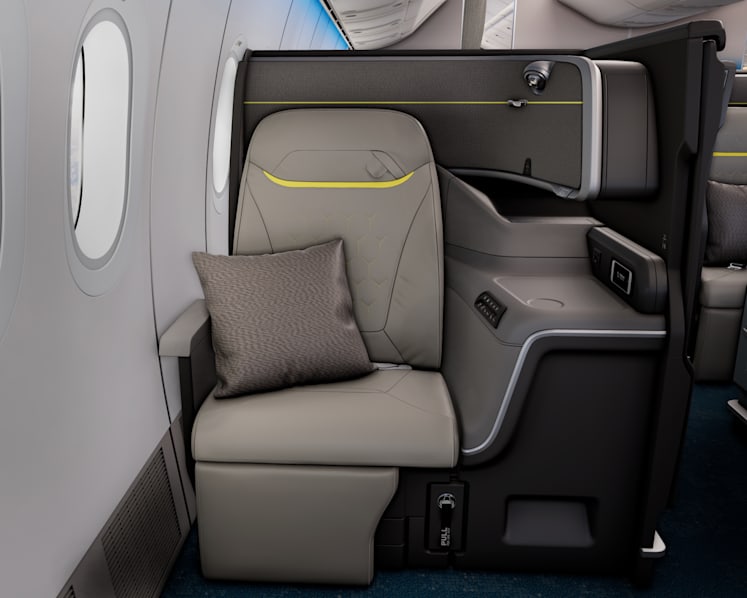
New: You can now listen to articles.

This audio is generated by an AI tool.

Read a summary of this article on FAST.
Get bite-sized news via a new
cards interface. Give it a try.
Click here to return to FAST
Tap here to return to FAST
FAST
SINGAPORE: The backlash against Singapore Airlines’ (SIA) new Business Class seats contains some good news for the airline. Customers care deeply about SIA.
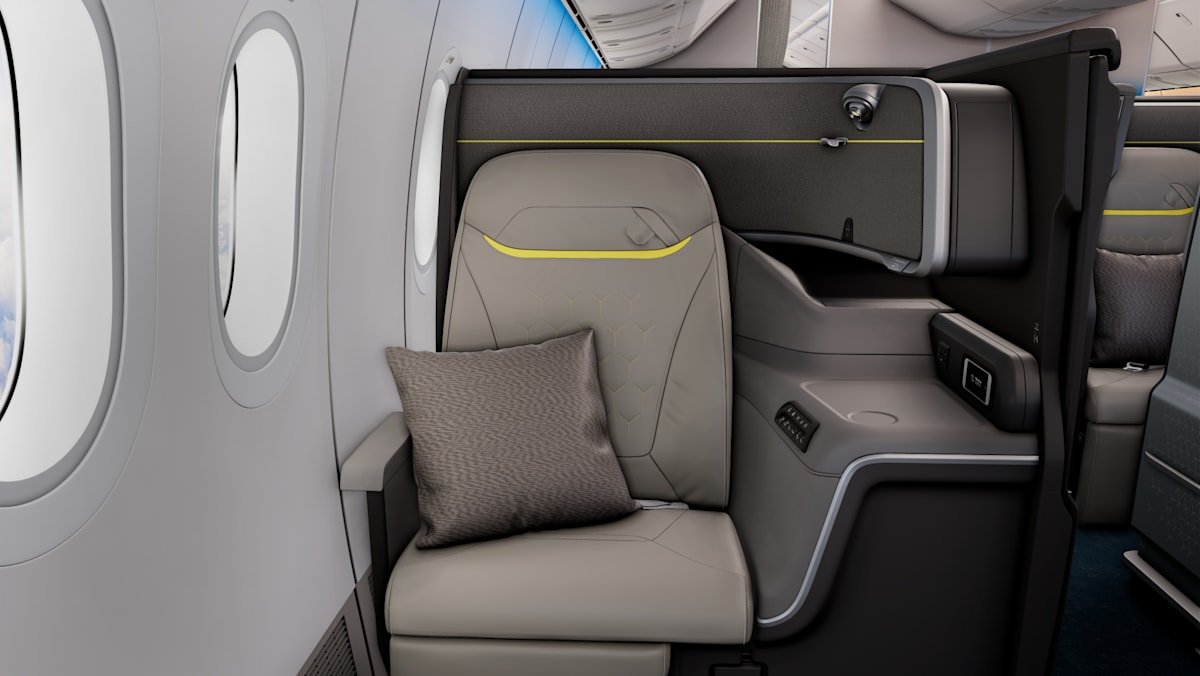
Unveiled on Nov 6 as part of a S$2 billion wider cabin upgrade, the seats have been praised for improvements in comfort and privacy. But their grey-and-yellow colour scheme has drawn criticism, with some even likening them to dental chairs.
Not many airlines could provoke this kind of strong reaction. I certainly cannot imagine a European or American airline generating so much media attention simply by redesigning the cabin.
In fact, it reminds me of one of the most famous marketing case studies: New Coke. Over 40 years ago, Coca-Cola introduced a new formula for its classic drink, hoping to rejuvenate the brand to better compete with Pepsi.

Guess Word
Crack the word, one row at a time

Buzzword
Create words using the given letters

Mini Sudoku
Tiny puzzle, mighty brain teaser

Mini Crossword
Small grid, big challenge

Word Search
Spot as many words as you can
Despite conducting extensive market research before the launch, there was public uproar. At the height of the backlash, Coca-Cola was receiving 1,500 calls a day from disgruntled consumers. What the company had underestimated was just how emotionally attached consumers were to Coca-Cola and everything it represented.
There are parallels with SIA. Both companies sought to modernise iconic brands, and illustrate the risks of underestimating the meanings and emotions they evoke in customers.
KEEPING SIA DISTINCTIVE
SIA is not simply a premium airline but a premium Asian brand – one that evokes a particular sense of comfort, elegance, and Asian hospitality. And this is precisely what feels missing in the new design.
Looking at the grey-and-yellow colour scheme, I struggle to see anything that evokes that identity. In its previous incarnations, the cabin environment mixed soft colours and textures. The warmth and hospitality associated with SIA’s cabin crew, found a visual counterpart in the cabin’s design.
But the new, more technical aesthetic, appears largely disconnected from this heritage. If someone told me this was the new business class cabin of Lufthansa, I wouldn’t bat an eyelid.
That is the central issue. SIA has said the colours and materials were selected to create a “fresh, contemporary and refined ambience”. But does it feel like Singapore Airlines?

MARKET RESEARCH IS NOT A BRAND STRATEGY
The airline may have lost sight of something fundamental in brand management. Brand identity is not something you simply ask customers to define for you. Otherwise, you end up losing yourself.
SIA has invested effort in researching the new cabin experience. It said that the new designs were informed by research involving more than 5,000 frequent travellers, customers, staff and industry experts.
But there is an important distinction between human-centred design research, which focuses on customers’ needs, and cultural or symbolic research, which explores what a brand means to people.
Perhaps the airline focused too heavily on the former and not enough on the latter. That might explain why the design is probably ergonomic, but not very emotionally resonant.
This was also the problem with New Coke. Coca-Cola’s research indicated that consumers preferred the taste of the new formula. What it failed to capture was that Coca-Cola was much more than a drink. It was a cherished national symbol, deeply associated with American identity.

EMBRACE THE BACKLASH
People don’t get angry about brands they don’t care about. Rather than becoming defensive, SIA should embrace the backlash and recognise that the intensity of the debate reflects the extraordinary attachment customers feel about the airline.
A short video from management, acknowledging the reactions and explaining how much it means to the airline that customers care so deeply, would be a way of turning a potentially negative situation into a demonstration of brand strength.
It should also consider talking to some of the airline’s most loyal business class customers and explore their reactions in depth. Importantly, this should not involve simply asking whether they like the new seats, but what feels right or wrong about the design in relation to their understanding of SIA.
There is also plenty to gain, for SIA, from engaging local design talent. This is what Finnair did when they collaborated with Marimekko to add a Finnish touch to their textiles and tableware.
For a global airline, connecting to one’s heritage can be a source of distinction. Working with Singaporean designers could help SIA reconnect to its roots.
At a staff townhall on Wednesday, SIA CEO Goh Choon Phong reportedly said: “We’ll look at it, we’ll see what is feasible”. Depending on what emerges, there are two possible paths.
The first could be a relatively minor redesign, involving adjustments to the colour palette and finishes to bring the cabin closer to SIA’s established visual identity.
The second path would go beyond changing colours and finishes to rethink the cabin’s overall design concept. If the concern is that the cabin no longer feels like SIA, a more substantial redesign would need to start with a deeper understanding of what the airline represents and how to express that identity through its use of space and materials.
The lesson is that many companies have come to believe that good brand management is primarily about listening to customers. Of course, listening matters. But brands also need a strong sense of who they are, and that’s what should guide their brand strategy.
The challenge for an iconic brand like SIA is not simply to modernise. It is to modernise without losing its soul.
Julien Cayla is an associate professor of marketing at Nanyang Business School, NTU Singapore.
Source: CNA/ch
Sign up for our newsletters

Get the CNA app
Stay updated with notifications for breaking news and our best stories
Get WhatsApp alerts
Join our channel for the top reads for the day on your preferred chat app

Get bite-sized news via a new
cards interface. Give it a try.
Click here to return to FAST
Tap here to return to FAST
FAST