The eyes of the world are, once again, glued to the World Cup. Overwhelmingly, they are on Lionel Messi’s goalscoring record, a Cape Verdean goalkeeper who shot to fame or viral clips of fans.
It’s a familiar and understandable diversion of attention from the issues that dominated the buildup. Many Argentinian fans were denied visas to attend the tournament and see Messi make history, Vozinha’s mother was only granted a visa bond waiver to the country after her son’s heroics for Cape Verde and those fans filmed are often the lucky few rich enough to afford outrageous ticket prices.
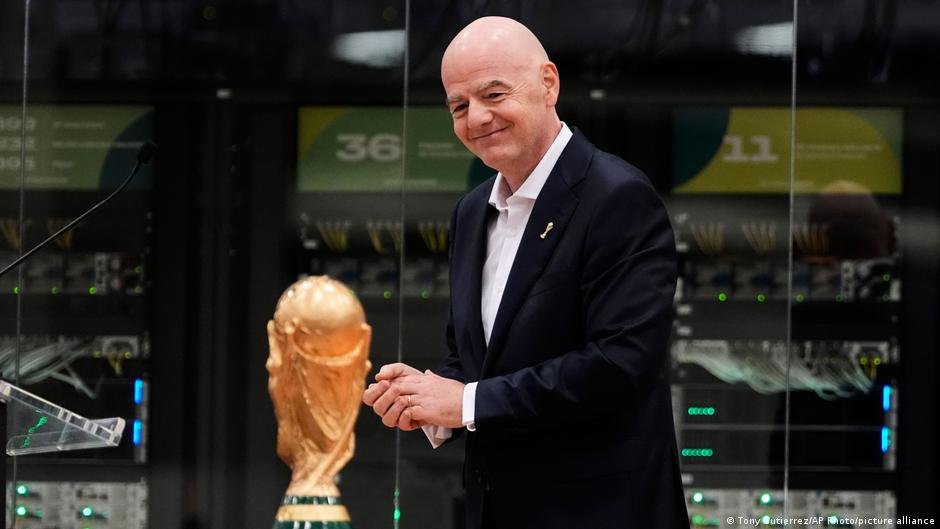
Infantino and Trump relationship has eroded FIFA trust
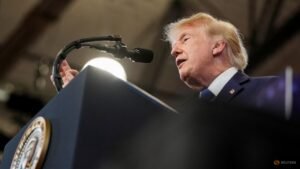
The decision to award US President Donald Trump FIFA’s inaugural Peace Prize last December, shortly before he started a war with tournament participant Iran, was reportedly unilateral and has further eroded trust both within and outside the organization.
To view this video please enable JavaScript, and consider upgrading to a web browser that supports HTML5 video
With the next tournament taking in games in Europe, Africa and South America in order to allow FIFA to award the 2034 tournament to Saudi Arabia unchallenged and Infantino set to exceed the usual presidential term limit of 12 years, again likely unopposed, frustration with FIFA is at an all time high, according to many observers. But can anything be done?
How does FIFA maintain its power?
FIFA is responsible for the game’s global development but also acts as its commercial operator, a system many governance experts question.
The World Cup is its key financial driver, though the recently-revamped and expanded Club World Cup is now another key contributor. That competition has led to widespread complaints from players and player unions about a congested calendar that makes unreasonable demands.
“I don’t think the players are listened to that much, if I’m totally honest,” said Bayern Munich and England striker Harry Kane before last year’s event.
Structurally, each of the 211 member nations (which sit in six continental federations), gets a single vote for the president every four years. These member associations are then financially rewarded, to a greater or lesser degree, through various schemes and programs.
“The commercial dimension is the bedrock of FIFA’s system of power. The money is used by the presidents to accumulate and consolidate their power,” Miguel Maduro, a former chairman of FIFA’s Governance and Review Committee, told DW. He was dismissed from the post in 2017 after attempting to enforce political neutrality rules regarding Russia.
“It’s what supports the system of patronage through which presidents reward those loyal to them and punish anyone that dares criticize anything. It explains why incumbent presidents are never challenged and stay in power indefinitely.”
Can politics and the EU force FIFA to change?
Like Maduro, Nick McGeehan, of human rights NGO FairSquare, agrees that any reform would have to be imposed upon FIFA. And with individual member nations not incentivized or able to drive change, he is calling on the European Union to take up the fight.
“It requires political intervention. There is no other way to fix FIFA,” he told DW.
“I think the most obvious example would be the European Union, who could regulate and govern sport the way they regulate other things like big tech.”
Fair Square have filed a complaint to the Investigatory Chamber to the FIFA Ethics Committee over Infantino’s dealings with Trump while, separately, fan group Football Supporters Europe (FSE) and advocacy group Euroconsumers filed a complaint about ticket prices to the EU Commission shortly before the World Cup.
A Commission spokesperson would not be drawn on whether the EU might take on FIFA, telling DW only that that the FSE and Euroconsumers complaint was being dealt with “in line with our standard procedures.”
Asked whether they might intervene in the various questionable World Cup ticket practices, the spokesperson went on to confirm that EU laws “do not regulate the price levels for goods and services, such as event tickets”. But added that: “Traders must adequately inform consumers about the total price of their offers and avoid misleading commercial practices, such as making attractive starting price claims for tickets that are not available or pressure-selling techniques while consumers wait in the virtual queue.”
Though definitive political action is so far thin on the ground, McGeehan retains hope.
“There is going to be a politician somewhere who recognizes the political value of taking people on and actually trying to hold them accountable. And I find that quite an exciting prospect, because I think it’s inevitable right now.”
Might UEFA and FIFA tensions force a breakaway?
While it operates under FIFA’s umbrella, there are simmering tensions between FIFA and the powerful European federation, UEFA. They were laid bare in UEFA’s hiring of Somalian referee Omar Artan for the Super Cup final, days after he’d been refused entry to the US to officiate at the World Cup.
“Football is made to connect people,” said UEFA President Aleksander Ceferin.
To view this video please enable JavaScript, and consider upgrading to a web browser that supports HTML5 video
Last year, UEFA delegates walked out of the FIFA Congress, accusing Infantino of prioritizing “private political interests” after turning up late from a a diplomatic tour of the Middle East alongside Trump.
“There are tensions between UEFA and FIFA and UEFA are a huge confederation and have the year of some of the biggest and the most historic footballing nations. So if there was any form of breakaway within football it would have to come from UEFA or a number of UEFA nations getting together,” Geoff Walters, a professor in sports business at the University of Liverpool in the UK, told DW.
“But it’s hard in the context of football politics to put your head above that parapet because you get shot down. If you do say something, then what does it mean? Is it going to harm your chances of hosting competitions, which can be beneficial? Does it mean that you are ostracized from the international community?”
Germany serve as an example of this. After the team covered their mouths in a political gesture at their first match in Qatar, the team and federation have rowed back on their support of political causes, possibly with a hosting bid for World Cup 2034 or 38 in mind.
UEFA themselves had to deal with the threat of an elite-club-driven breakaway Super League in 2021 and the legal issues that followed. Maduro said the organization “suffers from that same governance flaws as FIFA, albeit in a less obvious and radical manner.”
What’s in a FIFA breakaway for the rest of the world?
UEFA’s standing with the rest of the world’s federations may also have been weakened by Ceferin’s, reported recent comments that the expanded World Cup makes a lot of matches “completely uninteresting.” A coalition of 13 football associations from Africa and Asia said they “firmly reject” the comments reported by Zurnal 24 in Ceferin’s native Slovenia.
The prestige and power of Europe and South America, particularly Brazil and Argentina, is also not as strong as it may seem compared to Infantino’s powerbase in Asia and Africa. Walters said this is another reason why a breakaway appears a distant possibility.
“If it was spearheaded by leading nations, what would happen to the smaller nations across the world? What would happen to their ability to develop football in their countries?
“That’s part of the challenge with global sport that we’re seeing, not just in the context of the World Cup, but in the context of a lot of sporting leagues, where you are seeing the bigger teams starting to look to push and break away. They want to maintain the largest slice of the pie, of the commercial income and revenues that are coming into that sport.”
Are FIFA reaching areas others can’t?
While many others question those commercial motivations, Infantino insists they are for the greater good.
“Every dollar we generate goes back into football,” he told reporters on the eve of the tournament. “If we were selling our TV rights to pay-TV, like everyone else, we would generate four times as much revenue. And we could give all the tickets away, but they would still end up on the black market.”
“As FIFA president we have to strike a balance. We invest in countries where no one else does – South Sudan, Bhutan. No one else is doing this.”
For now, that much is true. In football terms, no-one else has the remit or the money. And, given how deeply FIFA is entrenched within the sport, the chances of a breakaway seem slim. And although discontent has rarely been higher, unless a federation, alliance of countries or prominent individual grasps the nettle, the chances of reform seem only marginally less slim than before.
Edited by: Chuck Penfold
About The Author