16 minutes agoShareSaveAdd as preferred on Google

 Getty Images
A father and son who worked at a Mississippi smoke shop have been arrested and charged in connection with the deaths of two university students who died from suspected overdoses of kratom, sometimes called “gas station heroin” in the US.
The pair worked at a shop that allegedly sold derivatives of the substance to the University of Mississippi students.
US prosecutors charged Yahya Mohamed Mosleh, 51, and Islam Yahya Mosleh, 18, for possession with the intent to distribute controlled substances in connection with the death of the Ole Miss students last month.
Although their deaths have not officially been attributed to kratom, officials afterward issued warnings about consuming kratom.
The criminal complaint alleges that on 21 September, an Ole Miss student was found dead in his dorm room. The apparent cause of death “appeared to be consistent with a drug overdose”, the US Attorney’s Office for the Northern District of Mississippi said in a press release.
Law enforcement found packages – with some tablets missing – of suspected kratom derivatives.
About an hour later, a second student was found dead from a suspected overdose in another location, also with packages of suspected kratom derivatives.
Officials connected the packages with the local vape, tobacco and beer store, the US Attorney’s statement said.
Law enforcement executed search warrants and seized suspected kratom derivative controlled substances from the store. The Mosleh’s, father and son, were later arrested.
The two students’ deaths have sparked alarm and warnings from officials about the plant-based drug referred to as “gas station heroin”.
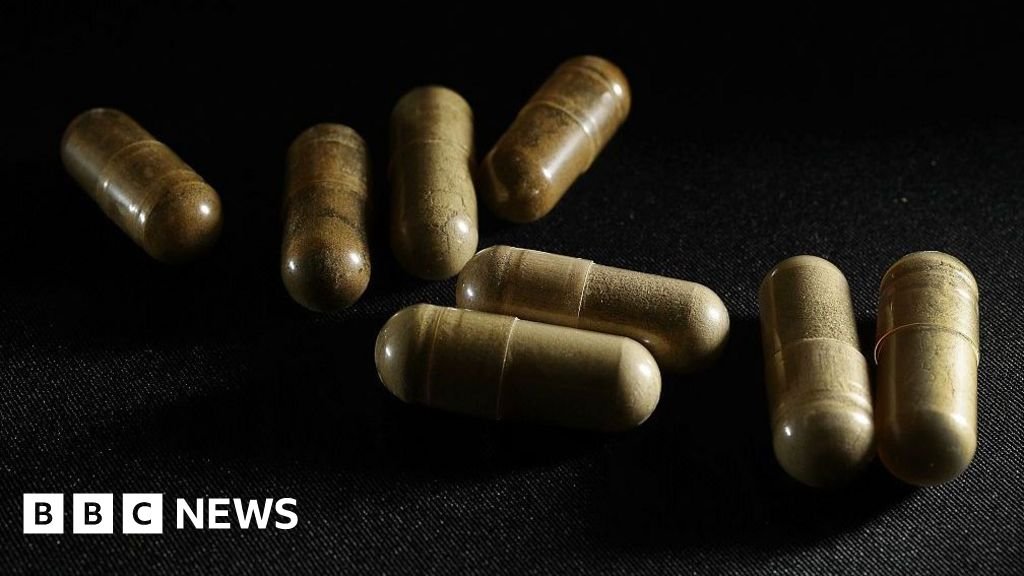
Kratom – a herb with opioid-like effects – has grown in popularity in the US over the last decade, and is typically purchased over the counter and consumed in pill or liquid form.
For years, anti-kratom advocates have pushed for bans, and in some countries, like the UK, it is illegal. But Kratom is not regulated by the US Food and Drug Administration and is legal in some states, including Mississippi.
The Mississippi prosecutors said that kratom derivatives, such as MGPI, MGM-15 and MGM-16, are now schedule I controlled substances in the US and can be significantly more potent than natural kratom leaf products and morphine.