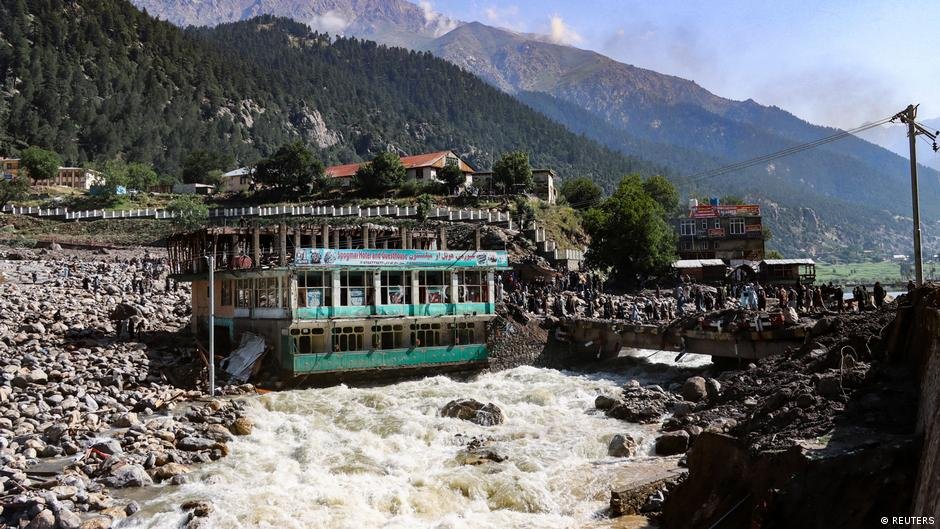
Heavy rains have triggered deadly flash floods in Afghanistan’s Nuristan province, destroying homes, bridges and roads. Rescue workers are continuing their search for missing people.
Image: REUTERS
The floods are affecting Nuristan Province in northeastern Afghanistan. This remote mountainous region in the Hindu Kush is characterized by deep valleys, steep slopes, and numerous rivers. Due to the challenging topography and limited infrastructure, severe weather and landslides are among the greatest natural hazards facing the population there.
Image: Azizi/Xinhua/picture alliance
Heavy equipment is being used to dig through the rubble here, but in many places, excavators are not available. According to the Taliban-led authorities, at least 23 people have died. Another 80 people were injured, and according to the disaster management agency, about 100 are currently listed as missing. Rescue operations are ongoing.
Image: REUTERS
Medical responders are delivering supplies to hard-to-reach, flood-affected areas of Afghanistan’s Nuristan Province. Many villages in this remote mountainous region are accessible only via unpaved roads or footpaths. Destroyed roads make it difficult to provide care for the injured and to transport medical supplies.
Image: Wahidullah Kakar/AP Photo/picture alliance
The floodwaters left behind destroyed roads, collapsed buildings, and meters of mud. In the affected areas, cleanup efforts are underway alongside the search for missing persons, while authorities are warning of further severe weather in parts of the country.
Image: Azizi/Xinhua/picture alliance
The floodwaters severely damaged a multi-story hotel building. The floodwaters swept away parts of the riverbank reinforcement and the adjacent roads. With its forested mountain landscape, Nuristan Province was once one of Afghanistan’s most famous tourist destinations.
Image: Wahidullah Kakar/AP Photo/picture alliance
A man sits next to the belongings he managed to save. Nuristan is one of the country’s most economically disadvantaged regions, which has been largely isolated internationally since the Taliban took power five years ago. Many families rely on subsistence farming. For many of those affected, the loss of their home, harvest, or livestock means the loss of their entire livelihood.
Image: Wahidullah Kakar/AP Photo/dpa/picture alliance6 images1 | 66 imageshttps://p.dw.com/p/5HY8D