Following a deadly train crash, Indonesia steps up safety reforms as experts push for long-term improvements
Authorities have begun addressing communication, signalling and other safety gaps exposed by the deadly April train crash, but experts say Indonesia needs broader reforms to prevent similar accidents elsewhere.
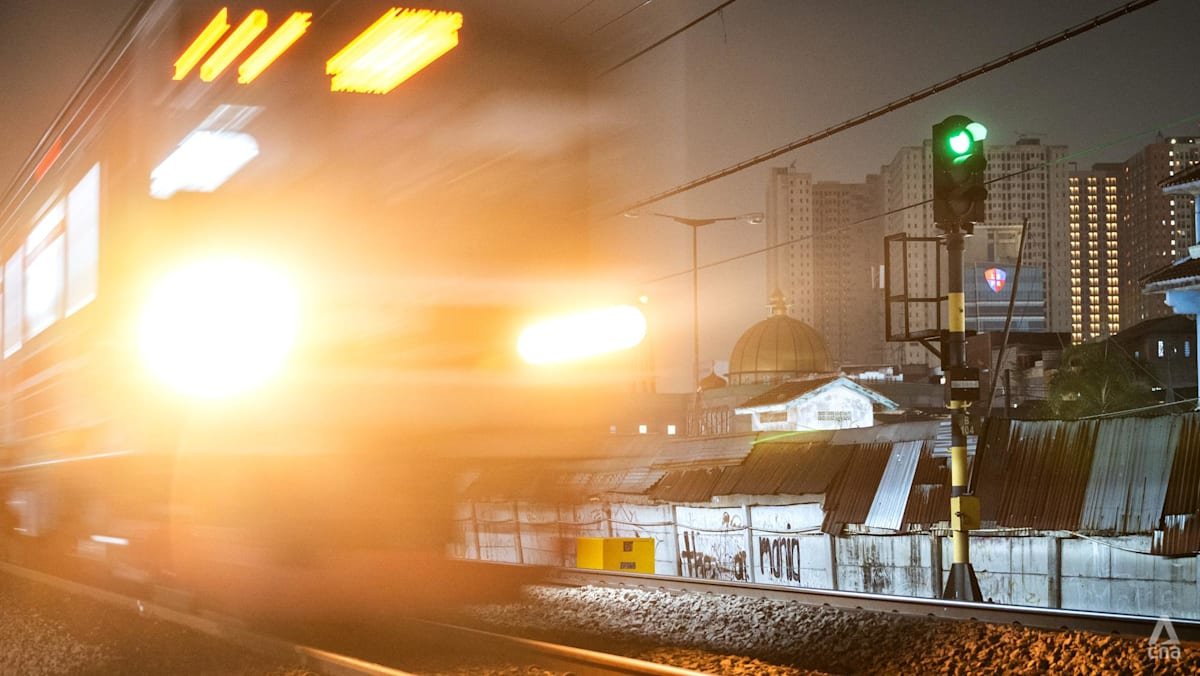
This railway signal near East Bekasi Station near Jakarta is said to be obscured by lights from the surrounding buildings on the night of a fatal train collision on Apr 27, 2026. (Photo: CNA/Wisnu Agung Prasetyo)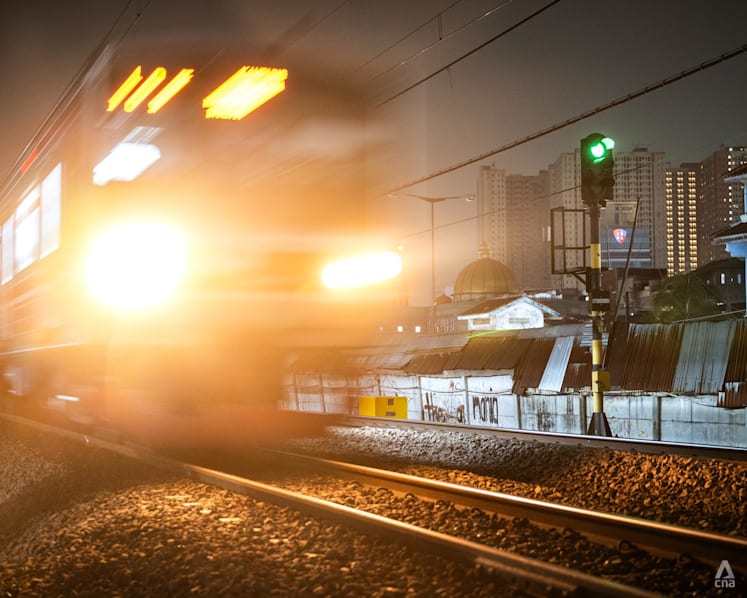
New: You can now listen to articles.

This audio is generated by an AI tool.

Read a summary of this article on FAST.
Get bite-sized news via a new
cards interface. Give it a try.
Click here to return to FAST
Tap here to return to FAST
FAST
JAKARTA: The unpaved alleyway of the neighbourhood of Gang Delima in the Indonesian city of Bekasi – which is 17km east of the capital Jakarta – has become noticeably dimmer since April.
A spotlight illuminating a local scrapyard has been removed, while street lights that once spilled onto the nearby railway tracks have either been redirected or fitted with shades. Residents and businesses in the working-class neighbourhood have also been barred from putting up red, green or orange lights that could be mistaken for railway signals.
“They plan to raise the height of that wall over there too,” Rahmat, a 55-year-old local resident, told CNA, referring to the authorities while pointing to the barrier separating the railway tracks from a traditional market, where brightly lit stalls stay open late into the night.
The changes are among a series of safety measures introduced around East Bekasi Station following a deadly train crash on Apr 27 that killed 16 people – all of whom were women, seated inside the women-only carriage at the rear.
The chain of events began when an electric taxi stalled at an unmanned level crossing near the station and was struck by a commuter train travelling west. As word of the collision spread, crowds gathered along the tracks, while another commuter train heading in the opposite direction was instructed to remain at East Bekasi Station.
A third train – an express service travelling from Jakarta to Surabaya in East Java – then slammed into the stationary commuter train at East Bekasi Station, crushing passengers inside the packed women-only carriage at the rear.

Guess Word
Crack the word, one row at a time

Buzzword
Create words using the given letters

Mini Sudoku
Tiny puzzle, mighty brain teaser

Mini Crossword
Small grid, big challenge

Word Search
Spot as many words as you can
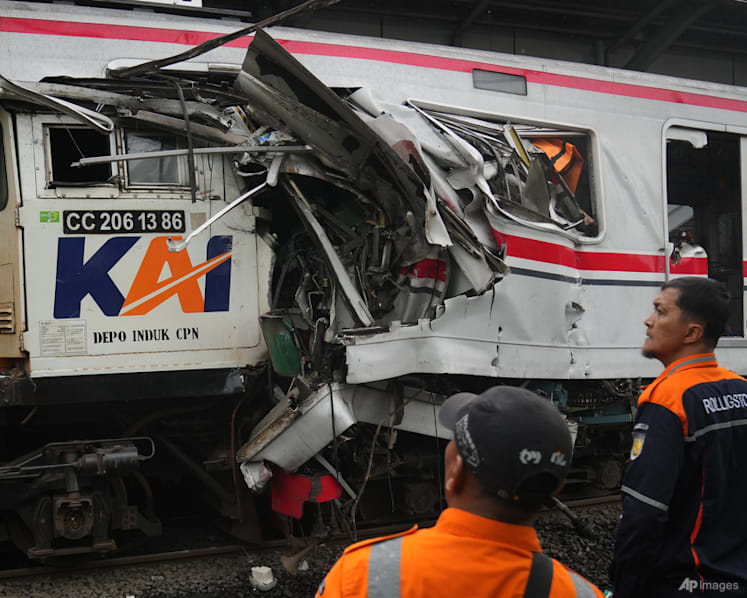
This fatal sequence of events – from the ramming of the stalled taxi and the fatal train collision – took just three minutes and 48 seconds.
An investigation by Indonesia’s National Transportation Safety Committee (KNKT), whose 141-page findings were released on Sep 29, highlighted communication problems, timetable management and the lack of standard operating procedures (SOP) to report and respond to emergency situations as contributing factors to the crash.
In the immediate aftermath, officials also took note of the intense lighting around Gang Delima and the traditional market beside the tracks. The KNKT report also confirmed that the surrounding lights had made railway signals more difficult to distinguish – a problem compounded by scratches and cracks on the express train’s windscreen.
The safety committee also issued 17 recommendations to train operators and the Ministry of Transportation, calling for tighter SOPs, more training and improvements of various infrastructures, systems and facilities.
But experts said limiting some recommendations to railway lines and areas directly affected by the April crash leaves a wider safety gap.
“Similar problems also exist across Indonesia,” Yusa Permana, a transportation planning and policy expert, told CNA. “There needs to be efforts to address the issues highlighted by the KNKT on a national level.”


POOR COMMUNICATION
According to the KNKT report, the first incident was communicated so poorly by the driver of the commuter train involved, it took the southern railway traffic controller, or PPKP Selatan, three minutes and 20 seconds to fully understand what had happened and activate an emergency response. This left the driver of the express train less than 30 seconds to react.
All train movements in the area were then suspended, including the second commuter train, which was instructed to remain at East Bekasi Station.
By then, however, the express train travelling from Jakarta was only one station away, travelling at more than 100kmh.
According to the KNKT report, the express train driver saw a red signal instructing him to stop when he was about 500m from East Bekasi Station, where the commuter train was stationary.
But the signal was located near a curve. The driver slowed the train to 78kmh before applying the emergency brake about 275m from the station, after the train had cleared the bend.
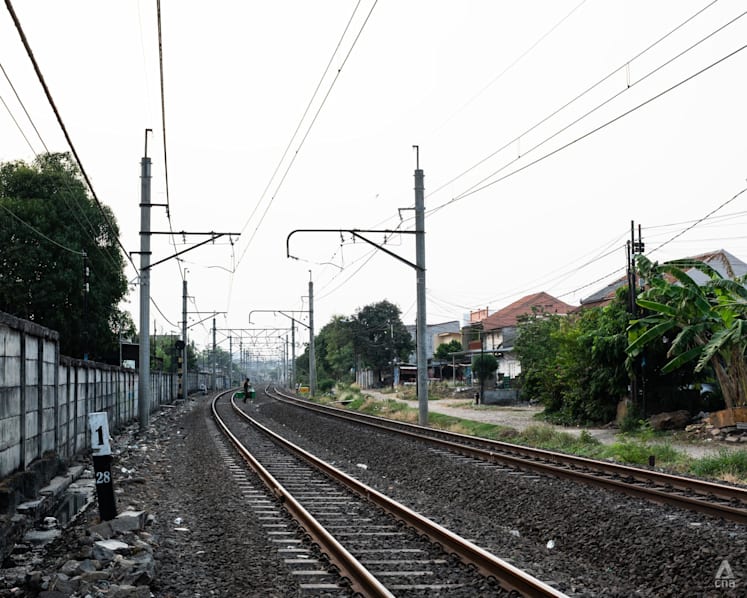
“Even on a straight track, suddenly applying the brakes could cause the train body to lift,” transportation policy analyst Azas Tigor Nainggolan told CNA.
“If the train driver had applied the emergency brake at the bend, the train could have overturned. That would have been even more dangerous and could have caused many casualties among the passengers.”
The KNKT report highlighted that there is currently no SOP on how emergency braking should be safely performed on a curved section of a track.
Despite the driver’s best efforts to avoid a crash, the express train was still travelling at 40kmh when it ploughed into the stationary commuter train. The safety committee concluded that it would have needed another 500m to 550m to come to a complete stop.
A CONTROVERSIAL DECISION
Jakarta police have since named the driver of the long-distance express train – identified only as 37-year-old AN – a suspect in the crash.
“Investigators concluded that the emergency braking could have been applied from farther away,” Jakarta police official I Dewa Putu Gede Anom Danujaya told a press conference on Sep 29.
AN faces up to 12 years in prison if convicted, Dewa said. He has not been detained.
The decision has drawn criticism from transportation experts, who argue that KNKT’s investigation identified broader failures beyond the actions of the driver.
“Don’t place all the blame on the driver. They operate according to instructions from the control centre. Fix the system,” Djoko Setijowarno, a transportation expert from Central Java’s Soegijapranata Catholic University, told CNA.
Members of parliament have also questioned the police’s decision.
“We believe KNKT’s findings show that this accident was not simply the result of an individual mistake, or human error, but involved systemic failures,” said Syaiful Huda, deputy chairman of the House of Representatives’ Commission V which oversees transportation and a lawmaker from the National Awakening Party (PKB).
“We believe it is unfair if the blame is placed solely on the Argo Bromo Anggrek train driver.”
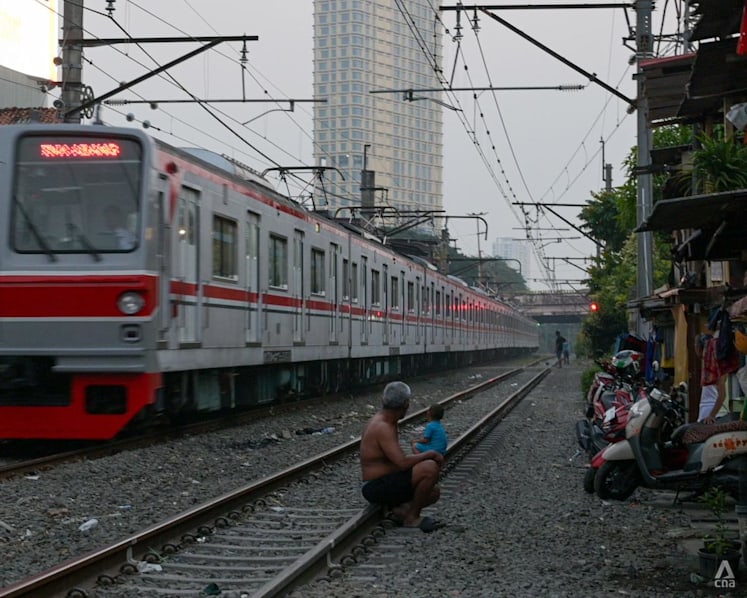
Police, however, have stood by their decision, saying the case against AN was based on KNKT’s findings and reached after consulting transportation experts.
State-owned train operator Indonesian Railway Company (KAI) said that the company will be providing AN with a lawyer.
KAI is in charge of all express trains in Indonesia while its subsidiary Kereta Commuter Indonesia is responsible for local train networks in a number of Indonesian cities including Greater Jakarta.
“We want to make sure that our employee does not go through this (legal) process alone,” KAI spokeswoman Anne Purba said in a statement on Sep 30.
“KAI respects and supports the processes being carried out by both KNKT and the Jakarta Metropolitan Police. We will continue to cooperate fully to ensure that each process is conducted professionally.”
Police had previously named the taxi driver, identified as RRP, a suspect for alleged negligence in the initial collision with the first commuter train. He faces a maximum sentence of six months in prison.

A NATIONWIDE PROBLEM
In its report, the KNKT issued six recommendations to train operator KAI, three to Kereta Commuter Indonesia and eight to the Ministry of Transportation. They include reviewing existing communication guidelines, providing additional training for train controllers and railway crews, and assessing signalling systems and infrastructure along the affected railway line.
“Our focus is on implementing KNKT’s recommendations quickly and appropriately,” KAI president director Bobby Rasyidin said in a statement on Oct 3.
“We are carrying out those which can be implemented immediately. We are expediting those that require further study and refinement.”
Minister of Transportation Dudy Purwagandhi said he will make sure all of KNKT’s recommendations are implemented.
“We as the regulator will certainly encourage operators to continuously improve the quality of their personnel, as well as other facilities and infrastructure,” he told reporters on Sep 30, as quoted by local news website Kumparan.
But some changes on the ground had begun well before KNKT released its recommendations.
Rahmat, the Gang Delima resident, said government officials visited the neighbourhood not long after the crash and persuaded residents and businesses to redirect lights that could interfere with the visibility of signals.
“Everyone agreed that safety must come first,” he said.
About 700m from Gang Delima, the once-unmanned level crossing where the taxi was struck is now equipped with proper barriers, warning lights and bells to alert motorists and pedestrians of incoming trains.

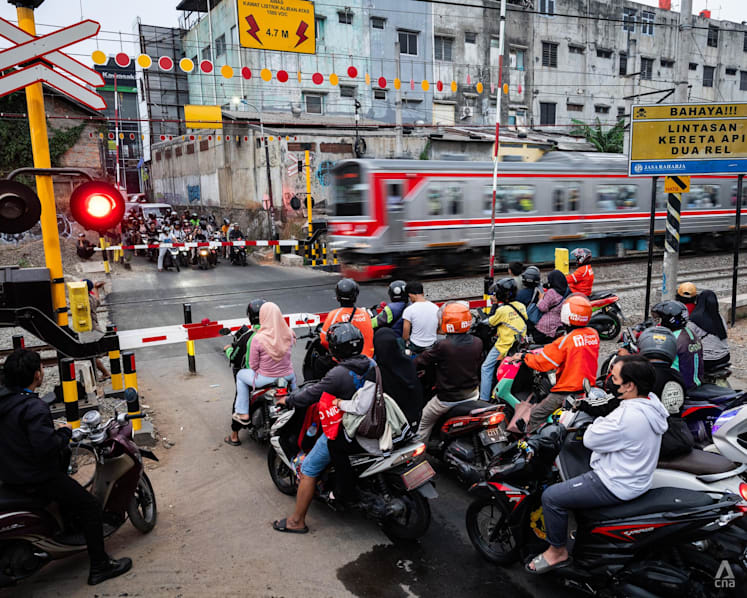
But experts said reforms should go beyond KNKT’s recommendations and the railway lines directly affected by the Bekasi crash.
Among the measures they are calling for is the closure of Indonesia’s roughly 3,800 level crossings, which several local studies have linked to around 300 accidents each year.
Experts also want trains to be equipped with automatic emergency braking systems and authorities to work towards unifying the patchwork of signalling systems used across the country, which rely on different technologies from various manufacturers and countries.
“Having multiple different signalling systems will, sooner or later, create a risk of operational problems that could potentially develop into safety issues,” transportation planning expert Yusa said.
Djoko of Soegijapranata Catholic University said the government should also conduct a nationwide railway safety audit to determine how far the problems uncovered in Bekasi exist elsewhere in Indonesia.
“Accidents keep happening in Indonesia because whenever there is an accident and KNKT issues recommendations, they are often only partially implemented or limited to the affected area. The improvements tend to be one-offs and are not sustained. That’s why we see the same problems recurring again and again,” he said.
“There needs to be a safety audit so that improvements can be made continuously … Don’t wait for another accident before making improvements.”
Source: CNA/ni(as)
Sign up for our newsletters

Get the CNA app
Stay updated with notifications for breaking news and our best stories
Get WhatsApp alerts
Join our channel for the top reads for the day on your preferred chat app

Get bite-sized news via a new
cards interface. Give it a try.
Click here to return to FAST
Tap here to return to FAST
FAST