From serial collectors to reluctant recyclers: How Singapore’s beverage container return scheme is shifting habits
As the transition period for the Beverage Container Return Scheme draws to a close, how has the scheme changed consumer behaviour, and will this translate into better recycling habits in the long run?
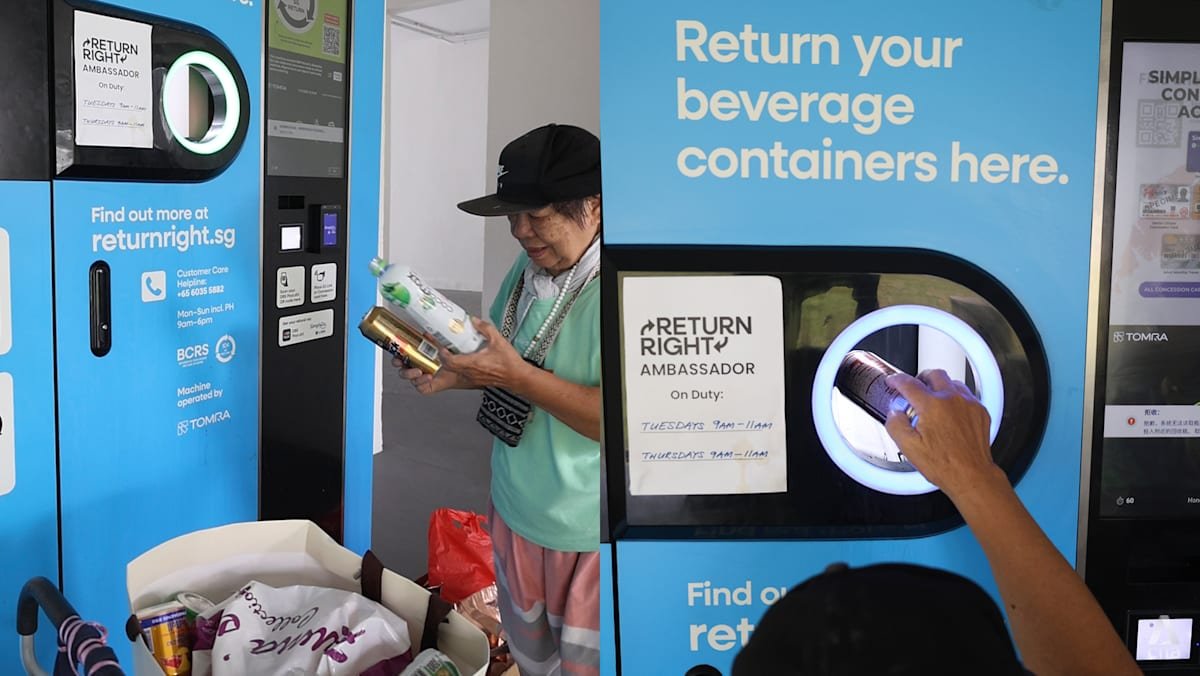
Madam Tan Mui Sng, 79, a retiree, feeding a can into a reverse vending machine at the void deck of her housing block in Serangoon on Sep 17, 2026. (Photo: CNA/Ooi Boon Keong)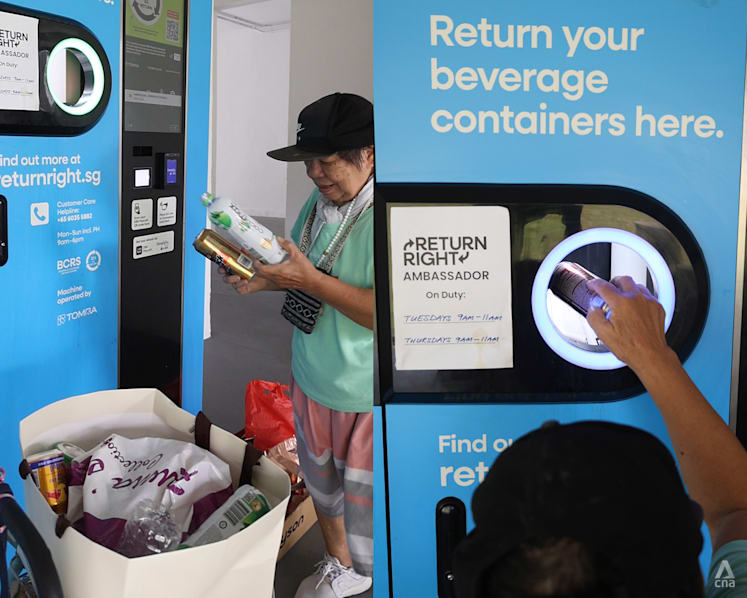
New: You can now listen to articles.

This audio is generated by an AI tool.


Read a summary of this article on FAST.
Get bite-sized news via a new
cards interface. Give it a try.
Click here to return to FAST
Tap here to return to FAST
FAST
SINGAPORE: Every few weeks, 79-year-old Tan Mui Sng heads to the reverse vending machine at the void deck of her Serangoon housing block with a trolley and bags of empty containers in tow.
The retiree returns dozens of containers each time, earning a few dollars in deposits — the result of hours spent scouring her neighbourhood for discarded drink cans and bottles.
While already a habitual collector before the nationwide Beverage Container Return Scheme (BCRS) was launched on Apr 1, the prospect of higher returns from reverse vending machines has spurred Mdm Tan to collect even more.
The scheme, which is still in a transition period until Thursday (Oct 1), may not have altered her desire to recycle discarded cans and bottles, but it has certainly made her weekly efforts more profitable.
“For this one, there’s much more money,” she said in Mandarin, adding that she used to earn S$0.50 (US$0.39) for every 1kg of containers she sold to the rag-and-bone man.
She has lost track of how often she has used the reverse vending machine, but estimated earning more than S$10 from returning containers.
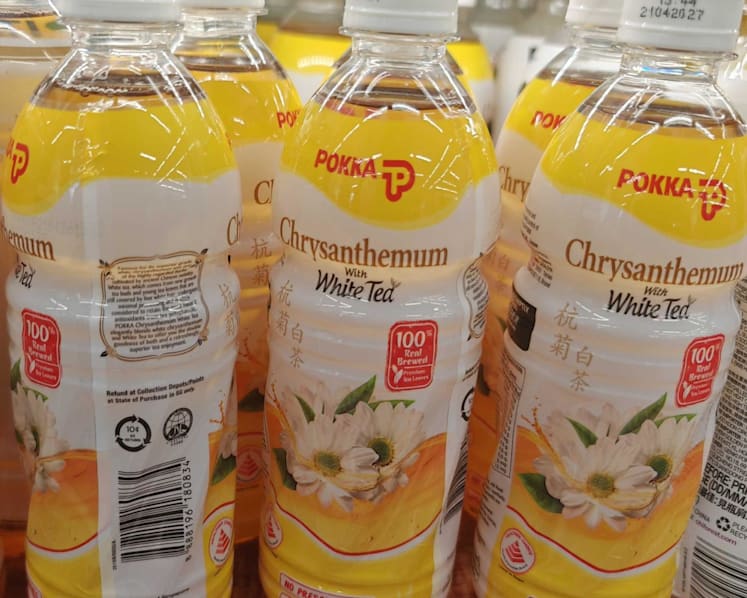
Under the scheme, consumers have to pay a refundable 10-cent deposit on eligible beverage containers, comprising pre-packaged plastic or metal containers with volumes between 150ml and 3,000ml.
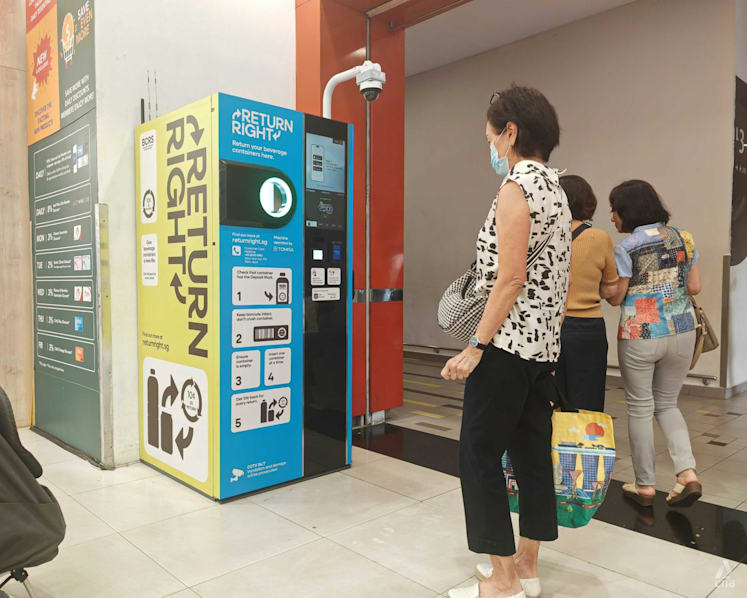
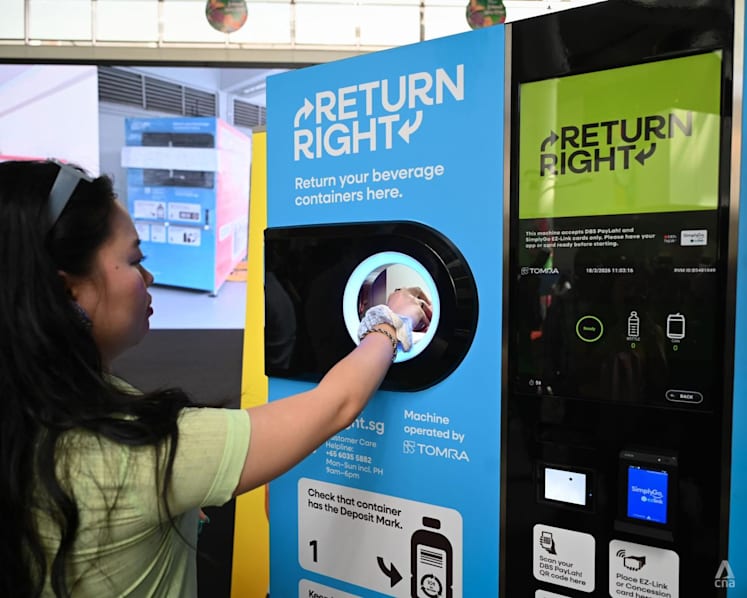
The deposit can be reclaimed by returning marked containers at one of around 1,300 Return Right reverse vending machines across Singapore.
On Sep 21, BCRS Ltd, the operator of the scheme, reported that more than 33 million bottles and cans had been collected by mid-September, up from 5.5 million as of Aug 5.
The operator has yet to say what proportion of eligible containers sold have been returned — also known as the return rate.
Singapore consumes more than one billion beverage containers annually, according to the National Environment Agency (NEA).
Dr Adrian Kuah, Professor of Strategy and Sustainability at James Cook University said while 33 million returned containers may “sound small” compared with the more than one billion consumed annually, this was not an apples-to-apples comparison, given that the scheme is still in transition.
“More significant is the acceleration — from 5.5 million returns in early August to more than 33 million by mid-September — showing participation is increasing.”
The return rate would ultimately be a more meaningful measure of how well the scheme is working, he said.
While it may still be too soon to tell how overall recycling rates have changed with the scheme still in its infancy, there are signs that the 10-cent deposit is already influencing some behaviours.
Several consumers told CNA the scheme has reinforced their recycling habits, while collectors like Mdm Tan actively hunt for containers discarded by others. Others, however, dismissed the process as too much hassle to bother.

Guess Word
Crack the word, one row at a time

Buzzword
Create words using the given letters

Mini Sudoku
Tiny puzzle, mighty brain teaser

Mini Crossword
Small grid, big challenge

Word Search
Spot as many words as you can
What will happen after Oct 1
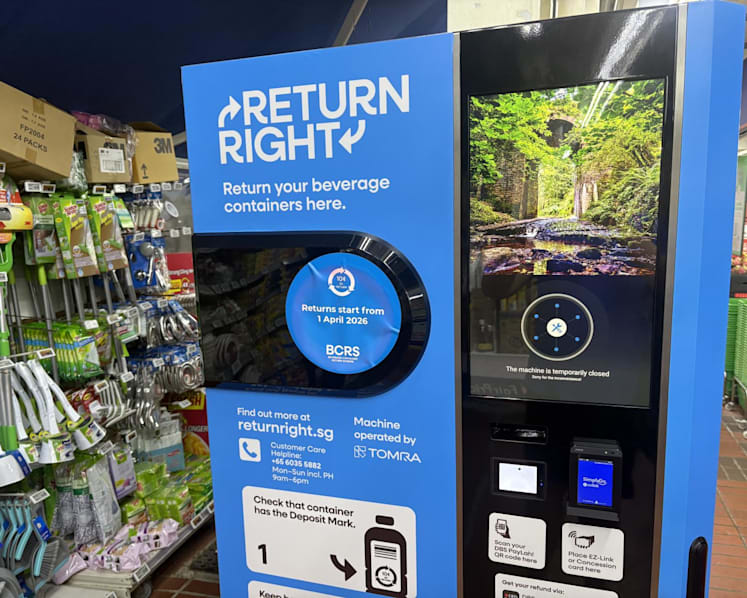
The scheme is currently in a transition period as retailers phase out beverage containers without the deposit mark.
It was initially slated to be fully implemented on Oct 1, after which containers without the deposit mark could no longer be sold.
NEA announced on Sep 18 a one-month grace period for eligible small retailers to clear unmarked stock by Oct 31.
Since then, over 2,000 smaller retailers have applied for more time to clear non-BCRS drinks stock.
Collapse
Expand
A NEW VALUE FOR USED CONTAINERS
For those who are making recycling containers through BCRS part of their routines, the process of collecting containers and returning them is a rewarding experience despite the extra effort.
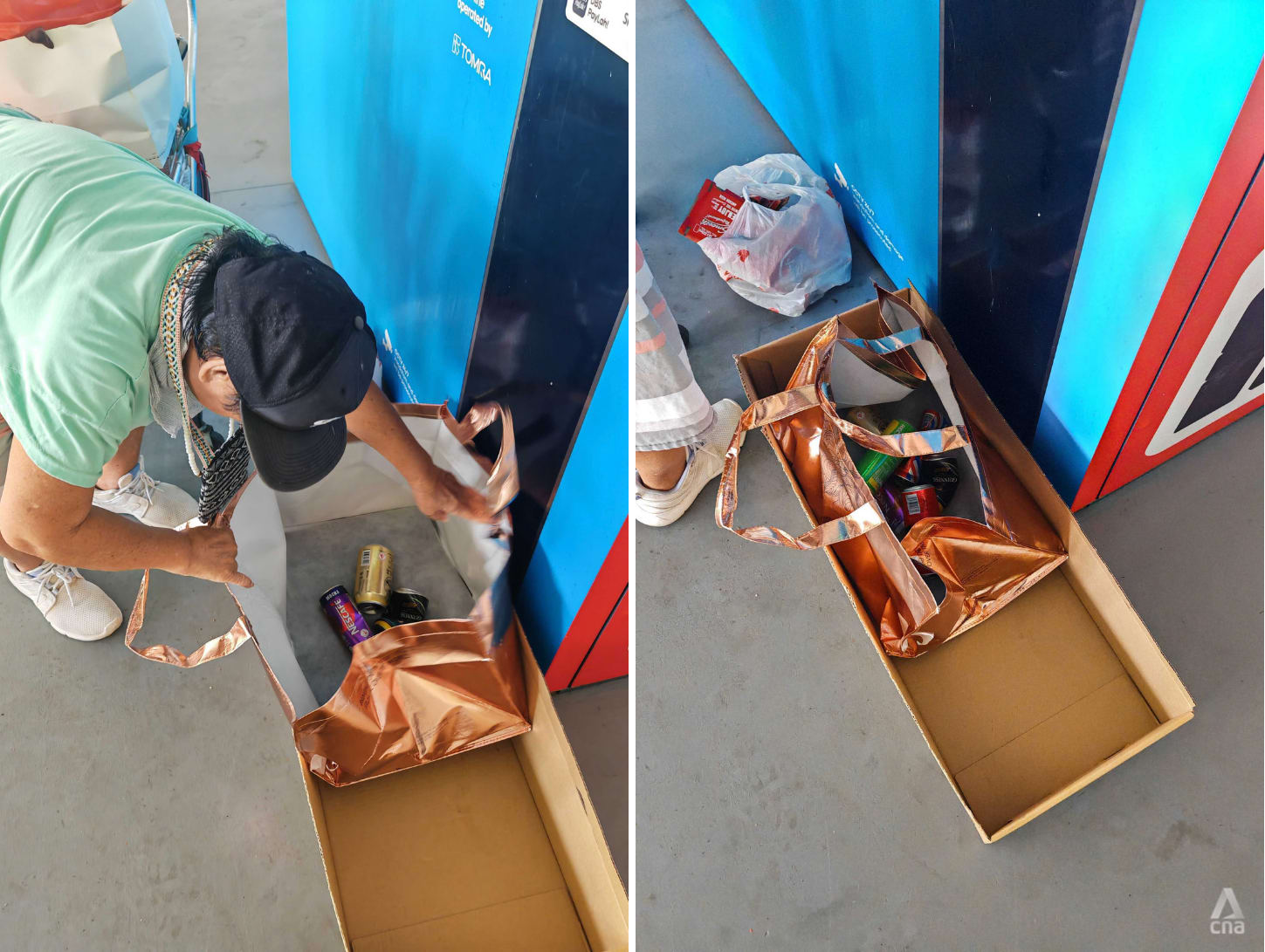
When CNA met Mdm Tan on Sep 17 afternoon, she methodically placed a bag and cardboard box at the foot of her usual reverse vending machine to collect rejected containers for disposal in a rubbish bin nearby.
She said that she had already been collecting empty cans to sell to the rag-and-bone man for five to six years before the scheme began, having taken it up in her spare time.
In the evenings, when it was cooler, she would head out to hunt for containers in nearby bins.
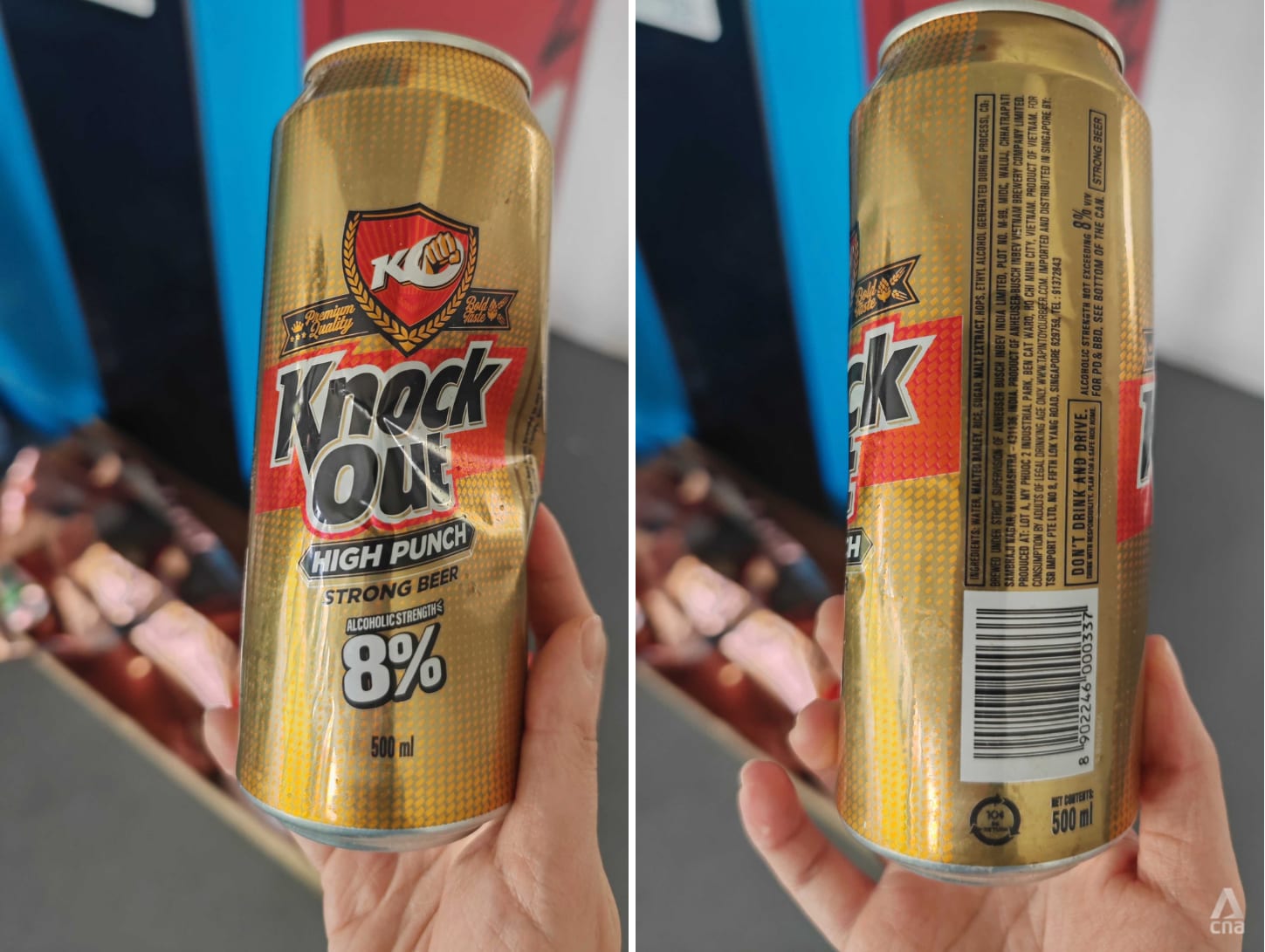
Mdm Tan demonstrated the process of inserting 32 containers into the machine. But only 14 containers were accepted, as the rest were either unmarked or dented despite carrying the deposit mark.
Grumbling about how she ended up with so many rejected drink containers, Mdm Tan said she could not check every container due to her poor eyesight.
Nevertheless, the retiree said she is now well-versed in the process of returning the containers and crediting refunds to her EZ-Link card.
“At first my MRT card only had S$6. A few days I went to use and there was S$8, there was an increase,” said Mdm Tan.
Others told CNA that they have developed a regular habit of returning discarded cans and bottles. Reclaiming their deposits was their main reason for doing so.
Mr Mark Zhang, 24, and his girlfriend save their containers for a trip to a reverse vending machine near their home in Hougang every two weeks.
The couple were spotted feeding 24 plastic bottles and 10 metal cans into a reverse vending machine for S$3.40 in refunds on Sep 23.
They said the scheme was already in place when they moved to Singapore from China six months ago, so they had little difficulty adopting the practice despite not having done anything similar back home.
Asked why he had taken up the habit, Mr Zhang said in Mandarin: “It is to recycle and to get my money back.”
Another recycling convert, who gave his name as Roy, said the machine has incentivised him to recycle more.
The 71-year-old said he “seldom” used to recycle cans or bottles after consuming their contents, leaving them at tray return stations or occasionally depositing them in blue recycling bins if he came across them.
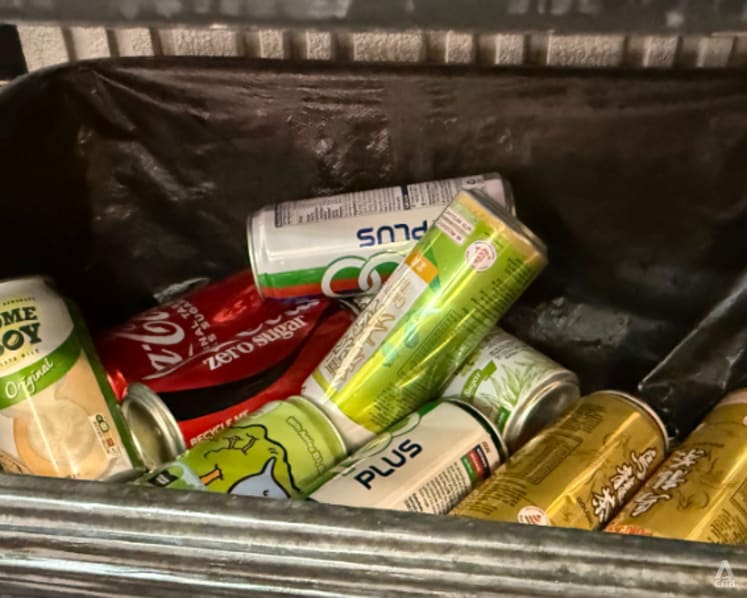
He has since used the reverse vending machine four to five times to return containers of sparkling Oldenlandia water he drinks at home.
Roy said using the machine required him to make a conscious effort to leave home and return the containers. He takes them to the reverse vending machine at Kang Kar Mall, the closest one to his home.
However, on one occasion, he tried to recycle his containers, only to find that the machine had reached full capacity. He suggested that full machines could direct users to the nearest alternative.
NOT ALL ON BOARD WITH SCHEME
But not everyone is on board with the scheme, with some saying the effort of returning their cans and bottles may not be worth getting their 10-cent deposit back.
On a Monday evening, CNA spent 20 minutes observing three different reverse vending machines in the north-east where rubbish bins were located nearby.
About two in five people seen disposing their drink containers tossed them straight into the bins rather than using the machines.
Even with a machine a few steps away, some consumers still opt for the quickest way to dispose of their containers.
Mr Jude Theng, 30, is one such consumer who remains unconvinced despite having reverse vending machines near his home.
On weekday mornings, Mr Theng passes at least two reverse vending machines during his walk and short bus ride to the MRT station on his way to work. But he has never used one as he feels the process is very cumbersome.
Instead, he disposes of his recyclable items through the recycling chute below his block every now and then.
Now that the scheme’s transition period is about to end, Mr Theng said he will need to choose between going through the hassle of returning a container or losing the deposit he paid.
“It is a refundable tax that you have to work to get back. It’s not an incentive to me. It feels like I’m being forced to recycle, and it increases this whole barrier for me.
“If I were to recycle, I want to recycle of my own accord rather than because of this tax burden. So personally, at this moment, I don’t see myself queuing up, waiting for each individual in front of me to slot in bottles one by one,” said Mr Theng, who works in an admin job.
There are also a few people who said they have tried out the BCRS process but were not persuaded to try again.
Having used the machines about 10 times, Mr Dean Heng has cut back their usage in recent months and may eventually stop altogether.
Long queues, rejected cans and bottles, and machines reaching full capacity have put him off the scheme.
“I wanted to return a plastic bottle that day and even queued for almost 10 minutes. When it was my turn, the machine had reached its maximum capacity and was no longer accepting bottles,” the 22-year-old student said.
Rather than making a point of seeking out a reverse vending machine, Mr Heng now disposes of his cans and plastic bottles at whichever option he comes across first — be it a reverse vending machine, recycling bin or rubbish bin.
“If we can have more BCRS machines around, like how we have parcel lockers at so many void decks, then I would be more encouraged.”
Mr Mohamed, who goes by one name, told CNA that recycling is already part of his routine – he disposes recyclables in a bin at the roadside near his block once a week.
His bigger concern is that the scheme could make recycling more cumbersome for households like his that are already doing it.
“I’m already recycling, and now I’m being penalised in the sense that I have to not only wash and collect. But instead of just dropping it into the bin below, I have to go to the machine to get it done,” said the 45-year-old.
SCHEME HAS ALREADY MADE AN IMPACT: EXPERTS
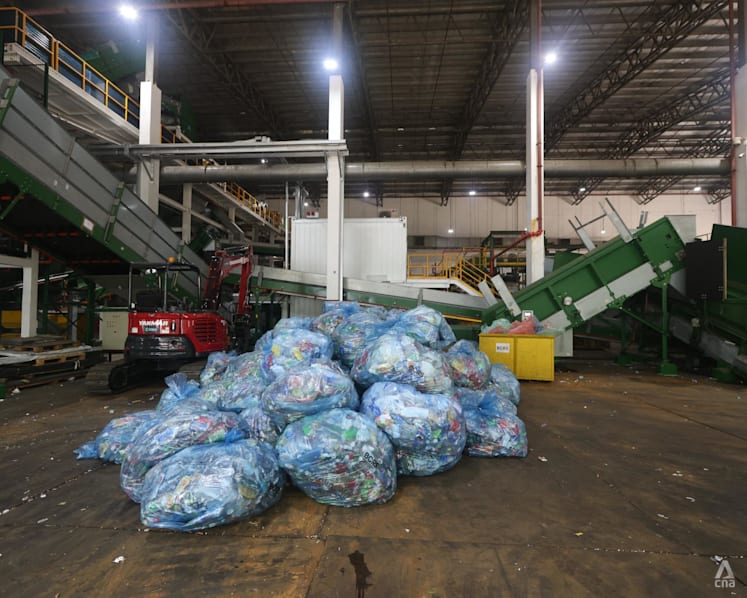
Singapore University of Social Sciences lecturer Eugene Or pointed to the 553 tonnes of material recovered by the scheme, describing it as a “real environmental outcome”.
“But an economist would also ask about the counterfactual: what would have happened to these containers without BCRS?” said Dr Or, who specialises in environmental economics.
“If they would have gone into general waste, the additional environmental benefit is substantial. If they would already have gone into Singapore’s blue recycling bins, there can still be an important gain because BCRS produces a cleaner recycling stream.”
Overseas deposit return schemes have been proven effective at shifting consumer behaviour, Dr Kuah said.
Germany reports return rates of at least 96 per cent as of June this year, according to the Deutsche Pfandsystem, the organisation behind the deposit system framework there. In Norway, 92.4 per cent of plastic bottles and 93.1 per cent of cans were returned through reverse vending machines in 2025, according to an annual report by operator Infinitum.
But these countries have had decades to build the infrastructure, habits and social norms around returning containers, while Singapore is only beginning to build such an ecosystem.
Dr Kuah’s research also suggests that the relationship between environmental values and actual consumer behaviour differs across cultures.
“European consumers, particularly in some mature recycling systems, appear more likely to translate biospheric values into individual pro-environmental action.
“In Asian contexts, environmental concern may be strong, but behaviour may be more dependent on economic incentives, social norms, institutional arrangements and perceptions that individual actions make a difference,” he said.
Dr Or said people like Mdm Tan show how putting a price on an empty container can change what happens to it.
He described individuals who collect containers beyond what they consume as a “fascinating demonstration” of how an incentive changed the value of waste.
“If the person who bought the drink does not value that 10 cents enough to return it, somebody else may,” he noted.
Both Dr Or and Dr Kuah said there could still be a positive material outcome if the container is ultimately recycled, but cautioned against equating material recovery with broader behavioural change.
Dr Or added that a recycling policy did not need to change everyone’s preferences to improve environmental outcomes.
“We should, of course, watch for unintended effects, such as nuisance or simply diverting material that was already going to be recycled,” he said.
“The interesting point is that BCRS can change who returns the container while still increasing the likelihood that the container gets recycled.”
Dr Or also pointed to the gap between reported recycling participation and actual recycling outcomes.
NEA’s 2025 survey on household recycling found that 78 per cent of households reported that they recycle, even though Singapore’s domestic recycling rate was 11 per cent.
While the figures are not directly comparable, Dr Or said they, together with the roughly 40 per cent contamination rate in household recycling bins and chutes, illustrate how widespread participation does not automatically translate into strong recycling outcomes.
“For Singapore, BCRS can therefore contribute not only by encouraging more recycling, but also by improving the quality of what is recovered.”
While the BCRS could have a broader spillover effect on recycling habits, this would not be automatic, the experts said.
Dr Or pointed out that a person could be very disciplined about returning a can while continuing to put the wrong items into a blue recycling bin.
“For Singapore, the strongest spillover would therefore be not just more recycling, but better recycling,” he added.
WHAT ELSE CAN BE DONE
For those who remain unmoved, experts said the challenge may lie less in persuading them to recycle than in making it worthwhile to return their containers.
“The hardest consumers to reach may not necessarily be those who don’t care about the environment. They may be people who are time-poor, convenience-driven or simply have not developed the recycling habit,” Dr Kuah said.
This could include people who consume drinks on the go or those for whom the 10-cent refund is relatively small when compared with the inconvenience involved.
Dr Or said the deeper challenge was to turn willingness to recycle into correct, consistent behaviour that produces recoverable material.
“I would therefore think of lasting change as moving from incentive, to habit, to norm. The 10-cent deposit first changes the cost-benefit calculation; repeated participation can then make returning containers habitual; eventually it becomes something people do almost automatically,” he said.
But he said cultural change should not be the only measure of success.
“The strongest outcome for Singapore is when the economics and the culture eventually point in the same direction: the incentive gets people started, habit keeps them going and returning beverage containers becomes the normal thing to do.”
Dr Kuah, meanwhile, suggested studying a different incentive model — rewarding consumers for returning containers rather than charging them a deposit upfront — to see if it could encourage stronger habits.
He cited a 2026 survey experiment comparing reward and deposit schemes, which found that a sufficiently meaningful positive reward increased recycling willingness.
“Ultimately, we should test which mechanism produces not only the highest return rate, but the strongest long-term recycling habit,” he said.
Source: CNA/wt
Sign up for our newsletters

Get the CNA app
Stay updated with notifications for breaking news and our best stories
Get WhatsApp alerts
Join our channel for the top reads for the day on your preferred chat app

Get bite-sized news via a new
cards interface. Give it a try.
Click here to return to FAST
Tap here to return to FAST
FAST