

Skip NavigationMarketsBusinessInvestingTechPolitics & PolicyVideoWatchlistInvesting Club PRO
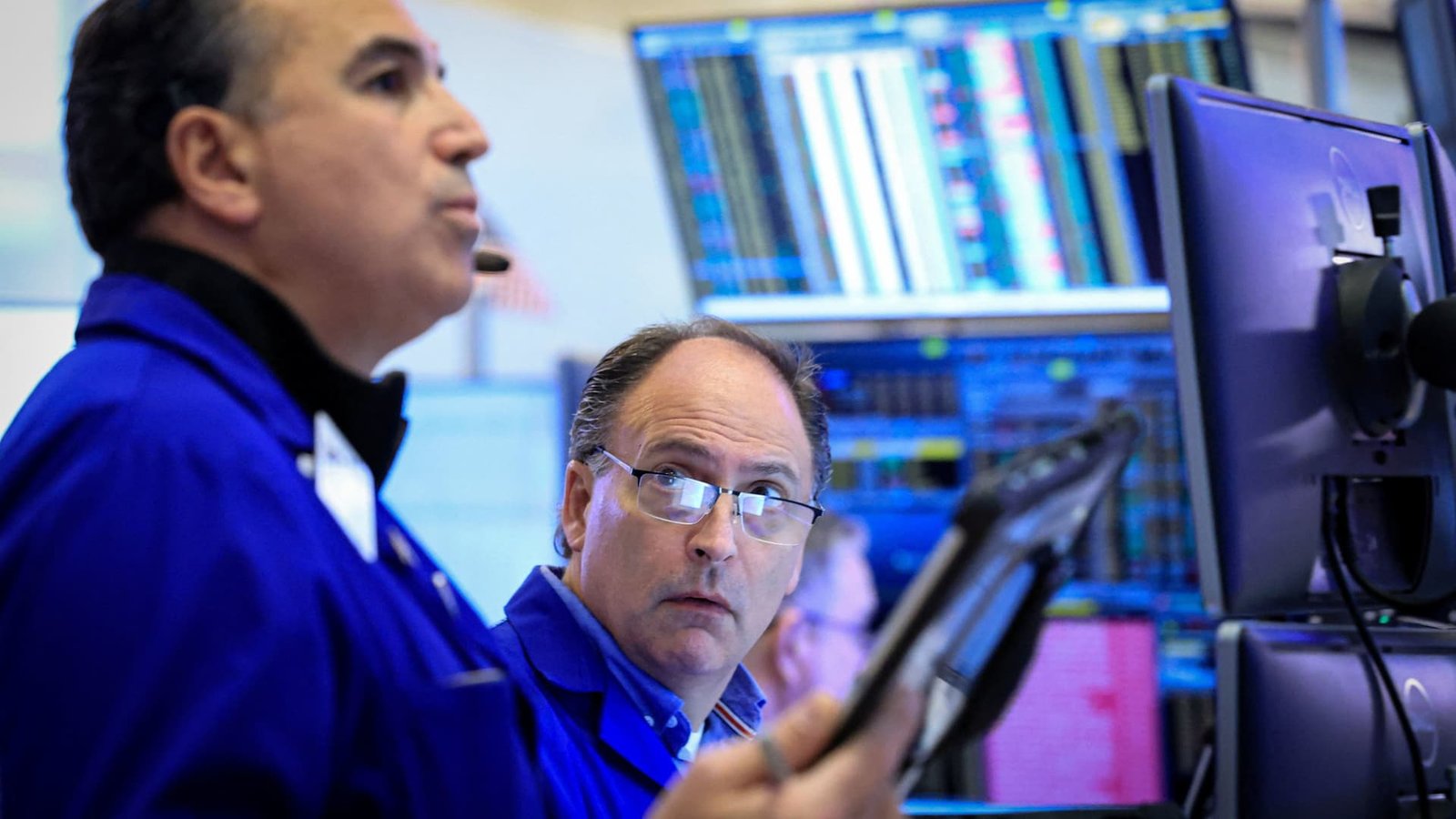
 LivestreamMenuThis latest bout of market turbulence may still get worse before it gets better. Investors are wrapping up a topsy-turvy week in markets. After the Dow Jones Industrial Average soared 1,500 points on Wednesday, the day after the U.S. midterm elections, it promptly erased all those gains on Thursday, plunging 1,800 points in the worst sell-off Wall Street had seen since April 2025 — which was when President Donald Trump announced his so-called “liberation day” tariffs. That’s not all: The Nasdaq Composite plunged into a correction, as artificial intelligence stocks bore the brunt of the selling. The single-day pillaging left the Magnificent Seven companies collectively poorer by $1 trillion , with Nvidia alone suddenly out a stunning $440 billion. Stocks recouped some of those losses on Friday, but traders don’t expect the bleeding is over just yet — even if they start taking a bite here and there, especially in semiconductors. “What I look for is this to continue over the next few days, maybe another week, before we hit a bottom,” said Jay Woods, chief market strategist at Freedom Capital Markets. No panic yet Even before a Democratic sweep of the House and Senate complicated the outlook for data center development in the U.S., investors had been anxiously waiting for the stock market to press the reset button on the AI trade. In many ways, the stock market has managed to avoid a true capitulation thus far thanks to a buy-the-dip mentality that has kept retail traders circulating their cash through the different parts of the market without ever leaving. More recently, they’ve been piling into defensive sectors such as healthcare and consumer staples, making even the safety trades look overbought. Meanwhile, the S & P 500, in spite of its many fits and starts this fall, is essentially where it was in July. .SPX YTD mountain S & P 500, YTD Now the market looks closer to finding a durable bottom. Thursday marked the biggest day of retail selling since the Covid pandemic, according to Vanda Research, as individual investors joined their institutional counterparts in pulling back from the market. But the losses aren’t severe enough yet. Bob Lang, chief options analyst at Explosive Options, said he needs to see several days of selling before calling a bottom. He noted that the CBOE put/call ratio on Thursday rose to 1.2, double the average at 0.6, which indicates 1.2 puts being bought for every call. It’s an extreme level of bearishness that’s often a contrarian signal to buy stocks. But, he said he would need more readings just like that one after this week’s ugly drawdown. Freedom Capital Markets’ Woods said he’s watching the CBOE Volatility Index , otherwise known as Wall Street’s fear gauge, which he would need to see climb above 30 before he can say there’s a real flush. On Friday, it was last at around the 24 handle. “We’re very close to this final capitulation,” Woods said. “We’re not seeing the panic yet, but we are seeing opportunities.” Drawing up shopping lists Woods thinks the highs may be in for the year, as there’s little left on the calendar that could serve as a durable positive catalyst for the market. The S & P 500 climbed to record highs just last month, topping 7,800. The third-quarter earnings season, which proved to be as impressive as anticipated, is largely behind traders, even with some big names like Nvidia still to come later this month. By the time it wraps up, the S & P 500 is expected to have grown earnings by 31% last quarter, according to FactSet’s John Butters. The results confirm yet again the unprecedented heft American companies are enjoying thanks to AI, gains that are expanding to the 493 companies outside of the Magnificent Seven. Washington will remain in focus, as investors await how a divided government tackles spending on the Iran war, a battle that could result in a government shutdown before the year is out. The path for monetary policy remains in focus, especially after Friday’s blowout payrolls report showed that hourly wages continue to grow and implied that the job market is holding up. Investors will get more clarity on the inflation front in the coming week, with the releases of both the consumer and producer price indexes. According to early estimates averaged on FactSet, CPI is expected to have increased 3.9% on a year over year basis, worse than the 3.7% in the prior reading, but core inflation is set to have cooled somewhat on a monthly basis. Some investors are drawing up their shopping lists to go bargain hunting following this week’s rout. Freedom Capital Markets’ Woods said he spies opportunities in Micron and Nvidia, both of which have been heavily punished in the recent sell-off, as well as the broader semiconductor space. “It’s not the time to jump in with both feet,” Woods said. “But it’s time to start nibbling because to pick that bottom will be very difficult.” Week ahead calendar All times ET. Monday, Nov. 9 10:00 a.m. Wholesale Inventories final (September) Earnings: Take-Two Interactive Software , Occidental Petroleum , KKR , NRG Energy , Constellation Energy , Skydance Tuesday, Nov. 10 6:00 a.m. NFIB Small Business Index (October) 8:15 a.m. ADP Weekly Employment change (10/24) 8:30 a.m. Consumer Price Index (October) 8:30 a.m. Hourly Earnings final (October) 8:30 a.m. Average Workweek final (October) Earnings: TransDigm Group Wednesday, Nov. 11 Earnings: Vylor Thursday, Nov. 12 6:30 a.m. New York Federal Reserve Bank President and CEO John Williams serves as a Panelist on UC Berkeley Alumni Salon at UC Berkeley, New York City 8:30 a.m. Initial Claims (11/07) 10:00 a.m. Existing Home Sales (October) Earnings: Applied Materials Friday, Nov. 13 8:30 a.m. Producer Price Index (October)Read More
Further turmoil could be in store for tech stocks. What to watch in the week ahead
Investors are wrapping up a topsy-turvy week in markets, and that volatility isn’t expected to end just yet.

by
Read Time
About the Author

Previous Post
Next Post
Leave a Reply
Latest News



Stay Connected
Categories
BBC News CNA CNBC CNN International Deutsche Welle (DW) Euronews France 24 General Global & European Specialized & Regional
Tags
amp Artificial intelligence Asia Breaking News: Business Breaking News: Markets Breaking News: Politics Breaking News: Technology Business business news cent china cup Donald J. Trump Donald Trump economy European Union fast football France germany india Investment strategy iran Iran war markets People per politics return russia S&P 500 Index said Singapore spain Sport Stock markets technology trump ukraine United States US-Israel attack on Iran 2026 video War in Ukraine World World Cup 2026
About the Author

AF themes
Easy WordPress Websites Builder: Versatile Demos for Blogs, News, eCommerce and More – One-Click Import, No Coding! 1000+ Ready-made Templates for Stunning Newspaper, Magazine, Blog, and Publishing Websites.

Search the Archives
Access over the years of investigative journalism and breaking reports


