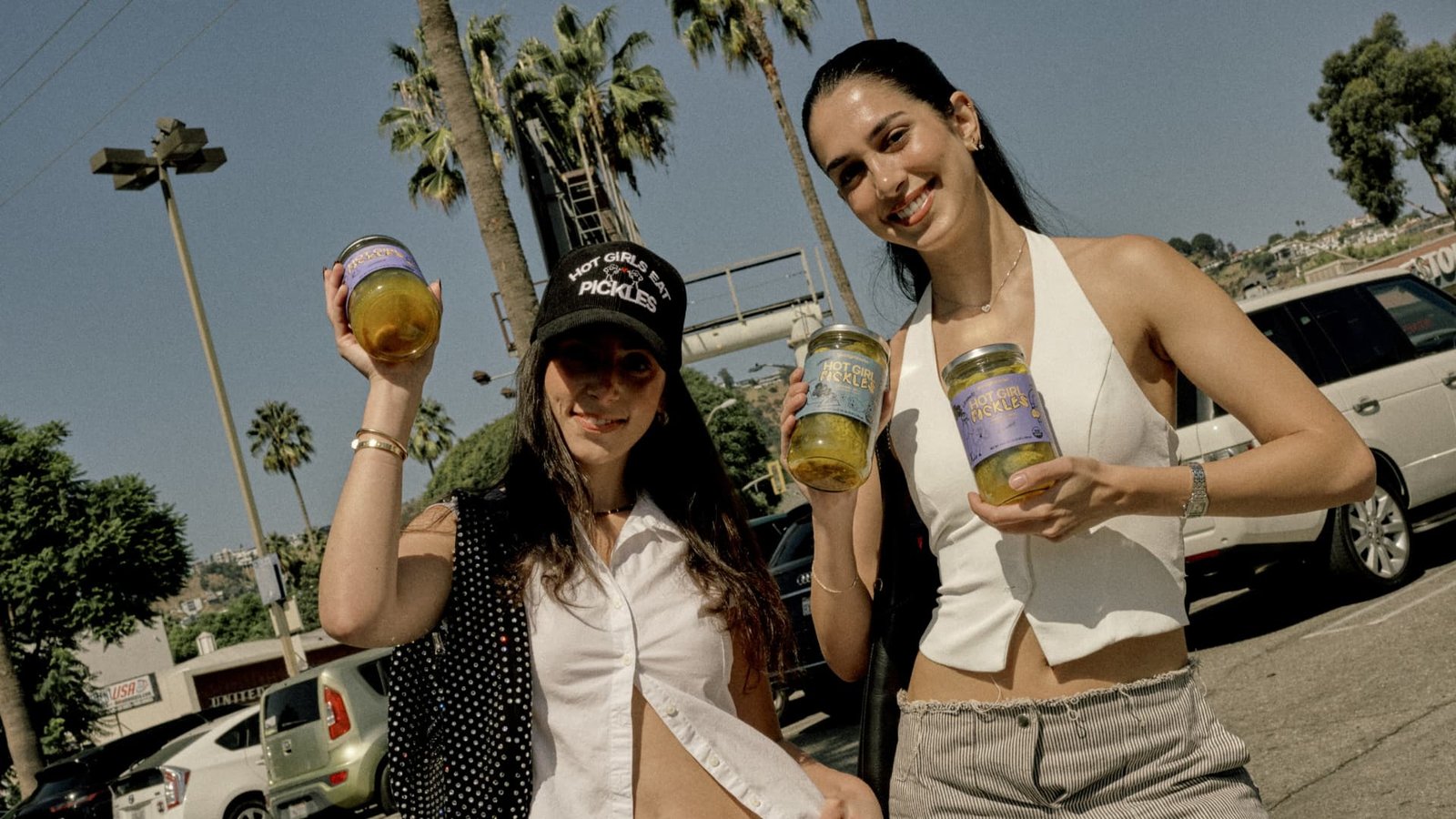
Skip NavigationGood Girl Snacks co-founders Leah Marcus (left) and Yasaman BakhitarCourtesy Leah Marcus
At 4 a.m. on Monday, June 1, Leah Marcus woke up to 70 missed calls from her co-founder.
The good news: A prominent influencer, Alix Earle, had posted a TikTok video about Hot Girl Pickles, the debut product sold by Marcus and co-founder Yasaman Bakhitar’s Los Angeles-based startup Good Girl Snacks. The bad news: Most of the video involved Earle struggling to open the pickle jar. “Imagine our horror,” said Marcus, partially joking, in a response video hours later. Next came adrenaline, when hundreds of orders flooded the startup’s Shopify store the following day, Marcus and Bakhitar say.
Turning chaos into content is part of the recipe at Good Girl Snacks, which sells jars of Hot Girl Pickles nationwide online and in grocery stores including Whole Foods Market and Erewhon, and grab-and-go packets on its website and in smaller grocery stores. The startup declined to share revenue figures or profitability status, but was most recently valued at $8.5 million following a $3 million seed fundraising round in March, according to documents reviewed by CNBC Make It.
The co-founders tout original recipes, but at a fundamental level, they didn’t invent a new method to soak cucumbers in vinegar. Instead, Marcus, 26, and Bakhitar, 27, say they’ve grown their startup around an aptitude for branding toward a Gen Z audience, both online and offline.
Each Hot Girl Pickles product has brightly colored pink, purple or teal packaging that visually stands out against the sea of legacy brands’ primary colors on grocery store condiment shelves. The co-founders’ tone drips with dryness, self-deprecation and a hint of sarcasm, when addressing their social media followers, including nearly 175,000 of them on Instagram — more than most traditional pickle brands, which generally aren’t as active online.
“Everything we do is to create a reaction,” says Marcus.
A business that’s online and atypical for its category is a positive for many Gen Zers, says Americus Reed, a marketing professor at The Wharton School of the University of Pennsylvania. Currently aged 14 to 29, Gen Zers are in a life stage where building “social credibility” among their peers matters, Reed says. Posting online about niche products can help them express part of their identity to their followers, Reed says — like how a colorful jar of organic pickles may show that someone is a conscientious snacker, for example.
Pickles are an actual trend right now, too: 20-somethings pushed retail sectors into “peak pickle” this summer, says Marni Shapiro, co-founder research and consulting firm The Retail Tracker. Pickle-flavored snacks brought in $518 million in sales between February 2025 and February 2026, up nearly 40% from a similar time period the year prior, according to data from market research firm Circana cited by food giant Conagra in a May 18 news release.
Marcus and Bakhitar, who are both of Middle Eastern descent, say they grew up eating cornichons at family meals.Courtesy Leah Marcus
Bakhitar and Marcus, college friends who graduated from the University of Southern California in 2022, started out as two of those 20-somethings, sending each other TikTok videos about pickles every day as early as 2023, they say. They decided to quit their jobs and start their company together that summer, as trends like Hot Girl Walk and Girl Dinner hit a fever pitch on social media, inspiring their startup’s name and branding.
“Our brand doesn’t take itself seriously. We’re self-deprecating on social media all the time. We do things that aren’t typically done in our category,” says Marcus.
The pair solicited startup advice from their USC classmates Troy Bonde and Winston Alfieri — co-founders of pasta sauce startup Sauz — and industry experts on LinkedIn to learn about funding, operations and logistics, they say. They raised an undisclosed amount of money from friends and family, and Good Girl Snacks sold its first pickles direct-to-consumer through its website in February 2024, they say. All along, they posted on social media about the process of building their business and gained 24,000 Instagram followers by Day 1 of sales.
The following month, Marcus and Bakhitar made another strategic decision based on their network’s advice, submitting applications to sell pickles at Erewhon and Whole Foods despite barely having any history as a business. Both applications were approved in 2025, widening Hot Girl Pickles’ audience to include less-online buyers.
Of course, Gen Z only makes up about 20% of the U.S. consumer market. As far as pickles go, the industry is still dominated by decades-old legacy brands like Mt. Olive and Vlasic, according to an August 2025 report from grocery delivery service Instacart. Mt. Olive sells 230 million jars of pickles, peppers and relishes per year, according to its website. Vlasic is owned by Conagra, which has a market cap of $7.72 billion, as of Friday’s market close.
Bakhitar and Marcus say they plan to sell additional snacks beyond pickles, using a similar branding and marketing playbook to grow their customer base across other categories. They may face challenges they don’t expect: Their first-ever inventory order of pickles, for example, got accidentally frozen in shipping, resulting in 3,000 pounds of defrosted, soggy, crunch-less cucumbers, the co-founders say. Another early shipment got delayed by a crop-destroying storm in Mexico, they add.
The co-founders documented both episodes in an online series they dubbed “cucumber gate.” Such growing pains are opportunities for great social media content, they say.
 VIDEO09:10I spent $20K to open a store in NYC—now it brings in $1.6 million a yearHow I Made It
About The Author