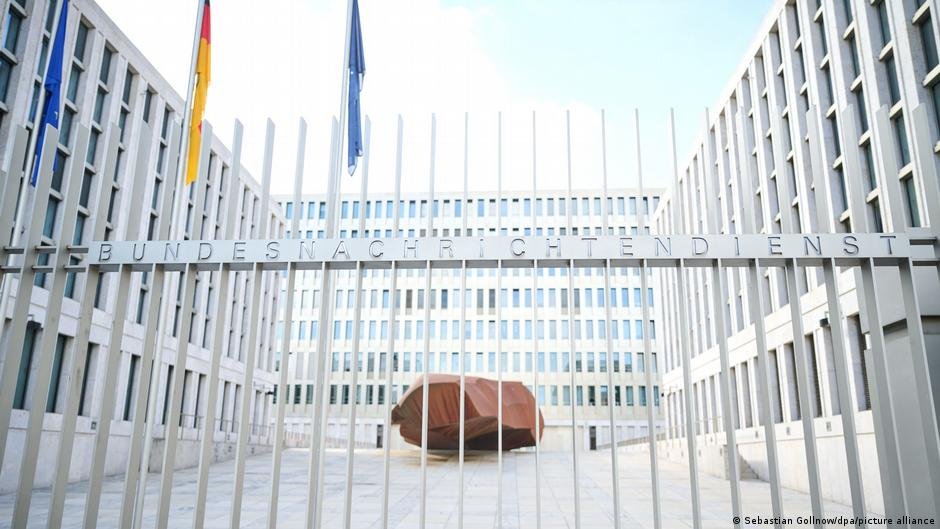
The arrests of August Hanning, former president of Germany’s foreign intelligence service, the Bundesnachrichtendienst (BND), and his former chief-of-staff, Manfred D.*, are threatening to cause a major rupture in Germany’s intelligence relationships, according to analysts, as the full scale of the scandal begins to be understood abroad.
Manfred D. is accused of selling around 2,000 highly classified documents to Hanning over a period of 12 years, long after the latter stepped down from the BND in 2005 following seven years as its chief. Manfred D. continued to serve all of Hanning’s successors, including the current BND chief Martin Jäger, before retiring in March this year.
On one occasion, the state prosecutor said, Hanning “used classified intelligence provided by Manfred D. to draft an analysis for an officer of a foreign intelligence service.”
To view this video please enable JavaScript, and consider upgrading to a web browser that supports HTML5 video
According to Florian Flade, a reporter for public broadcaster ARD, most of these documents were weekly intelligence briefings the BND delivered to the German government, including the latest findings from partner intelligence agencies in other countries.
“This is very, very sensitive because it involves partner agencies in other countries,” Flade told DW’s Berlin Briefing podcast. “And we heard this also involves information about the Iranian nuclear program, the Russian military, also the Ukraine war.”
Broken trust, broken credibility
Some pundits now say that the biggest concern is what conclusions the intelligence agencies of allied countries will draw from this affair. In the past, the Central Intelligence Agency in the US is known to have shared information on radical Islamists in Germany, which possibly helped to prevent terrorist attacks in the country.
If it now emerges that information was leaving the BND via Hanning, that relationship could be undermined, particularly if it was also eventually ending up in the hands of the intelligence agencies of Russia and China — though there is no suggestion of that as yet.
“There’s huge damage being done not only to the outer appearance and image of the BND,” said Flade. “There’s a damage assessment now happening within the BND. Also, they’re talking to partners about this because they want to know if their information was given to other countries.”
That could also potentially have consequences for Germany’s national security in the growing confrontation with Russia. The BND, which is currently subject to more legal restrictions than other intelligence agencies around the world, considers its relationship with its US counterpart as vital.
“There might be a change in the amount of information that is coming from the US and others,” Flade added. Ultimately, he pointed out, it might be difficult for the BND to know what they’re not being told.
To view this video please enable JavaScript, and consider upgrading to a web browser that supports HTML5 video
Only a day before the scandal broke, current BND President Martin Jäger reiterated his concern that Germany could slide into a military conflict with Russia, telling a parliamentary hearing that the Kremlin was already waging a “shadow war” and that further military rearmament was “unfortunately necessary” — though he did say that there was currently no indication of active preparations from Russia.
Flade said that, behind the scenes, Jäger is furious about the leak of information from Manfred D. and called a meeting on Tuesday of all BND officials to underline how serious the consequences of sharing information could be. New internal security measures are also being put in place.
The new case could not have come at a worse time for Jäger or the BND. For one thing, new laws are currently being prepared to expand the agency’s powers, partly to improve the BND’s standing among its foreign partners.
For another thing, another BND agent, Carsten L. and a businessman named Arthur E., are currently on trial in Berlin on treason charges for passing on classified documents to the Russian secret service in 2022.
New rules for old officials?
The case has also raised questions about what former intelligence officials should and shouldn’t be allowed to do once they leave office. After leaving the BND, Hanning founded his own security consultancy business, where he apparently used his contacts and knowledge to advise his clients. This is legal and tolerated, but many think it shouldn’t be.
Timo Lange of the NGO LobbyControl said that the Hanning case shows why former intelligence officials must be prevented from working as security consultants in any capacity for the rest of their lives.
“It is fundamentally problematic when high-ranking officials from the intelligence or military sectors, after leaving government service, act as consultants for various — and in some cases unknown — clients from abroad,” Lange said in a statement. “This is an obvious gateway for illegitimate foreign influence and jeopardizes the security interests of Germany and the European Union.”
But as Flade pointed out, Hanning’s career path is not exactly unusual. “These people are trying to just make some money with what they can do best, which is networking and then selling the security assessments that they do,” he said. “And yeah, working for companies or even for other countries as a consultant.”
Edited by Rina Goldenberg
Editor’s note: DW follows the German press code, which stresses the importance of protecting the privacy of suspected criminals or victims and urges us to refrain from revealing full names in such cases.