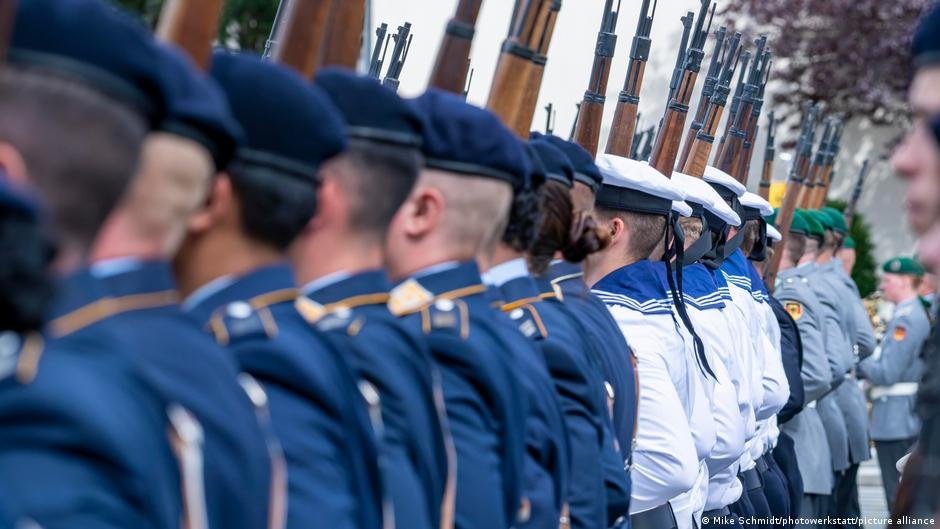
Germany’s Bundeswehr military employed roughly 186,700 soldiers as of July 31 this year, the Defense Ministry said on Monday.
The increase is a relatively rare positive headline as Germany and its military try to ramp up recruitment, procurement and defense spending — to meet new NATO targets, appease the Donald Trump administration, and respond to perceived threats from Russia and beyond — encountering a string of setbacks and bottlenecks along the way.
By the mid-2030s, Germany aims to recruit some 70,000 more full-time troops than it currently has on retainer, to reach a full-time force of around 260,000 plus around 200,000 reservists.
Some, including Defense Minister Boris Pistorius, have voiced concerns that this might be difficult to achieve without reintroducing some form of military service.
What’s the latest data on Bundeswehr troop numbers?
- The Defense Ministry said the total of around 186,700 put the military inside its recruitment target window for this year with months to spare
- It was aiming to reach between 186,000 and 190,000 personnel in 2026, and anticipates further increases this year
- It also said it was the highest total in ‘around 13 years,’ soon after the 2011 abolition of the country’s former period of mandatory national service for many young men
- The total was an increase of roughly 3,700 troops, or around 2% of the total force, since the previous July
- Applications were also up 26% year-on-year, at 47,300 in total
- New hires from those applications rose 12%, to 15,400
- Roughly 61,500 are career soldiers on permanent contracts
- The bulk of the full-time force, around 113,000 troops, are on long-term temporary contracts
- Short-term contract soldiers and volunteer forces’ numbers also rose by about 6%, to around 12,100 in total
How are the new service surveys for young people faring?
The Defense Ministry also published information on the new service availability questionnaires that are trying to boost recruitment among people of school-leaving age.
A survey trying to gauge a person’s availability, interest and suitability is sent to young men and women alike. Men are obliged to respond, women and people of other sexes or genders are not.
At present, responding in no way commits you to any form of service, no matter how great an interest you express or aptitude you demonstrate.
The figures do clearly point to the obligation to respond having a major impact on participation.
To view this video please enable JavaScript, and consider upgrading to a web browser that supports HTML5 video
Of around 194,000 men surveyed, 96% responded. But of 184,000 women and people of other genders questioned, only 4% voluntarily replied.
The ministry said that if you excluded people who responded with a 0 when asked to rank their interest in joining the military from 0 to 10, then the average figure given was a 5.
It said the questionnaires had led to 2,630 people coming in for assessments, and 865 people signing up for active service, starting either this year or in 2027.
“This proportional increase in staff is an ‘add-on’ — that is, a supplement to the extensive recruitment efforts that have contributed to the very encouraging number of applications and hires mentioned above,” the Defense Ministry wrote.
Edited by: Rana Taha
If you rely on our team for trusted reporting, please take a moment to select us as your Preferred Source on Google, so you’ll always see our verified news first.
About The Author