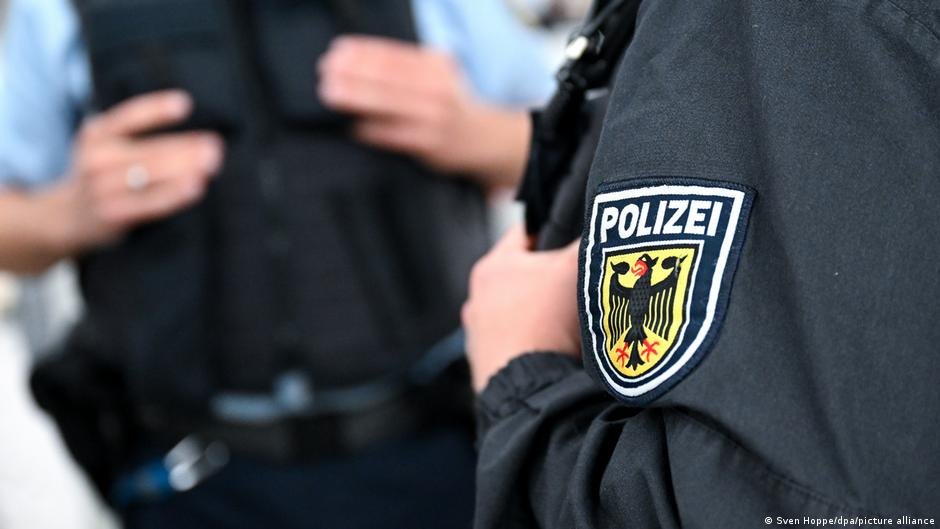
The German Bundestag last week approved a new law that significantly expands the powers of the federal police by providing the scope to use drones, artificial intelligence, and increased surveillance of telecommunications. The law also makes it easier to incarcerate immigrants due for deportation.
The government argued that the law — the first new federal police law in Germany since 1994 — is essential to keep up with technological developments, and the changing nature of threats to public safety.
But according to critics, the federal police’s rollout of mass surveillance will mean that technologies and databases that until now have only been used by state police forces, or for individual operations, could be used consistently across the whole country.
Human rights and digital privacy advocates say the law brings significant risks to democratic freedoms and is likely to be challenged before Germany’s Constitutional Court. Nevertheless, those legal challenges can take many years and the new law can be implemented in the meantime.
Real-time AI-supported surveillance
Maybe the most significant element of the new Federal Police Law is that it allows the use of AI-supported facial recognition surveillance in public spaces where the federal police have jurisdiction (airports, intercity railway stations, and near Germany’s borders).
The federal police will also be allowed to use “behavior recognition” on surveillance footage, an AI system that is supposed to be able to assess if a figure in a crowd is acting in a threatening or otherwise conspicuous way — by throwing a punch, for example. If such behavior is recognized the AI system can alert officers directly.
This was particularly criticized by opposition parties during the Bundestag debate last week. “Imagine this: Your train is two hours late … and you’re angry, pacing back and forth on the platform in frustration. To the AI, this is a ‘suspicious lingering behavior.’ It thinks you’re a pickpocket,” said the socialist Left Party‘s Clara Bünger, to much jeering from the government parties’ representatives.
Police unions have welcomed this measure, partly because it could relieve pressure on manpower, but it is seen as controversial by digital rights activists, who say it creates the infrastructure for mass surveillance. “That’s a real breach of the dam, because it more or less suspends anonymity in public spaces,” Michael Kolain, head of policy at the Berlin-based Center for Digital Rights and Democracy, told DW. “These are measures that we know from China, from Iran, from Russia, but which are extremely unusual for German circumstances.”
To view this video please enable JavaScript, and consider upgrading to a web browser that supports HTML5 video
Markus Thiel, professor of public law at the German Police University in Münster, said he could understand such concerns. “But I think that’s always a bit of a reflex,” he said. “Whenever police powers are extended, there are always certain organizations and groups who are very critical of it. They have some justification, because especially these AI-supported measures always include the possibility of serious breaches of basic rights.”
That is especially the case because it is impossible for citizens to know how their data is being read and processed by AI surveillance technology — and in Germany people are supposed to have a right to access their data and find out how it is used. “That’s why it’s very important that such regulations are formulated to conform with basic rights,” said Thiel. “I can understand the criticism, but I also think that we need these instruments. I consider them basically unproblematic, as long as they are formulated well.”
But activists are also concerned because the new law also gives the police more scope to use surveillance software in end-user devices for what the government calls “preventative surveillance.” “That, of course, brings the danger that sensitive data is suddenly in the hands of the security forces,” said Kolain. “That’s like they can read your diary, in the worst-case scenario.”
Drones: When to use them, when to bring them down
The new law also regulates how and when the federal police is allowed to use drones.
This new legal framework is important, explained Thiel, “because the intervention in basic rights is of course much higher with a drone that can watch anything from the sky, in comparison with a fixed camera.” The new law allows drones to be deployed at particularly busy times in train stations and near borders.
Similarly, the law sets out what the police is allowed to do if an unmanned aerial vehicle is deemed to represent a threat — considered important after last year’s spate of drone sightings that caused disruptions at airports across Germany and Europe.
The police can now use signal blockers, electromagnetic pulses, and even firearms during such incidents — though, as Thiel said, only as a last resort.
To view this video please enable JavaScript, and consider upgrading to a web browser that supports HTML5 video
Spot checks and incarceration of immigrants
Human rights groups are concerned because the new law gives the federal police more powers to incarcerate immigrants due for deportation and carry out random searches, which, according to a statement from Amnesty International, “provide a gateway for racial profiling.”
These are parts of a wider development in policing, according to Amnesty’s general secretary in Germany Julia Duchrow: “We are observing a growing and dangerous imbalance: While federal and state police agencies are being granted ever-greater powers of control and surveillance, mechanisms for transparency, accountability, and data protection are not being expanded — and existing safeguards for fundamental rights are even being rolled back,” the organization’s statement said.
Constitutional challenges and a parliamentary sleight of hand
The German government has had to cave to challenges to its policing before: In 2016, the Constitutional Court ruled that some of the federal police’s surveillance powers — which had been expanded in 2008 — were disproportionate and had to be amended.
But it took eight years for that decision to be reached, and experts like Kolain think the government always decides to strengthen the police’s powers and let the lawyers argue it out over the coming years.
“What we see is a kind of cat-and-mouse game between the Constitutional Court and the Interior Ministry,” said Kolain. Every time the court makes new rulings, the government responds by making minimal changes, and then a new legal rows begin. “It’s a never-ending story that we’ve seen for 30 years,” Kolain added.
That cycle is somewhat inevitable — the state security forces will always push for more powers and the Constitutional Court will, ideally, try always try to protect civil rights. What is missing, Kolain argues, is more scrutiny from lawmakers. “My main criticism is that it’s really the parliament’s job to make sure the basic right guarantees are in place. But far too often, the parliamentary parties just wave through what the government writes.”
In this case, he added, there wasn’t even time for a public parliamentary hearing on the question of real-time AI surveillance, because that part was added by the government parties, the center-right Christian Democratic Union (CDU) and the center-left Social Democratic Party (SPD), just days before the vote. “The parliamentary groups just went and wrote it into the law, without consulting experts or even asking the data protection commissioner — and a legislative process should not work like that,” he said.
Edited by Rina Goldenberg
About The Author