https://p.dw.com/p/5PuPqPrefer DW on Google
Skip next section What you need to know
What you need to know
- A court has ordered the archdiocese in Cologne to pay out record damages to a claimant who suffered years of abuse at the hands of a priest
- The German parliament, or Bundestag, has begun the penultimate day of debate on the federal budget for 2027 ahead of an expected finalizing vote on Friday
- A Berlin woman accused of spying for Russia is going on trial
- Two suspected pro-Iran Islamists alleged to have planned an attack on a synagogue in Cologne have been arrested in Germany, federal prosecutors say.
- Less chocolate was produced in Germany last year
This is a roundup of the top news stories from Germany on Thursday, November 26, 2026:
Skip next section IN DEPTH: Soccer national Laura Freigang to miss Brazil World Cup over missed doping test11/26/2026November 26, 2026
IN DEPTH: Soccer national Laura Freigang to miss Brazil World Cup over missed doping test
Timothy Jones | Chuck Penfold
Germany national player Laura Freigang has been banned from playing until October 7, 2027, over three doping tests she missed, meaning that she will not be available to participate in the World Cup in Brazil next year, the German Football Federation (DFB) said in a statement on Thursday.
The ban comes amid a settlement between Freigang, 28, who is also the captain of Frankfurt Eintracht, and the DFB, the World Anti-Doping Agency (WADA) and Germany’s National Anti-Doping Agency (NADA).
Freigang has been the subject of proceedings for several months, having been accused of not being at the location she specified for a doping control on three occasions between March 2025 and February 2026.
In June, she said that the missed tests “were not deliberately avoided appointments but inconsistencies or misunderstandings in the comprehensive details that have to be updated daily and which we as national team players have to update in the system on a daily and hourly basis.”
Freigang has played 45 times for Germany, scoring 17 goals.
However, she has not recently been a regular in the team.
Read the full story on why Freigang will miss the 2027 World Cup.
Edited by:Alex Berryhttps://p.dw.com/p/5PwpASkip next section Court awards record damages in Catholic sexual abuse case11/26/2026November 26, 2026
Court awards record damages in Catholic sexual abuse case
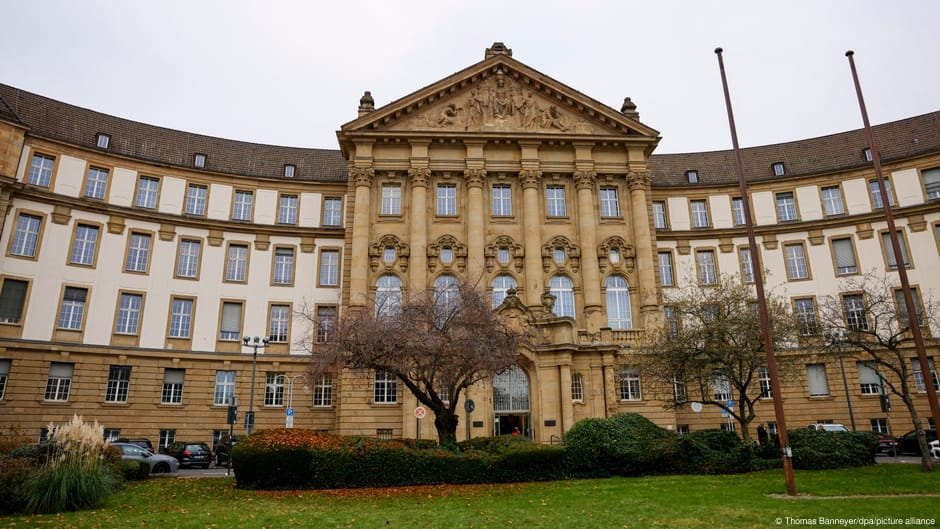
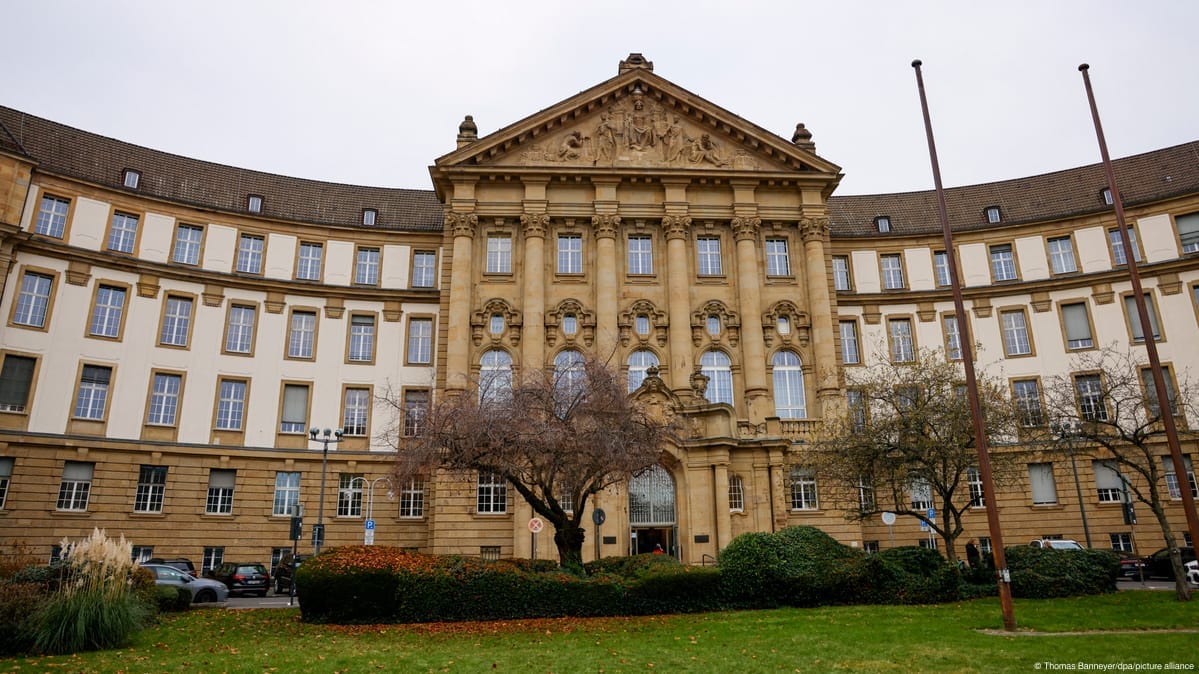
The archdiocese in the western city of Cologne was ordered on Wednesday to pay a woman who was sexually abused by a priest for years €550,000 ($601,865) in damages — the highest amount a German court has ever awarded to a victim of abuse in theCatholic Church.
That amount will, however, by offset by the €360,000 that the Catholic Church’s Independent Commission for Recognition Payments has already paid to the claimant.
The woman had previously had her claim rejected by the Cologne Regional Court, which, although it accepted that the victim had been severely sexually abused by a priest in the 1970s and 1980s, argued that the archdiocese could not be made responsible for the crimes because the man had acted “more or less as a private individual.”
The higher regional court has now overturned that ruling at an appeal, saying that the priest had approached the claimant “under the cover of his church work” when he was a deacon.
It said he used his standing in the church to be allowed to take in foster children, of whom the claimant was one.
The priest was sentenced to 12 years in prison in 2022.
Edited by:Alex Berryhttps://p.dw.com/p/5PwFhSkip next section Wadephul warns against regional spillover from Russia’s war in Ukraine11/26/2026November 26, 2026
Wadephul warns against regional spillover from Russia’s war in Ukraine
German Foreign MinisterJohann Wadephul has warned against an expansion of the Ukraine conflict into other regions after the Ukrainian attacks on Russian ships in Libya.
“Ukraine’s right to self-defense is undisputed and we do support Ukraine, but I strongly warn against allowing this
conflict to spread geographically,” he said at a press conference in Berlin with his Romanian counterpart Dan Neculaescu.
Wadephul also condemned reported Russian attacks on two foreign freight ships said to be carrying grain near Ukraine’s Black Sea port of Odesa, saying such attacks did not concern only the security of nearby nations but also the food security of people in the Global South.
“It is clear that we cannot accept drone attacks on trading vessels,” he said. “NATO will therefore step up its engagement in the region.”
Edited by:Alex Berryhttps://p.dw.com/p/5Pw99Skip next section Steinmeier calls for closer partnerships with African nations at close of tour11/26/2026November 26, 2026
Steinmeier calls for closer partnerships with African nations at close of tour
German President Frank-Walter Steinmeier has called for closer economic and political partnerships with African countries as he wound up what was probably his last trip to the continent as head of state.
Speaking in Kenya, Steinmeier said that there were great variations in the state of development between individual countries and even within some of them.
“But I believe it is worthwhile investing in Africa and in relations with African countries,” he said.
He said this was not just meant with a view to possible investment by German companies drawn by Africa’s mostly young national populations and developing markets.
“That is true, but we should not limit our view to that. Many African countries now have political weight and growing self-confidence and want a say in shaping the future of the world,” he said.
“Africa, it has become clear, is a continent that requires patience if you want to discover it,” Steinmeier said. “There is no single Africa, but very many.”
Before Kenya, Steinmeier visited Ivory Coast and Ghana. On the final day of his trip, he went to the Crescent Island nature reserve on Lake Naivasha, an area under threat from climate change.
Edited by:Alex Berryhttps://p.dw.com/p/5PvrtSkip next section Chocolate production down in 2026 — but Germany remains Europe’s gingerbread giant11/26/2026November 26, 2026
Chocolate production down in 2026 — but Germany remains Europe’s gingerbread giant
Chocolate manufacturers in Germany produced less in 2025 than the year before.
According to figures from the Federal Statistical Office (Destatis) released on Thursday, around 1 million metric tons (1.1 US tons) of chocolate products containing cocoa were made in Germany in 2025, compared with 1.1 million tons in 2024.
This represents a reduction of 5.7%.
Much of the chocolate produced in Germany is exported (916,200 tons in 2025), while considerable amounts are also imported (530,000 tons in 2025), with a quarter of that amount coming from neighboring Belgium.
Altogether 13.4% of exports went to France, followed by Poland (9.6%) and the UK (9.3%).
According to Destatis, citing the EU’s statistical agency Eurostat, Germany remains the European leader in the production of gingerbread, or Lebkuchen, manufacturing 39.4% of the entire EU supply of the sweet treat, compared with Poland on 17.3% and the Netherlands on 17%.
Edited by:Rob Turnerhttps://p.dw.com/p/5PvdrSkip next section IN DEPTH: Two Iraqi nationals arrested over synagogue attack plan11/26/2026November 26, 2026
IN DEPTH: Two Iraqi nationals arrested over synagogue attack plan
German authorities say that two Iraqi citizens believed to be members of a pro-Iranian terrorist group have been arrested on suspicion of having planned a number of anti-Jewish attacks, including on a synagogue in the western city of Cologne.
You can read more about the arrests and the charges laid against the two men in our article: Germany: 2 arrested, suspected of plotting synagogue attack
Edited by:Rob Turnerhttps://p.dw.com/p/5PvWGSkip next section Most police want ban on New Year Eve fireworks11/26/2026November 26, 2026
Most police want ban on New Year Eve fireworks
A survey by police union GdP has shown that some 69% of police in Germany are in favor of a ban on private fireworks on New Year’s Eve.
According to the survey of 9,000 members, more than 70% feel that the situation for police on the evening would improve if such a ban were in place.
Altogether 54% of respondents who had been on duty during the past 10 years of New Year’s Eve festivities reported having been in a dangerous or threatening situation caused by fireworks.
A whole 195 respondents said they had been injured by fireworks on the evening.
The poll was prompted by an open letter to Interior Minister Alexander Dobrindt by a group calling itself #böllerciao (Goodbye firecrackers) with some 1.17 million signatories. The name is a play on the famous anti-Nazi song Bella Ciao.
The group includes 86 organizations, among them Environmental Action Germany (DUH) and the GdP, who have called for a ban on private fireworks to protect people, emergency personnel, animals and the environment.
Edited by:Rob Turnerhttps://p.dw.com/p/5PvQHSkip next section Rwanda return hubs in focus as higher Interior Ministry budget accepted11/26/2026November 26, 2026
Rwanda return hubs in focus as higher Interior Ministry budget accepted
Plans foreseeing a rise of €1 billion ($1.1 billion) in the budget for the Interior Ministry have been approved by the three parties in Germany’s coalition government, after much debate centering on something that makes up a relatively small proportion of that money: the controversial planned centers for rejected asylum seekers in Rwanda.
According to Klaus-Peter Willsch of Chancellor Friedrich Merz’s Christian Democrats (CDU), just €5 million are earmarked for the so-called return hubs, shared between several European countries.
He said the €20 million that has often been cited as being for the Rwanda migration centers was not only for the hubs in that country, but for other potential projects in third countries as well.
Despite the relatively small amounts of money involved, the Rwanda plans devised by Interior Minister Alexander Dobrindt of the Bavarian Christian Social Union (CSU) along with Austria, Denmark, the Netherlands and Greece came under fire not only from coalition partners the Social Democrats (SPD) but particularly from opposition parties.
The Green Party and the Left Party both rejected the idea for ethical reasons, with Green lawmaker Leon Eckert speaking of “state-organized human trafficking,” while Dietmar Bartsch of the Left pointed out that the deal was being made with an authoritarian regime.
The far-right Alternative for Germany (AfD), for its part, said it found the plans too soft, with parliamentarian Marcus Bühl calling them a “smoke screen,” as just 20 rejected asylum-seekers from Germany were to be initially sent to Rwanda under the scheme.
To view this video please enable JavaScript, and consider upgrading to a web browser that supports HTML5 video
Dobrindt defended the scheme, saying that the opposition was trying to stir up controversy about a concept that had been approved at European level. He also called criticism of the political system in Rwanda inappropriate, citing a school for Afghan girls that had been set up in the country amid the ban on secondary education for females by the Taliban government.
The interior minister also praised the additional funds given to his ministry as a contribution to Germany’s defense against hybrid attacks from Russia, with a rise in the budgets of both the IT security and the civic protection departments.
The draft 2027 budget, which was approved by the conservative CDU/CSU bloc and the SPD, however includes less funding for the BAMF migration authority (from €999 million in 2026 to €994 million) and for integration aid for migrants and refugees (down €328 million to €1.07 billion).
Edited by:Rob Turnerhttps://p.dw.com/p/5Pv3KSkip next section Trial of alleged Russian spy delayed over health issues11/26/2026November 26, 2026
Trial of alleged Russian spy delayed over health issues
The trial of a German-Ukrainian woman due to go on trial on Thursday on charges of spying for Russia was delayed in the morning after the accused developed health problems that required treatment by emergency medical workers, a spokeswoman for a Berlin court said.
It was not clear whether her trial could go ahead as planned.
The 57-year-old woman has been accused of passing information to an officer from Russia’s GRU intelligence agency who was posing as a diplomat at the Russian Embassy in Berlin.
Prosecutors allege that she used contacts with current and former German Defense Ministry officials to collect information on military aid for Ukraine, drone test sites and the arms industry.
She also faces accusation of having provided her alleged handler access to key political events in Berlin.
The woman was arrested in late January, with the alleged involvement of the Russian Embassy causing considerable outrage in Berlin.
Russia’s ambassador was summoned over the incident, and the handler — identified by news weekly Der Spiegel as the embassy’s deputy military attache — was expelled from Germany.
To view this video please enable JavaScript, and consider upgrading to a web browser that supports HTML5 video
Edited by:Rob Turnerhttps://p.dw.com/p/5PusQSkip next section Parliament continues budget debates11/26/2026November 26, 2026
Parliament continues budget debates
The Bundestag is conducting its concluding debates on the budget for 2027 ahead of a final vote scheduled for Friday.
On Thursday, the focus will initially be on the individual budget for the Interior Ministry led by Alexander Dobrindt of the conservative Bavarian Christian Social Union (CSU), the sister party of Chancellor Friedrich Merz‘s Christian Democrats (CDU).
The government foresees that the ministry, which is responsible for the federal police and the domestic intelligence agency BfV, among other things, will receive some €16.8 billion in 2027 ($18.43 billion), around €1 billion more than this year.
Lawmakers will then go on to debate the individual budgets for the Economics and Energy Ministry, the Ministry for Housing, Urban Development and Building, the Ministry of Food and Agriculture and the Ministry for Education, Family Affairs, Senior Citizens, Women and Youth.
Opening the debates on Wednesday, Merz described the tight budget as an “accurate reflection” of the “difficult situation as a country — geopolitically, technologically, and demographically” — that Germany finds itself in.
“We will no longer be able to afford everything with tax revenue that we have become all too accustomed to for far too long,” Merz added.
You can read more about what the planned record-breaking German budget for 2027 includes in this DW article:€561 Billion and Still Not Enough: Germany’s 2027 Budget Exposes a Coalition on the Brink
Edited by:Rob Turnerhttps://p.dw.com/p/5PucjSkip next section Welcome to our coverage11/26/2026November 26, 2026
Welcome to our coverage
Guten Tag from DW’s newsroom in Bonn!
The second-to-last day of debates on Germany’s 2027 budget, which foresees both record spending and borrowing, is getting underway in the parliament.
Lawmakers are being forced to grapple with a horde of economic and geopolitical challenges as they seek to set the right priorities, with an ideological split in the ruling coalition likely to bring additional heat to the discussions.
In other news, the trial is opening in Berlin of a woman accused of spying for Russia against the background of Moscow’s full-scale invasion of Ukraine.
And chocolate production went down in Germany last year, while the country remains the European leader in another Christmas specialty, gingerbread or Lebkuchen.
Read on here for more on these and other stories.
Edited by:Rob Turnerhttps://p.dw.com/p/5PuTqShow more posts