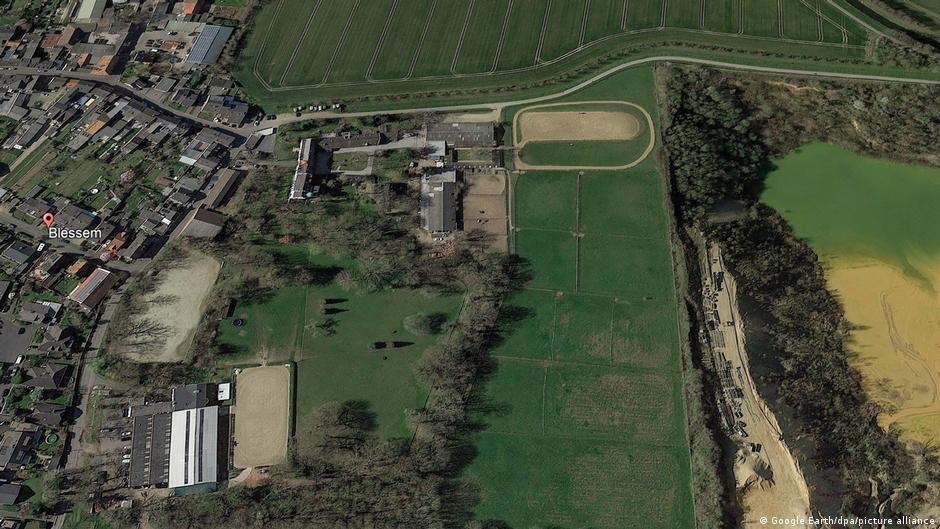
A state court in Hesse, Germany, has ruled in favor of a Frankfurt man who sued US tech giant Google over the publication of images on Google Earth and Google Maps that he argued invaded his privacy.
The man had previously sued to have images of his Frankfurt home and property scrubbed from Google’s Street View site as well as from Apple Look Around.
Court finds privacy rights were violated
The court found that Google had infringed on the privacy of the man and his family by publishing aerial images of their property on Google Earth, saying: “Nobody must accept the worldwide publication of aerial images of their property without their consent, at least when concerning areas of a property hidden from public view.”
“The plaintiff’s personal space extends across the whole of the home’s parcel. The only data to be gleaned here are personal, giving clues to private lifestyle, such as the size and design of the property. Beyond this, potential weak points in the property’s security perimeter are also laid bare.”
The court also accused Google of acquiring the images by “spying” because it does not notify property owners that their properties will be filmed.
The court additionally found that although Google says it contributes to the democratization of knowledge, it nevertheless has no right to invoke freedom of information to justify invading private spaces.
The ruling may still be appealed.
Edited by: Louis Oelofse