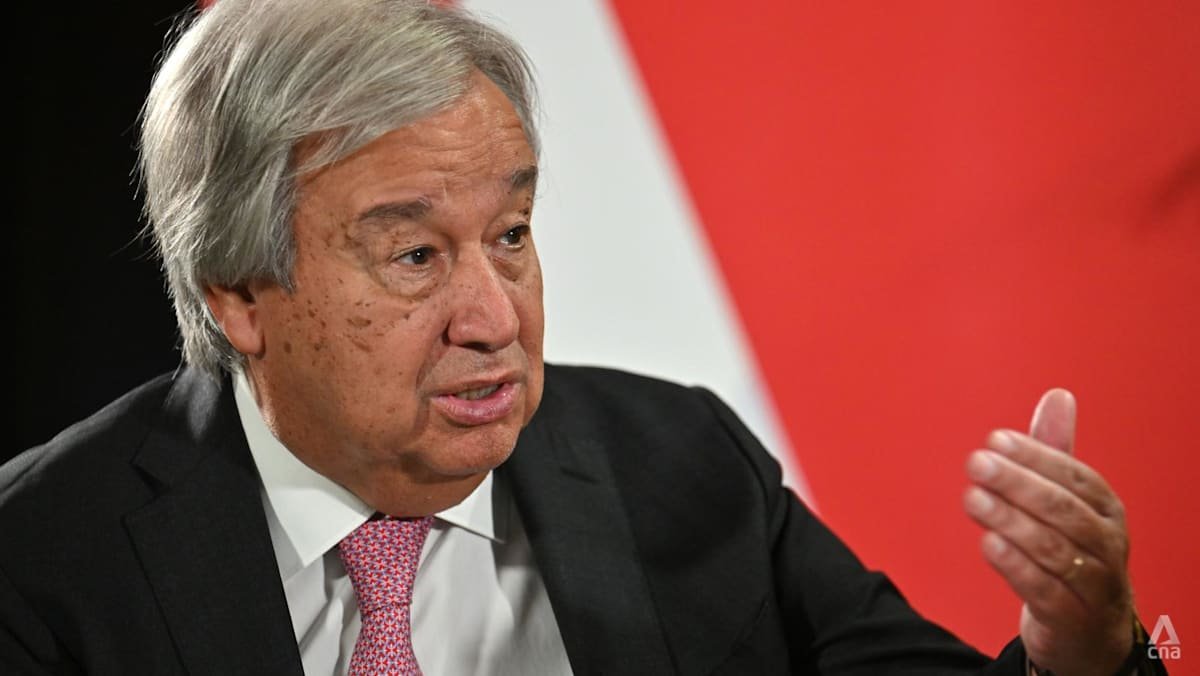
Guterres enters final UN General Assembly with legacy shaped by a more divided world
It will be Antonio Guterres’ final General Assembly as UN chief before his decade-long tenure ends in December.
New: You can now listen to articles.

This audio is generated by an AI tool.

Read a summary of this article on FAST.
Get bite-sized news via a new
cards interface. Give it a try.
Click here to return to FAST
Tap here to return to FAST
FAST
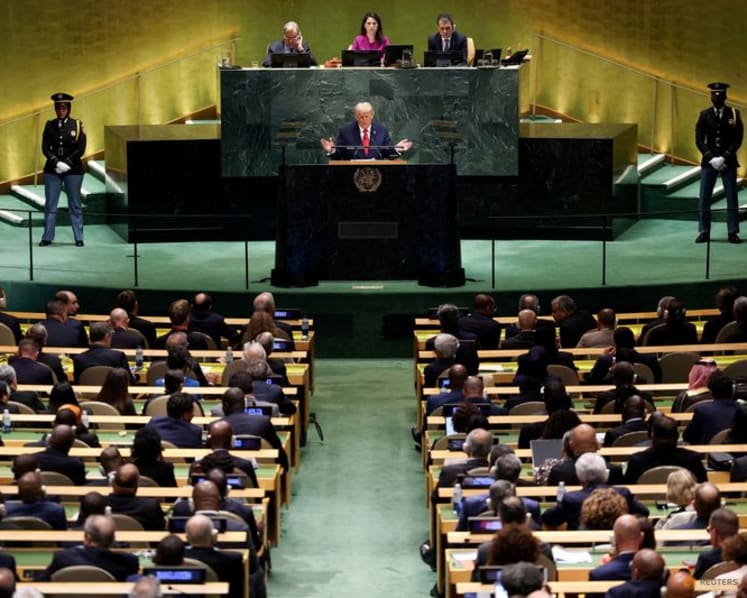
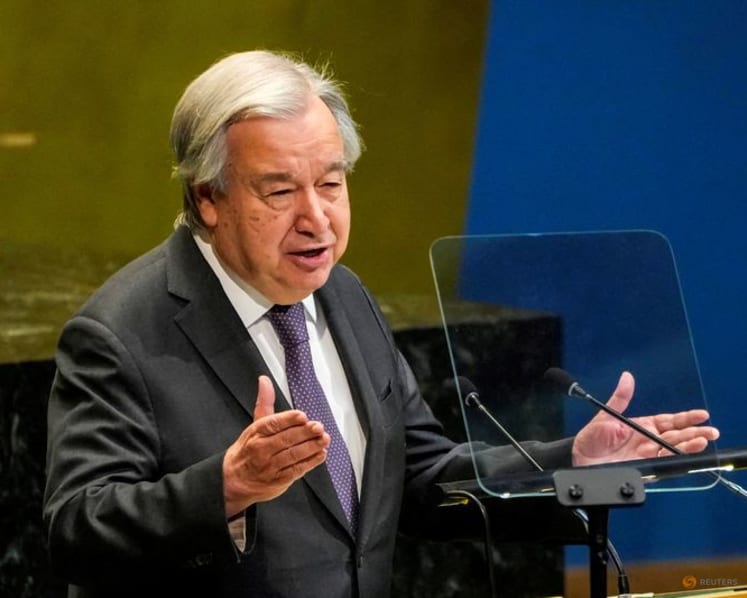
NEW YORK: United Nations Secretary-General Antonio Guterres has urged world leaders to unite around peace, dignity, justice and humanity as they prepare to gather in New York for the annual United Nations General Assembly.
It will be Guterres’ final General Assembly as UN chief before his second term ends in December, bringing to a close a decade at the helm of the organisation.
But as the veteran diplomat prepares to leave the world stage, attention is turning to the legacy he leaves behind.
A MORE DIVIDED WORLD
Guterres took office in 2017 at a very different moment for international diplomacy.

Guess Word
Crack the word, one row at a time

Buzzword
Create words using the given letters

Mini Sudoku
Tiny puzzle, mighty brain teaser

Mini Crossword
Small grid, big challenge

Word Search
Spot as many words as you can
“There was a sense that multilateralism was in a good place, and that major powers and states around the world were invested in international cooperation and multilateralism,” said Daniel Forti, head of UN affairs at the International Crisis Group, an independent non-profit organisation.
Guterres was elected with the expectation that “the UN and the current world order would remain on that trajectory”, he added.
Instead, Guterres’ decade in office has been dominated by conflict and growing rivalry among the world’s major powers.
He inherited conflicts in Syria, Yemen and Libya, while new wars erupted during his tenure in Ukraine, Gaza and Sudan, among other places.
Tensions between the United States and China intensified, including over trade and technology, while major international agreements came under strain.
In Asia, Guterres also faced crises ranging from Myanmar’s civil war and North Korea’s nuclear programme to growing maritime tensions in the South China Sea.
Those divisions have been particularly visible at the UN Security Council.
Seven draft resolutions were vetoed in 2024, the highest annual number since 1986, underscoring the difficulties confronting the UN body charged with maintaining international peace and security.
“It exposes the limits of the UN at a moment when its five major powers are not working in concert or have completely different visions of what they want from international cooperation and how they engage with each other,” Forti said.
FINDING ROOM TO ACT
Faced with those constraints, observers said Guterres increasingly focused on areas where the UN could still exert influence, including climate change and artificial intelligence.
On AI, he sought to carve out a role for the organisation in shaping international governance of the rapidly developing technology, an area where member states have found some common ground.
Guterres also helped broker the Black Sea Grain Initiative, which allowed Ukraine to export grain and other food products from its Black Sea ports during the war. Russia withdrew from the agreement in 2023.
“Guterres led a lot of personal investment and direct diplomacy with Russia, with Turkiye, with Ukraine,” Forti said.
But such diplomatic breakthroughs were limited, with deep divisions among the world’s major powers constraining the UN’s ability to respond to global crises.
Simon Adams, professor of human rights at Murdoch University in Australia, said the geopolitical environment undoubtedly made Guterres’ job more difficult.
“But that doesn’t negate the fact that the office does carry enormous moral authority, and that he could, in creative and courageous ways, challenge them to uphold their own promises to the organisation and their promises to the world, and to show leadership in different kinds of ways,” he added.
“I just don’t think he’s wielded that moral authority particularly courageously or consistently.”
Forti similarly said Guterres “missed an opportunity to push the UN forward, even as the context got more difficult”.
EXPERIENCE AND DIPLOMATIC REPUTATION
Guterres was already deeply familiar with international crises when he was chosen to lead the UN in 2016.
He served as Portugal’s prime minister from 1995 to 2002 before becoming UN High Commissioner for Refugees in 2005. During a decade in that role, he confronted some of the world’s most severe displacement crises.
His experience and diplomatic reputation helped make him a leading candidate to succeed Ban Ki-moon as secretary-general.
Upon his selection, he pledged to prioritise peacebuilding, UN reform, sustainable development and climate change, while positioning himself as a mediator amid international divisions.
“I will be doing my best during these two and a half months to prepare, in order to recognise the difficulties, the problems and the divisions, but to act as a convener, and honest broker,” he said after his selection in 2016.
Guterres leaves behind an institution that the world still turns to, even as its ability to act is increasingly constrained.
Observers said his successor will face the same challenge of finding common ground in an increasingly divided world.
Source: CNA/ca(oc)
Sign up for our newsletters

Get the CNA app
Stay updated with notifications for breaking news and our best stories
Get WhatsApp alerts
Join our channel for the top reads for the day on your preferred chat app

Get bite-sized news via a new
cards interface. Give it a try.
Click here to return to FAST
Tap here to return to FAST
FAST