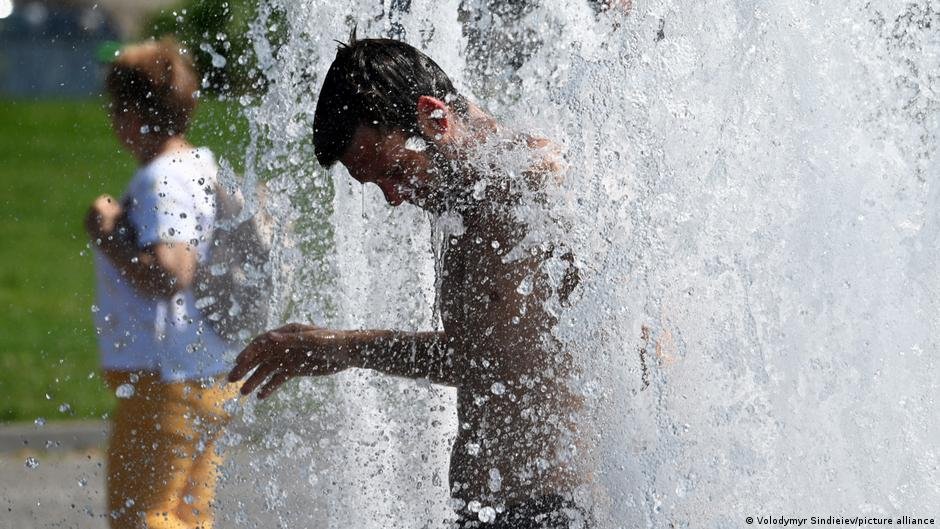
A record 52% of Europe witnessed “very strong” heat stress by the end of this summer, the EU’s Copernicus Climate Service (C3S) said in new research published on Friday.
What did Copernicus say in its findings?
According to Copernicus, “very strong” heat stress is characterized by temperatures which feel higher than 38 degrees Celsius (100.4 degrees Fahrenheit).
Around 80% of Europe witnessed “strong” heat stress by the end of the summer. “Strong” heat stress is when temperatures feel like more than 32 degrees Celsius (89.6 degrees Fahrenheit).
Heat stress is when temperatures and humidity are so high that the body cannot cool itself through perspiration.
This summer was the third-warmest on record on the European continent and the hottest on record in Western Europe.
“One of the things that stands out for 2026 is that the heat was not only remarkable for its intensity, but also for its geographical extent,” Samantha Burgess, the deputy director of the C3S, said.
Copernicus also said that European rivers registered their lowest average flows since records began in 1992. In addition, the service said that “56% of the European ocean was much warmer than average, with 22% experiencing record-high summer sea surface temperatures.”
Burgess said that drought impacted almost half of Europe by the end of this summer.
“That’s one of the defining characteristics of summer this year, that it was not a single record. It was the way that multiple records appeared together across the climate system,” she said.
What was the impact of the European heat waves this summer?
Tens of thousands of people died in heat waves in Europe this summer, which also impacted economic activity and agricultural harvests.
Some cities such as Paris even temporarily restricted alcohol sales as temperatures frequently spiked above 40 degrees Celsius (104 degrees Fahrenheit) on parts of the continent.
Air conditioning is uncommon in some parts of Europe, with many Europeans staying home or going out to the pool to cool off.
To view this video please enable JavaScript, and consider upgrading to a web browser that supports HTML5 video
In addition, the frequent heat waves and dry conditions this summer also led to wildfires in southern France and the southern Spanish region of Andalusia, among other locations.
The biggest wildfire in history in Germany’s most populous state, North Rhine-Westphalia, triggered evacuations in August before it was brought under control.
Wildfires not only damage buildings but also create harmful air pollution in the environment.
Edited by: Karl Sexton
If you rely on our team for trusted reporting, please take a moment to select us as your Preferred Source on Google, so you’ll always see our verified news first.