Hong Kong’s first post-colonial leader Tung Chee-hwa dies aged 89
Hand-picked by Beijing to run Hong Kong after the 1997 handover, the former shipping tycoon oversaw a rocky tenure until he stepped down in 2005.
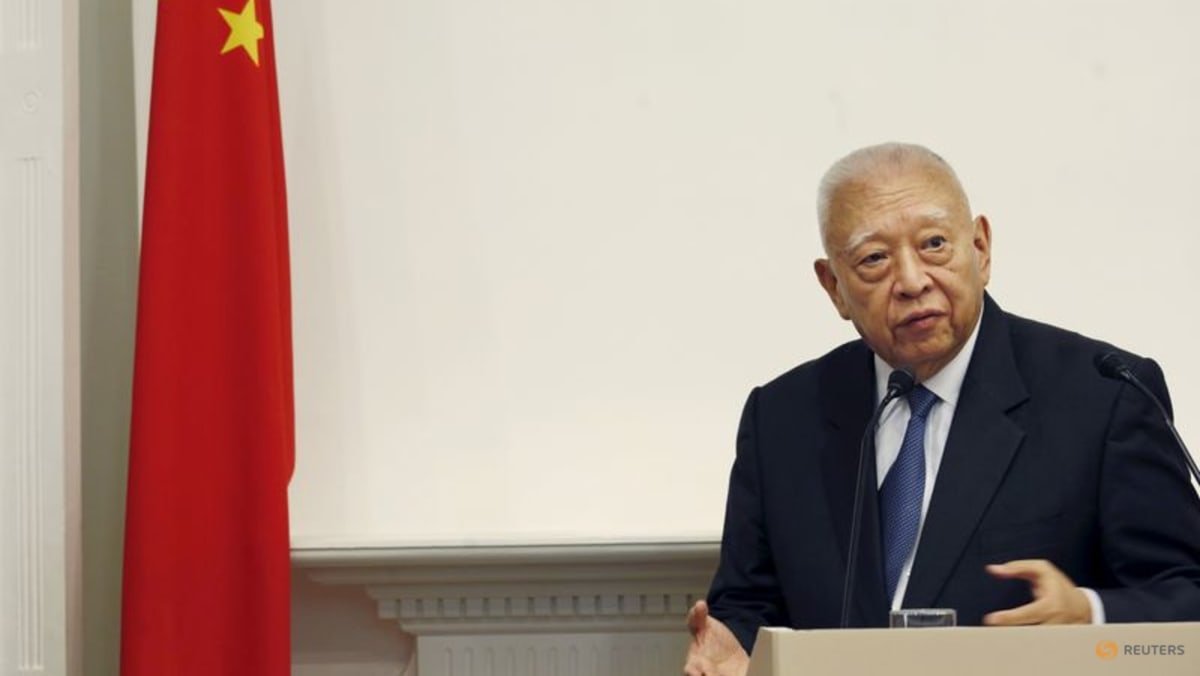
File photo taken on Apr 29, 2015 shows Tung Chee-hwa at a news conference in Hong Kong. REUTERS/Bobby Yip/File Photo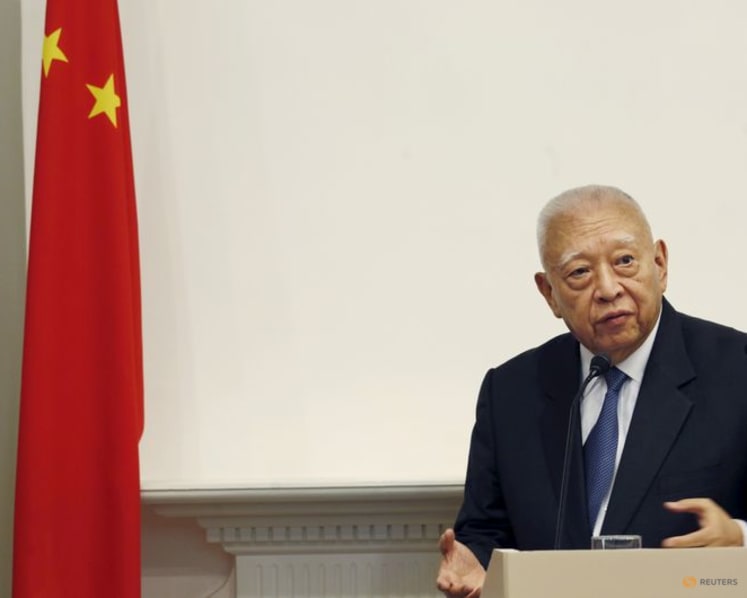
Read a summary of this article on FAST.
Get bite-sized news via a new
cards interface. Give it a try.
Click here to return to FAST
Tap here to return to FAST
FAST
HONG KONG: Tung Chee-hwa, Hong Kong’s first leader after the city’s return to Chinese rule, has died aged 89, his office said on Wednesday (Sep 9).
The former shipping tycoon, hand-picked by Beijing to run the former British colony after its 1997 handover, oversaw a rocky tenure until he stepped down in 2005.
Tung served as a bridge during Hong Kong’s transition from colonial rule, steering the city as it was battered by the Asian financial crisis, the deadly SARS epidemic and mass protests in its turbulent early years under Chinese rule.
Tung “passed away peacefully in the presence of his beloved family members” on Tuesday, a statement from his office said.

Guess Word
Crack the word, one row at a time

Buzzword
Create words using the given letters

Mini Sudoku
Tiny puzzle, mighty brain teaser

Mini Crossword
Small grid, big challenge

Word Search
Spot as many words as you can
“Mr Tung dedicated his life with an unwavering commitment to the service of the Nation and the Hong Kong SAR. His contributions with integrity, compassion, and dignity will be well remembered,” it said.
Former chief executive Leung Chun-ying hailed Tung’s role in implementing the “one country, two systems” framework in Hong Kong and said he was deeply trusted by China’s leaders.
“Mr Tung had a kind and generous nature, won others over with reason. He was a role model to us all,” Leung posted on Facebook on Wednesday.
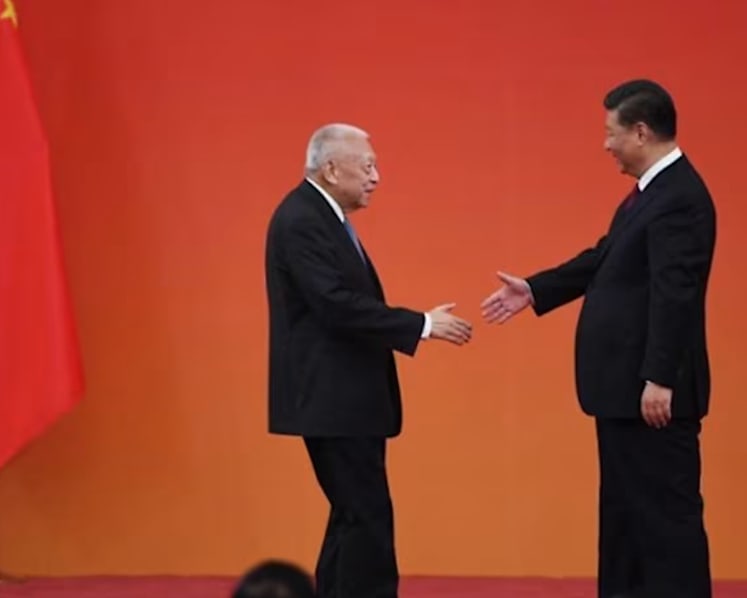
TURBULENT TENURE
Known for his distinctive grey crew cut and support for Liverpool football club, Tung was born in Shanghai on May 29, 1937, into one of China’s richest shipping dynasties.
His family moved to Hong Kong in 1947, according to his biography on a government website.
He graduated from the University of Liverpool with a degree in marine engineering in 1960 and worked in the United States before returning to Hong Kong to join the family business in 1969.
In 1985, Tung joined a committee to aid in the writing of the Basic Law, Hong Kong’s mini-constitution that has governed the former British colony since it was handed over to China in 1997.
As a public servant, Tung quietly worked his way through the political machines on both sides of the border, sitting on Beijing’s political advisory body and Hong Kong’s cabinet.
Widely believed to have been thrown reluctantly into the lion’s den of leadership because of his close links to Beijing, Tung had a tumultuous eight-year tenure as the city’s leader, blighted by policy blunders and unease over China’s interference.
The first years of his leadership coincided with the Asian financial crisis, record unemployment and a crash in the city’s property market which hit many ordinary citizens hard.
His leadership was also beset by his government’s handling of a 1997 avian flu outbreak, and the deadly 2003 SARS outbreak.
A major hurdle for his administration came in July 2003 when 500,000 people protested against restrictive anti-subversion laws proposed by China.
The government was forced to shelve the bill but the Jul 1 marches to mark the handover anniversary became an annual fixture until 2020.
Protests again swelled in 2004 as residents rallied for democracy.
His tenure reached its nadir in December 2004 when he and his cabinet were given a public dressing-down by China’s then-president Hu Jintao for poor performance.
“GO HOME”
He quit the helm with two years left of his second term in 2005, blaming poor health, and was replaced by his deputy, chief secretary Donald Tsang.
During the 2014 pro-democracy demonstrations led by students, he publicly urged student protesters to go home.
In recent years, Tung remained largely out of the public eye, with local media noting his absence from the Jul 1 handover anniversary flag-raising ceremonies.
Source: AFP/ht
Sign up for our newsletters

Get the CNA app
Stay updated with notifications for breaking news and our best stories
Get WhatsApp alerts
Join our channel for the top reads for the day on your preferred chat app

Get bite-sized news via a new
cards interface. Give it a try.
Click here to return to FAST
Tap here to return to FAST
FAST