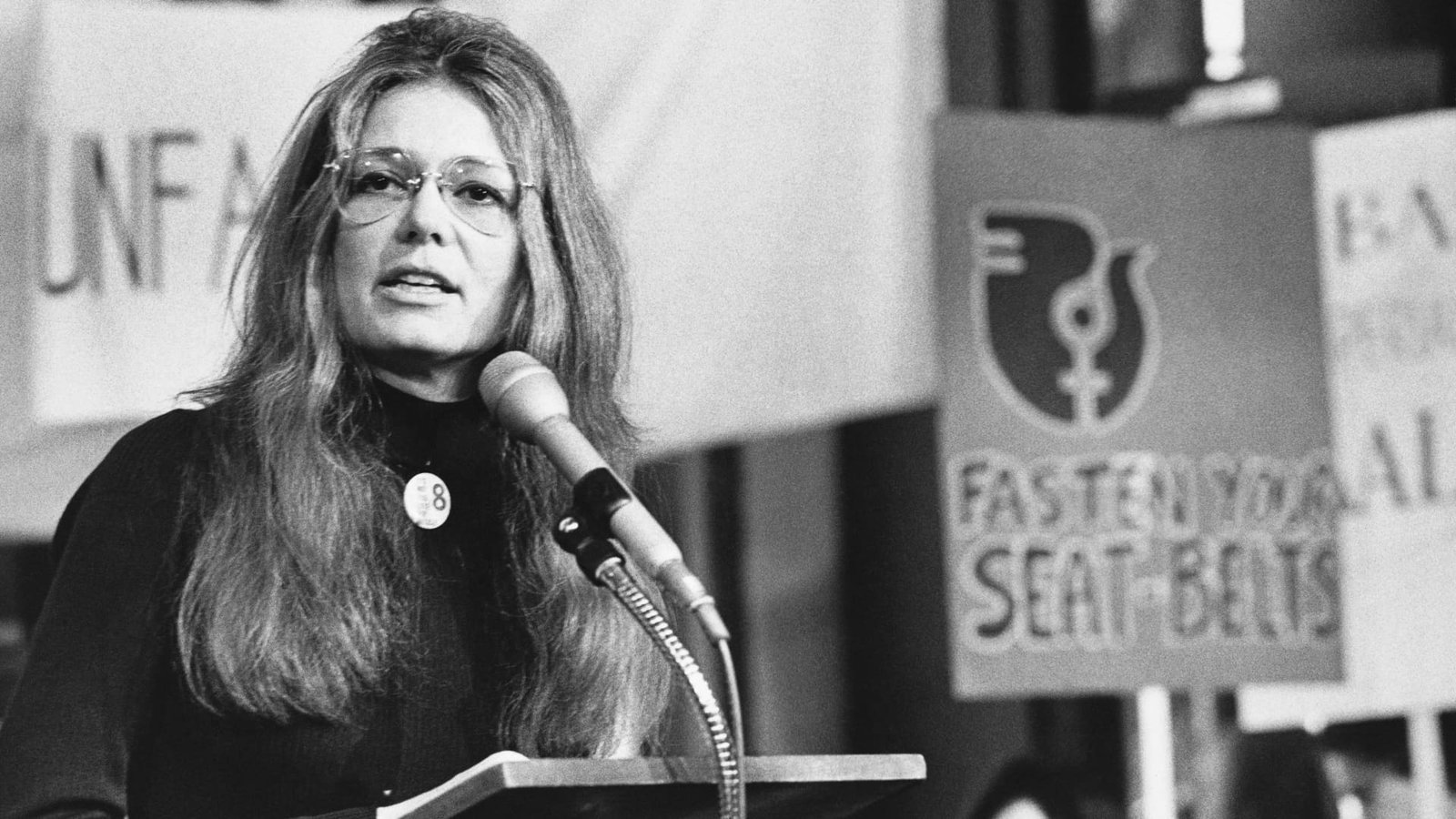
Skip NavigationAmerican feminist and activist Gloria Steinem speaks at a rally outside the United Nations, New York, New York, 1978. (Photo by Bettye Lane/Photo Researchers History/Getty Images)Photo Researchers | Archive Photos | Getty Images
In the moments after journalist and activist Gloria Steinem’s death was announced on Thursday morning, heartfelt tributes poured out from a wide range of leaders as far-flung as Hillary Clinton, Oprah Winfrey and Spanx founder Sara Blakely.
Steinem, who died at age 92, became a symbol of the second-wave of feminism through activism work after initially gaining notoriety as a journalist in the 1960s. She wrote essays, delivered speeches, led protests, and helped fundraise for causes directly impacting women. Many prominent women have noted since the announcement how Steinem’s boldness — in her writing, advocacy work and even wardrobe — impacted their careers, personal lives and the trajectory of working women across generations.
“We all identified with her for many reasons,” says her friend Lynn Povich, a fellow journalist and author of the 2012 book, “Good Girls Revolt: How the Women of Newsweek Sued their Bosses and Changed the Workplace.” “She was a writer. She was young. She was beautiful, even though she downplayed it, when feminists were called sexless. She was really smart. She was very clever and the best thing is she was funny. She really had an amazing sense of humor when we were called humorless.”
In addition to her journalistic work — from going undercover as a Playboy Bunny to document workplace sexism to co-founding the feminist publication Ms. Magazine — Steinem was active in politics, helping launch the National Women’s Political Caucus in 1971 to help increase women’s representation in Washington D.C. Her work linked gender inequity to race, poverty and violence, which played a role in establishing a framework for modern feminism, some feminist experts say.
Despite the breadth of her influence, Steinem never wanted “to stand out as a star, even though she was,” Povich says.
Even in recent years, Steinem remained an active voice advocating for women’s rights, autonomy and representation. Women still earn 83 cents for every dollar made by men in same roles, according to the 2026 census. Roe v. Wade, the 1973 Supreme Court decision that established a constitutional right to abortion in the U.S., was overturned in 2022.
“I want women and men and everybody to be able to do anything they f—ing well please,” Steinem said at Global Citizen NOW, a New York-based leadership summit, in 2022. She added: “Change is like a tree. It doesn’t grow from the top down, it grows from the bottom up.”
Her impact on women in leadership roles has long been considered a prominent part of her legacy. Here’s a look at what some of them learned from Steinem, and how they say those lessons changed the trajectory of their lives.
‘She listened. She connected people’
Throughout her career, Steinem traveled extensively to speak with and learn from women facing different challenges around the U.S. As she aged, she stopped jet-setting and started regularly hosting women of all ages and backgrounds in her New York City brownstone home.
Rachelle Hruska MacPherson, co-founder of retail brand Lingua Franca and social news website Guest of a Guest, says she attended two of Steinem’s gatherings. One was for women entrepreneurs in their 20s and 30s, and the other was for women over age 50, she says. Despite not technically falling into either age range, “I never once felt like an outsider,” says Hruska MacPherson.
“She had this incredible generosity, both in literally opening up her living room and home, but also in the way she participated in conversation,” Hruska MacPherson says. “She listened. She connected people. And she always seemed to bring it back to: ‘OK, what can we actually do? Who do we know? Who can we call? What happens from here?’”
[Steinem] always seemed to bring it back to: ‘OK, what can we actually do? Who do we know? Who can we call? What happens from here?’Rachelle Hruska MacPherson
When Hruska MacPherson opened Lingua Franca’s headquarters, she did so in a New York City townhouse. “I wanted us to have a place where we could open our own doors and regularly bring women together too,” she says.
Emily Hikade, founder of luxury pajama brand Petite Plume, also attended sessions in Steinem’s home, she says. Touched by Steinem’s capacity to listen, encourage and make people feel that their voice mattered, Hikade says she left meetings feeling like lasting change was possible.
“There’s still so much work to do. Women receive only a small fraction of venture funding, and women are dramatically underrepresented in leadership,” Hikade says, adding that she now feels a responsibility to help carry on Steinem’s legacy. “For me, that makes mentoring women, making introductions, creating opportunities within my own company, investing directly in women-owned businesses and investing in funds that support women entrepreneurs.”
‘She changed what we believed we were allowed to talk about’
Steinem’s candidness, through essays like “If Men Could Menstruate” and speaking about her own abortion experience, helped make topics like sexual harassment and body politics less societally taboo, says Tamsen Fadal, a journalist and author of 2025 book, “How to Menopause: Take Charge of Your Health, Reclaim Your Life, and Feel Even Better Than Before.
“Gloria understood that movements begin when women say out loud what they have been expected to endure quietly,” Fadal says, adding: “That belief is at the heart of my own work … She didn’t simply open doors for women. She changed what we believed we were allowed to talk about once we walked through them.”
Steinem’s activism spanned more than half a century, in part, because of how she connected with and tried to understand other people’s experiences. Part of the reason women over multiple generations felt drawn to her was her ability to listen and reply with enthusiasm, says Povich.
“She always was talking to women and wanted to know what their issues were and tried to help. She had just enormous energy and interest … She never stopped working, and she never stopped speaking, and she never stopped writing,” Povich says. “She was always relevant, always right about what was going on. I never found a false note in Gloria.”
 VIDEO17:28The internet’s grandma & granddaughter advice duo on dating, marriage and familyThe Next Dream