How soccer has helped shape national identities in England and Argentina
Read a summary of this article on FAST.
Get bite-sized news via a new
cards interface. Give it a try.
Click here to return to FAST
Tap here to return to FAST
FAST
July 14 : The clash between Argentina and England in the soccer World Cup semi-final on Wednesday is freighted with history and rivalry, but also represents an interesting contrast of evolving national identities and how they play out on a global stage.
England, once the epitome of a team that stuck to ideas of nationhood defined by their supposed superiority to others — having invented the game, they declined to take part in the first three World Cups — now has a more inclusive approach, reflecting the country’s increasing diversity and multicultural make-up.
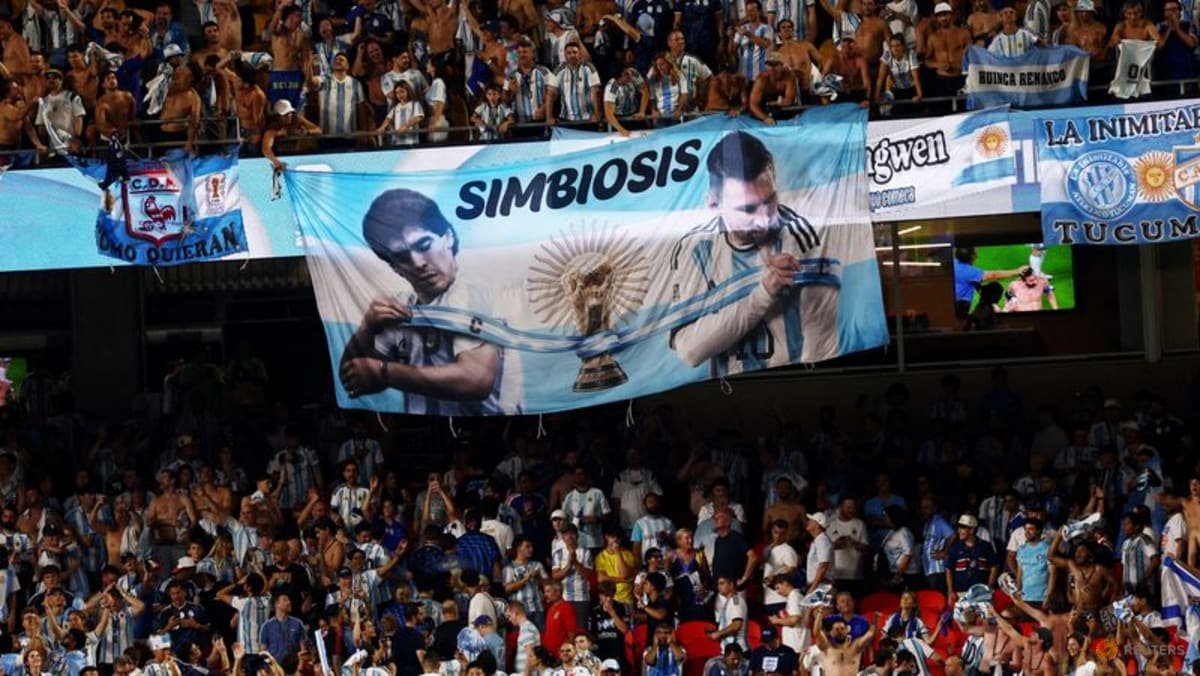
Argentina’s sense of national identity, by contrast, remains rooted in an origin myth from the 1920s, which in many ways was set up in direct opposition to the English, cultural historians say.
In the decades after Britain introduced soccer to Argentina, the idea of developing a style of play and sense of identity radically different to the English one was strongly encouraged by Argentina’s first sports journalists, according to Pablo Alabarces, a professor of popular culture at the University of Buenos Aires.

Guess Word
Crack the word, one row at a time

Buzzword
Create words using the given letters

Mini Sudoku
Tiny puzzle, mighty brain teaser

Mini Crossword
Small grid, big challenge

Word Search
Spot as many words as you can
An influential article in 1928 by the editor of El Grafico, known as Borocoto, described what a statue of an Argentine footballer would look like.
It describes him as “short, malnourished, a shock of dark hair, his teeth worn down by eating yesterday’s bread … a picaresque smile on his lips,” said Jonathan Wilson, author of “Angels With Dirty Faces: The Footballing History of Argentina.” “If you gave that description to somebody now, without any context, what would they say? It’s (Diego) Maradona. But this was 32 years before Maradona was born.”
The 1920s origin myth of Argentine football, defined by this character, popularly referred to as a “pibe,” and his virtuosity and cunning, was “key to its sense of nation, and one of the few things all these people (from different countries) could agree on,” said Wilson.
Argentina then was a country in formation. Huge waves of migrants — largely from Italy, but also from Spain, Eastern Europe and elsewhere — had entirely reshaped it. In 1910, around half the population of Buenos Aires was foreign-born.
But economic hardship and political volatility slowed that wave down to a trickle as the century wore on, and most Argentines today are third or fourth generation migrants.
Although many of the national squad players are with European clubs, the concept of the “pibe” remains. Goalkeeper Emiliano Martinez’s controversial mind games — on show during the last World Cup final against France — could be seen as an example of that.
“Argentine culture carried us through the World Cup final in Qatar,” said former player Jorge Valdano at a sporting press association talk in Spain last year. “Our know-how and cunning allowed us to triumph in a match when France had managed to level it. And that’s something you learn in the street.”
SHIFTING IDENTITY IN ENGLAND
England has also been a country of migration — but in much more recent times, as people from across the world and particularly Britain’s former colonies have moved there. Many players are now second or even third generation migrants.
That has meant England has needed to change its own concept of national identity.
“I think, in a very profound way, the English football team over the last half-century has shifted the cultural and social norms of who we think is English,” said Sunder Katwala, director of diversity and inclusivity think tank British Future.
After England’s sole World Cup triumph in 1966, and following World War Two which cast a long shadow, the sense of identity initially came from nostalgic nationalism, and of standing alone against the enemy, historians say.
In the 1990s, suspicion of foreigners lingered. Hooliganism was an enduring problem, and references to the war still abounded.
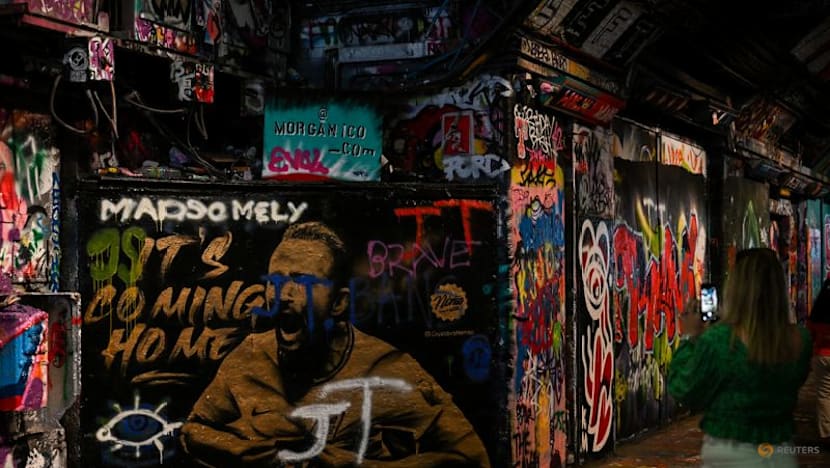
For Katwala, the Euro 1996 tournament, hosted in England, was a transformative moment, helped in part by the Three Lions song with its oft-sung (and sometimes mocked) “football’s coming home” lyric.
“It’s actually a song about hope over expectation,” he said. “It’s a song about what it is to be a nation, which is the shared experience of losing on penalties, winning a match, hoping to win, not quite winning, hoping to win next time.”
For the first time, the Football Association pursued a foreign manager, Sweden’s Sven-Goran Eriksson. Now, it is under the wing of straight-talking Thomas Tuchel, a native of long-time rival Germany.
England is unusual in that, as part of Britain, it is not a nation state. For England, it is the football team that represents the country more than any other institution, said Katwala. Surveys indicate that both white and ethnic minority English agree on that point, he added.
It has not always been a smooth ride. Black players were subjected to a storm of online racist abuse after their defeat in the final of Euro 2020, when they missed spot-kicks in a penalty shootout against Italy. The abuse drew wide condemnation from sporting and political leaders.
“You look at the run into that final and you felt as though the country had united,” midfielder Jude Bellingham told the Mirror in 2022. “Then as soon as they missed a penalty, they were not English, just Black. Anyone can miss a penalty.”
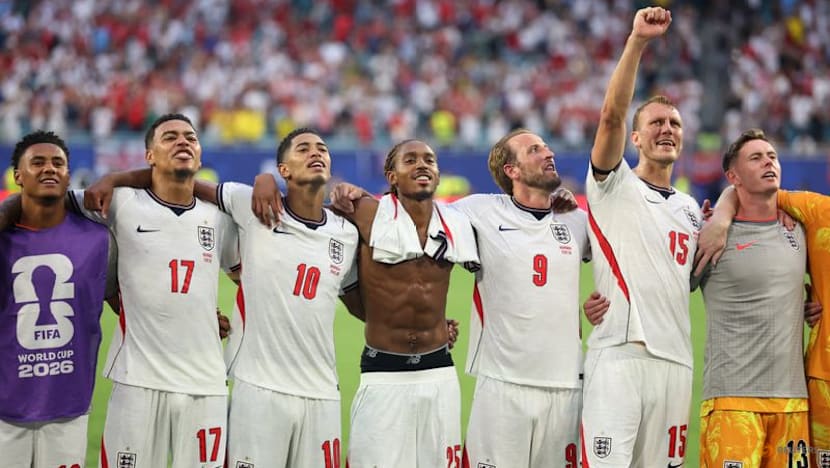
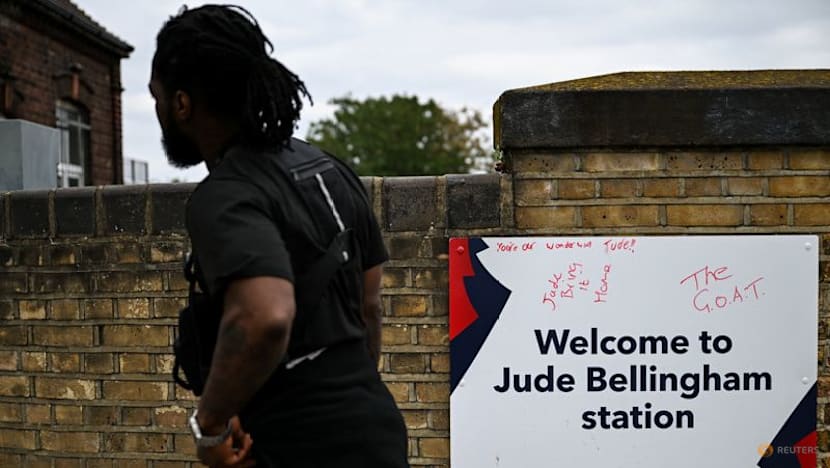
Perhaps it is Bellingham himself, of mixed Black and white heritage, who most embodies changing attitudes. As he has produced the kind of performances that have underlined his status as one of the tournament’s outstanding players, he has been serenaded by travelling supporters — predominantly white — singing along to The Beatles’ “Hey Jude” at the end of matches.
“We’ve brought this nation together,” England’s goalkeeper Jordan Pickford told a press conference on Monday.
“We’re in the semi-final and we know we can’t look past Argentina. It’s going to be a tough game, a top game. But we want to put smiles on their faces.”
Source: Reuters
Sign up for our newsletters

Get the CNA app
Stay updated with notifications for breaking news and our best stories
Get WhatsApp alerts
Join our channel for the top reads for the day on your preferred chat app

Get bite-sized news via a new
cards interface. Give it a try.
Click here to return to FAST
Tap here to return to FAST
FAST
About The Author