Huawei plans for more AI pharma tie-ups, says healthcare president
FILE PHOTO: People walk past the Huawei booth, where the Atlas 950 SuperPoD system is displayed, during the World Artificial Intelligence Conference (WAIC) in Shanghai, China, July 17, 2026. REUTERS/Go Nakamura/File Photo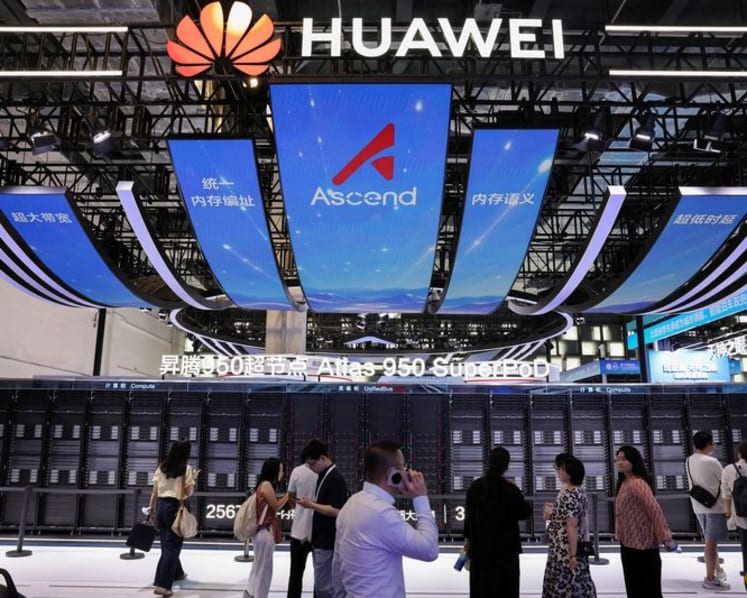
Read a summary of this article on FAST.
Get bite-sized news via a new
cards interface. Give it a try.
Click here to return to FAST
Tap here to return to FAST
FAST
SHANGHAI, Aug 27 : Chinese technology conglomerate Huawei plans to expand its AI cooperation with local pharmaceutical firms into drug development and clinical practice, a senior executive said.
The move highlights Huawei’s ambitions to gain a foothold in the fast-growing AI drug discovery market, where pharmaceutical companies are investing in modelling tools and automated laboratories to shorten development timelines and improve efficiency.
“As we further deepen our research into AI in the medical field, we’ll have more collaboration and results emerging with pharmaceutical companies from drug manufacturing to clinical to final implementation,” William Zhang, president of Huawei’s healthcare business unit, told Reuters on Wednesday.
He said that Huawei had some existing collaborations in the area of clinical practice in hospitals and was exploring more opportunities, without further elaboration.

Guess Word
Crack the word, one row at a time

Buzzword
Create words using the given letters

Mini Sudoku
Tiny puzzle, mighty brain teaser

Mini Crossword
Small grid, big challenge

Word Search
Spot as many words as you can
The projects now are mainly with domestic drugmakers, he said.
U.S. chip giant Nvidia has struck AI-related partnerships with drugmakers such as Eli Lilly and Novo Nordisk, as technology companies seek to capitalise on growing demand for AI-powered drug research.
Huawei offers tools for screening potentially viable drug compounds, alongside its Ascend and Kunpeng chips.
In May, Huawei said one project involving state-owned Guangzhou Pharmaceutical Holdings was the industry’s first production validation of independently developed AI drug research models that were adapted to its Ascend and Kunpeng technologies.
Industry forecasts suggest that the use of machine learning to optimize target discovery, design molecules and streamline clinical trial planning could halve early-stage development timelines and costs within the next three to five years, Reuters has previously reported.
Source: Reuters
Sign up for our newsletters

Get the CNA app
Stay updated with notifications for breaking news and our best stories
Get WhatsApp alerts
Join our channel for the top reads for the day on your preferred chat app

Get bite-sized news via a new
cards interface. Give it a try.
Click here to return to FAST
Tap here to return to FAST
FAST