Warning: This article discusses sexual violence, which some readers might find distressing.
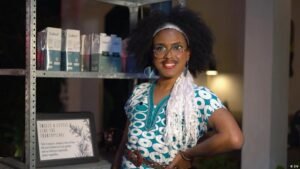
Mixi Cruz was just 13 years old when her mother died. At first, she lived on the streets, then she turned to her elder stepsister for help. Once there, she was forced to manage household chores and pressured into sexual exploitation.
“The hardest part was accepting that none of that happened simply because I was naive or stupid,” the young woman, now 33, tells DW. “It happened to me because there are bad people who sell other people. And there are bad people who buy other people.”
In Mexico human trafficking has become one of the most lucrative economies in organized crime. According to the 2025 Global Organized Crime Index by the Swiss-based Global Initiative organization combating transnational organized crime, criminal synidicates are becoming more and more involved. These include the Jalisco New Generation Cartel (Cartel de Jalisco Nueva Generacion, CJNG) and the Sinaloa Cartel.
Within just one year, the number of incidents reported to authorities spiked by 45%.
To view this video please enable JavaScript, and consider upgrading to a web browser that supports HTML5 video
On World Day Against Trafficking in Persons, July 30, the UN Office on Drugs and Crime (UNODC) is calling for tighter, cross-border cooperation between judiciaries and law enforcement. Experts say that so far, only a fraction of the actual cases are being reported, let alone solved.
Perpetrators exploit vulnerabilities
Mixi Cruz was exploited by her own family. She was made to look after five children, and iron laundry until late at night. She still has scars on her hands, from when she’d fall asleep and burn herself with the iron, she says.
Not longer after, she was pressured into sex work for money. She was 14.
Many survivors don’t know at the time that they are experiencing sexual violence, she says.
“Many think they’re in love, or their own family sells them,” Cruz explains. “From the time they’re little, they’re made to believe violence is normal, and just part of what love is.”
To view this video please enable JavaScript, and consider upgrading to a web browser that supports HTML5 video
In Mexico, the civil-society organization Consejo Ciudadano para la Seguridad y Justicia (Citizens’ Council for Security and Justice) estimates that seven out of 10 human trafficking survivors are female. More than half of them are minors.
Hidden human trafficking figure much higher, experts say
“Human trafficking is a game of deceit, it involves a high level of emotional manipulation to isolate victims and prevent them from reaching out and building support networks,” Gabriela Gonzalez Garcia explains. She is the director general of citizen services for the Citizens’ Council.
Her organization runs Mexico’s only specialized 24-hour hotline , as well as a live chat, for people affected by human trafficking. Since it was founded in 2007, the organization has counted some 26,000 cases. But the real number, Gonzalez says, is far higher, likely around 98%.
Ana Torres and three volunteers are in a red-light district near the edge of Mexico City. She’s asked not to be mentioned by her real name. Now in her late 20s, she’s been leading a street project for the past five years for El Pozo de Vida (“The Well of Life” in Spanish) that combats human trafficking and sexual exploitation. Each week, Torres and her colleagues visit a different part of Mexico’s capital, speaking with the women there and offering help.
Before this year’s soccer World Cup in Mexico, Canada and the United States, many sex workers had hoped for higher earnings, but Torres says the demand remained virtually unchanged. But what did increase noticeably was the number of foreign tourists, and with it, another source of danger for the women on the streets: the language barrier.
“Maybe they reach an agreement (with clients) on the street,” Torres explained. “But what really happens when they get a room?”
Raising awareness for human trafficking
The UNODC and its Mexican partners the like Citizens’ Council used campaigns like Mundial sin Trata (“A World Cup Without Human Trafficking” in Spanish) to make the tourism industry more aware of the increased risk of human trafficking during the World Cup. A popular driving service joined the campaign, and an online homestay operator teamed up with the UNODC to offer workshops for hosts.
But Cruz says she’s skeptical that was enough to curb trafficking and exploitation.
“Men don’t pay for sex because they traveled here just for that. They do it because an opportunity presents itself,” Cruz said. “In any tourist district, people can tell you where to find prostitution, where you can find women, or children.”
‘They’re locked away and guarded’
In the red-light district, it’s starting to rain. Many sex workers have disappeared into nearby houses. A young woman is standing at the corner, wearing black high-heels, a short green dress, grey denim jacket, dark hair to her shoulders. Rain drops bounce off her umbrella. Ana Torres approaches her.
The young woman says she’s worried about one of her colleagues, from Colombia, who’s currently hiding somewhere in the city. She talks about a family of pimps that targets Colombians, luring them to Mexico with fake promises.
The pimp’s wife, she says, has an iron grip on operations: “She makes them work 12 to 15 hours a day, they’re not even allowed to eat alone,” the woman told DW. “They’re locked away and guarded in houses.”
Ana Torres asks the woman to pass her organization’s number on to her colleague who has fled. The young woman has tears streaming down her face as Ana Torres commends her for her courage to speak up for others.
On the way back, Ana says she’s under the impression the pimps and their overseers were watching the women more closely that evening than they usually would. She says she’s not quite sure why, but it worries her.
To view this video please enable JavaScript, and consider upgrading to a web browser that supports HTML5 video
Mixi Cruz was 16 when she finally managed to run away. Today, she’s part of a survivors’ network that visits schools and universities to raise awareness for human trafficking. Her stepsister was eventually sentenced to four years in prison, her stepsister’s husband got five years. In the end, they weren’t convicted for human trafficking, but for other serious offenses. But even that is unusual.
This article was translated from German.
If you or someone you know have experienced any kind of gender-based violence, the website lila.help lists trustworthy helplines and NGOs that offer support in almost every country in the world.
About The Author