I discovered Chiang Mai’s quieter side: Coffee farms, village stays and forest bathing
From forest bathing and mountain coffee farms to meals beneath towering trees, CNA Lifestyle’s Joyee Koo explores Chiang Mai’s lesser-known villages and community-based stays.
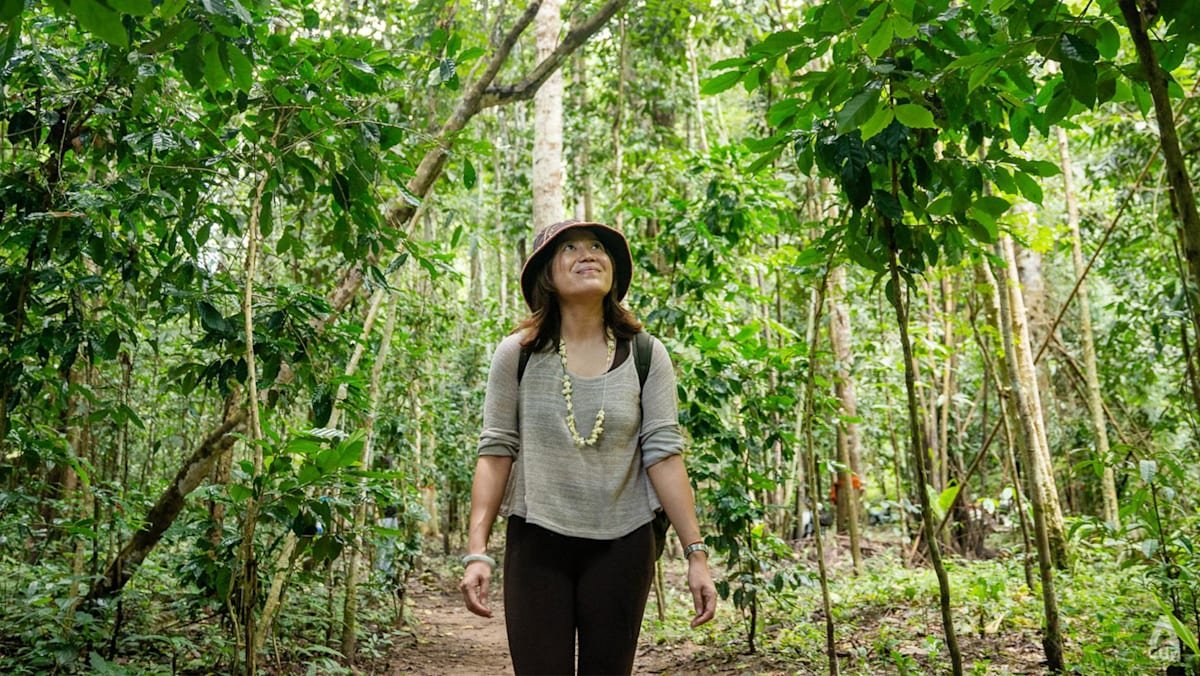
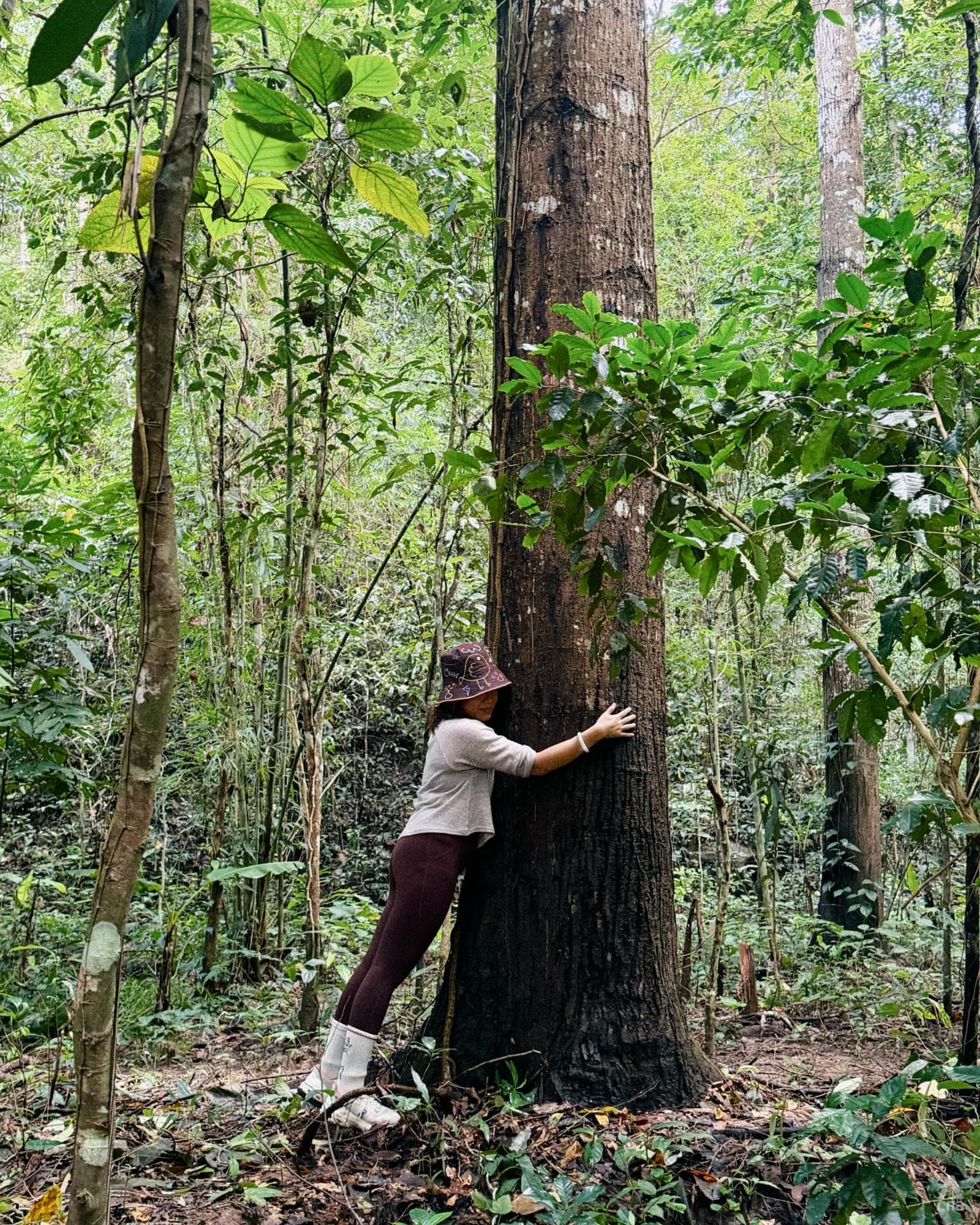
Forest bathing in Chiang Mai. (Photo: CNA/Joyee Koo)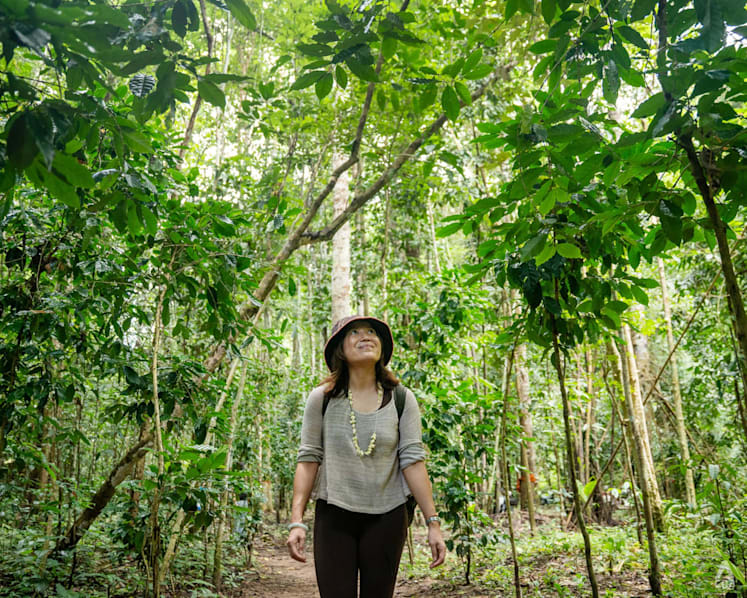
New: You can now listen to articles.

This audio is generated by an AI tool.

Read a summary of this article on FAST.
Get bite-sized news via a new
cards interface. Give it a try.
Click here to return to FAST
Tap here to return to FAST
FAST
Chiang Mai is a popular destination for Singapore travellers, with part of its appeal lying in its combination of city life and nature. You can spend your days exploring temples, stopping at cafes and browsing night markets, then head into the surrounding mountains for a change of scenery.
On this trip, though, the countryside was more than a scenic escape. A nature-focused itinerary, which Singapore-based travel agency Aveson Travel and the Tourism Authority of Thailand invited us to try, introduced us to communities whose lives and livelihoods are closely tied to the land. There was coffee with the farmer who grew the beans, meals made with freshly harvested produce and a stay overlooking rice paddies.
There was also my first attempt at forest bathing. I wasn’t quite sure what to expect, but figured I’d be hugging at least one tree.
WASUNTHARA FARM: A MEAL ROOTED IN THE LAND
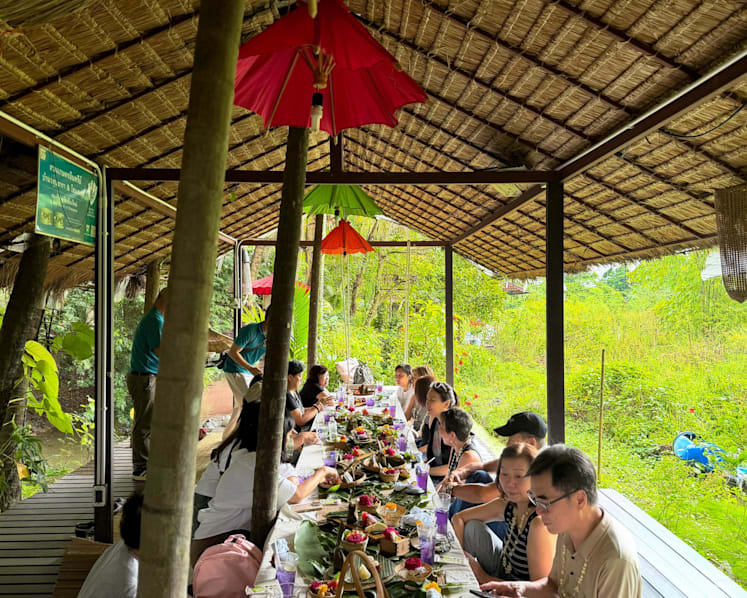
One of our first meals took us to Wasunthara Farm in Chiang Mai’s San Sai district. The farm-to-table eatery opens year-round but offers just one seating a day, which fills up quickly, so reservations need to be made at least a month in advance. Its concept? A floral omakase.
We met chef-owner Wilat Junlakan, who manages both the farm and kitchen with just one other staff member for the past seven years. The menu changes with the seasons, featuring a variety of produce grown on the farm. He even grows his own rice.
Wilat previously worked in restaurants serving Japanese and American cuisines. Seeing people around him fall ill motivated him to grow his own produce and open an eatery serving food that was both healthy and enjoyable. He said he uses no MSG, preferring to let the produce take centre stage.
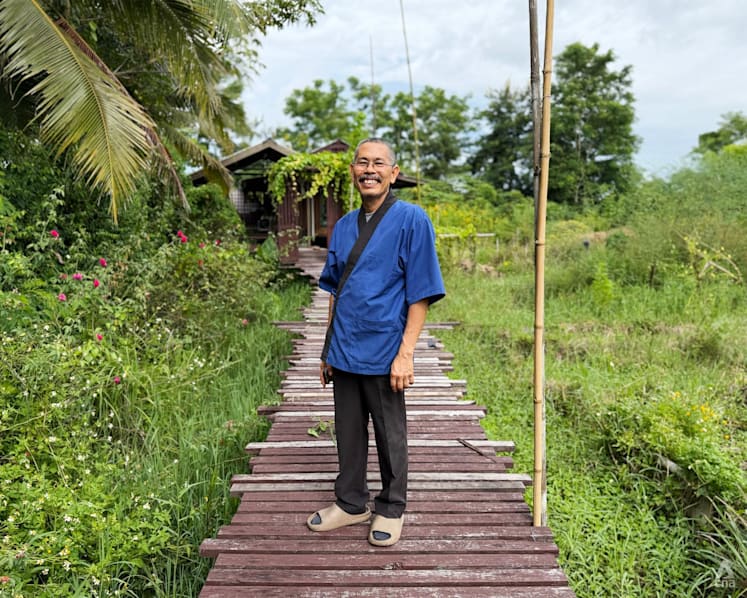
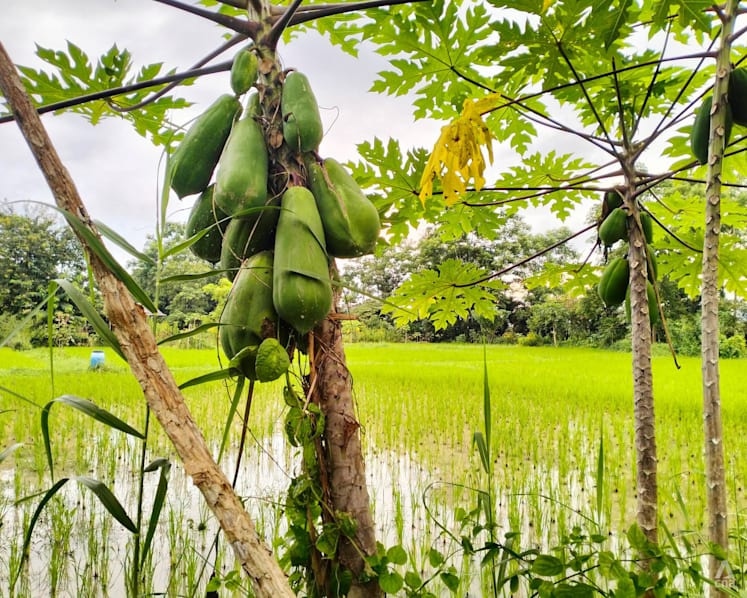
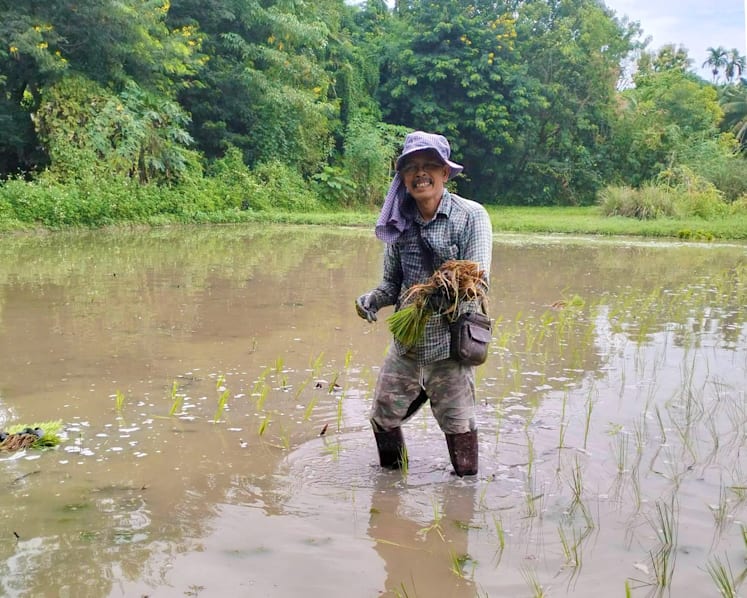
“What makes me most happy about what I do is I know what I put into the food. I grew them, and I eat them,” he said with a broad smile.
We settled onto cushions at low tables on a wooden floor, overlooking rice paddies. A drizzle brought welcome relief from the heat, its gentle pitter-patter adding to the laid-back atmosphere.
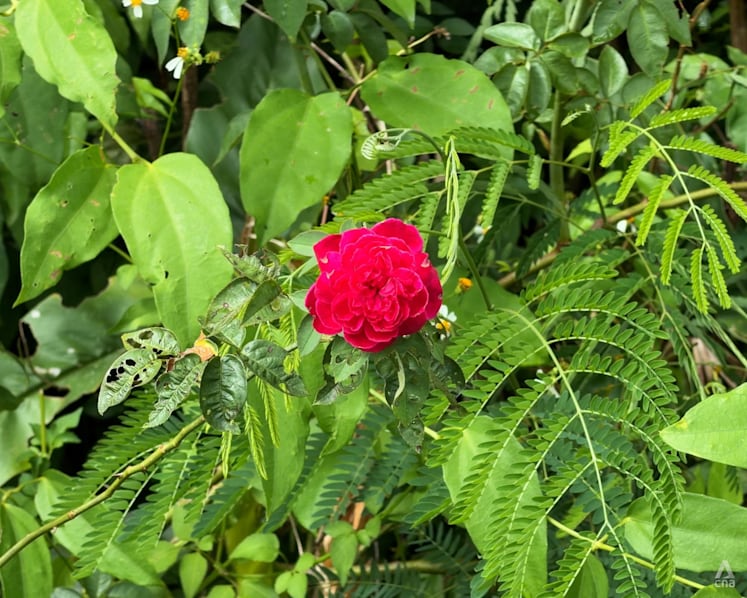
Our eight-course meal looked deceptively simple but the dishes were textural and packed with light but distinct flavours. Each dish is also carefully assembled and finished with edible flowers grown on the farm. Even the utensils featured nature-inspired decorations.
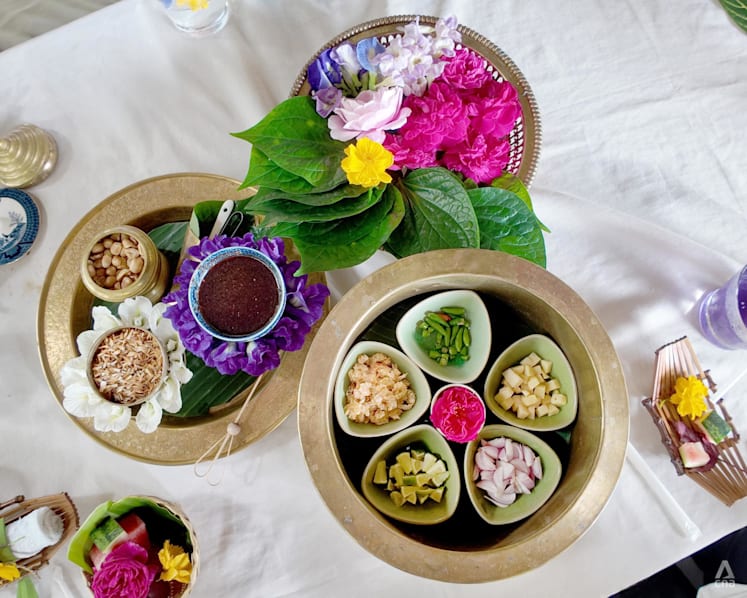
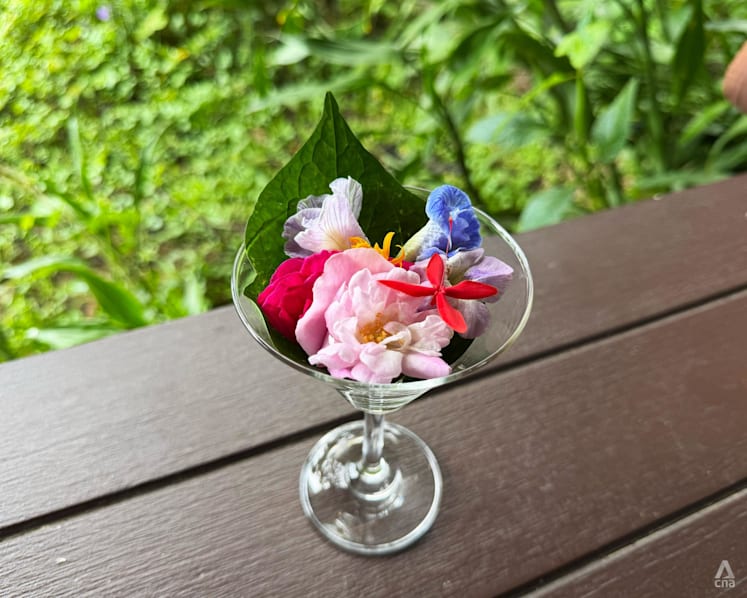
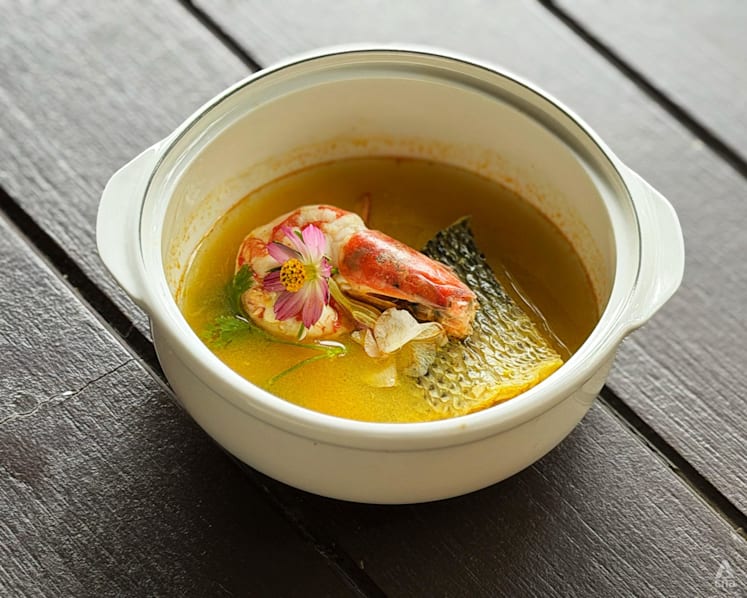
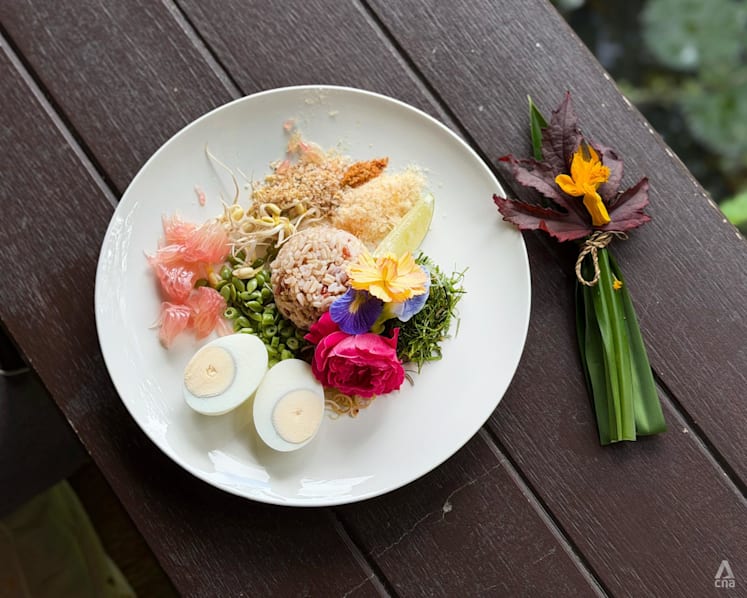
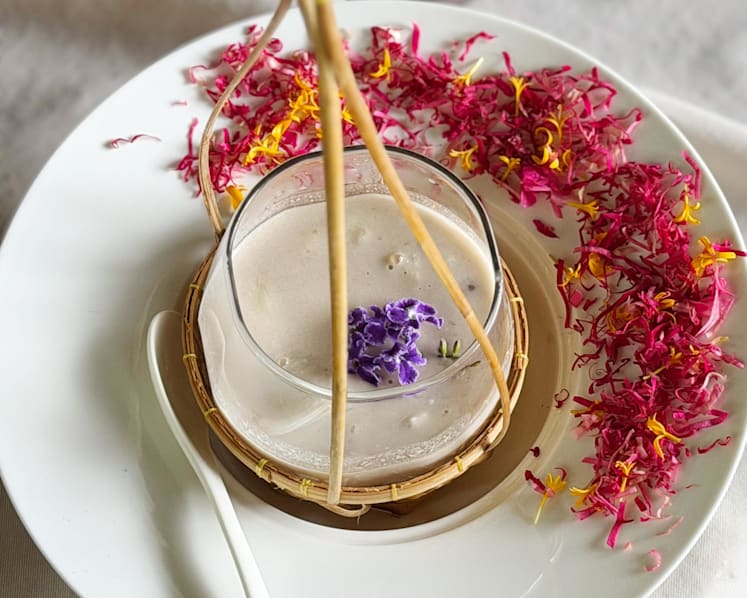
One favourite among my fellow travellers was miang kham – a leaf wrap filled with shallots, chillies, dried shrimp, roasted coconut and a colourful selection of edible flowers, finished with sauce. Eaten in a single bite, it delivered a lively mix of flavours and textures.
BAAN PA NGIEW: GETTING ACQUAINTED WITH THE FOREST
I’ve hiked through forests before but had never tried forest bathing. The practice originated in Japan and encourages people to take in the atmosphere through their senses.
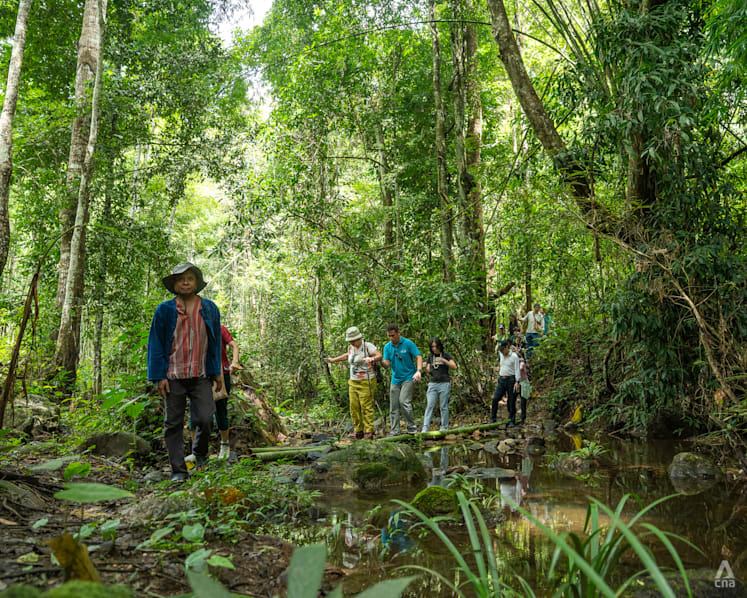
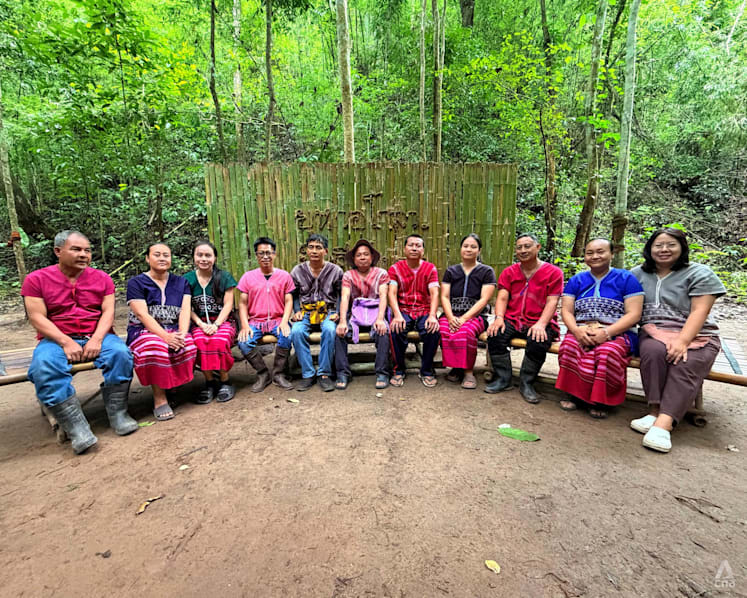
My first experience took place in Baan Pa Ngiew, a village in Chiang Mai’s Mae On district. Most of its approximately 300 residents belong to the S’gaw Karen community.
According to Sittipong, our local tour guide from Northern Smile Travel, the villagers divide the forest into two zones. The inner forest is considered sacred and accessible only to villagers, with tree-cutting and hunting strictly forbidden. The outer zone is a community forest, where residents can gather herbs and bamboo, or fish in the river.
Sittipong first visited last year and eventually worked with the villagers to develop a forest bathing programme for international visitors, creating opportunities for residents to guide walks, share local knowledge, and prepare food.
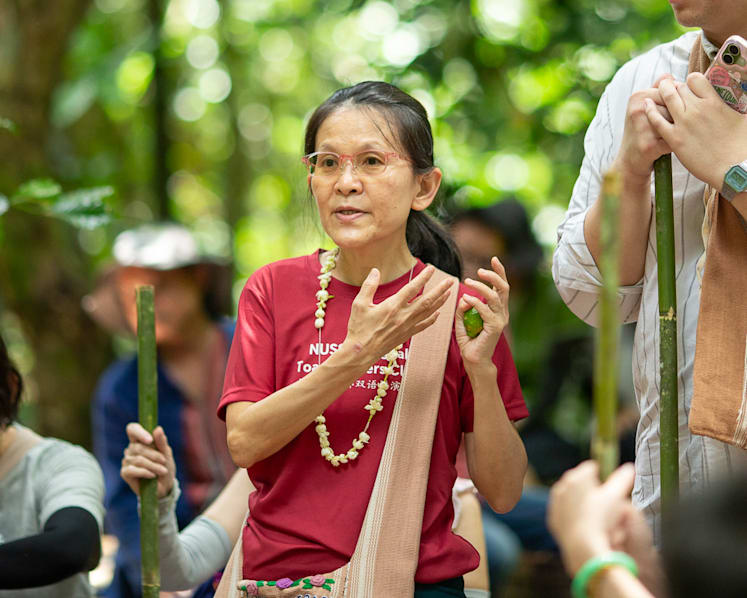
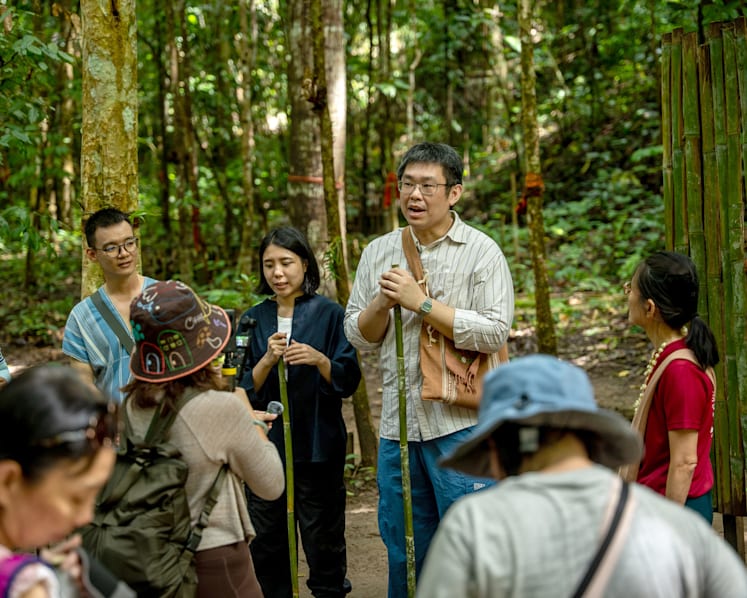
We were the first group to try the forest bathing programme, led by Singapore-based certified forest therapist Phyllis Koh, who helped develop the itinerary and assessed the forest’s suitability for the experience.
We were also joined by Dr Peraphol, a fellow practitioner from the Forest Bathing and Forest Therapy network, who assured us he would be on hand if anyone got bitten by insects. Reassuring.
Then we set our intention for the walk. Rather than focusing on distance, we were encouraged to slow down, breathe, notice our surroundings and engage with nature through our senses, like noticing what we could smell.
Admittedly, at the start of the walk, all I could smell was the insect repellent I had enthusiastically sprayed on myself. I was also focused on keeping my light-coloured shoes out of the mud.
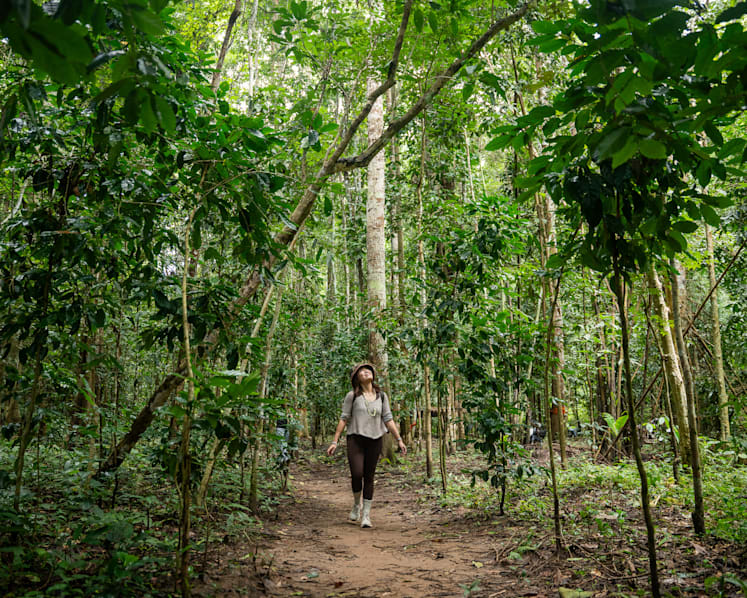
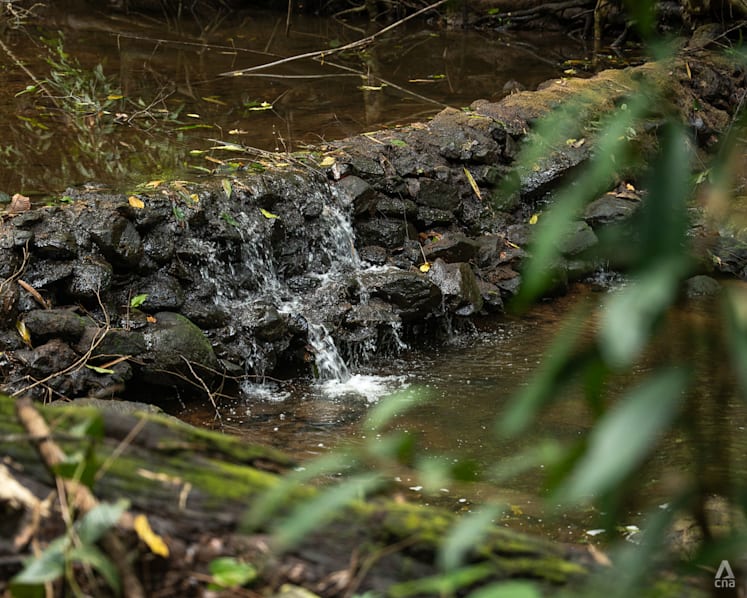
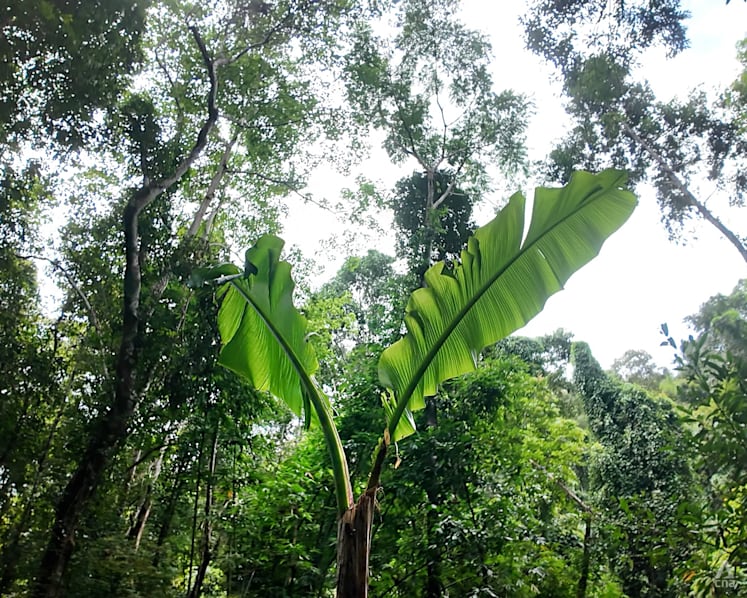
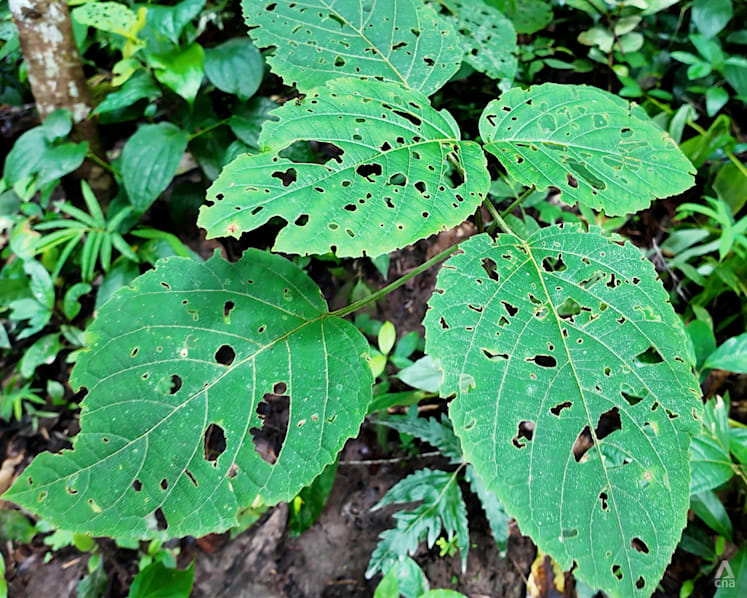
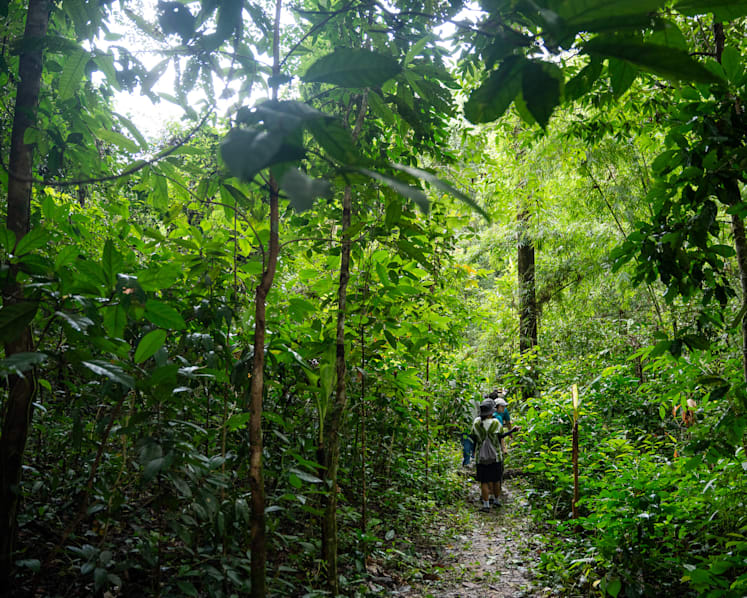
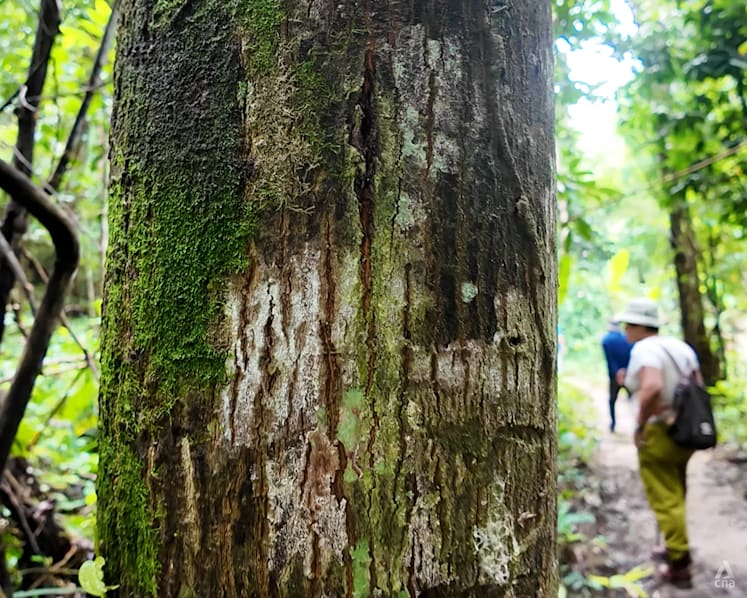
But as we made our way deeper into the forest, we reached the river and the group’s chatter faded. With no phone reception, the notifications had stopped too. I found myself listening to the water flowing past. I dipped my hands in, feeling the cold water against my skin.
Gradually, I stopped watching every step and began noticing what was around me and above me. We picked up fallen leaves with shapes that caught our eye, or that we simply felt drawn to. I paid closer attention to the texture of the bark, especially the rough, layered surfaces of the older trees. The air smelled fresh, carrying the scent of trees and damp soil.
It all felt far removed from my everyday life in Singapore, and I wanted to take it in. My shoes, meanwhile, surrendered to the mud.
Towards the end of the walk, Dr Peraphol’s wife, Ms Supapit, another practitioner, introduced us to grounding (or earthing), which involves making direct contact with the ground with our bare feet. She described it as a way of connecting with electrons at the Earth’s surface.
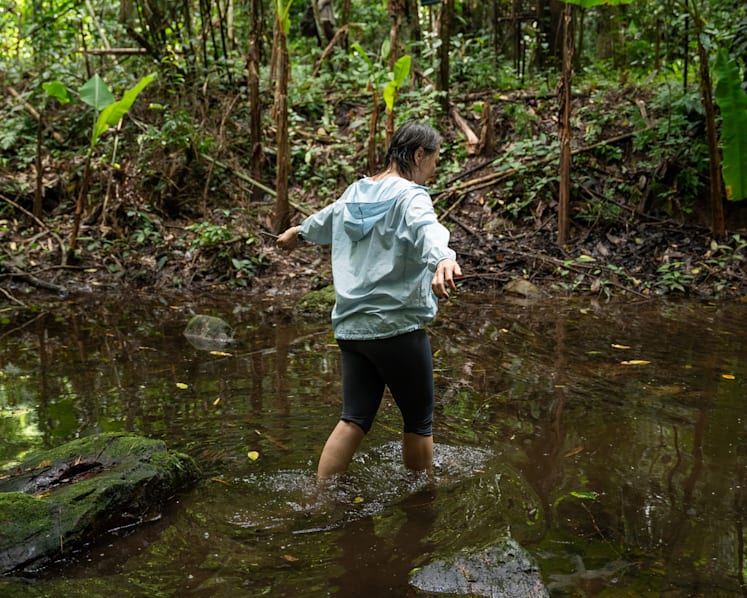
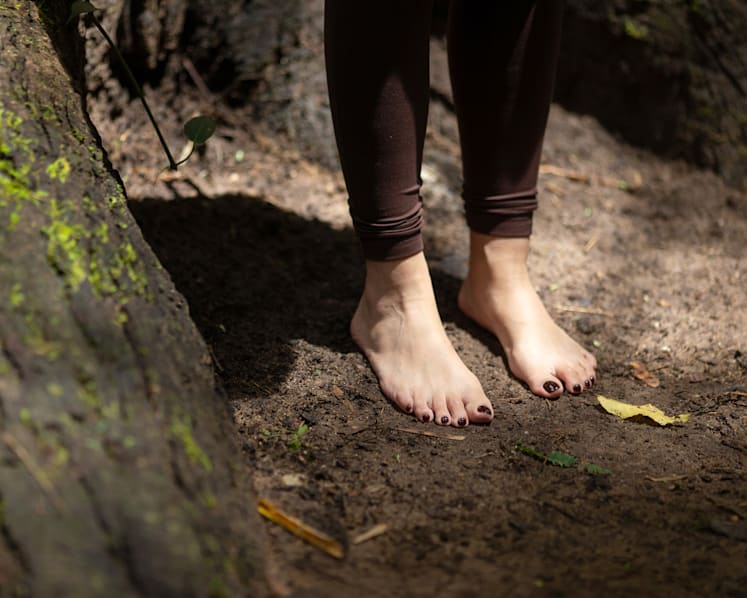
I was initially hesitant, thinking about the hassle of drying my feet and putting my socks back on afterwards. But hey, how often would I get to do this? I took off my shoes, and a few others followed suit.
The soil was surprisingly cool underfoot. A few of us then crossed the river. There was something freeing about walking barefoot through the forest and feeling the ground and cold water beneath me. I felt lighter, refreshed and glad I’d taken my shoes off after all.
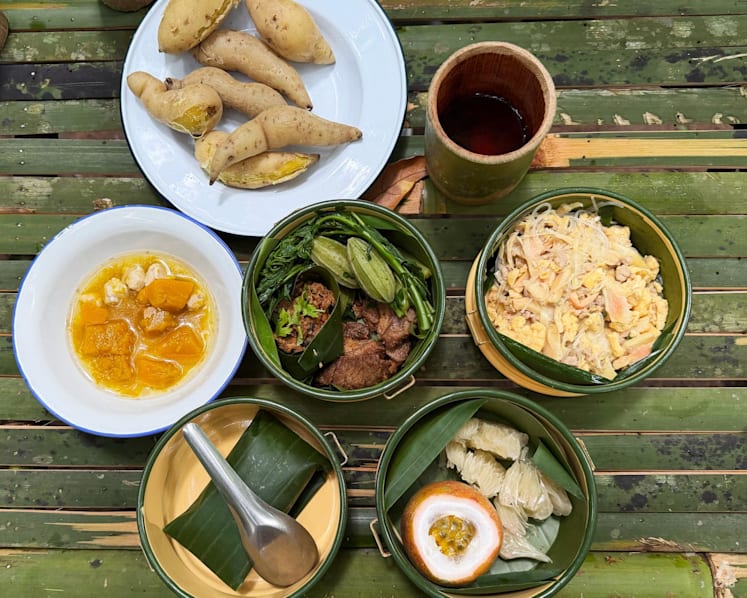
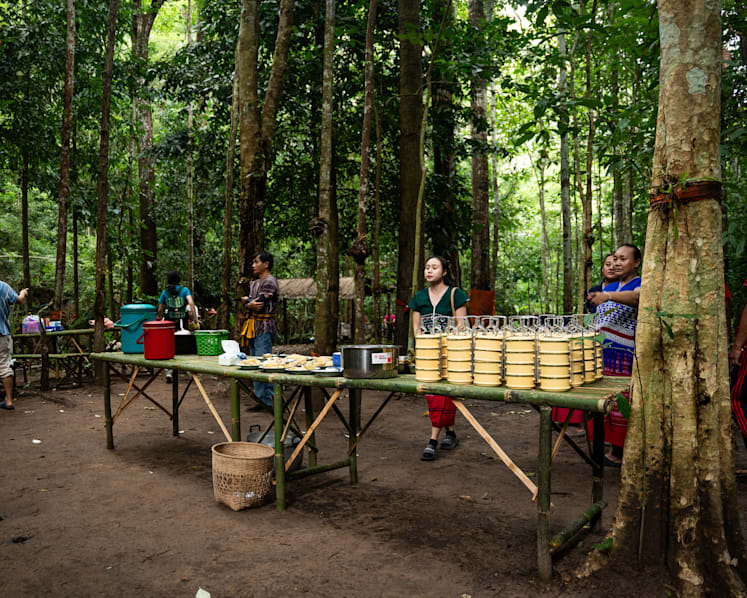
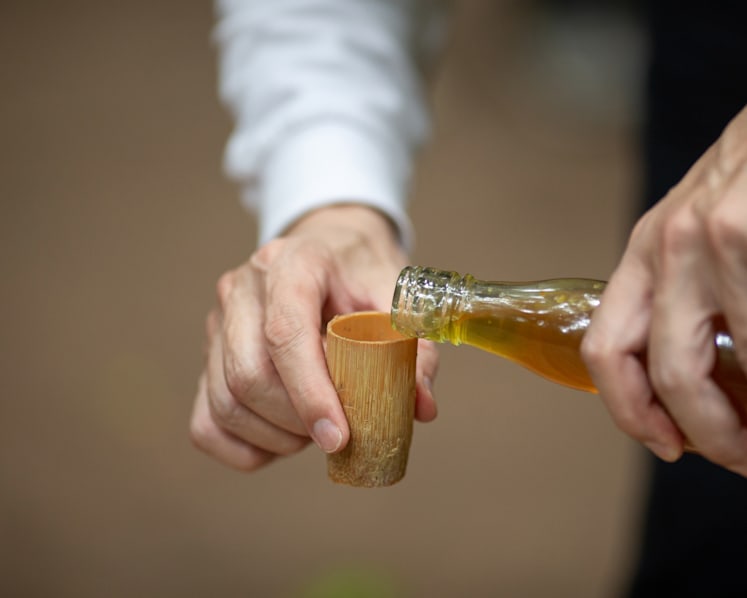
We finished with herbal tea and a home-cooked meal prepared by the villagers using ingredients gathered from the forest. We also tried a local alcoholic drink called lao tom, served in a long bamboo carrier. Sitting beneath the tall trees, sharing food and laughter in the forest we had just explored, felt a little surreal. I was still in the forest, but already knew I would miss it.
And yes, I did hug a tree before we left, with a photo to remember the moment. I chose it less for the energy I felt and more for the fact that it had the fewest ants. I was embracing nature, but I had my limits.
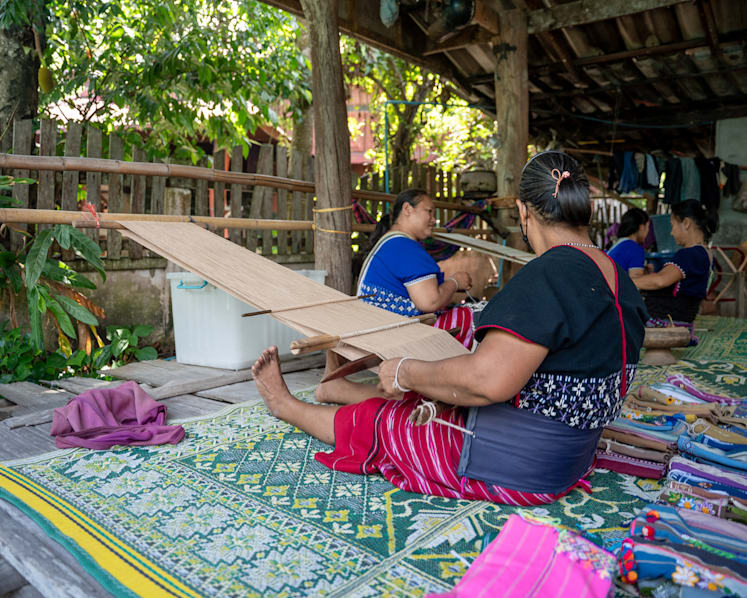
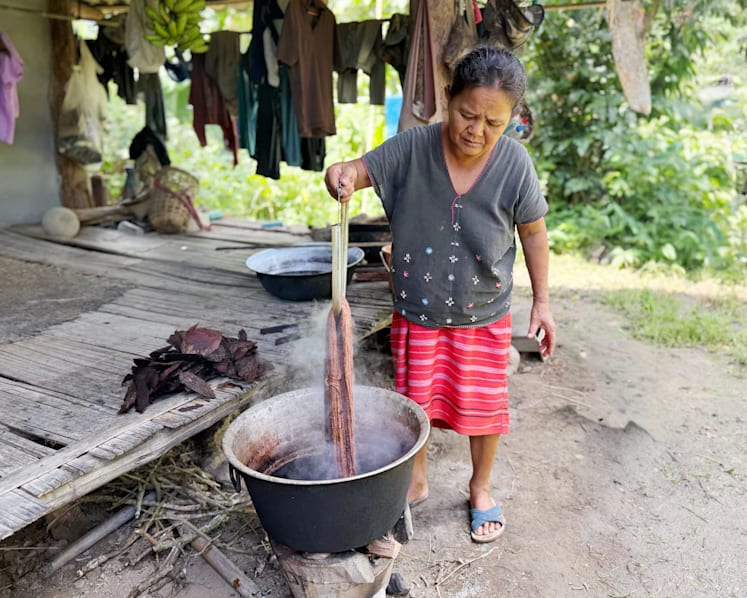
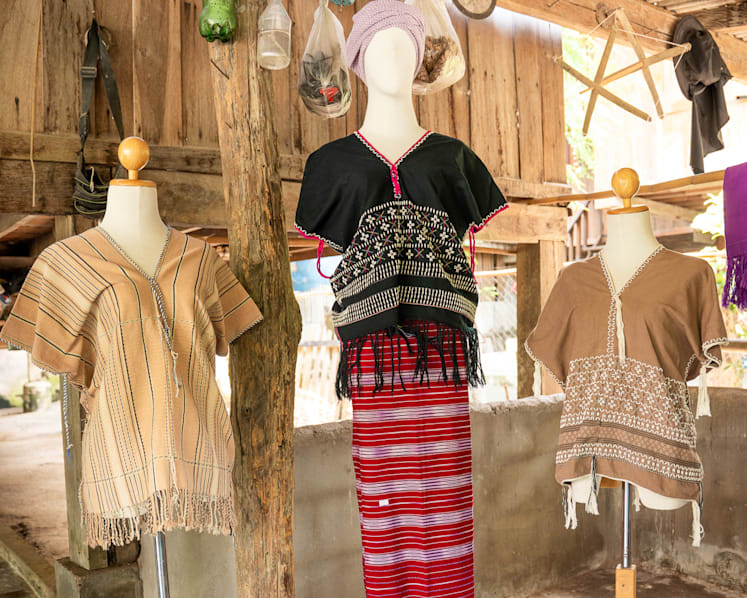
Back in the village, residents showed us how they dyed cotton and wove fabric for traditional clothing. We could also buy their handmade pieces directly from them, offering another way to support the community. Being Singaporeans who love a good shopping opportunity, we soon had our cash out.
KHUN CHANG KIAN VILLAGE: BREWING A LIVELIHOOD
High in the mountains, Khun Chang Kian Village is home to a White Hmong community and lies in one of Thailand’s earliest coffee-growing areas.
With rain coming down hard, an afternoon cup seemed in order. We visited a rustic hut run by fourth-generation farmer Chatree Saeyang, who serves pour-over coffee made with beans he grows, ferments and roasts himself.
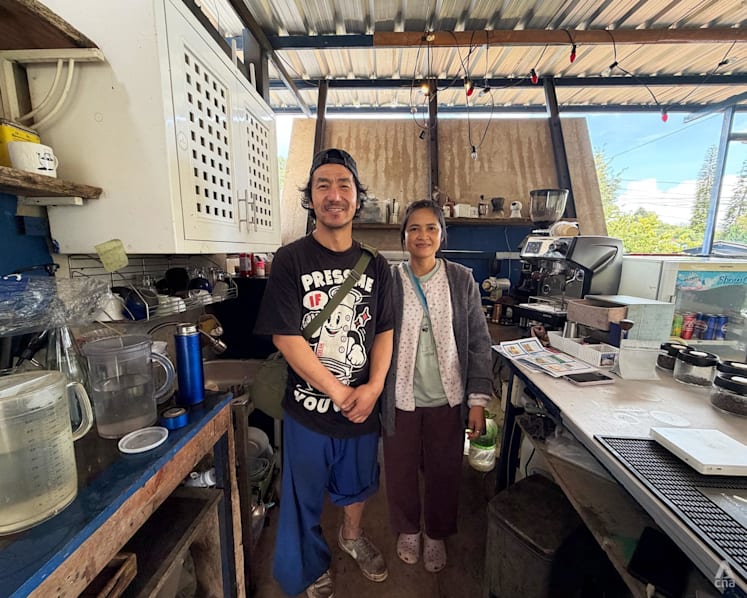
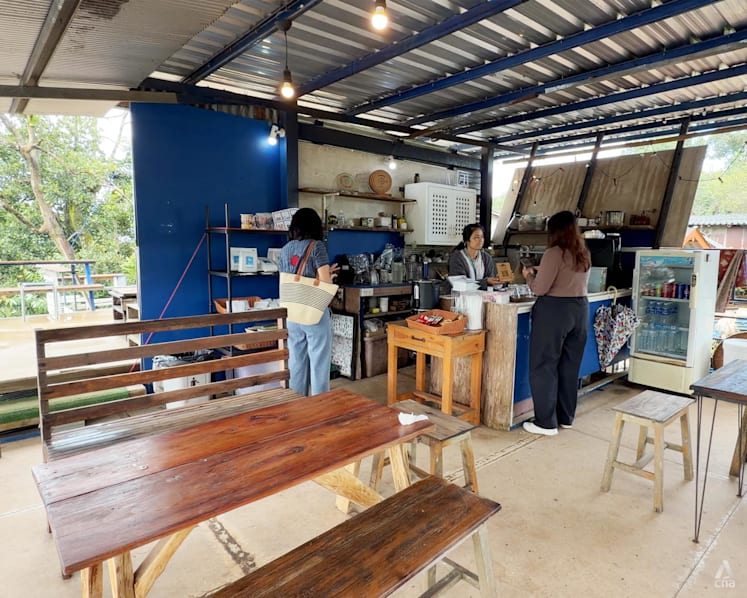
Chatree shared how villagers were initially encouraged to grow coffee because the area’s climate was suitable for the crop. But many began without a full understanding of how to cultivate or process it.
An interest in specialty coffee led him to learn from established roasteries, exploring processing methods that could add value to his beans. His coffee went on to win first prize in a Specialty Coffee Association of Thailand competition in 2019. Following his success, he said, coffee farming in the village became more informed and business-minded. Coffee is now the community’s most profitable crop, with each family tending a small plot.
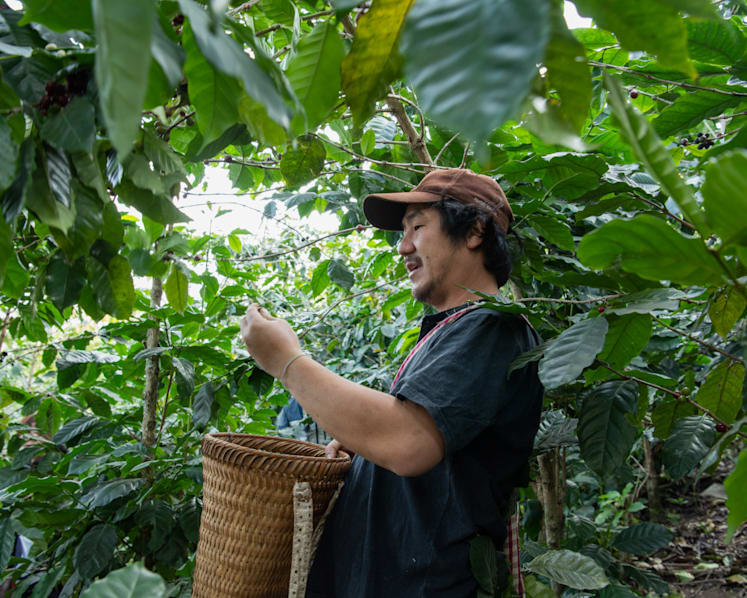
We tasted coffee made from different beans and processed in various ways by Chatree, hand-poured and brewed by his wife. My favourite was the signature washed-process coffee stood out for its clean taste and gentle acidity, sipping on the cup of good coffee, while taking in the view of the mist sweeping rapidly across the mountains.
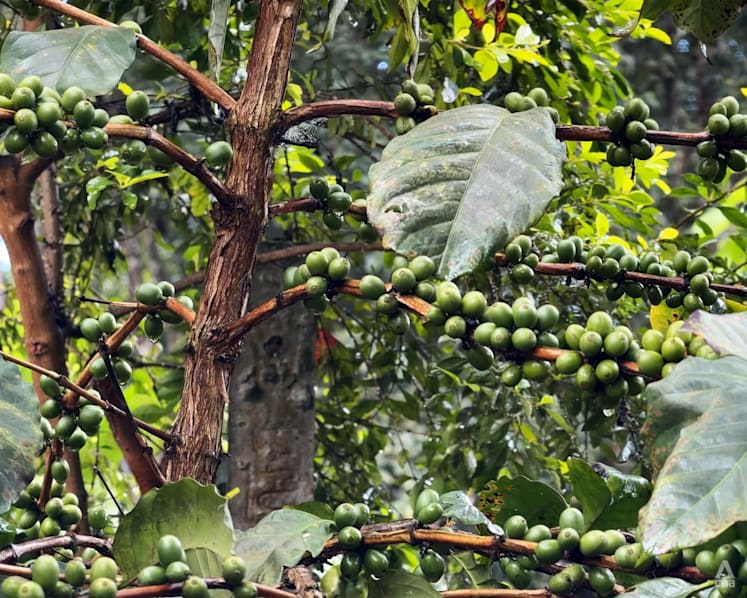
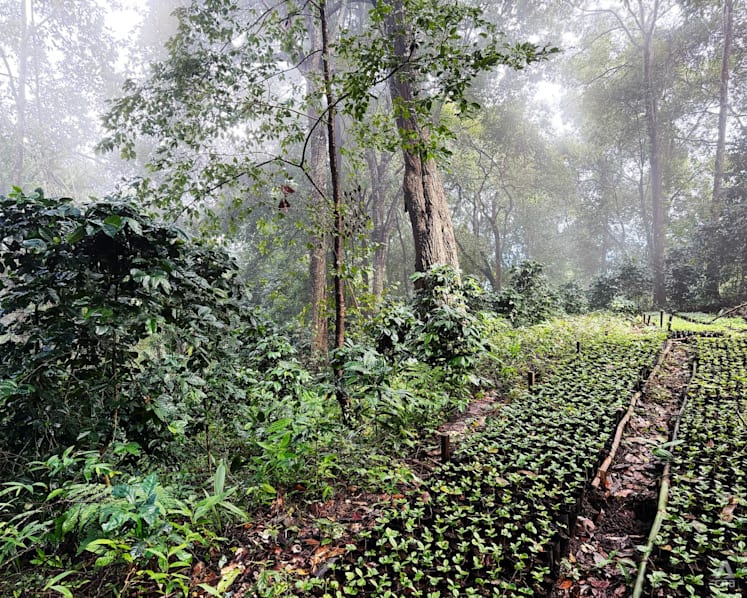
We then followed a short, forested path to his plantation to see where it all began. Chatree explained the work that goes into nurturing a seedling into a productive coffee tree – and the challenges of an increasingly unpredictable climate.
Nearby is Srinehru primary school, which his daughter attends. It offers a barista club as an extracurricular activity, with a cafe where students gain practical experience.
Pupils in Grades 3 and 4 help with customer service and cleaning, while those in Grades 5 and 6 prepare coffee, including latte art. They are paid for their work, and part of the cafe’s profits goes towards supporting the school.
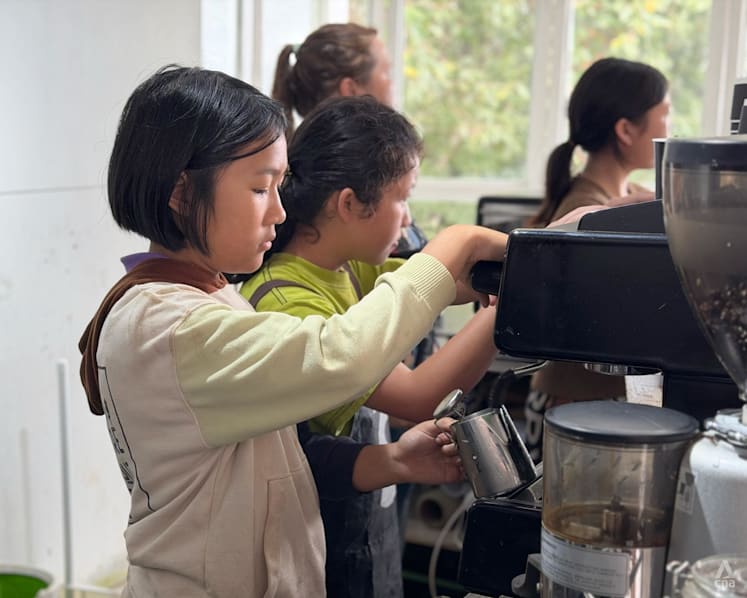
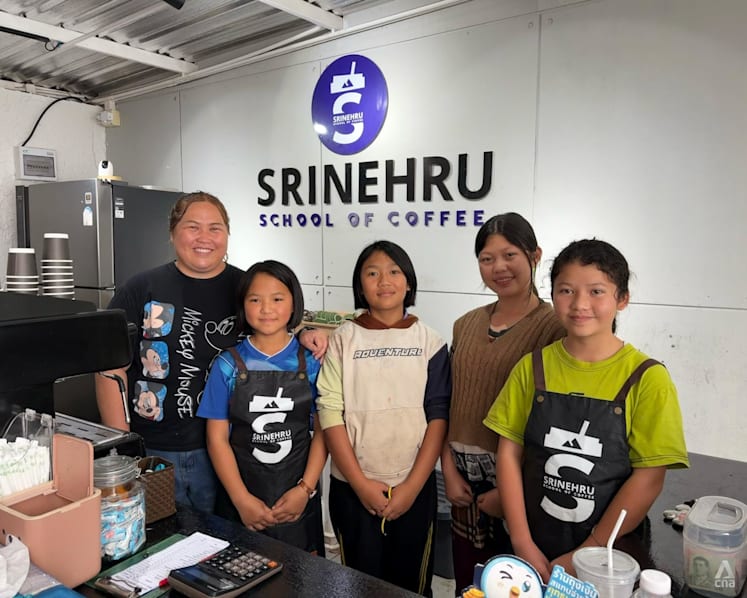
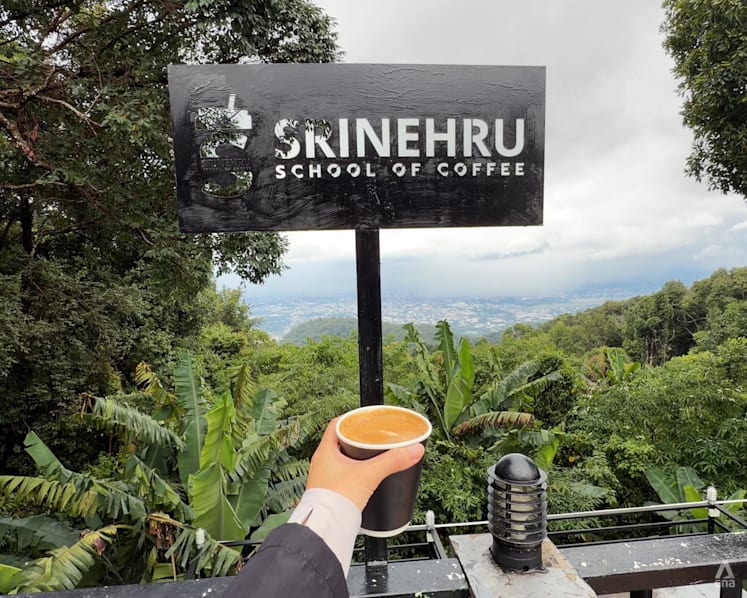
By then, I was probably more coffee than person. But I couldn’t resist another cup, this time made by the students working that day. They were shy when asked to demonstrate their latte art on camera, but took the business of making us a good cup of coffee very seriously. One ground the beans, another prepared the milk, and another cleaned up after them. That extra cup was worth losing a little sleep over that night.
LISU VILLAGE: STAYING WITH THE COMMUNITY
The final leg of our trip brought us to a Lisu village in Mae Taeng district, home to an ethnic minority hill tribe community.
Arriving at Lisu Lodge, our accommodation for the next few days, felt like visiting someone’s home. Rice fields stretched out before us, surrounded by orchards and vegetable plots that supply ingredients for meals at the lodge.
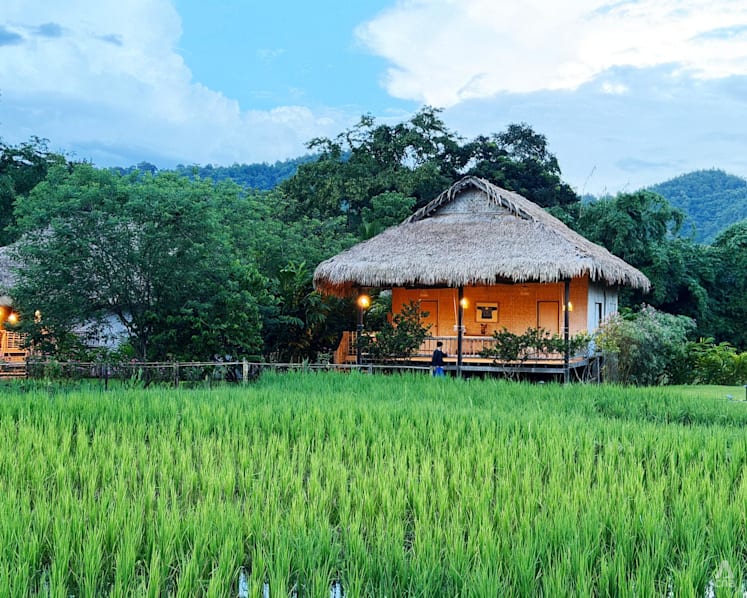
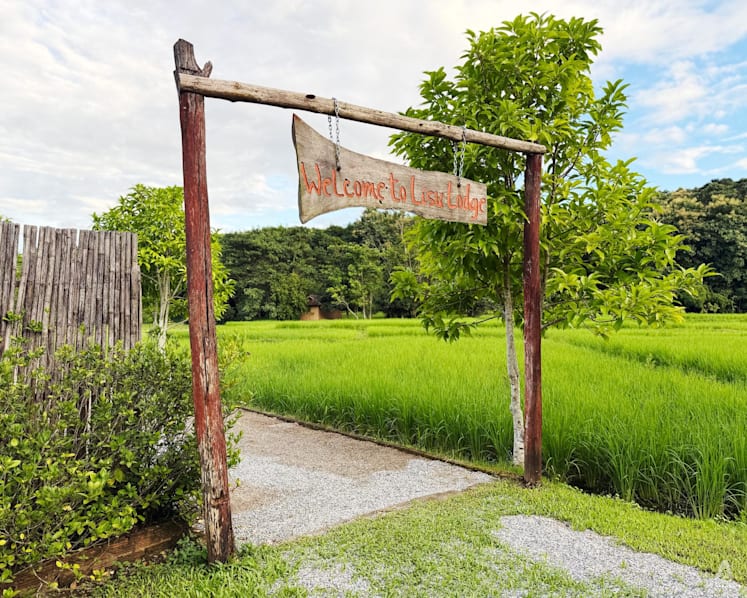
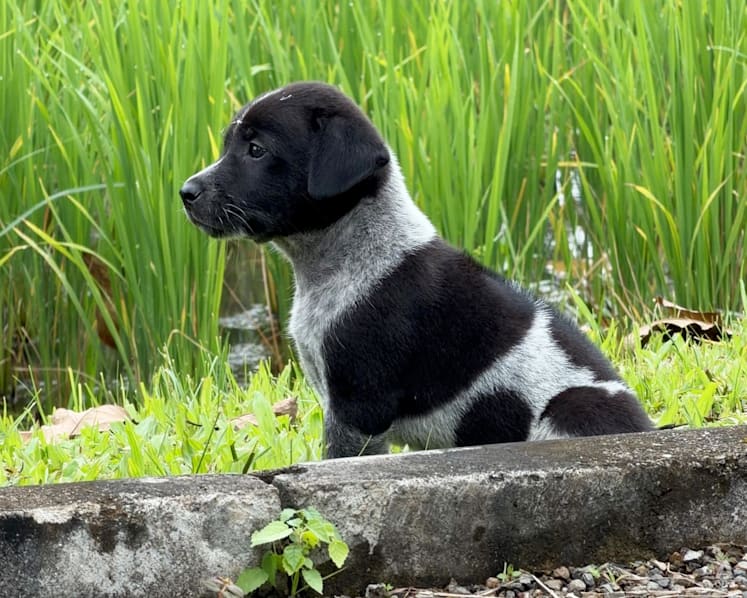
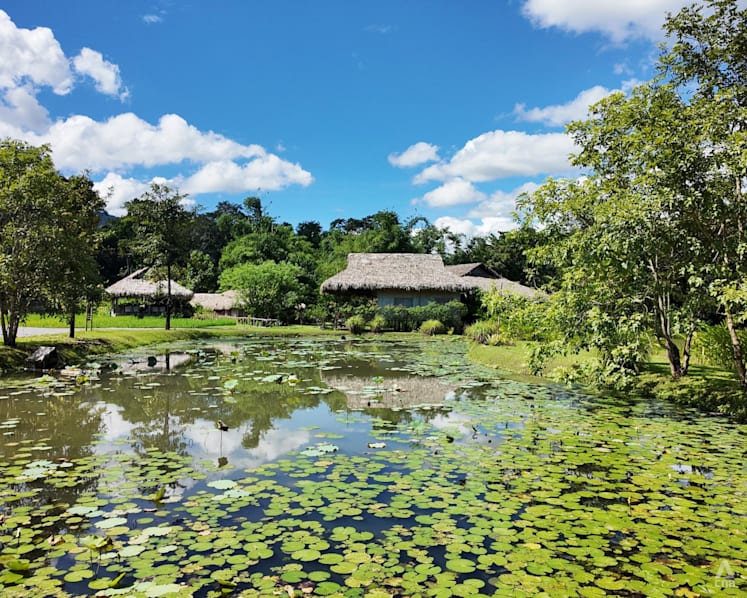
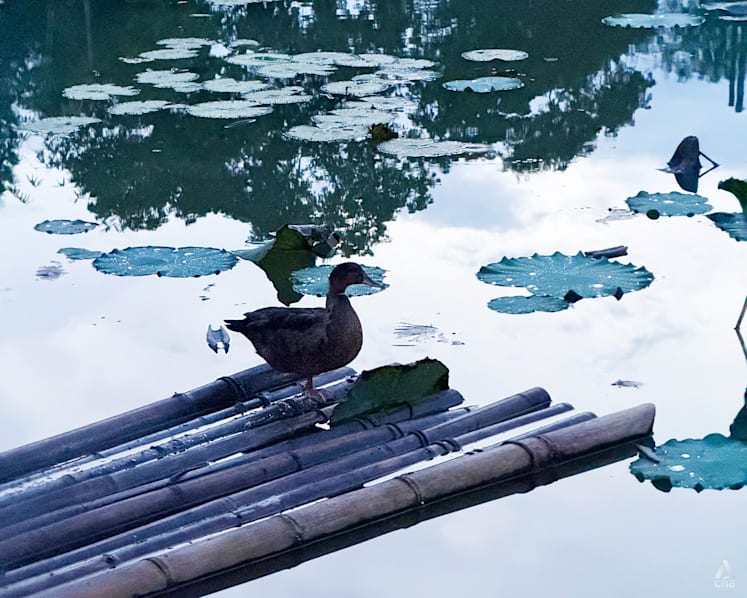
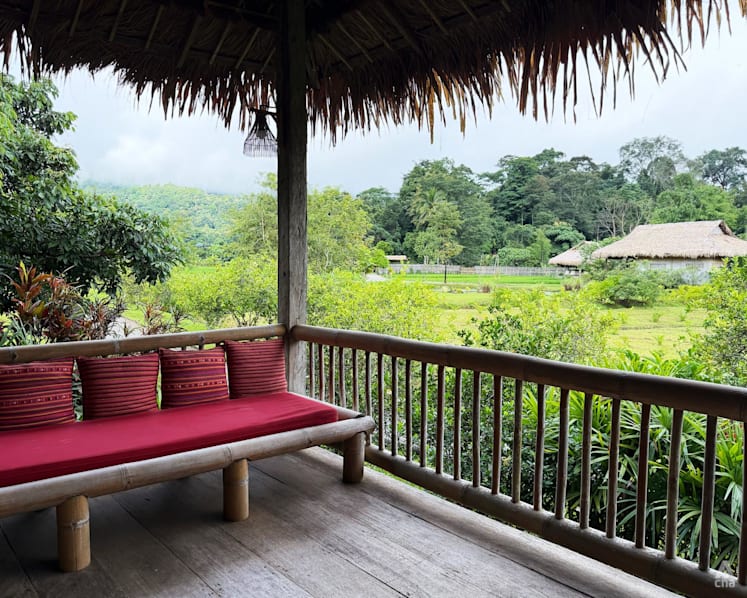
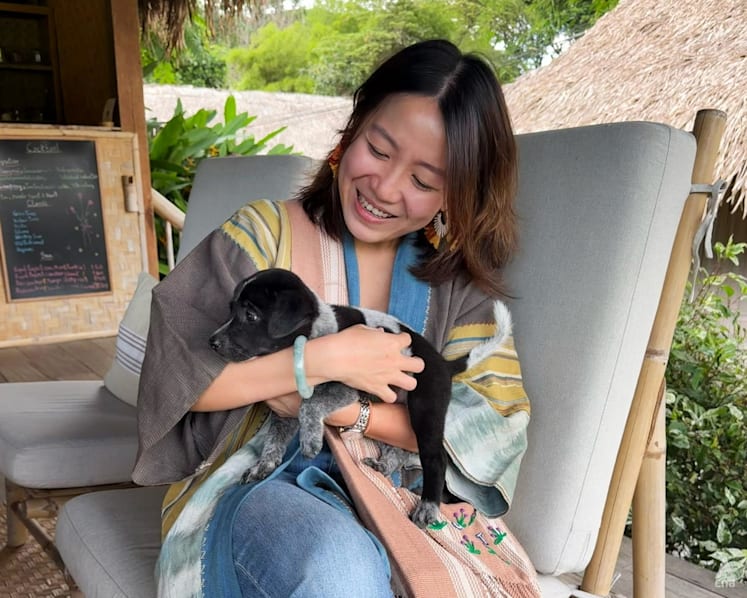
A pond reflected the sky and surrounding greenery, while its resident duck rested in a cosy nest. A couple of dogs wandered past, entirely unfazed by our arrival. Then there was Sesame, the lodge’s newest and rather shy pup, who stole the entire group’s hearts. A considerable amount of time went into trying to win his attention.
Lisu Lodge is a community-based ecolodge staffed largely by local residents. A portion of its profits goes towards projects chosen by the community, supporting areas such as small businesses, agriculture, education and healthcare.
Peaceful as the surrounding rice fields were, I had one question about my accommodation: Would the bugs be joining me?
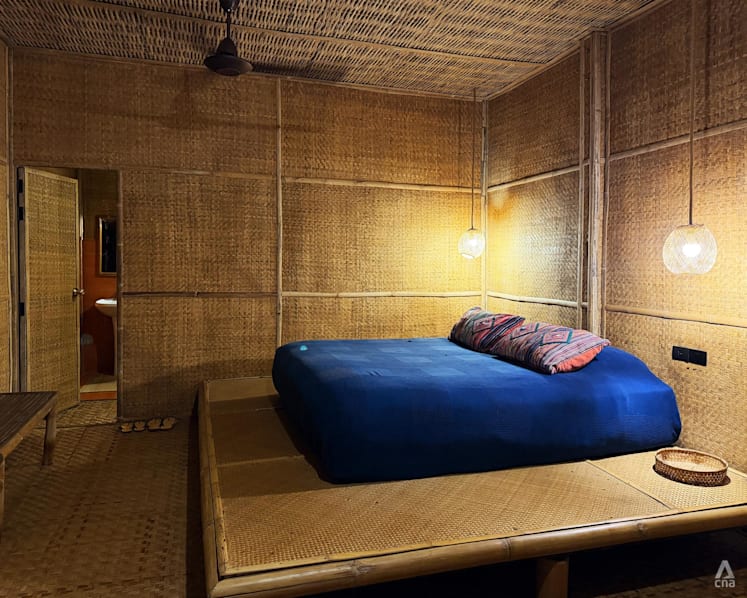
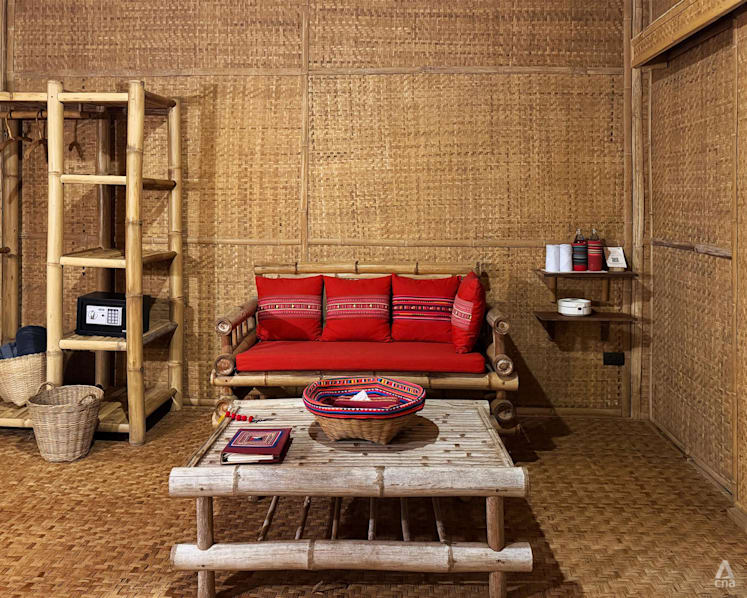
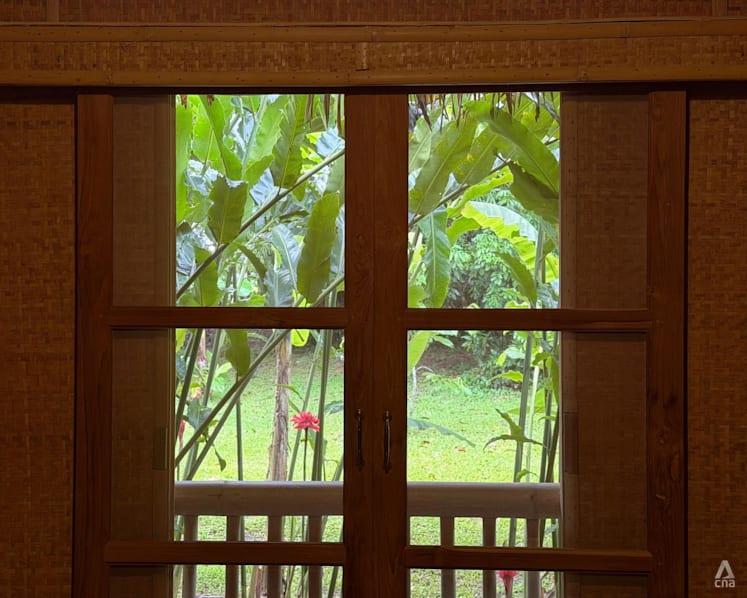
Stepping inside, I was relieved to see mosquito screens covering the windows. The spacious room had a simple design, with woven bamboo walls and ceilings, but still felt warm and inviting, with pops of colour from handcrafted Lisu textiles.
I’d usually reach for the TV remote soon after entering a hotel room, just for some background noise. There was no TV here, but with greenery outside and the sounds of nature drifting in, I was happy to settle in and listen.
We also visited a resident’s home in the village, where we were welcomed with a taste of local alcohol and stories about Lisu culture. Handicrafts made by residents were available to buy, offering another way for visitors to support the community.
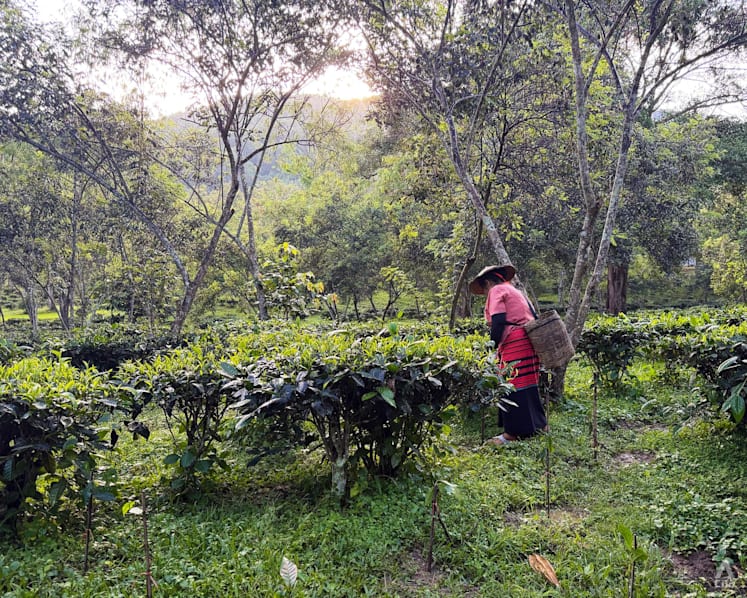
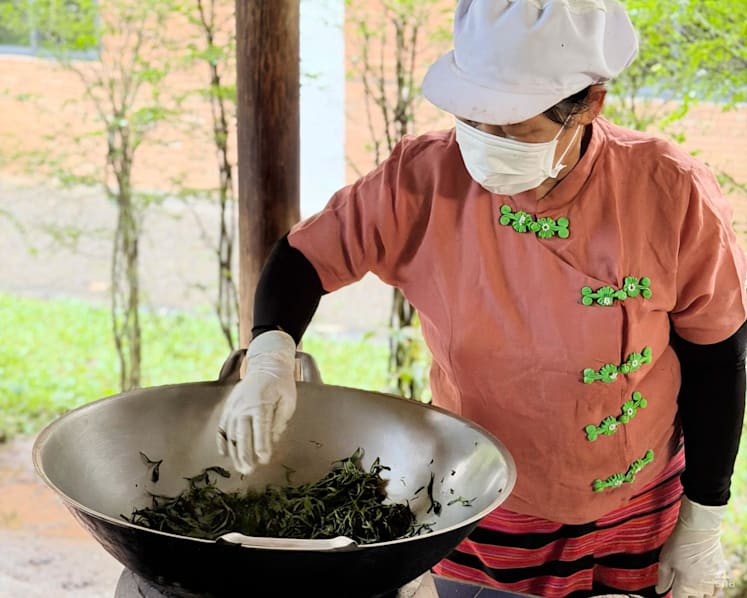
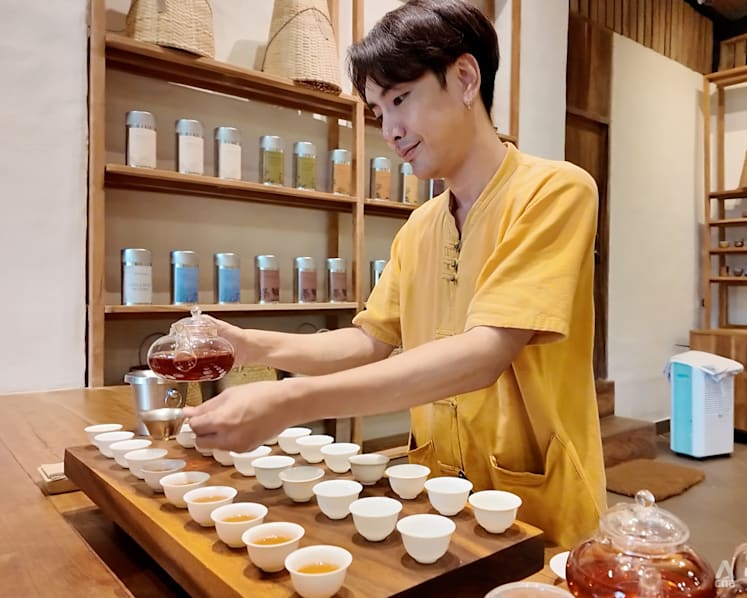
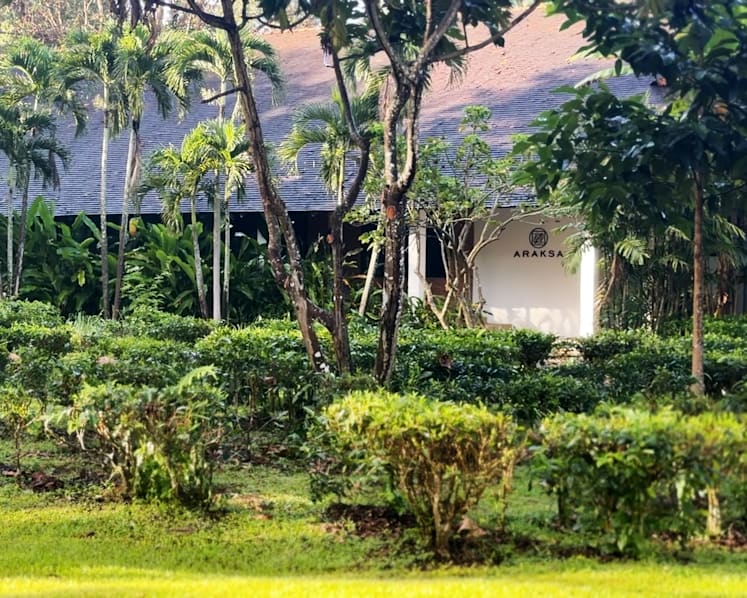
Nearby, we visited Araksa Tea Garden, described as one of Thailand’s oldest tea gardens. After learning how to identify leaves ready for harvesting, we set to work picking a kilogram between us.
Even with our combined efforts, we were comfortably outpaced by a local tea picker, who filled a large bag in what seemed like no time. She then demonstrated how the leaves were roasted by hand before we sampled different teas, including the award-winning Araksa Thai Tea, a natural take on the classic drink with creamy vanilla and caramel notes.
There was time for one final forest walk near Lisu Lodge, this time through terrain a little wilder and rougher than where we’d tried forest bathing.
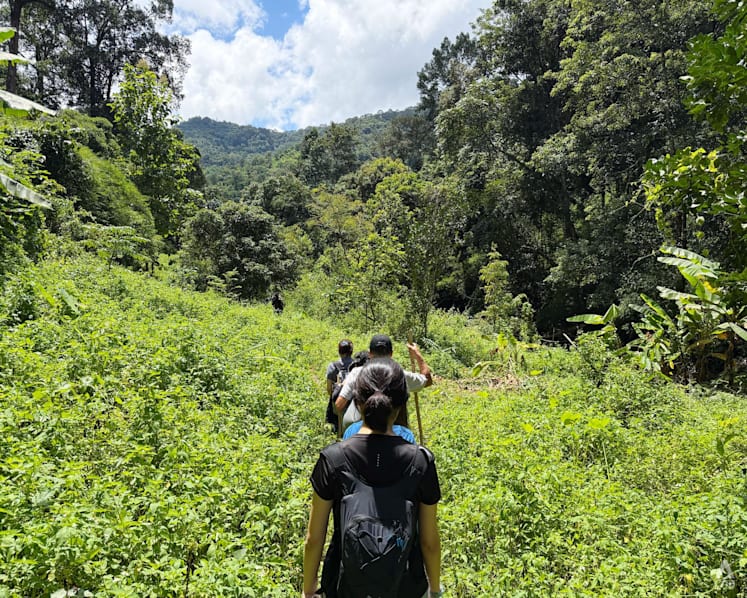
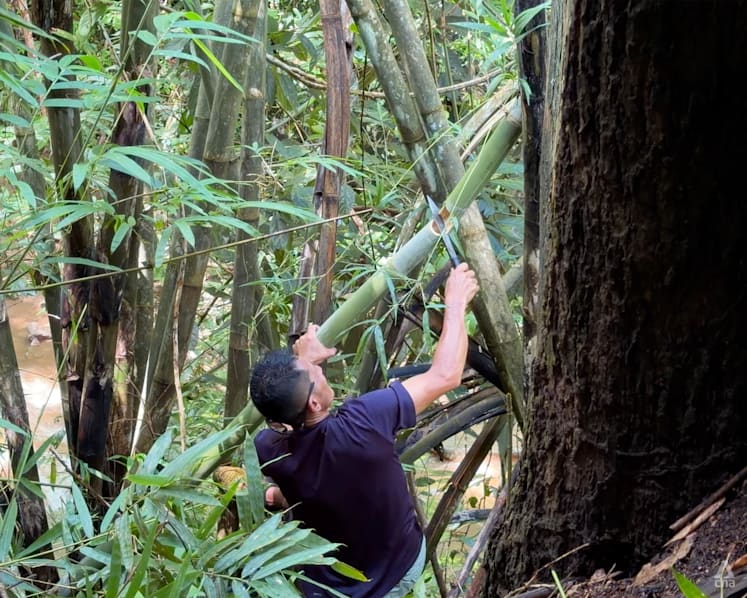
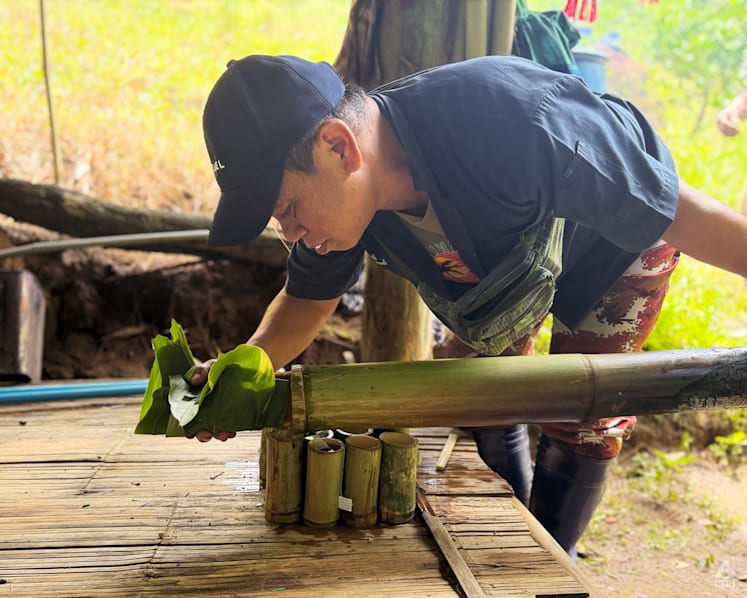
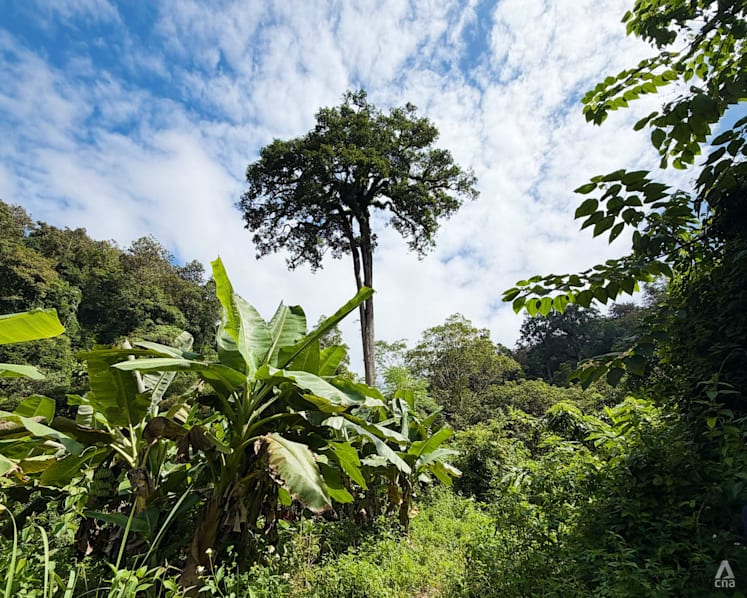
By then, my shoes were no longer the colour they’d arrived in Chiang Mai, and it didn’t bother me at all. Leading the trek was a local ranger I nicknamed the Thai Bear Grylls. At one point, he scrambled down a steep slope and deftly cut some wild bamboo for our next activity, making it look effortless.
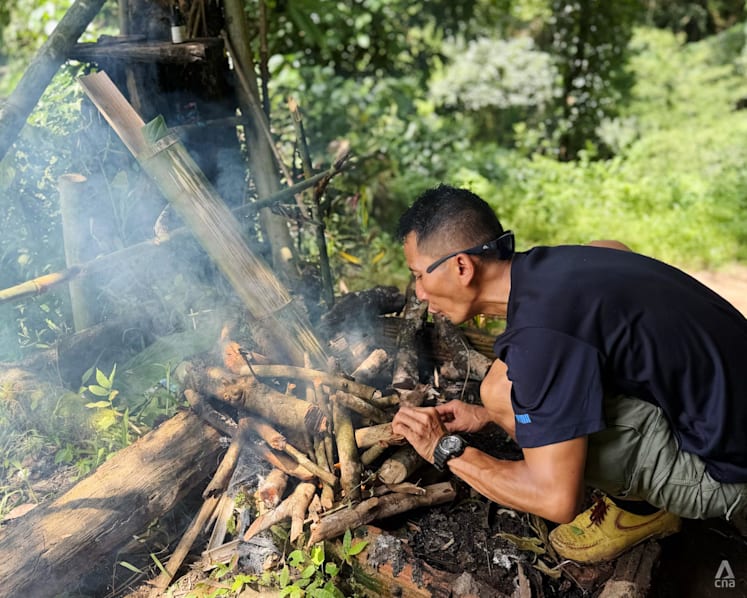
He later demonstrated how to boil water inside the bamboo – a lesson in survival skills, with a rather civilised finish as we used the hot water to brew tea from Araksa. Forest, but make it fancy.
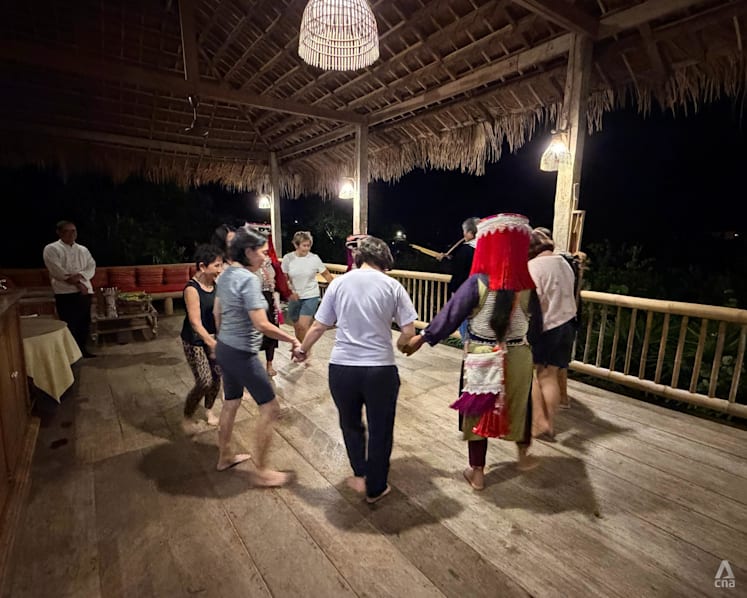
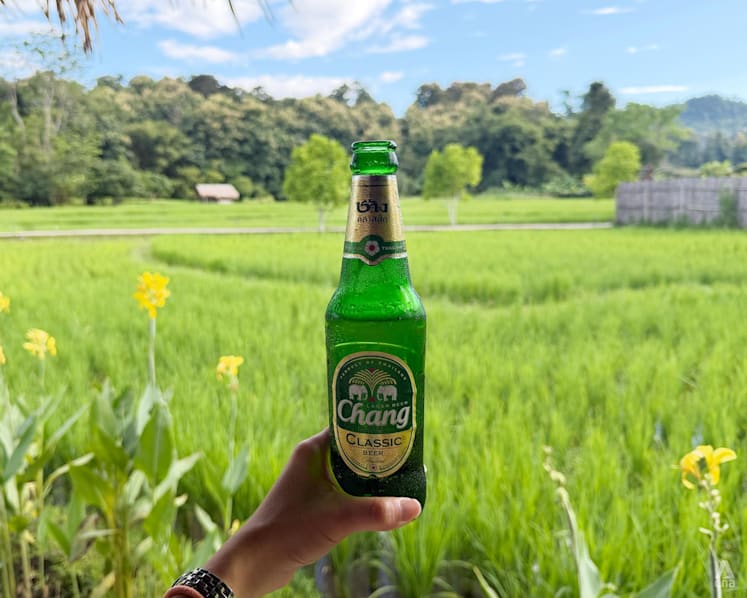
Back at the lodge, we enjoyed home-cooked meals featuring produce from around the village and watched a traditional dance performance, before joining in ourselves. Later, I settled down with a beer overlooking the rice fields. Sesame had finally made himself comfortable on my lap. My efforts had paid off.
BAAN KANG WAT: SHOPPING AT A SLOWER PACE
As much as I’d enjoyed spending time in nature, the city girl in me was still itching for some retail therapy before heading home. In keeping with the tour’s focus, this was a chance to shop a little more thoughtfully.
Baan Kang Wat isn’t your usual Chiang Mai market. It’s an artists’ village, with independent shops and studios selling locally handmade products. Some studios offer workshops, while others let you watch artisans demonstrating their techniques and making pieces on site.
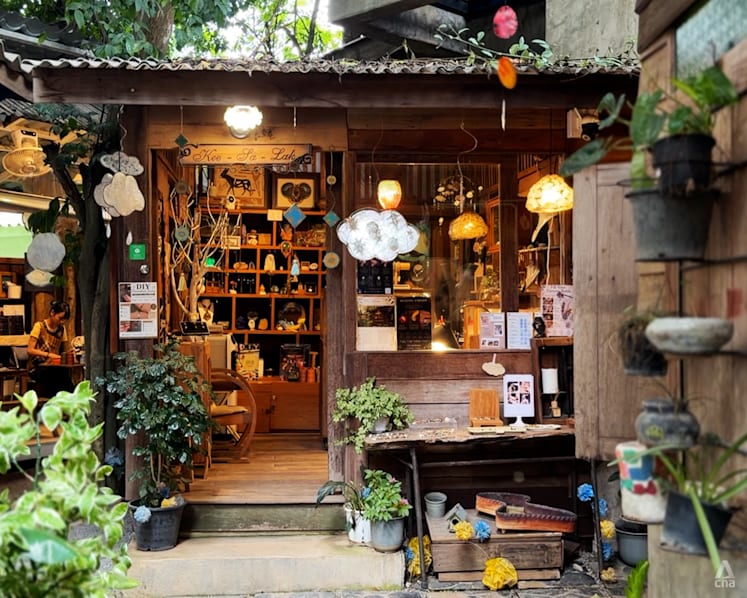
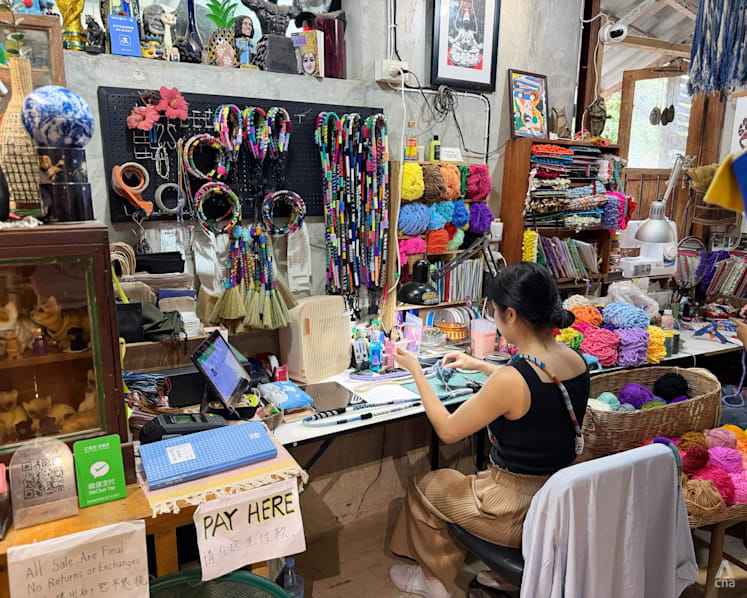
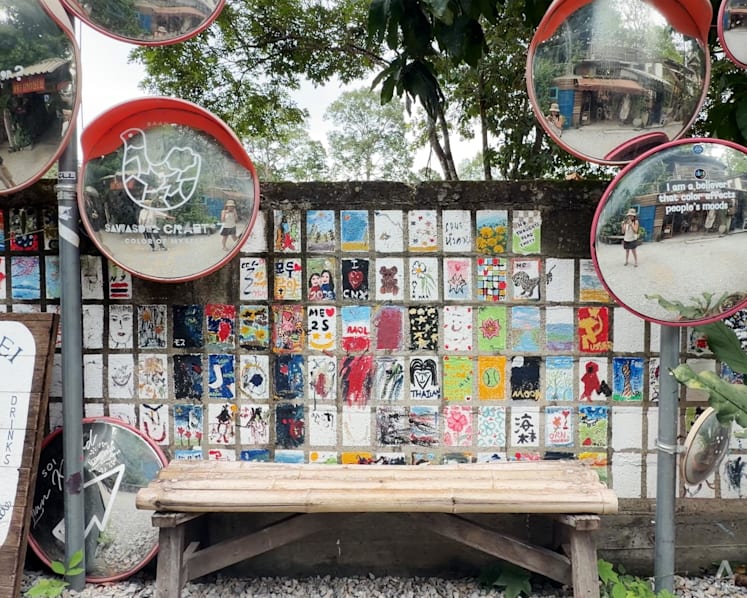
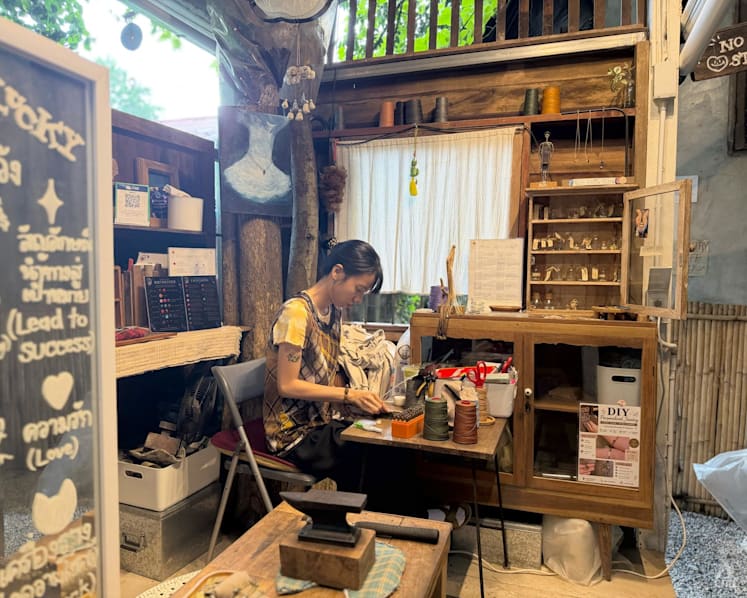
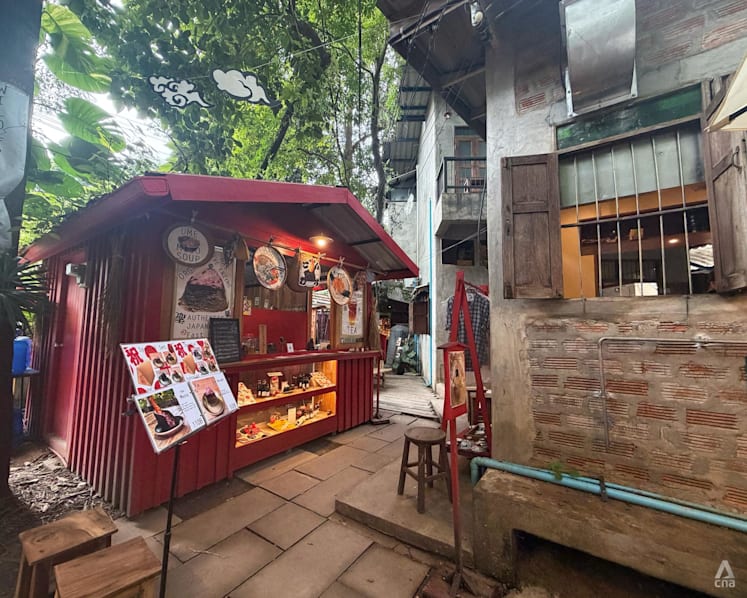
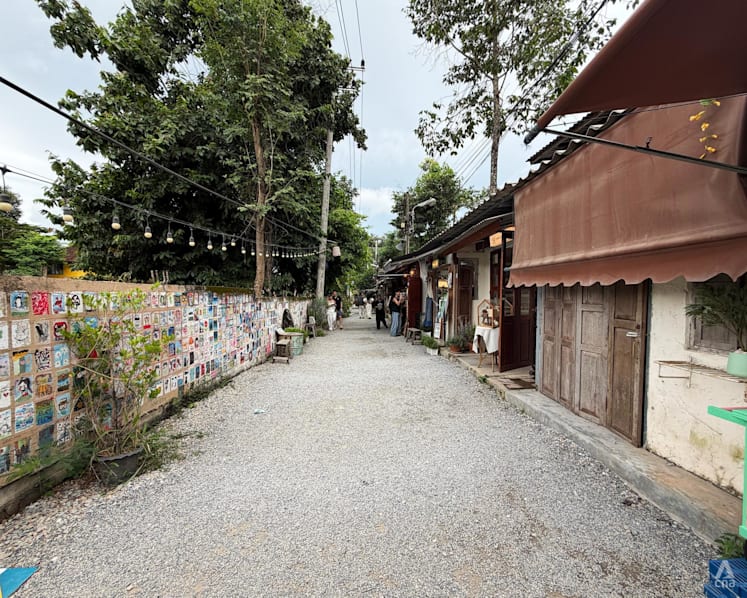
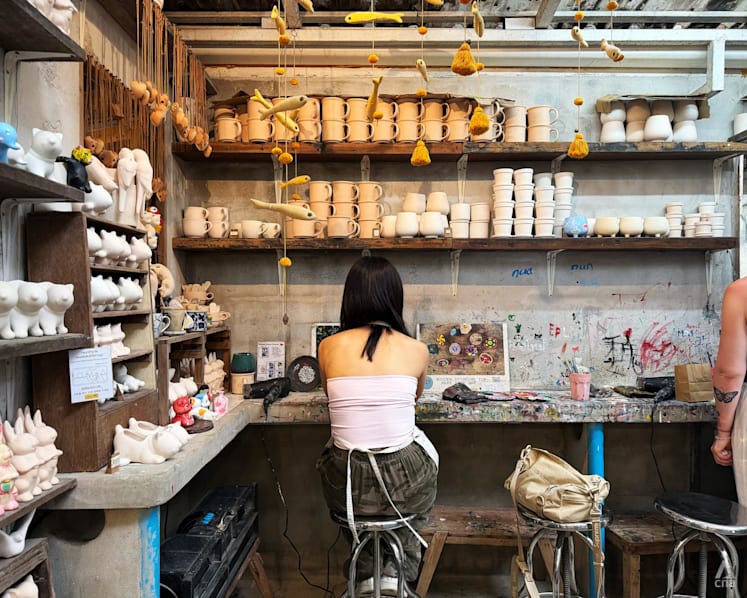
The setting was just as inviting. Narrow pathways wound between small wooden buildings draped in vines and shaded by tall trees. Colourful artworks and installations added character to the space. The aroma of coffee drifted from the cafes, accompanied by acoustic tunes from performers. With so much to stop and look at between shops, I found myself enjoying the wander as much as the shopping.
Then it was time to head home. Sitting in traffic on the way to the airport, I found myself missing the quiet of the forest. I thought about the sound of the river and our meal beneath the towering trees, and could see myself seeking out more experiences like these on another holiday.
I’d still want a bug-free room at bedtime, of course. The muddy shoes, I could live with.
CNA Lifestyle was in Chiang Mai at the invitation of Tourism Authority of Thailand.
Source: CNA/jk
RECOMMENDED
Get bite-sized news via a new
cards interface. Give it a try.
Click here to return to FAST
Tap here to return to FAST
FAST