IN FOCUS: Why Greenland’s warming climate matters – to Asia and the world
As rising temperatures melt Greenlandic ice sheets, the changes are set to ripple across the planet. The Arctic is also becoming heavily contested, with US President Donald Trump pushing to acquire Greenland.
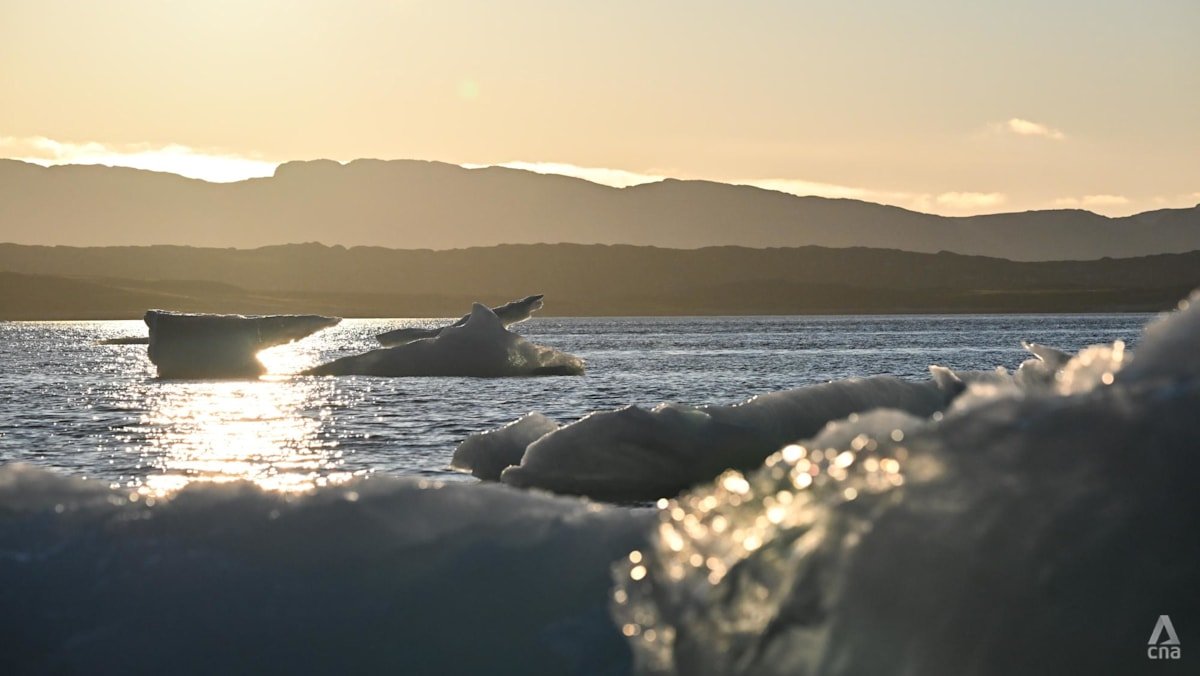
Icebergs drift in the waters off western Greenland during the Arctic summer. (Photo: CNA/Jack Board)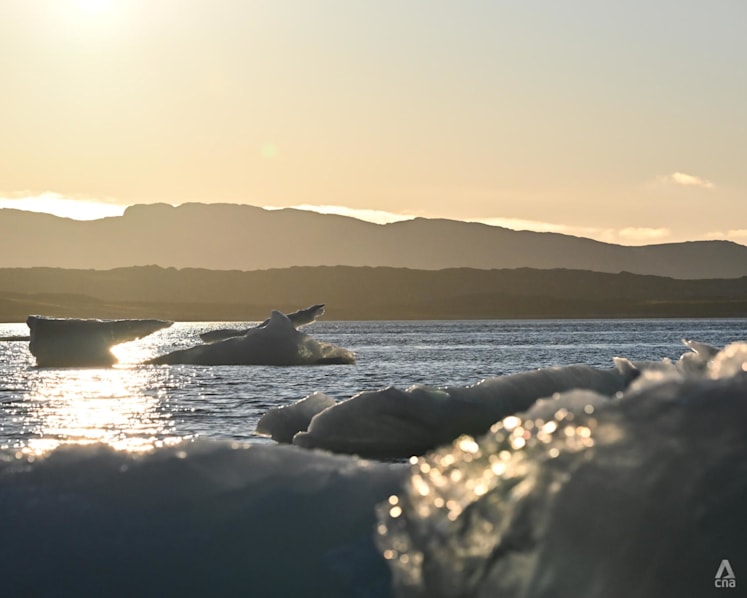
New: You can now listen to articles.

This audio is generated by an AI tool.

Read a summary of this article on FAST.
Get bite-sized news via a new
cards interface. Give it a try.
Click here to return to FAST
Tap here to return to FAST
FAST
SISIMIUT, Greenland: From a distance, the village of Sarfannguit looks like a scattering of coloured candy placed upon a shelf.
Hidden deep along a narrow, sheltered inlet, away from the humpback whales and ringed seals that ride the currents of the nutrient-rich Davis Strait, its colourful homes rise against the exposed granite slopes of the area.
This settlement is one of dozens of small communities whose future is increasingly uncertain – caught between a changing climate, decades of population decline and the economic pull of Greenland’s growing towns.
The Arctic is warming around four times faster than the global average, transforming coastlines, ecosystems and weather patterns across the high north.

Guess Word
Crack the word, one row at a time

Buzzword
Create words using the given letters

Mini Sudoku
Tiny puzzle, mighty brain teaser

Mini Crossword
Small grid, big challenge

Word Search
Spot as many words as you can
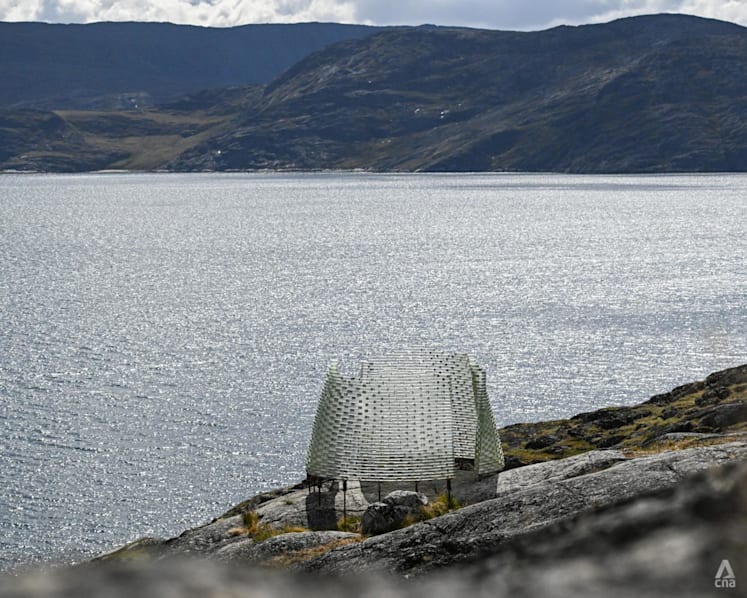
From the highest vantage point in the settlement of about 100 people, wind whips across this landscape’s bare, smooth curves. Distant patches of Arctic wildflowers, dwarf shrubs and lichen break up the starkness of the rocky peninsula.
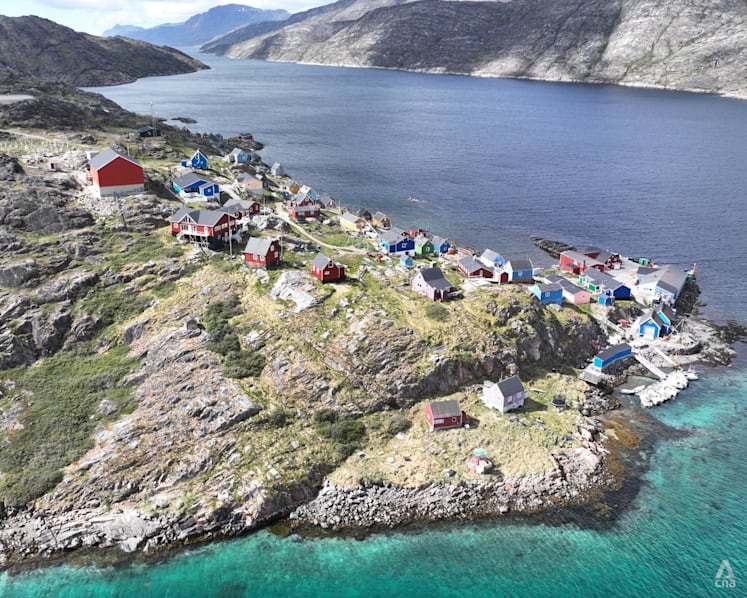
An installed artwork of light-fracturing glass and steel called “Qaammat” – Greenlandic for “Moon” – sits here too, a tribute to the unbroken, intangible cultural heritage of the native Inuit people in this landscape.
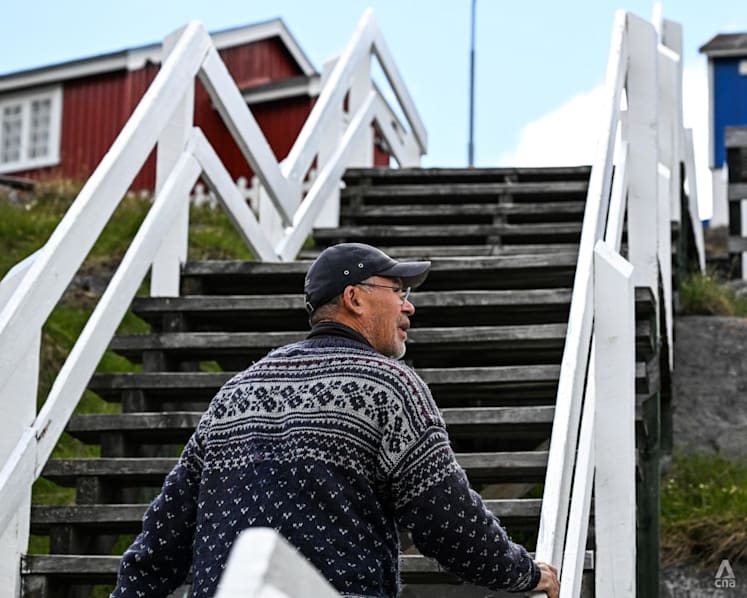
Hanserak Olsen has spent years of his life looking out across this view, beyond the small cemetery where his ancestors are buried and out to a place that for 4,000 years has been a central meeting place.
For generations, families left Sarfannguit each summer to hunt inland towards Greenland’s remarkable ice sheet. Olsen, a 69-year-old fisherman and boat guide who grew up here, wonders if that tradition will continue.
He worries about the less predictable sea ice, the shifting fish stocks that mean his catch has been poor this year and the young people drawn away for education and employment.
Climate change is accelerating many of the pressures that Greenland’s remote settlements were already facing.
“Of course, we have the internet here, but there’re a lot more interesting possibilities and more modern life in the towns,” he said, referring often to Sisimiut, about an hour’s boat ride away.
Greenland’s ice sheet is melting faster than almost anywhere on Earth and the world’s largest island will be “ground zero for the confluence” of the impacts of a hotter and wetter polar region, said Klaus Dodds, a professor of geopolitics at Middlesex University London and co-author of Unfrozen: The Fight for the Future of the Arctic.
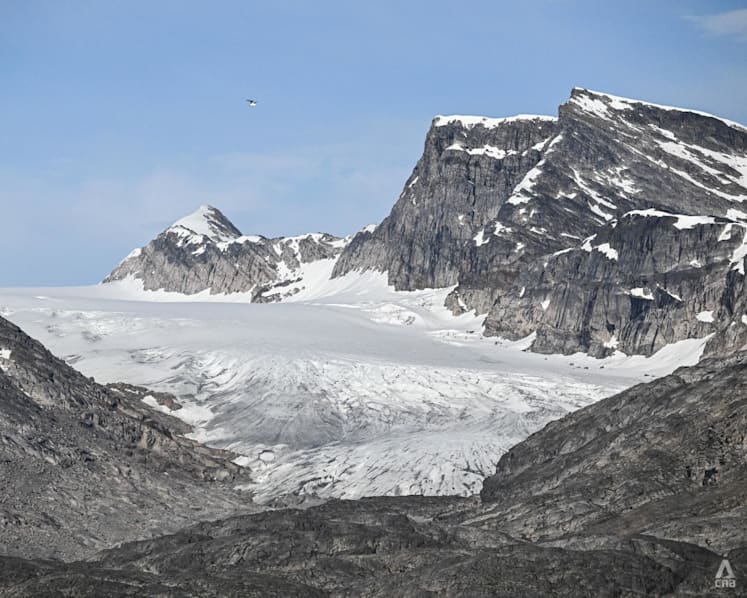
The changes here will ripple across the planet, experts say. Greenland’s ice sheet – which covers over 80 per cent of its total land surface – is now one of the largest contributors to global sea-level rise.
Under the Intergovernmental Panel on Climate Change’s (IPCC) highest emissions scenario, Greenland’s ice sheet is projected to contribute around 13cm to global sea-level rise by 2100, with a likely range of 9cm to 18cm.
That would have profound impacts on the world’s coastal cities.
In Asia, the river deltas of the Mekong, Ayeyarwady and Chao Phraya, the low-lying megalopolises of Jakarta and Manila and vulnerable ports in Hong Kong, Singapore and Malaysia would all be highly exposed.
“The key point is simple: what happens in Greenland does not stay in Greenland. It reaches the waterfronts, transport systems, homes, ports and water supplies of coastal cities across Asia,” said Benjamin Horton, the dean of the School of Energy and Environment at City University of Hong Kong.
Asia is the world’s most exposed region to sea-level rise because of the number of people living in low-elevation coastal zones, according to the IPCC, the United Nations’ scientific body on climate change.
Around 70 per cent of the global population exposed to sea-level rise and land subsidence lives in just eight Asian countries, including Bangladesh, India, Indonesia, Thailand, Vietnam and the Philippines.
Thirteen of the world’s 20 coastal cities projected to suffer the highest flood losses by 2050 are in Asia. Among them are Bangkok, Ho Chi Minh City and Jakarta.
“Greenland may feel remote, but it is directly connected to every coastline on Earth. This is not an abstract Arctic issue,” Horton said.
The risks faced by coastal communities are expected to become at least 10 times greater this century because sea levels will continue to rise, based on the IPCC findings. And population and infrastructure exposure to such threats will continue increasing, especially in Southeast Asia.
The greater global forces feel distant on the shores of Sarfannguit. But they are intimately tied. Olsen and others are living the local consequences of indelible change.
GLOBAL COMPETITION
As the ice melts, the Arctic is also emerging as a more heavily contested zone for the world’s most powerful geopolitical players eyeing new opportunities for critical mineral extraction, military influence and transport routes.
“Greenland and other territories are caught in the crosshairs of great powers and their spherical ambitions,” Dodds said.
United States President Donald Trump’s attention on Greenland has already caused prolonged turbulence in the self-governing territory amid a concerted campaign to bring it under American control since he started his second term in January 2025.
He has maintained a level of pressure on Greenland in recent weeks, telling a radio host in an interview in late July that it would be a safe bet that the US would be controlling Greenland before the end of his term in January 2029.
Trump, a long-time climate sceptic, has also withdrawn the US from the Paris Agreement, leaving the world’s largest historical polluter outside the world’s principal climate pact and unbound by global emissions reduction targets.
As the planet warms and pressure on natural resources grows, Dodds believes the Arctic will become increasingly central to global competition over land, water and critical minerals.
“All of which means that the Arctic will get caught up in explicit resource calculations,” he warned.

Right now, there are very few active mining projects in Greenland, despite the perceived potential of unexploited mineral resources, including rare earths, graphite and lithium.
China has repeatedly tried to invest in Greenlandic infrastructure and mining, but most major projects have not proceeded because of political and security concerns.
“However, there is no doubt that more countries view the Arctic as a region where they should get involved with and the US is very concerned that China in particular is in danger of becoming a peer-to-peer competitor at some point this century,” Dodds said.
The Arctic has long been an important domain for missile defence and submarines operating beneath the ice.
Now, longer periods of open water – where the ocean remains free of sea ice – are expanding opportunities for seasonal patrols by naval vessels and coast guards.
“(These operations) are generally more visible and play a role in signalling intent,” said Rebecca Pincus, senior fellow in the Transatlantic Security Program, German Marshall Fund of the United States.
The US has increased its patrols in the Bering Sea and Arctic Ocean, with a stronger emphasis on monitoring Chinese and Russian vessels. Several American allies from the North Atlantic Treaty Organization (NATO) now also operate more frequently around Greenland.
Russia remains a powerful Arctic player. In its northern territory, it has reopened Soviet-era Arctic bases, expanded deep-water ports and increased Arctic naval patrols with a modernised northern fleet.
But as Pincus notes, operations remain seasonal and geographically limited, and the Arctic is still one of the world’s most demanding environments in which to operate, whether for military, tourism or transport purposes.
Dodds warned that due to climate change, the region is also becoming more unpredictable, more expensive and more hazardous to live and work in.
“A warming Arctic is an Arctic that burns more. A wetter Arctic is one that floods more. And a warmer and wetter Arctic is one where infrastructure is more expensive to maintain,” he said.
“Less sea ice does not mean no sea ice.”
GRADUAL DOES NOT MEAN HARMLESS
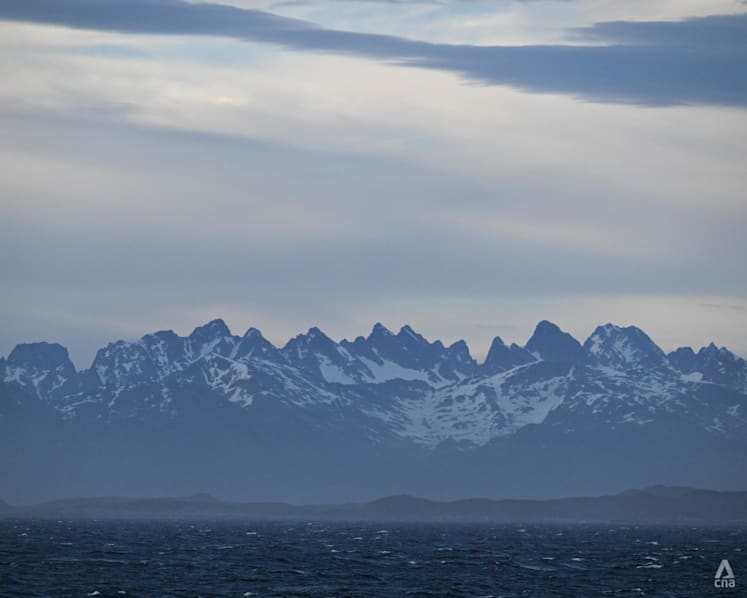
Under the midnight sun in Nuuk Fjord, floating bergy bits – medium-sized glacial ice chunks – crack and drip, splintering the silence as fresh water slowly enters the inlets around Greenland’s capital city.
These are the summer runaways, echoes of glacier melt further inland. Waterfalls feed the fjord as well, cascading down onto the glass sheet below, as rainbows form on steep ancient rock.
What looks slow and ancient is actually alarming. Scientists say that, especially since the 2000s, Greenland’s ice loss has accelerated as air and ocean temperatures and atmospheric carbon dioxide have risen.
Glacier melt can be dramatic and destructive too. In late July, video captured the spectacular capsizing of a Titanic-size iceberg off the Greenland city of Ilulissat, a visual reminder of the immense forces at work along the island’s coast.
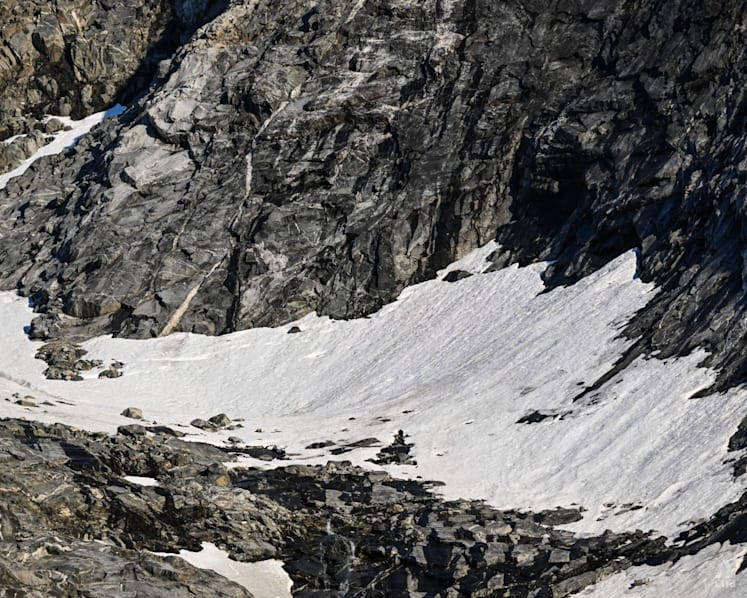
As the Arctic warms, more of the ice sheet melts at the surface, darker exposed ice absorbs more solar energy and outlet glaciers – channels of ice that flow out of an ice sheet – can retreat and discharge more water into the ocean, Horton said.
Central Greenland has experienced around 1.5°C of warming since the mid-1990s, resulting in the highest temperatures there in more than a millennium. The outcome has accelerated ice melt.
Satellite observations from the US’ National Aeronautics and Space Administration (NASA) show that between 2002 and 2025, Greenland lost about 264 billion tonnes of ice per year, adding around 0.8mm per year to global sea levels.
“The reason sea level rise can seem distant is that it is gradual. But gradual does not mean harmless,” Horton said.
Across different parts of the globe, a few centimetres of rise can increase the magnitude of extreme events and contribute to more frequent coastal flooding, damage to infrastructure, saltwater contamination of drinking water and farmland, loss of mangroves and wetlands, higher insurance and adaptation costs, and in some places, human displacement.
New scientific research released in August has revealed more about the consequences of a warming Arctic.
As sea ice retreats, newly exposed ocean releases natural compounds that help form clouds, potentially affecting how much sunlight the Earth reflects back into space and how much heat the region absorbs, according to a study by the University of Birmingham.
This newly discovered process could alter how quickly the Arctic warms in the future.
“By reflecting incoming solar radiation, the Arctic cools the planet and shapes global weather, including phenomena like the polar jetstream and the monsoon,” said Pincus.
“The loss of Arctic sea ice weakens that ‘air-conditioning’ effect,” she said.

Beyond the issues at sea, rising temperatures are interfering with Greenland’s seasonal patterns, the movements of animals and marine life, and the human activities that rely on them.
The waters around Greenland support one of the world’s most productive fishing industries. Fisheries account for around 95 per cent of the territory’s export earnings, with seafood shipped to markets across Asia, Europe and North America.
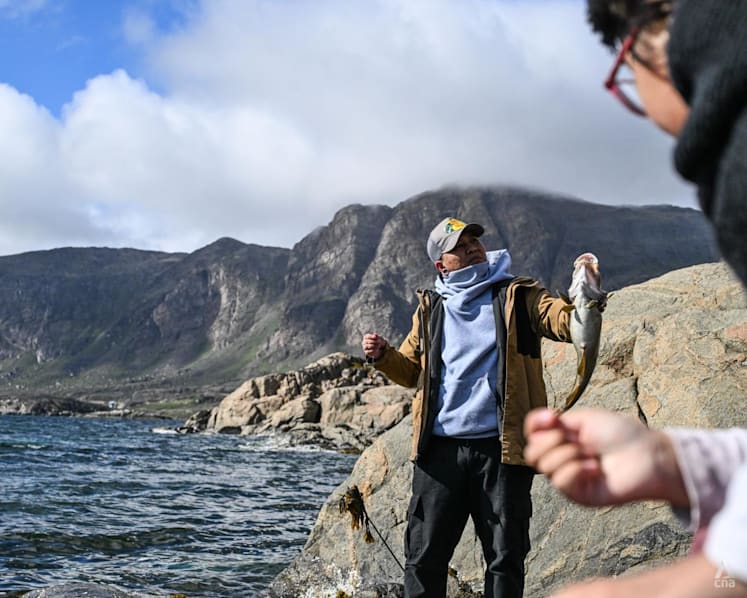
Scientists have already documented key species shifting their range. Arctic cod, for example, have moved further north as sea temperatures rise, while fishermen report catches becoming less predictable and some species moving into deeper water.
Traditional fishermen, many of whom still depend on stable sea ice to reach hunting and fishing grounds, are among those most exposed to these changes. As conditions become less reliable, some are leaving for larger towns and commercial fishing operations able to work further offshore.
That has consequences far beyond the fishing industry. It threatens the long-term viability of Greenland’s smallest settlements and the traditions that have sustained them, said Bo Martinsen, a member of the Greenlandic parliament.
“If we don’t have them, who is going to provide for the rest of the area? If they are disappearing, we are losing a lot. But still, we cannot change that it is happening, so we have to learn how to work with it,” he said.
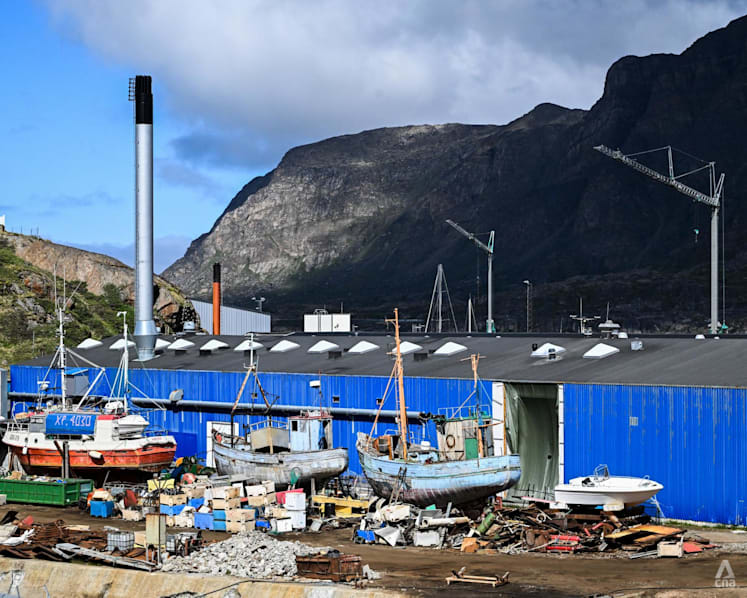
From the harbour in Nuuk, Tika Olsen heads out into the fjords most days to catch Atlantic cod in a small boat. The days are long even when the nets are full and the sun is shining.
One morning when a likely humpback whale broke his nets, releasing his entire catch, he shouted out jokingly that it was another large mammal prowling the landscape.
“Maybe it was a polar bear,” he said, as Greenlandic rap and Adele blasted out across the still water, breaking the distant screeching sound of gulls and the whistle of a mild Arctic breeze.
Polar bears remain an uncommon sight around Nuuk, given their primary habitat lies in the more extensive sea ice of northern and eastern Greenland. But what has long been a joke to mess with foreigners feels more real now, according to Tillie Martinussen, a former member of Greenland’s parliament.
The unusual appearance of a bear in the fjords – which likely arrived on drifting sea ice – during the summer of 2024 served as a reminder that the Arctic’s changing environment is affecting even its most iconic species.
“That’s so crazy. Nobody would have believed you if you said that 15 years ago,” she said.
“The ice cap is melting at an alarming rate. I think we’re going to see a future where things drastically change even more.”

MEMORIES AND DUST
Greenland is confronting the challenge of keeping its remote communities – whose identities are deeply tied to nature – alive in a time where nothing is as it once was.
Locals do not need to read scientific data to understand the shifts.
Hanserak Olsen the fisherman described days in the past where ocean ice would form for months in the fjord in front of his village. For most of the year now, that same harbour is accessible by boat.
“We have less ice in the winter time. Normally, when I was young, we could go by dog sled all the way to the town. Today it’s nearly impossible,” he said.
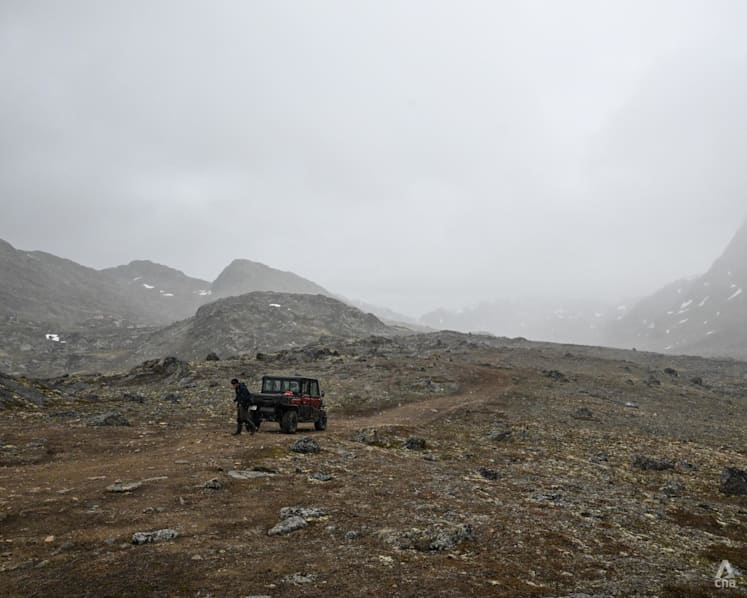
Further north, outside the city of Sisimiut, a summer snowstorm briefly turns the Arctic Circle Trail white. The famous route leads 160km inland towards the Greenland ice sheet, through a landscape increasingly shaped by unpredictable conditions.
Marinus Hurni Christensen, who runs adventure tours through Hotel Søma, described unusual winter periods leading to dry riverbeds and wildfires lighting up the remote tundra.
A lack of snowfall through the winter not only caused him to cancel trips but also brought about a sense of communal gloom through long periods of darkness, he said.
“Even though it’s dark here, the light we do get is greatly reflected by the snow, even the moonlight and the stars. Everything shines,” he said.
“If you remove the snow, then it’s pure, complete, Arctic darkness. People get depressed, anxious and just a bit more sad in general.”
There are financial costs too for an economy shifting increasingly away from traditional hunting and survival on the land and towards international tourism.
Greenland received about 170,000 tourists in 2025, up substantially from roughly 100,000 to 110,000 a decade ago.
Last year, the government said it aimed to double tourism numbers by 2035 through better air connectivity and infrastructure.
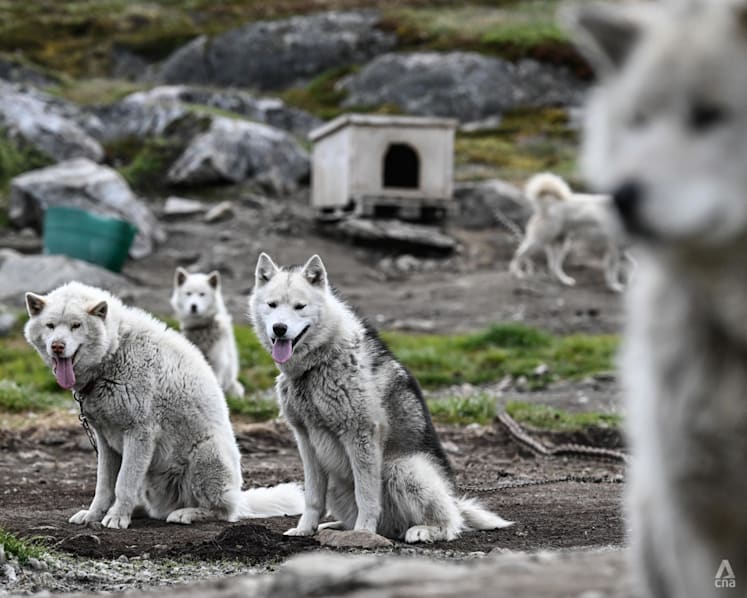
Unreliable snow over the past winter forced Villiam Olsen to cancel multiple dog sled trips for tourists in Sisimiut. A centuries-old form of transport has evolved into a business catering to curious visitors and highly dependent on weather forecasts.
He and his wife Ninni Geisler said they have found joy in making other people happy in Greenland’s wilderness, raising dogs to be friendlier and more accustomed to human contact than in the past. The elements were not in their favour in recent times.
“When I was a kid, there was always snow. This year it’s very different, we have almost no snow, so we could barely go dog sledding, so it was really challenging,” he said.
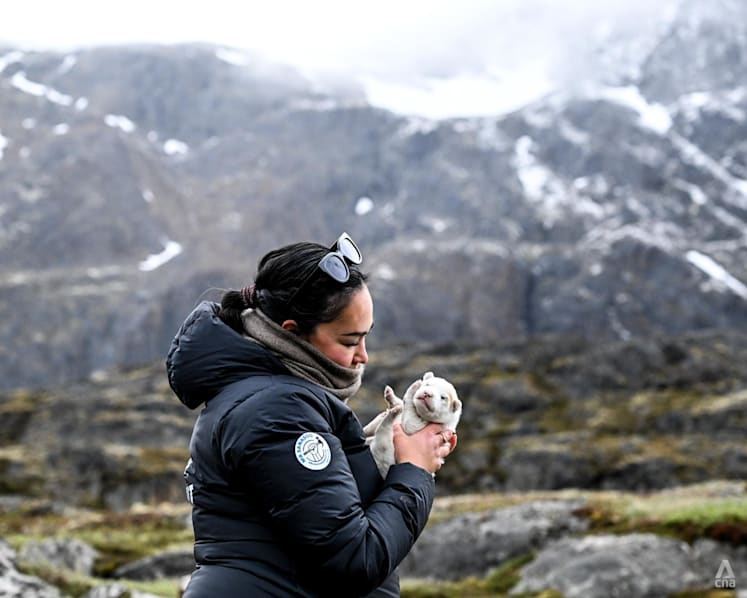
The Greenlandic name Sisimiut is often translated to “the place where foxes live” or “fox dens”, a tribute to the adaptive nature of the native species.
Inuit communities have survived by responding to changing seasons and landscapes for thousands of years. Today’s challenges may be different, but the instinct to adjust remains the same.
“We want to take the history with us into the future and hope to do so for many years,” Villiam Olsen said.
But modernity is calling many. And it means abandonment of the more remote settlements in many cases.
Greenland has a history of forced relocations and compulsory closure of some of its smaller villages during the Danish colonial era. This time is different and more like a sift, said Steven Arnfjord, director of the Centre for Arctic Welfare at the University of Greenland.
“They’re going to dwindle away and turn into ghost towns. (People) are just oozing out of the local communities because they’re seeking services and employment elsewhere,” he said.

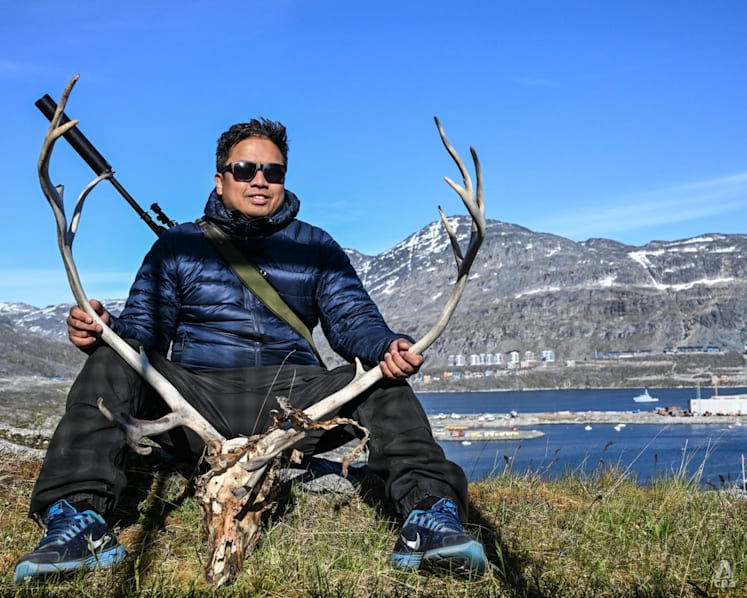
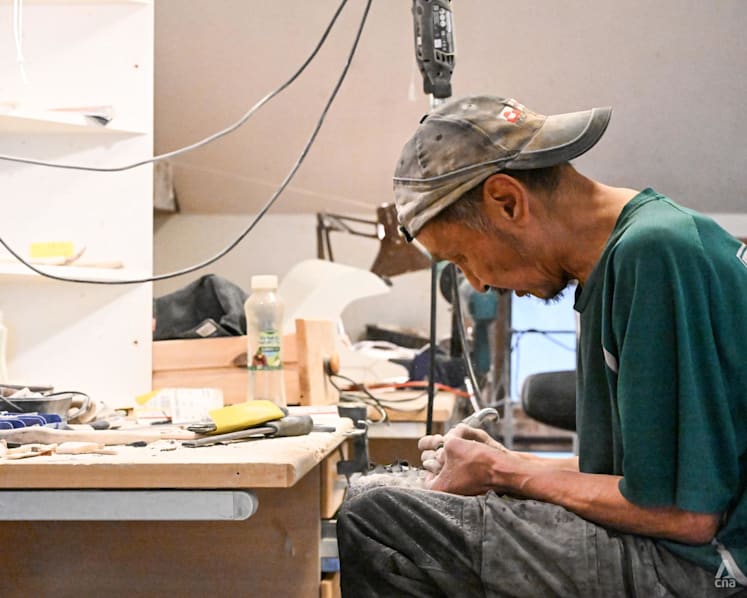
In Sisimiut, at an artisan workshop for local craftspeople, along small shelves and tables sit figurines carved from walrus tusk, reindeer antler and narwhal horn. Knitted headbands of musk ox and gloves lined with polar bear fur are also for sale.
All of these are items steeped in traditional hunting culture in Greenland. The artists are ageing. And their work is now done mainly for tourists arriving by cruise ship at the local dock at regular intervals.
In a few years, these veteran sculptors and knitters may not be around. Frederikke Platou said she hopes her children will go elsewhere, rather than following her into this traditional trade.
“We won’t have this anymore. But there’s no choice,” she said.
In Sarfannguit, Hanserak Olsen holds some optimism that the village can thrive into the future. It will take a willingness to shift mindsets and do things differently, even if it goes against tradition, he said.
“I think the children want to stay here and build it up, raise the population again,” he said.
“They are open for tourists. Some families are even interested in opening a cafe or hostel here to welcome more tourists.”
Greenland has always been a place that moves and bends with the seasons, with the light and the tides and the wind. Now it faces a different kind of transformation, driven by a warming climate, growing international interest and a rapidly changing Arctic.
The consequences will be felt far beyond Greenland’s exposed landscape of jagged edges and calving glaciers.
In Qaanaaq, one of the northernmost towns in the world, Aleqatsiaq Peary, a hunter, storyteller and descendant of Robert Peary – the Arctic explorer – has grown to accept the upheaval, not to fight against it.
Close to the North Pole, life follows the formation of the sea ice. Hunting is central to survival. And change driven by the greater world feels inevitable and impossible to stop.
“We are just dust. Cultures always change. Animals come and disappear. Our children’s children will not know how we lived,” he said.
“The world will go on without us.”
Source: CNA/jb(as)
Sign up for our newsletters

Get the CNA app
Stay updated with notifications for breaking news and our best stories
Get WhatsApp alerts
Join our channel for the top reads for the day on your preferred chat app

Get bite-sized news via a new
cards interface. Give it a try.
Click here to return to FAST
Tap here to return to FAST
FAST