India orders top drugmaker to halt eye medicine production at plant over quality lapses
Indian regulators have escalated action against India’s largest drugmaker, Sun Pharma, barring ophthalmic drug production at its Assam factory until it submits a satisfactory compliance report.
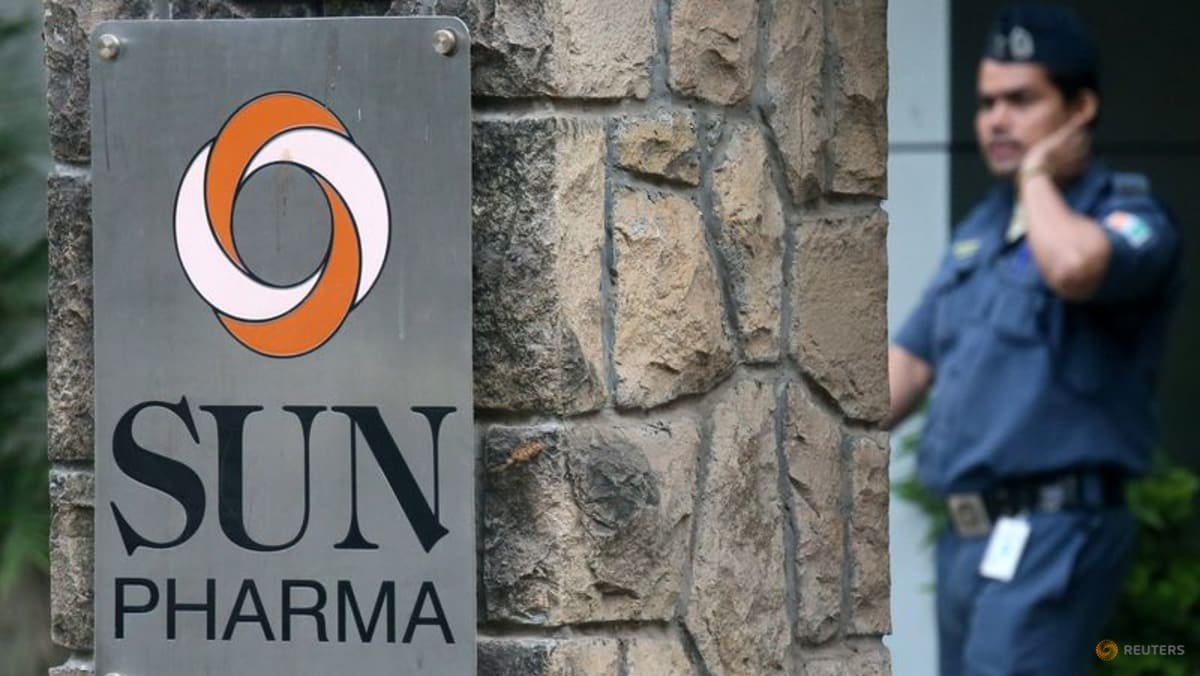
A guard walks inside the office of Sun Pharmaceutical Industries Ltd in Mumbai, India, Nov 13, 2018. (Photo: Reuters/Francis Mascarenhas)
Read a summary of this article on FAST.
Get bite-sized news via a new
cards interface. Give it a try.
Click here to return to FAST
Tap here to return to FAST
FAST
HYDERABAD: Indian drug regulators ordered Sun Pharmaceutical Industries to stop manufacturing, selling and distributing ophthalmic products made at its Assam facility after finding failure in its quality management system, documents reviewed by Reuters showed.
The Central Drugs Standard Control Organisation and the office of Drugs Controller Assam ordered the shutdown on Aug 20 after a joint federal-state inspection of the facility identified lapses in the system meant to ensure product quality and safety, following Sun Pharma’s move in July to voluntarily recall about 11 eye-care brands.
India’s drug quality standards have come under increased scrutiny at home and overseas in recent years after locally made cough syrups were linked to the deaths of children in India and also in countries including Gambia and Uzbekistan.
The regulatory agencies’ move marks an escalation of the action against Sun Pharma, India’s biggest pharmaceutical firm, which will be unable to continue ophthalmic drug production at the Assam factory until it submits a satisfactory compliance report.

Guess Word
Crack the word, one row at a time

Buzzword
Create words using the given letters

Mini Sudoku
Tiny puzzle, mighty brain teaser

Mini Crossword
Small grid, big challenge

Word Search
Spot as many words as you can
Sun Pharma said previously the site was expected to become one of its largest manufacturing hubs for sterile products in a business identified as a key global growth driver.
The regulators sought more information on the recall of 332 batches of ophthalmic suspension products – liquids used to treat eye conditions – the documents showed.
In an internal notice sent to stockists at the time, the company said it was withdrawing the products as a “precautionary measure.” It remains unclear whether all of the recalled products were contaminated.
Sun Pharma did not publicly disclose details of the recall.
The company has submitted a compliance report in response to the order, which is being reviewed by the regulator, an official familiar with the matter told Reuters on condition of anonymity because they were not authorised to speak to the media.
Sun Pharma did not respond to Reuters’ requests for comment on the Assam plant and the recall. The company says on its website it follows a single global quality standard.
RECALL COULD INVOLVE HUNDREDS OF THOUSANDS OF BOTTLES
Some of the recalled products included Lotepred 1 per cent 5ml eye drops, Nepalact OD eye drops, Nepalact-Z, Brinzotim eye drops 5ml and Depopred 2ml. The eye drops are used to treat eye inflammation, infections and chronic eye diseases, according to doctors.
It is unclear whether these eye products were exported from India or whether any patients reported any adverse effects.

Reuters found that, based on the product packaging, most of the recalled products were manufactured at the Assam state facility in Kokjhar village. Reuters could not independently verify whether the 332 batches cited by regulators were related only to the 11 identified brands in the recall notice or included additional brands.
The affected batches could translate into hundreds of thousands of eye-drop bottles, according to industry experts, who declined to be identified because they were not authorised to speak publicly.
Ophthalmology contributes about 3 per cent of Sun Pharma’s domestic revenue, according to its 2025-26 annual report. It is also one of its key areas for the United States.
The company reported a drop in second-quarter profit on Friday (Oct 30) weighed down by a one-time charge related to its acquisition of US-based Organon.
The eye product recall coincided with a patient-safety advisory issued in June by the All India Ophthalmological Society (AIOS), an independent body of eye specialists, warning that certain batches of Predmet eye drops appeared to be contaminated.
“There were some adverse cases of infections reported in patients who used Predmet and we got sealed bottles investigated and found it was contaminated,” Santosh Honavar, a doctor and secretary of AIOS, told Reuters, adding that Sun Pharma had also recalled those Predmet drops.
Sun Pharma did not respond to Reuters’ request for comment on the AIOS advisory.
The regulators issued a show-cause notice to Sun Pharma on Aug 10, citing the quality management system failures, the documents showed.
Dissatisfied with the company’s response, the regulators ordered a halt to the manufacturing, sale and distribution of all ophthalmic products from the facility.
Indian regulators did not respond to Reuters’ requests for comment. The agency did not issue a public health alert after the recall.
It is not the first time Sun Pharma’s sterile manufacturing facilities have faced regulatory scrutiny. Last year, the US FDA halted the company’s shipments from Gujarat’s Halol plant after inspectors cited shortcomings in contamination controls.
Source: Reuters/cf
Sign up for our newsletters

Get the CNA app
Stay updated with notifications for breaking news and our best stories
Get WhatsApp alerts
Join our channel for the top reads for the day on your preferred chat app

Get bite-sized news via a new
cards interface. Give it a try.
Click here to return to FAST
Tap here to return to FAST
FAST