https://p.dw.com/p/5PguEPrefer DW on Google
The Taliban authorities in Afghanistan claim that the Pakistani government is supporting armed Afghan groups that are opposed to their rule, an accusation Islamabaddenies.
Taliban Foreign Minister Amir Khan Muttaqi recently alleged that Pakistan had launched a “project to destabilize Afghanistan.”
He claimed that “thousands of armed individuals have gathered along the Durand Line [Afghanistan-Pakistan border] to undermine the stability achieved in Afghanistan.”
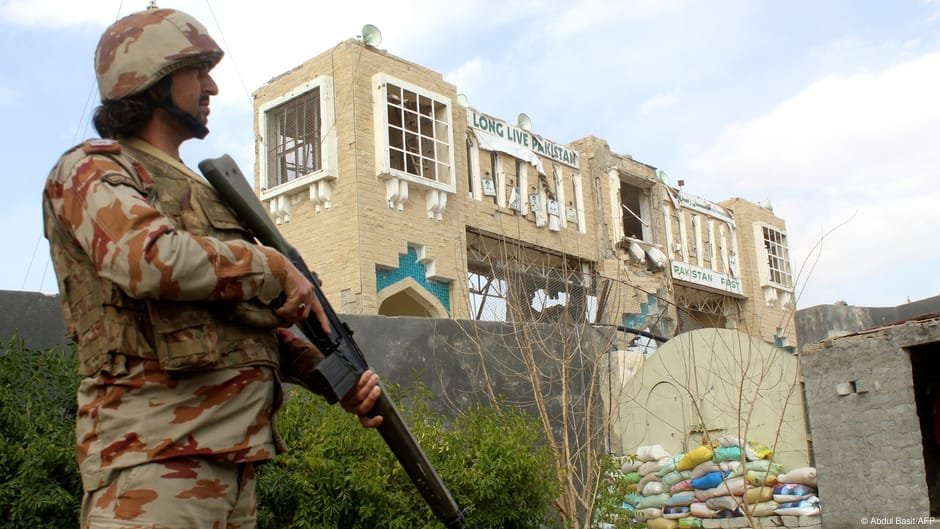
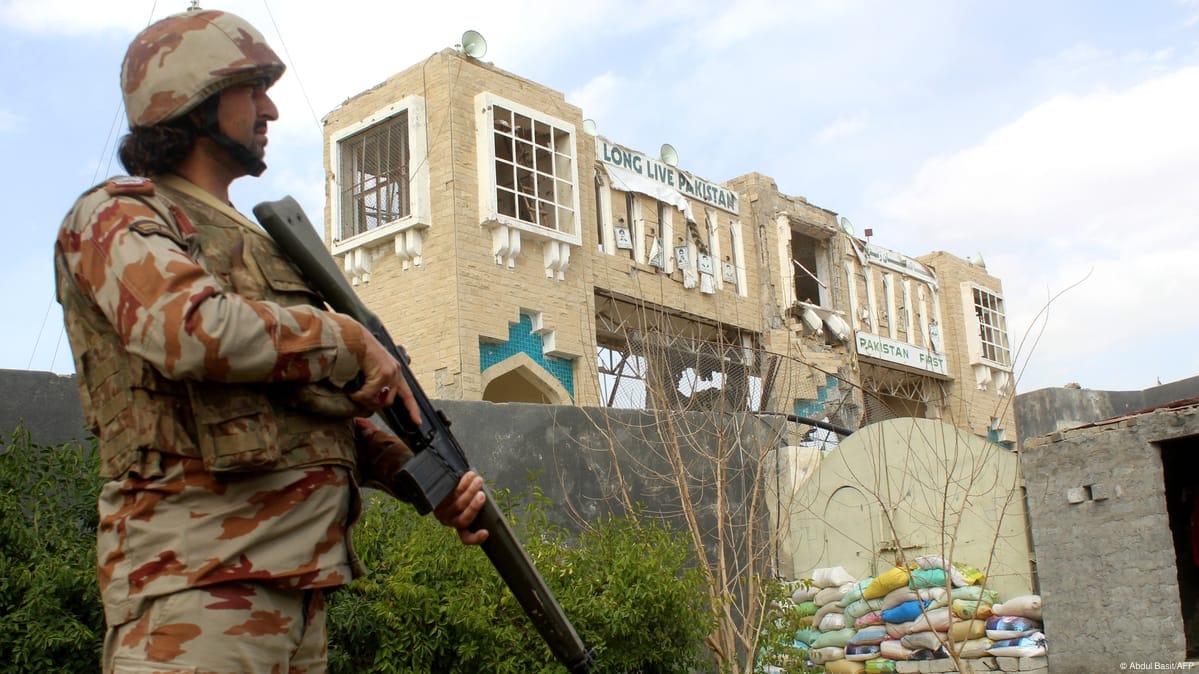
The accusations come after months of border clashes between Afghan Taliban and Pakistani forces.
In July, the Afghanistan Freedom Front (AFF), an anti-Taliban group, reportedly clashed with Taliban forces in the Zebak district of Badakhshan, a northeastern Afghan province. The group said it also carried out attacks in Nooristan and Kunar provinces in October.
Another “resistance group,” the United Front of Afghanistan, claimed it attacked Taliban forces in Kandahar province along the border with Pakistan.
“The people who created insecurity in Badakhshan crossed from Chitral [in Pakistan] and later fled back to Chitral. They had been brought in. Even Pakistani military personnel were with them,” alleged Zabihullah Mujahid, the Taliban’s main spokesperson, in an interview with DW’s Pashto-Dari service in September.
Pakistan’s Ministry of Information swiftly dismissed the allegations as propaganda.
Groups that oppose Taliban rule in Afghanistan say they are not supported by any external force, and their resistance is purely indigenous.
To view this video please enable JavaScript, and consider upgrading to a web browser that supports HTML5 video
Pakistan’s ‘leverage’ amid tense ties
More than five years since returning to power in Kabul, the Taliban have consolidated their control over Afghanistan and largely suppressed both armed resistance groups and political dissidents.
Shinkai Karokhail, a former Afghan lawmaker, told DW it would be logistically difficult for anti-Taliban Afghan groups to cross the Pakistani border and enter Afghanistan without Islamabad’s support, referring to clashes in Badakhshan and Nooristan provinces. “It is simply impossible,” she said.
The Taliban themselves maintained close ties with Pakistan in the 1990s during their first stint in power. Some US officials have even claimed that Islamabad didn’t relinquish its support to the Islamist group even after the 2001 September 11 terrorist attacks in the United States. Islamabad has always refuted these allegations.
Afrasiab Khattak, a Pakistani political analyst and former senator, believes that Pakistani support for anti-Taliban groups is “real.”
“Taliban opponents come to Islamabad, hold meetings, and it is a part of Pakistan’s policy toward Afghanistan,” he told DW.
Qandil Abbas, an associate professor of politics and international relations at Quaid-i-Azam University in Islamabad, disagrees.
“Pakistan may provide political support [to Taliban opponents], but not military support,” she told DW.
Ali Ahmad Jalali, a professor at the Near East South Asia Center for Strategic Studies at the National Defense University in Washington DC, said it is possible that Islamabad is backing opponents of the Taliban as “leverage.”
“When such incidents take place along the Afghanistan-Pakistan border, and given Pakistan’s history of support for Afghan groups, it would not be surprising if Pakistan is supporting these groups,” Jalali said.
To view this video please enable JavaScript, and consider upgrading to a web browser that supports HTML5 video
Islamabad accuses Taliban of similar tactics
Pakistani officials have repeatedly demanded that the Taliban take action against anti-Pakistan militant groups, particularly the Tehreek-e-Taliban Pakistan (TTP), a militant group responsible for attacking Pakistani civilians and soldiers, and the Baloch Liberation Army (BLA), an outlawed armed separatist group active in its western Balochistan province.
Islamabad alleges that these groups organize and launch attacks on Pakistan from Afghan territory with Taliban support.
“Meaningful progress requires Afghan authorities to address legitimate security concerns of neighboring countries, particularly the threat of terrorism,” Pakistani Foreign Minister Ishaq Dar said this week at the Economic Cooperation Organization (ECO) summit in Islamabad.
The Pakistani government said on Friday that Afghanistan was not invited to participate in the ECO gathering as Pakistan does not recognize the Taliban regime in Kabul.
Jalali, who served as Afghanistan’s interior minister from 2003 to 2005, argued that Islamabad is demanding something the Taliban may neither be willing nor able to provide.
“Pakistan wants the Taliban to cooperate in fighting against groups such as the TTP. But the TTP has long fought alongside the Afghan Taliban. There are ideological as well as friendly ties between the two. They seek a similar political system, and some Afghan Taliban members may even be among TTP fighters,” the analyst added.
Experts also point to the Taliban’s efforts to strengthen relations with India, Pakistan’s long-standing regional rival, as a cause of concern for Islamabad.
Malek Sitez, an Afghan international relations researcher, argued that Pakistan was not keen on Kabul getting closer to New Delhi but added that Pakistan no longer had the kind of influence over Afghanistan that it had in the past.
To view this video please enable JavaScript, and consider upgrading to a web browser that supports HTML5 video
Is Pakistan seeking to remove the Taliban from power?
Despite accusations and counteraccusations from both sides, Jalali did not believe that Pakistan was seeking regime change in Afghanistan.
“I do not think Pakistan can or wants to overthrow the Taliban and replace them with another group,” he underlined. Instead, he stressed, Islamabad’s objective is to pressure the Taliban into cooperating against the TTP.
Aziz Barez, a political analyst, was of the view that Afghan groups opposed to the Taliban could not fully trust Islamabad, adding that they may welcome alleged Pakistani support but are also aware that such backing could be temporary.
“It is possible that Pakistan and the Taliban will resolve their differences tomorrow and become close allies again,” he told DW.
Ahmad Waheed Ahmady and Helay Asad contributed to this report.