Malaysia leads Southeast Asia’s IPO race, but analysts warn post-listing performance is the real test
While Malaysia dominated Southeast Asia’s IPO market in the first nine months of 2026 with 38 of the region’s 56 listings, analysts caution that over half of this year’s debutants are trading underwater.
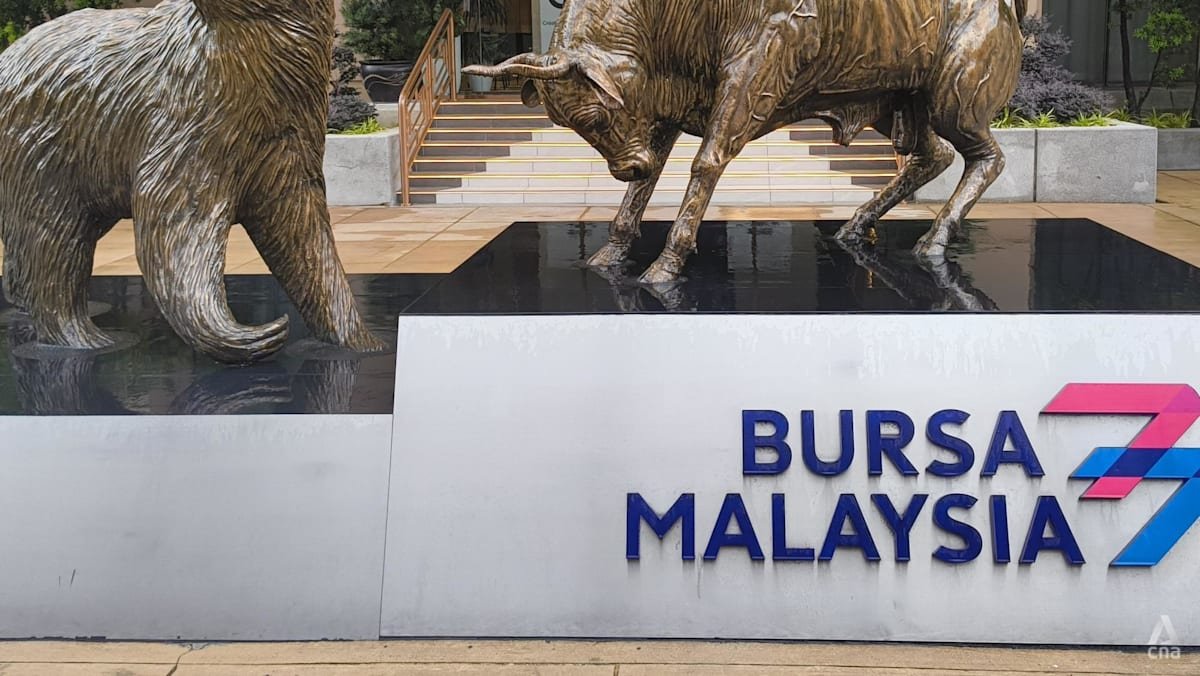
The headquarters of Bursa Malaysia, the country’s national stock exchange, in Kuala Lumpur. (Photo: CNA/Rashvinjeet S Bedi)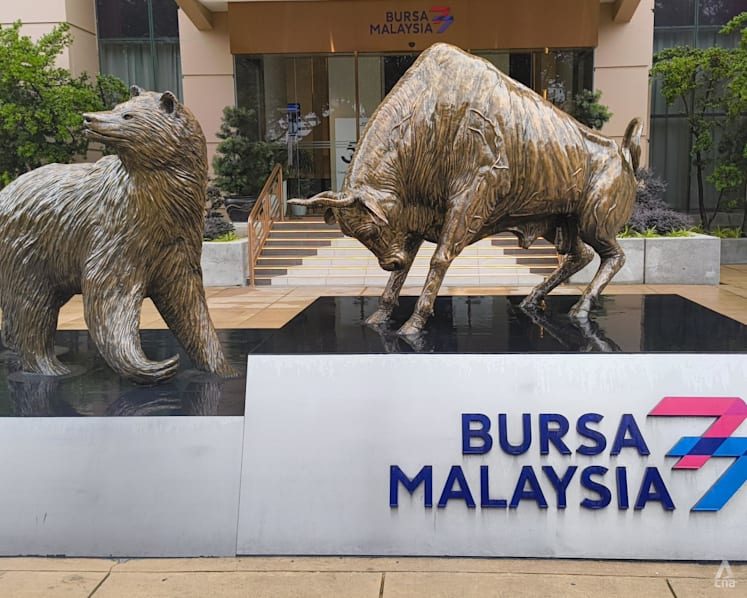
New: You can now listen to articles.

This audio is generated by an AI tool.

Read a summary of this article on FAST.
Get bite-sized news via a new
cards interface. Give it a try.
Click here to return to FAST
Tap here to return to FAST
FAST
KUALA LUMPUR: Defying a broader regional slowdown, Malaysia has emerged as the engine of Southeast Asia’s initial public offering (IPO) market in 2026.
According to global accounting and consulting firm Ernst & Young (EY), Malaysia’s bourse operator, Bursa Malaysia, captured more than two-thirds – or 38 of 56 – of all regional listings in the first nine months of the year.
Total proceeds – the amount of money raised by companies listed on the stock exchange – surged 63 per cent to US$1.62billion in the first nine months of the year, compared to US$992 million over the same period last year.
E&Y said ongoing conflicts in the Middle East and uncertainty about near-term prospects had led IPO aspirants in the region to take a more cautious approach with their listing plans, but Malaysia had bucked that trend.
While headline listing numbers and fundraising totals put Malaysia firmly ahead of regional peers, analysts cautioned that listing volume alone does not guarantee investor returns or long-term market competitiveness.
Loui Low, the head of research at Malaysian stockbroker M+Global, said that while Malaysia’s IPO momentum is encouraging, success should be measured by post-listing performance rather than listing numbers.
“Quality over quantity will be crucial to sustaining investor confidence and attracting long-term capital,” he told CNA.

Guess Word
Crack the word, one row at a time

Buzzword
Create words using the given letters

Mini Sudoku
Tiny puzzle, mighty brain teaser

Mini Crossword
Small grid, big challenge

Word Search
Spot as many words as you can
WHY MALAYSIA HAS PULLED AHEAD
Nghia Trung Nguyen, of Ernst & Young’s capital markets division, told CNA that Malaysia has maintained a robust listing pipeline – particularly on the ACE Market – underpinned by deep domestic liquidity, referring to how much money is available within a country from large domestic investors and financial institutions to invest in its financial markets.
The Main Market caters to larger, established corporations, while the ACE Market serves as a stepping stone for smaller and mid-sized firms.
“This momentum also reflects the role of the capital market in supporting companies as they pursue their next phase of growth, providing access to capital while broadening their investor base and market profile,” said Nghia.
He said that the technology, construction, healthcare and consumer businesses continue to attract interest, while the ACE Market provides an accessible fundraising platform.
Over the past year, high-profile Main Market debutants have included integrated circuit designer SkyeChip and private hospital operator Sunway Healthcare Holdings, while the ACE Market continued to anchor overall listing volume with high-growth small and mid-sized enterprises.
Of the 38 listings, six were in the main market, and 32 were in the ACE Market.
Economist Sedek Jantan of IPP, a financial planning group in Malaysia, attributed Malaysia’s performance to three main factors: the depth of domestic institutional liquidity, an appealing market setup for raising funds, and upbeat stock market conditions driving companies to bring forward their listings.
He said that local institutions such as Malaysia’s pension fund – the Employees Provident Fund (EPF) – and Permodalan Nasional Berhad (PNB) – Malaysia’s largest state-owned investment fund – provide a substantial pool of domestic savings that can be channelled into the capital market.
“This creates an important foundation for IPO demand, particularly for larger offerings where institutional participation is essential,” he said.
PNB has RM365.3 billion (US$89.2 billion) in assets, while the EPF has total investment assets of RM1.54 trillion, roughly 61 per cent of which is invested in domestic markets, and 39 per cent is invested in international markets.
While local institutional funds helped sustain deal flow in Kuala Lumpur, regional peers faced tougher challenges.
By contrast, Indonesia saw a sharp pullback to just seven listings, raising US$121.3million, down from 23 IPOs worth US$919.6 million a year earlier, while Thailand’s tally fell from eight to three listings, with proceeds more than halving to US$21.3 million from US$57.6 million.
Singapore, meanwhile, logged eight listings, one more than a year earlier, although total funds raised dipped to US$1.28 billion from US$1.54 billion.
THE REALITY CHECK
However, observers stressed that while Malaysia is demonstrating strength in IPO accessibility and fundraising activity, it was not established that this translated into superior capital-market depth, issuer quality and long-term competitiveness.
They pointed out that performance of the companies has been mixed, with a wide gap between the strongest and weakest listings.
Loui said that with more than half of this year’s Main and ACE Market IPOs trading below issue prices, investors should prioritise fundamentals over listing-day excitement.
He said that as of Nov 4, only 46 per cent of the 46 Main and ACE Market IPOs were trading above their issue prices, while 54 per cent were underwater.
“This highlights that strong IPO demand does not necessarily translate into sustainable returns,” he said.
Nghia said this underscored the importance of companies delivering on the growth story presented at IPO and sustaining investor confidence beyond the listing.
“Strong oversubscription or a first-day gain is not a reliable guide to longer-term returns,” he said.
“There is always a risk of companies rushing to market when sentiment is positive, but an IPO is really just the start of being a public company. Companies need to ensure their valuation is realistic, their governance, financial reporting and controls are ready, and their growth story remains credible after listing,” he added.
Sedek echoed this view and said that companies tended to accelerate their listing decisions during periods of strong equity-market performance, favourable valuations and elevated investor optimism.
“Companies are effectively making a financing decision based on the relative cost of equity capital,” he said, adding that he would not interpret Malaysia’s strong IPO performance as definitive evidence that the country’s capital market has become structurally more competitive.
He said that companies should not rush to list simply because market conditions are favourable but because their businesses are ready to become publicly accountable and because the capital raised can generate meaningful future returns.
He added that Malaysia needed to move from a liquidity-supported IPO market towards an internationally competitive, investor-driven capital market.
He said this meant attracting foreign institutional investors based on the quality of companies, strengthening research coverage and improving corporate governance, rather than relying predominantly on domestic institutional demand.
“When EPF or PNB subscribes to a Malaysian IPO, the investment may simply represent a reallocation of existing domestic savings from one financial asset into another. It does not necessarily represent additional capital entering the Malaysian economy,” he added.


Source: CNA/rv(ao)
Sign up for our newsletters

Get the CNA app
Stay updated with notifications for breaking news and our best stories
Get WhatsApp alerts
Join our channel for the top reads for the day on your preferred chat app

Get bite-sized news via a new
cards interface. Give it a try.
Click here to return to FAST
Tap here to return to FAST
FAST