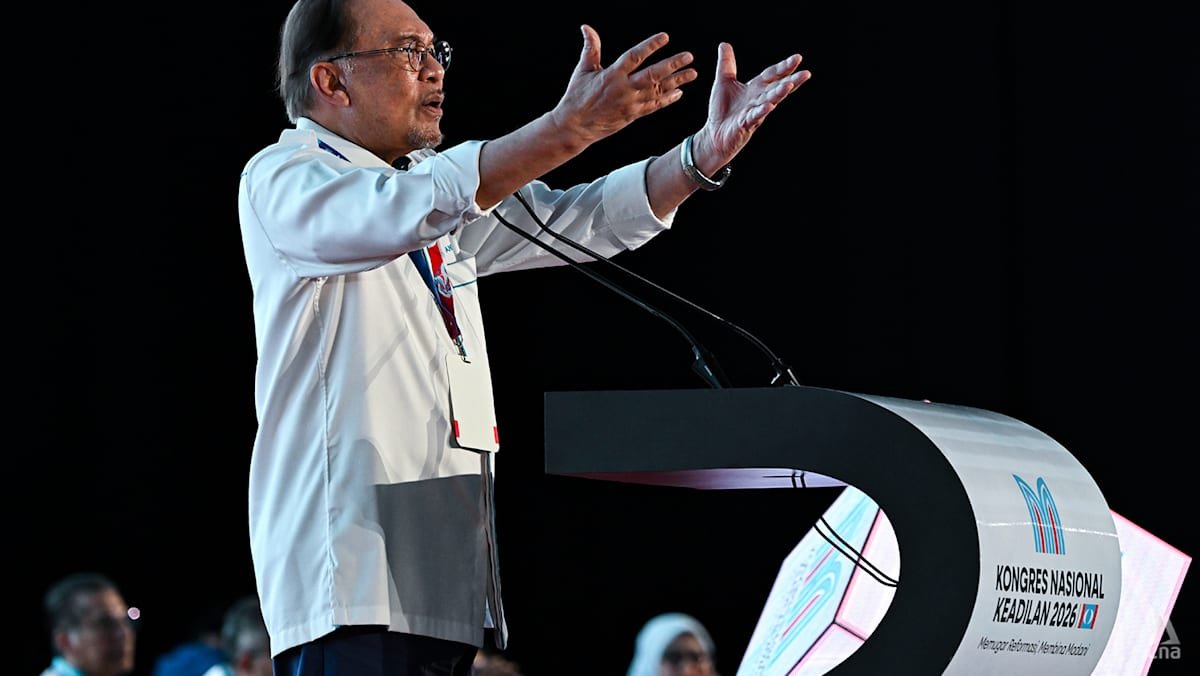
Malaysia PM Anwar to grant federal constituencies additional US$245,000 each in push for fair politics, needs-based governance
Parti Keadilan Rakyat president Anwar Ibrahim hit back at accusations of unfairness in allocating funding to opposition-held areas. He also said cooperation with Barisan Nasional at the federal level must be guided by the interests of Malaysians and the country.
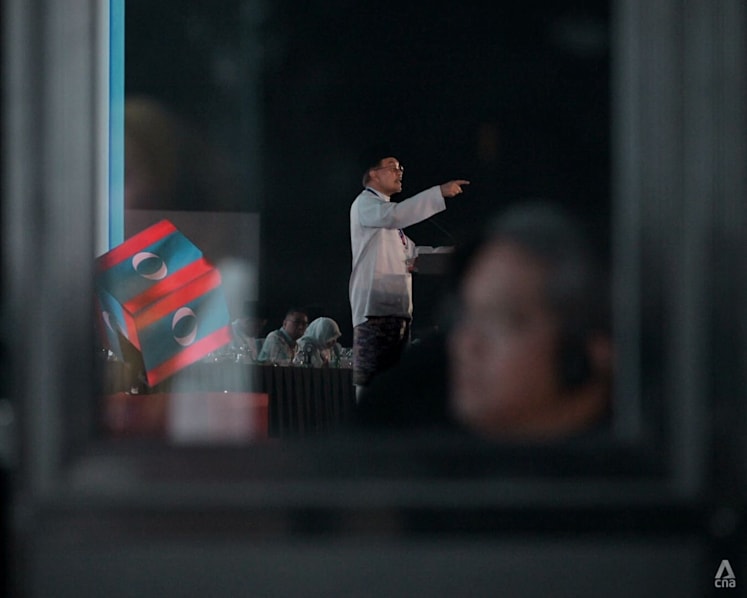
Parti Keadilan Rakyat (PKR) president Anwar Ibrahim delivers his closing address at the party congress at the Melaka International Trade Centre on Aug 16, 2026. (Photo: CNA/Zamzahuri Abas)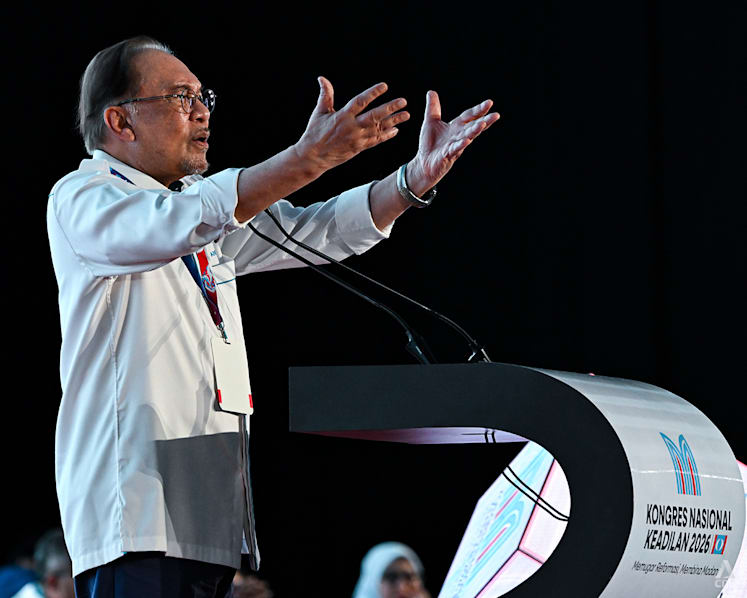
New: You can now listen to articles.

This audio is generated by an AI tool.

Read a summary of this article on FAST.
Get bite-sized news via a new
cards interface. Give it a try.
Click here to return to FAST
Tap here to return to FAST
FAST
AYER KEROH, Melaka: Malaysia Prime Minister Anwar Ibrahim has pledged an additional RM1 million (US$245,000) to each of the country’s 222 federal constituencies, including opposition wards, underscoring his administration’s push to allocate resources fairly and commitment to needs-based policies despite losing electoral support to a race-based alliance.
Anwar announced the funding during his closing speech at his Parti Keadilan Rakyat’s Congress on Sunday (Aug 16), saying the money should be used to address the needs of constituents.
The move comes as his Pakatan Harapan (PH) coalition faces pressure following recent electoral setbacks, amid signs of growing cooperation between Barisan Nasional (BN) and Perikatan Nasional (PN) to consolidate the Malay vote.
“Today, I would like to announce that for each parliamentary constituency, I will top up an additional RM1 million,” said Anwar, who is PKR president.
Anwar did not specify how the additional allocation will be channelled – whether through the members of parliament, government agencies or other means.
In his speech, he also spoke about why PKR and its Pakatan Harapan pact should continue working with BN despite being rivals in recent state polls.
PUSH FOR NEEDS-BASED REFORMS
The additional allocation has come amid accusations that Anwar has not been fair to certain states, especially those held by the federal opposition coalition PN.
“If there is positive criticism, I can accept, but the fact is I have never reduced funds (for the people),” said Anwar.
PN’s main component party Parti Islam Se-Malaysia controls the states of Kelantan, Kedah and Terengganu.
“They go to Parliament and continue hurling insults. ‘This is a cruel prime minister. He seized all the revenue from Kelantan and gave nothing’,” said Anwar.
“The reality is that billions of ringgit in additional funding have been provided to address the people’s problems. This has never been done on such a scale,” he added.
Anwar reiterated his government’s focus on needs-based rather than race-based policies, despite objections from some segments of the Malay-Muslim majority.
Malaysia’s bumiputera policies, originating from the 1971 New Economic Policy (NEP), provide affirmative action for Malays and indigenous groups in equity, education and the civil service.
“We must have the courage to move forward and do what benefits the poor, the majority of whom are Malay. But why should we separate the issue of wealth distribution and poverty from that of poor Chinese, Indians, Dayaks, Dusun Kadazans and others?” said the premier.
“That is why we put forward that idea. Today, we continue the struggle for everyone,” he said.

Guess Word
Crack the word, one row at a time

Buzzword
Create words using the given letters

Mini Sudoku
Tiny puzzle, mighty brain teaser

Mini Crossword
Small grid, big challenge

Word Search
Spot as many words as you can

The issue of fairness to all races was raised by other delegates including PKR vice-president Amirudin Shari, who stressed that the party’s “reformasi” struggle is on the basis of “fair economic distribution” and governance with integrity.
“We are fair to all Malays, Chinese, Indians, Christians, Buddhists and Hindus,” said Amirudin, who is also Selangor chief minister.
In his speech, Anwar also stressed the commitment to reform state agencies and enterprises, saying that a new Bill to regulate them and enforce strict corporate governance standards will be discussed in Cabinet soon.
The commitment to reform extends to policies such as the repeal of the Universities and University Colleges Act 1971 (AUKU), he said.
Student activists have recently called for a repeal of AUKU, which they claim suppresses student autonomy, academic freedom and free speech through political control over higher education institutions.
“There are concerns (among activists) that sometime after AUKU is abolished, a new law will be introduced that is similarly restrictive and limiting,” said Anwar.
“I will not allow any regulation or law (that specifically restricts) university students,” he said, explaining students were already subject to laws that apply to the general population.
MIXED SENTIMENTS ON COOPERATION WITH BARISAN NASIONAL
Anwar also touched on the party’s relationship with the Barisan Nasional at the federal level. BN is part of Anwar’s unity government alongside PH, Gabungan Rakyat Sabah (GRS) and Gabungan Parti Sarawak (GPS).
However, they have been foes during the recent state elections, especially in Negeri Sembilan and Johor, collaborating with PN under a so-called Malay unity pact.
BN won 48 of 56 state seats in the Johor state election in July. BN and PN won 25 of 36 seats in Negeri Sembilan on Aug 1, seizing control of the state assembly that PH had helmed since 2018.
In the three most recent state elections in Sabah, Johor and Negeri Sembilan, PKR only won four out of the 49 seats it contested.
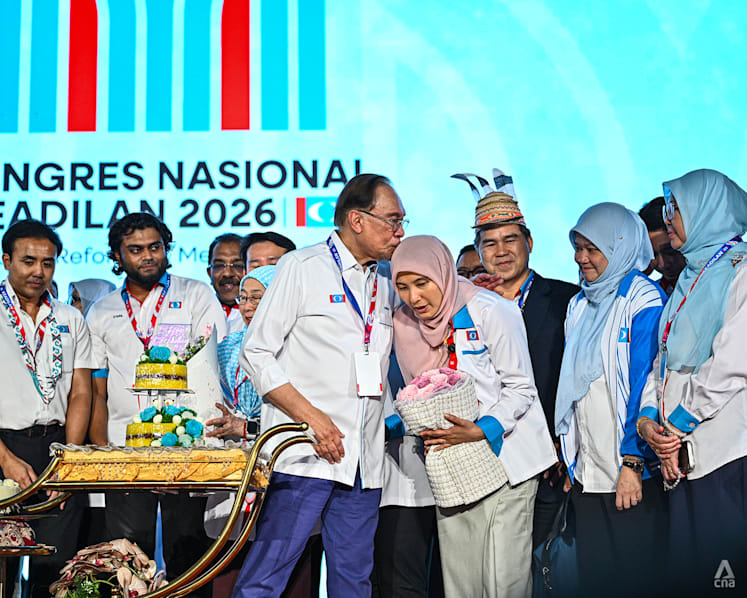
At the congress, some party leaders urged Anwar to show mettle in dealing with political foes on the back of perceived betrayals.
Selangor PKR delegate Danish Hairudin said the two state elections had exposed BN component party United Malays National Organisation’s (UMNO) lack of sincerity despite them being allies in the unity government.
“We accepted them as partners because the country needed stability, but political friendship must have limits and dignity, said Danish, PKR’s youth wing information chief.
“We cannot shake hands in Putrajaya while, on the political battlefield, the same hand stabs us in the back,” he said.
Anwar said that dealings with BN cannot be driven by anger and disappointment, and must be guided by the interests of Malaysians and the country.
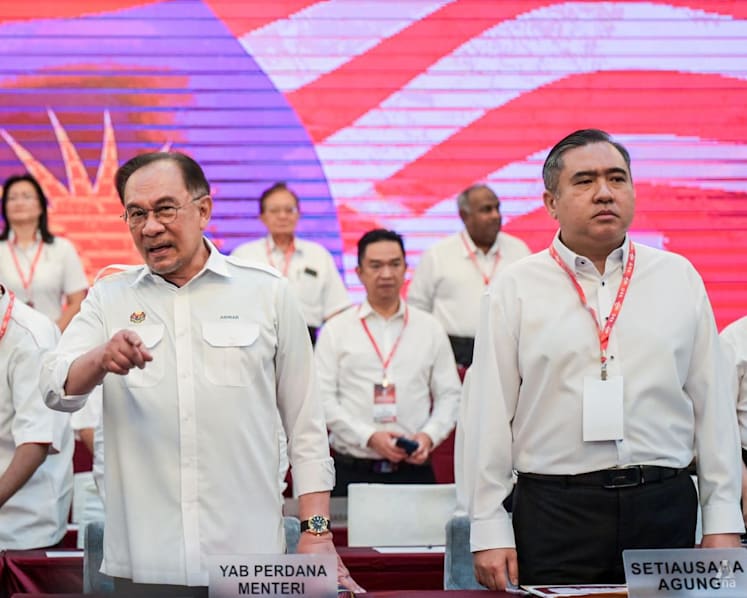
“Even if some of them do not think that way, we must. We have to be more rational. There must be wisdom and good judgment,” said Anwar, who maintained that his relationship with BN chief and deputy PM Ahmad Zahid Hamidi continued to be positive.
“If you ask me, Anwar, what is your choice? I choose stability. I choose prosperity for the people through economic growth. And I choose to continue cooperating with BN and UMNO at the federal level so that these principles can be upheld,” Anwar said.
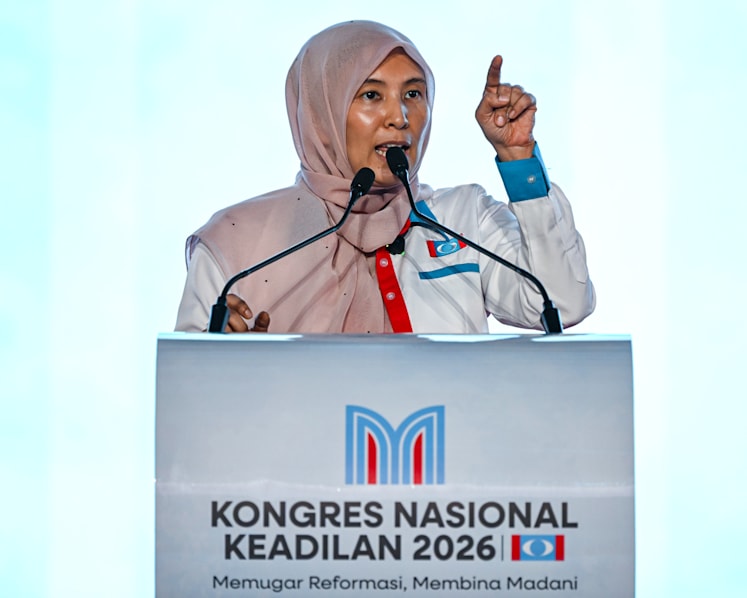
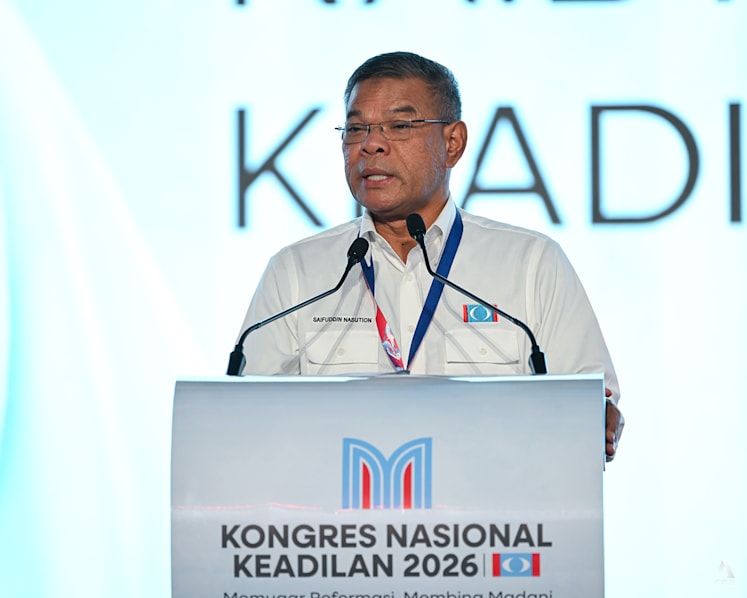
The congress also marked Anwar’s daughter, PKR deputy president Nurul Izzah, starting her leave of absence to pursue further studies. Vice-president Saifuddin Nasution Ismail will take over in her absence while Amirudin will continue to serve as PH’s election director.
Anwar said Tengku Zafrul Abdul Aziz, who quit UMNO in May 2025 to join PKR, will be given a “full mandate” to coordinate on Anwar’s behalf and with the party’s secretariat.
Nurul Izzah’s move means a potential leadership vacuum for PKR at a delicate moment as it seeks to rebuild voter support and chart a path towards the next GE.
In her closing speech at the congress, Nurul Izzah said PKR must continue its struggle for reform within the party and in the government.
She called for AUKU’s repeal while PKR is in power, and for economic growth achieved under the current government to be translated to more opportunities in employment, for small and medium enterprises and for women and children.
Delegates like PKR vice-president Roland Engan told CNA he agreed with Anwar’s call for all party members to put aside differences with BN “as of now”.
“We have to prioritise the needs of the whole country to maintain stability in the unity government,” added Roland, who previously served as chairman of the party’s leadership council in Sarawak.
On the prime minister’s decision to allocate RM1 million to each federal constituency, including those led by MPs from the opposition, Roland expressed hope that the mechanism will be “done in a way that everyone receives (something)”.
Source: CNA/ia
Sign up for our newsletters

Get the CNA app
Stay updated with notifications for breaking news and our best stories
Get WhatsApp alerts
Join our channel for the top reads for the day on your preferred chat app

Get bite-sized news via a new
cards interface. Give it a try.
Click here to return to FAST
Tap here to return to FAST
FAST
About The Author