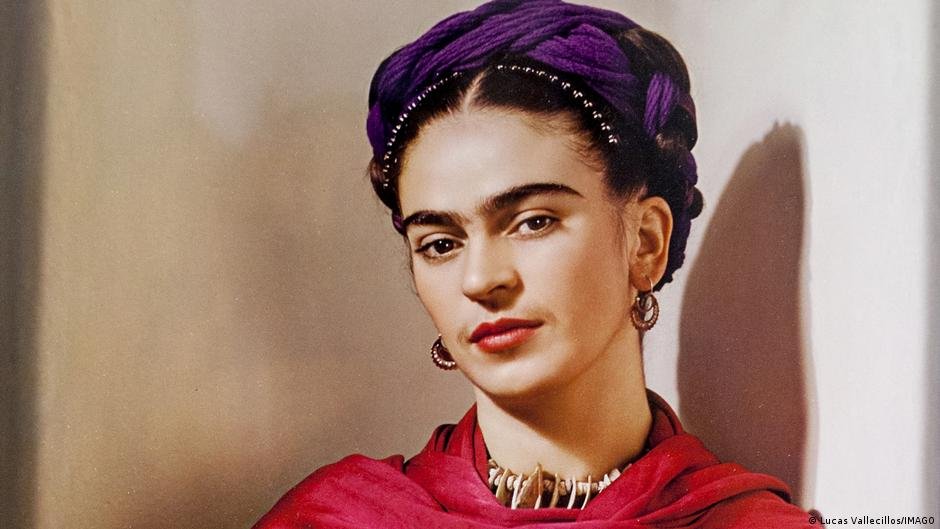
Few artists have turned personal suffering into visual language as powerfully as Frida Kahlo.
More than 70 years after her death, the Mexican painter, who died in 1954, remains one of the most recognizable figures in art history. Her iconic unibrow and flower crowns have made her image instantly identifiable around the world, and her works have been sold for millions at auction.
Her life and work are being celebrated at London’s Tate Modern with the exhibition, “Frida: The Making of an Icon,”which opens June 25 and run until January 3, 2027.
Born in 1907 in Coyoacan, now part of Mexico City, Frida Kahlo was the daughter of a German immigrant and a mother of mixed Spanish and Purepecha descent.
Her early life was marked by physical pain — she contracted polio as a child, and at 18 experienced a devastating bus accident that left her with lifelong injuries and destroyed her dream of becoming a doctor. It was during her long recovery that she started painting by using a special easel and a mirror above her bed.
To view this video please enable JavaScript, and consider upgrading to a web browser that supports HTML5 video
Brutally honest self-portraits
Most people are familiar with Kahlo’s striking self-portraits, which make up the majority of her work. But instead of painting herself in an idealized way, she was brutally honest, using them to explore her disability, miscarriages and heartbreaks. Such subjects were rarely depicted at the time — even less so from a woman’s perspective.
Kahlo’s works are difficult to categorize. She rejected the surrealism label many have associated with her, famously saying: “I never painted dreams. I painted my own reality.”
That reality was certainly rich enough. Kahlo had a turbulent marriage to Mexican artist Diego Rivera, who was 20 years her senior and the most famous artist in the country at the time.
During her lifetime, Kahlo was often overshadowed by Rivera’s fame — but it is her legacy that has stood the test of time. Her image and artwork is seen everywhere, from TikTok feeds to souvenir shops to museum exhibitions — a phenomenon that has been called “Fridamania.”
In 2021, her painting “Diego y yo” (Diego and I) was sold at auction for $35 million (€31 million). It depicts Rivera enthroned as the third eye on the artist’s head. Their passionate relationship was marked by much pain and suffering, yet the couple shared a strong emotional and intellectual bond and remained together until Kahlo’s death in 1954.
The 2025 auction of Kahlo’s work “El Sueno” (The Dream) was the latest record-breaker, selling for a whopping $54.7 million, making it the most expensive artwork by a woman to ever be sold at auction. It depicts a sleeping Kahlo in bed, covered in vines — likely a reference to the chronic pain she endured — while a skeleton holding dynamite rests on the canopy above her.
Defying gender roles
Kahlo was known for defying conventional gender roles, which has helped her art resonate with the LGBTQ+ community today. She was openly bisexual and had affairs with prominent men and women during her marriage to Diego Rivera.
In her works, she sometimes painted herself with masculine features, such as in her 1940 painting “Self-Portrait with Cropped Hair.” In it, she wears a loose-fitting men’s jacket and has short hair. Going against conventional beauty ideals, she often painted herself with her signature unibrow and visible mustache. Such details are part of Kahlo’s strikingly frank oeuvre.
Museums around the world continue to draw large crowds for exhibitions dedicated to her art. The upcoming Tate Modern show will feature over 30 of the artists “most iconic works” and introduce what curators describe as her “‘many selves’ — the dedicated wife, the intellectual, the modern artist, and the political activist.”
A book helped boost her fame
Yet, Kahlo hasn’t always been a cult figure. The book “Frida: A Biography of Frida Kahlo” by author Hayden Herrera, published in 1983, paved the way for Kahlo to go from being known largely in academic circles to a globally recognized painter and public figure.
The book was also the basis for the 2002 film “Frida,” starring Salma Hayek.
Critics have questioned the commercialization of Kahlo’s work, which can now be found on everything from coffee mugs to T-shirts, arguing that hermarketable image often overshadows the artist’s political convictions and the nuances of her work.
Kahlo was a committed communist who engaged deeply with the political upheavals of her time. She maintained relationships with prominent left-wing figures, including the exiled Russian revolutionary Leon Trotsky.
Today, Kahlo remains Mexico’s most famous artist. Traditional Tehuana dresses, Indigenous symbolism and references to the country’s landscape appear throughout her work.
Yet, even while championing of Indigenous cultures as the daughter of a mestiza woman, Kahlo’s relationship with Indigenous identity was complex, as her biographer Herrera pointed out.
She sometimes used Indigenous imagery symbolically to construct her own artistic persona and communicate ideas about Mexican identity, femininity and politics, despite being from an upper-class intellectual background.
But such questions haven’t overshadowed the artist’s broader legacy. There’s no sign either that “Fridamania” will slow down any time soon. Kahlo’s strong personality, her life experiences and her ability to convey her emotions bluntly through her work has helped the artist stand the test of time.
Edited by: Elizabeth Grenier
About The Author