More than ordinary shops: China strengthens a decades-old network for an age of disruption
China is beefing up a decades-old state-linked network spanning rural shops, agricultural supplies and distribution. The reasons go well beyond everyday commerce, say analysts.
New: You can now listen to articles.

This audio is generated by an AI tool.

Read a summary of this article on FAST.
Get bite-sized news via a new
cards interface. Give it a try.
Click here to return to FAST
Tap here to return to FAST
FAST
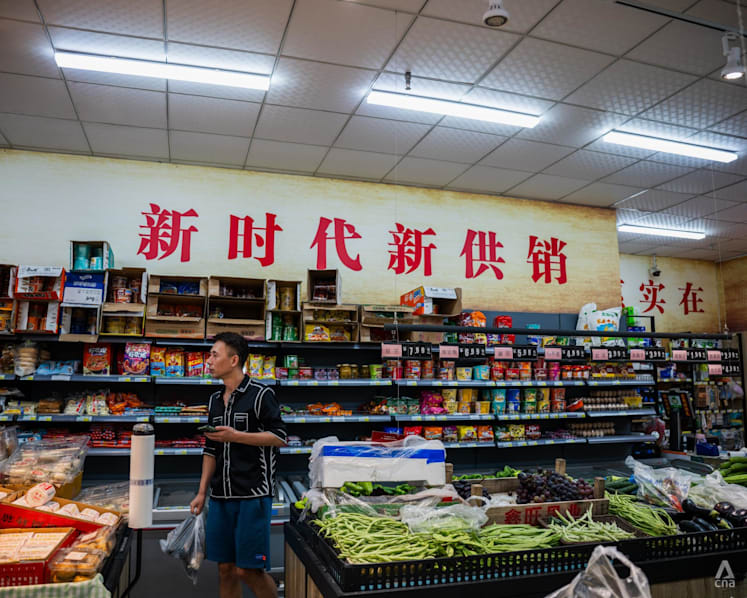
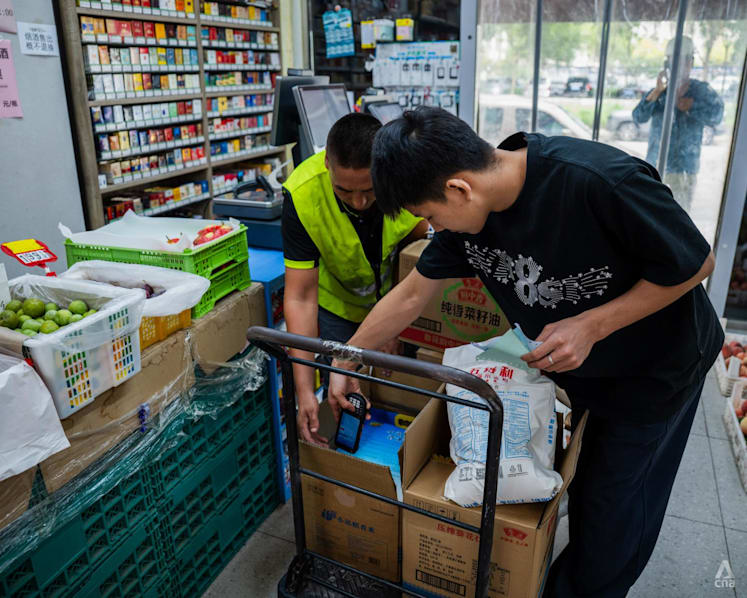
BEIJING: Fresh vegetables sit alongside bottled drinks and household essentials on the shelves of a brightly lit store in Beijing’s Shunyi district.
At first glance, it’s nearly indistinguishable from countless neighbourhood shops across the Chinese capital.
But an emblem and prominently displayed signage point to a very different lineage.
It is a supply and marketing cooperative – “gong xiao she” in Chinese – part of a sprawling state-linked network that once played a key role in rural commerce and traces its roots to the Mao Zedong era.

Guess Word
Crack the word, one row at a time

Buzzword
Create words using the given letters

Mini Sudoku
Tiny puzzle, mighty brain teaser

Mini Crossword
Small grid, big challenge

Word Search
Spot as many words as you can
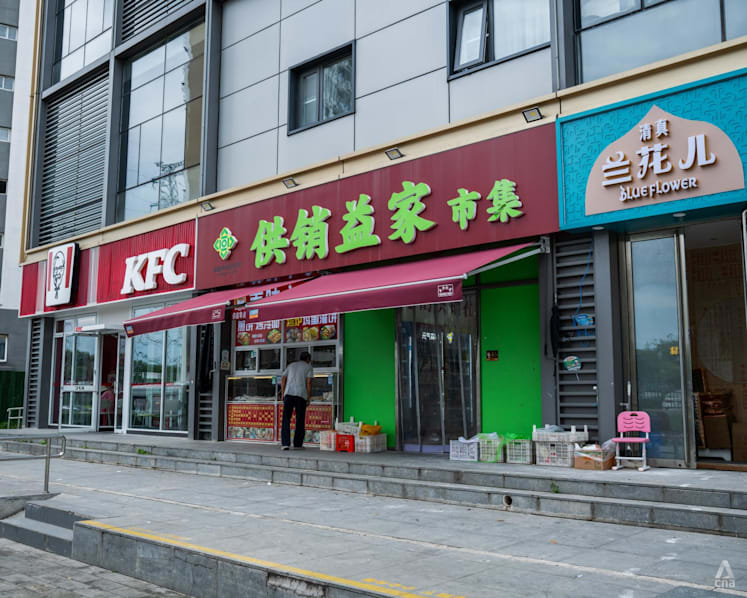
To some local residents, however, little of that history is apparent.
“There is no cooperative now, it’s a regular supermarket,” said a 68-year-old surnamed Wang, who has lived nearby for decades and shops there frequently when short of daily essentials.
Wang prefers the district’s morning market for his regular grocery runs. Prices there are lower, he said, while acknowledging that the products sold at the cooperative are of comparable quality.
Yet while Wang may see little difference between the cooperative and an ordinary shop, China still sees value in the system behind it.
Authorities are seeking to strengthen the decades-old network, with a new five-year development plan unveiled in August that places food security and rural revitalisation among its central priorities.
Analysts said the push reflects a broader effort by Beijing to retain state-backed capacity alongside highly developed private markets – building buffers that can be called upon when commercial supply chains are roiled by anything from natural disasters to geopolitical shocks.
“Put simply, Beijing does not need the supply and marketing system to outperform JD or SF Express in everyday delivery,” Chinese policy researcher Li Yaqi told CNA, referring to Chinese e-commerce giant JD.com and leading courier company SF Express.
“It needs designated organisations that already hold relevant stocks, report information and understand their responsibilities when a disruption occurs.”
MORE THAN MEETS THE AISLE
About 90 minutes from central Beijing, in the mountainous village of Laoyugou in Changping district, one of the older incarnations of the supply and marketing cooperative is still hanging on.
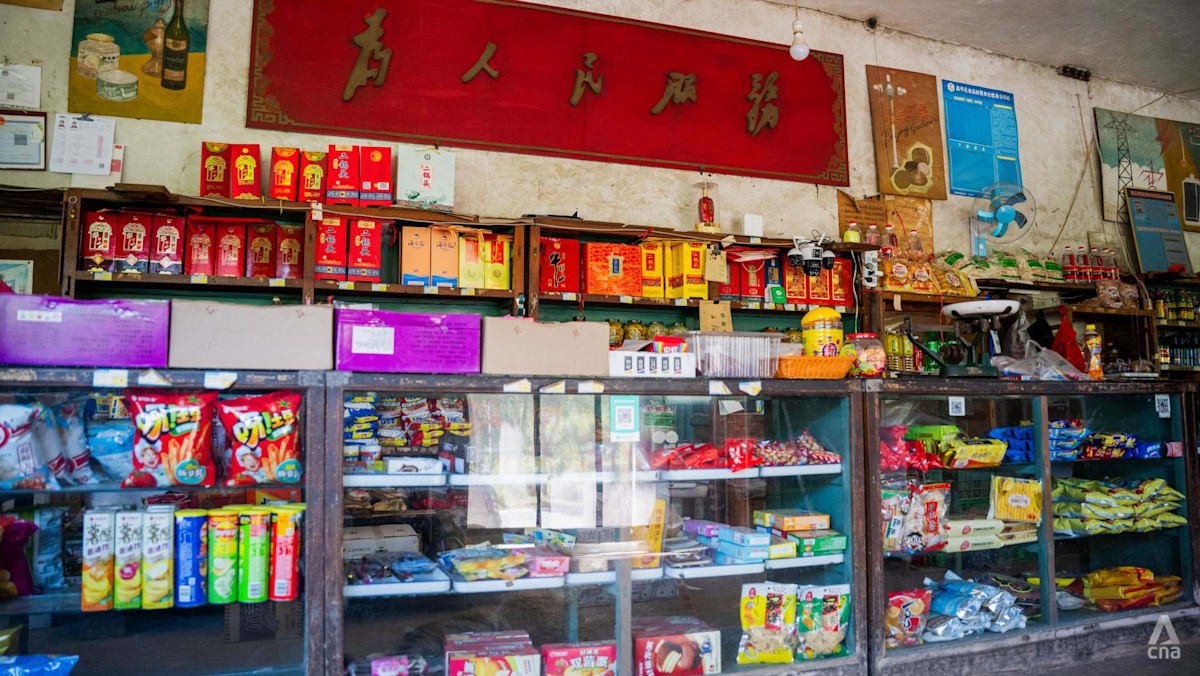
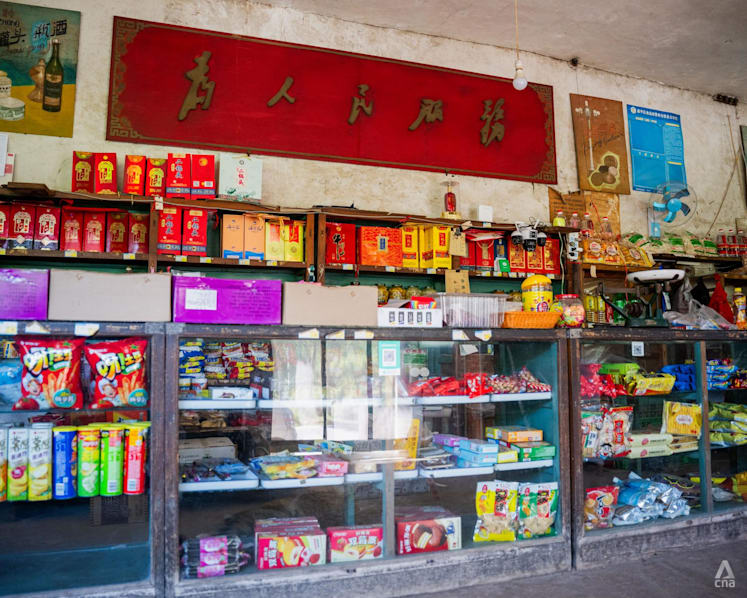
The store is small and rustic. A row of wooden cabinets with glass fronts serves as a counter, while simple shelves behind it are stocked with cooking oil, rice, flour and other household necessities.
Customers arrive only sporadically. But when they do, the exchanges feel more like visits between old acquaintances than trips to the shop, with conversation stretching well beyond what is being bought.
During CNA’s visit, a customer picked up an item and left without paying for it on the spot – an informal arrangement with the shopkeeper to settle the bill later.
The operator, a man in his 60s who declined to be named, said the cooperative had “served the village for decades”.
To him, there was little grand about its purpose.
“It’s just an ordinary store that serves the people,” he said.
Yet he has noticed growing outside interest. Some visitors now make the journey simply to photograph the old shop – drawn by nostalgia for a system that, for generations, was woven into everyday rural life.
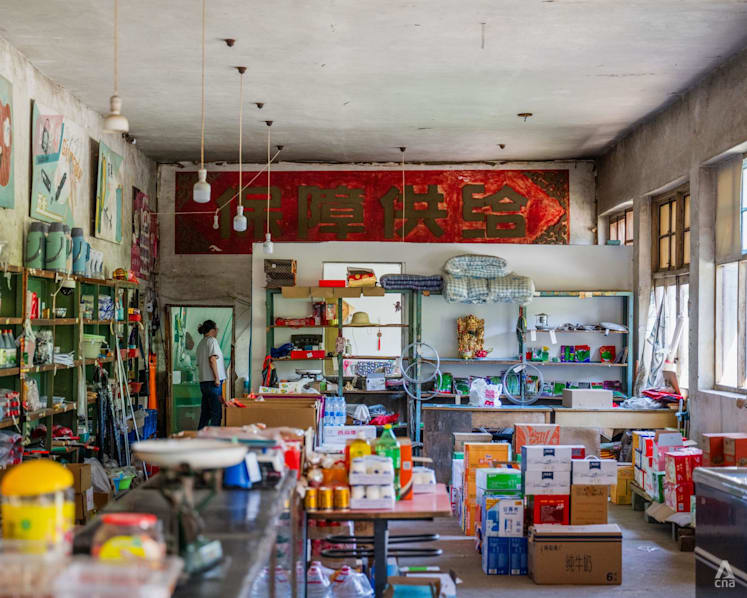
Supply and marketing cooperatives took shape in the early years of the People’s Republic of China, becoming a main channel through which the state supplied farmers with agricultural inputs and daily necessities, bought produce and moved goods between villages and cities.
By the early 1950s, tens of thousands of grassroots cooperatives were already operating across the country.
Their dominance faded after market reforms from the late 1970s, as private shops, wholesalers, supermarkets and later e-commerce transformed rural commerce. But the network itself has endured.
Today, the system has about 37,000 grassroots cooperatives and more than 856,000 operating and service outlets nationwide, according to the All-China Federation of Supply and Marketing Cooperatives, which heads the network.
While neighbourhood stores are their most visible face, operations extend far beyond retail – spanning agricultural services, produce distribution and logistics.
Under the latest five-year plan, China aims to build or upgrade around 100 national strategic agricultural-input reserve warehouses and about 1,000 county-level distribution centres by 2030, while expanding agricultural services, storage and emergency supply capabilities.
While the headline targets were already set under a separate programme, their inclusion in the blueprint reflects the importance Beijing continues to place on the cooperatives, analysts said.
Today, the bigger question is less whether the cooperatives are “coming back” than how they are trying to remain relevant in an economy where private supply and retail networks are already highly developed.
Among those making the trip to Laoyugou to visit was 53-year-old business owner Xing Sumei, who also runs a cooperative in another village in Shunyi, about a 40-minute drive away.
She told CNA she had come specifically to see how the older store was being run and whether there were ideas she could take back to improve her own operation, as Beijing puts fresh emphasis on developing the cooperative system.

“The environment is very different now, and old cooperatives do face difficulties keeping up,” she said.
“But with the government’s plans, I think they still have a role to play in the country’s development. If operators really put their heart into it, they can still do well.”
For Xing, the challenge is not simply preserving an old way of doing business, but finding a place for the cooperative in a market that no longer needs it in quite the same way.
WHEN EFFICIENCY ISN’T EVERYTHING
At Dahanzhuang in Shunyi district, a 74-year-old shop operator, also surnamed Wang, offered a more sobering picture of what survival can look like for an old cooperative.
She said she had been running the store since the 1960s, but was recently told to vacate its old premises and move into a newer building nearby as part of redevelopment plans.
“Business isn’t what it used to be,” she told CNA, adding that she had stopped ordering new stock for now because she was unsure how relevant the shop would remain after the move.
She also operates an e-commerce parcel collection point alongside the cooperative business – a telling sign of how much rural commerce has changed around her.
“I don’t know yet whether I should keep doing it the same way,” she said. “There aren’t that many customers now.”

That uncertainty goes to the heart of why Beijing’s renewed push stands out.
Across China, private logistics firms, supermarkets and e-commerce platforms have long overtaken the cooperative system in the speed and efficiency of everyday commerce.
But analysts said commercial efficiency is only part of what Beijing wants from the system.
“It’s the same question you’d ask about state-owned enterprises or the state banks: why keep them when everyone knows that private firms are more efficient?” said Adam Liu, an assistant professor at the Lee Kuan Yew School of Public Policy at the National University of Singapore (NUS).
“Because efficiency was never what the (Communist) Party tries to maximise. They are the economic foundations of the party’s political rule – instruments through which it directs resources without a market intermediary,” he told CNA.
The supply and marketing system also reaches deep into rural China, including areas where maintaining permanent commercial infrastructure may be less attractive to private firms.
“(The) system can help maintain capacities that companies may not preserve without subsidy or contract: off-season fertiliser stocks, disaster inventories, regulated agricultural inputs and permanent facilities in low-margin rural markets,” said Chinese policy researcher Li, also formerly a research assistant at the S Rajaratnam School of International Studies think-tank in Singapore.
That does not mean Beijing is trying to recreate a sealed-off state distribution system.
Li noted that the latest plan explicitly calls for cooperation with postal, courier and logistics companies, describing the emerging model as “a mixed commercial system with a state-anchored layer”.
STOCKING UP FOR SHOCKS
Beyond everyday commerce, analysts said Beijing sees another advantage in retaining the cooperative network – the stocks, facilities and organisations already in place when supplies are disrupted, or when emergencies strike.
Take fertiliser as an example.
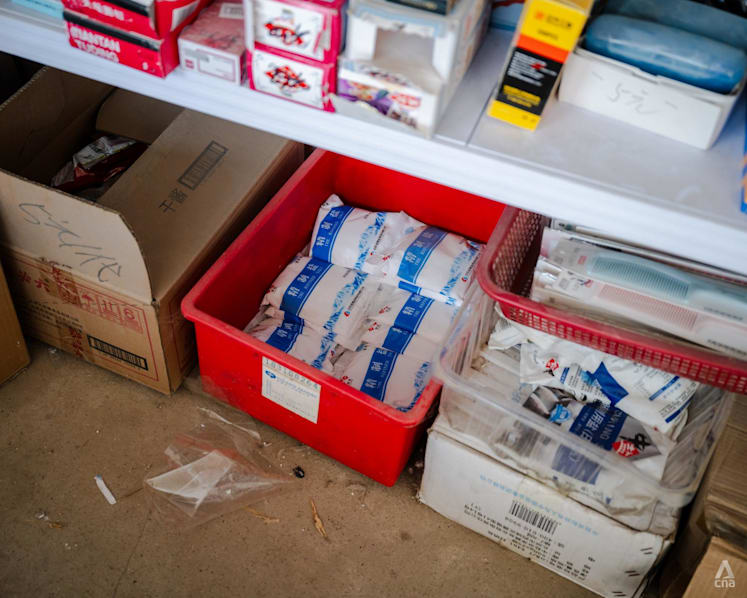
Under China’s national fertiliser reserve system, companies hold supplies that can be released to stabilise availability and prices or support agricultural production after disasters. The cooperative federation has described reserves of fertiliser, pesticides and seeds as a “reservoir” and “stabiliser” that can be tapped when needed.
During the 14th Five-Year Plan period (2021-2025), the cooperative system supplied about 70 per cent of China’s fertiliser, accounted for around 40 per cent of its potash imports and undertook about 47 per cent of the country’s national commercial fertiliser reserve tasks, according to the All-China Federation of Supply and Marketing Cooperatives.
That capacity faced a real-world test earlier this year.
In March, as the Middle East conflict disrupted global fertiliser trade and shipping through the Strait of Hormuz, China moved to release fertiliser from national commercial reserves ahead of schedule for the spring planting season.
Authorities later said measures including early reserve releases, securing imported supplies and ensuring domestic transport had helped keep major fertiliser supplies sufficient and prices broadly stable.
For Li, the episode showed how infrastructure built for agricultural security could also cushion a geopolitical shock.
“Ordinary food security is the stated mission; severe external disruption is the tail-risk use case,” he said.
Nor are such risks confined to a single commodity.
Genevieve Donnellon-May, a China risk and policy specialist at the University of Melbourne’s Centre for Contemporary Chinese Studies, pointed to China’s heavy reliance on imported soybeans, as well as supply risks involving potash and edible oil.
Longer-term challenges, including climate change and constraints on arable land and water resources, further complicate Beijing’s efforts to shore up food security, she said.
“A range of pressures – from systemic competition with the US, lessons from COVID-19, chokepoint and trade disruptions, wars and increasingly extreme weather events – have certainly sharpened these fears,” Donnellon-May, who’s also an affiliated researcher at the Asia Society Policy Institute’s Center for China Analysis, told CNA.
Donnellon-May noted that new warehouses and distribution centres under the cooperative system principally improve China’s ability to store and move existing supplies, rather than remove dependence on imported commodities.
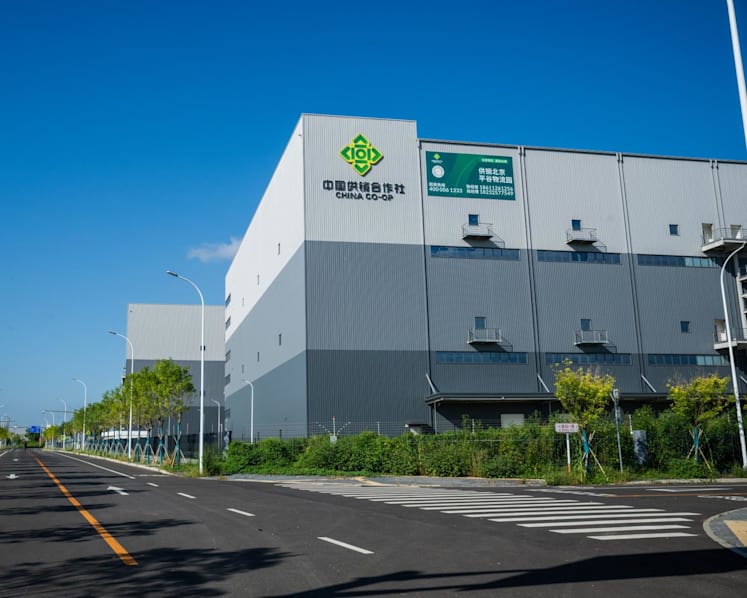
Analysts see them as part of an effort to build buffers at points where disruptions could have outsized consequences.
Li described the approach as “selective redundancy” – adding capacity in inventory and distribution while continuing to rely on commercial markets.
“The aim is not to replace markets,” he said.
“It is to ensure that the state does not have to construct inventories, data systems and organisational relationships from scratch once a crisis begins.”
The same infrastructure that helps China weather fertiliser shortages or shipping disruptions could also prove useful in a more severe crisis, such as conflict or war, analysts noted.
But they stressed that potential wartime utility is not evidence of deliberate preparation.
Liu from NUS said the current plan does not contain the kind of indicators he would expect if conflict preparation were a central objective.
“Nothing in it uses mobilisation vocabulary (yet), the siting follows grain geography rather than strategic geography, and nothing benchmarks stocks to wartime consumption,” he said.
“Change any of those and I’d revisit.”
Li similarly noted that the publicly available plan contains no references linking the cooperative build-out to military or wartime functions.
“A capability that would be useful during war is not necessarily a capability built for war … the main danger is confusing capacity with intent,” he said.
“The same fertiliser warehouse could support spring planting, flood relief, a pandemic lockdown, an import embargo or a war-related shipping disruption. Its physical existence cannot reveal which scenario motivated the investment.”

What is clearer is that Beijing is trying to guard against disruption from multiple directions, experts said.
“China is not abandoning markets or import reliance,” said Donnellon-May from the University of Melbourne.
“I see this as China trying to make both more diversified and harder to disrupt, while building just enough state-controlled buffering capacity (reserves, distribution, cooperative infrastructure) to survive the gap if one channel fails.”
Source: CNA/lg(ws)
Sign up for our newsletters

Get the CNA app
Stay updated with notifications for breaking news and our best stories
Get WhatsApp alerts
Join our channel for the top reads for the day on your preferred chat app

Get bite-sized news via a new
cards interface. Give it a try.
Click here to return to FAST
Tap here to return to FAST
FAST