


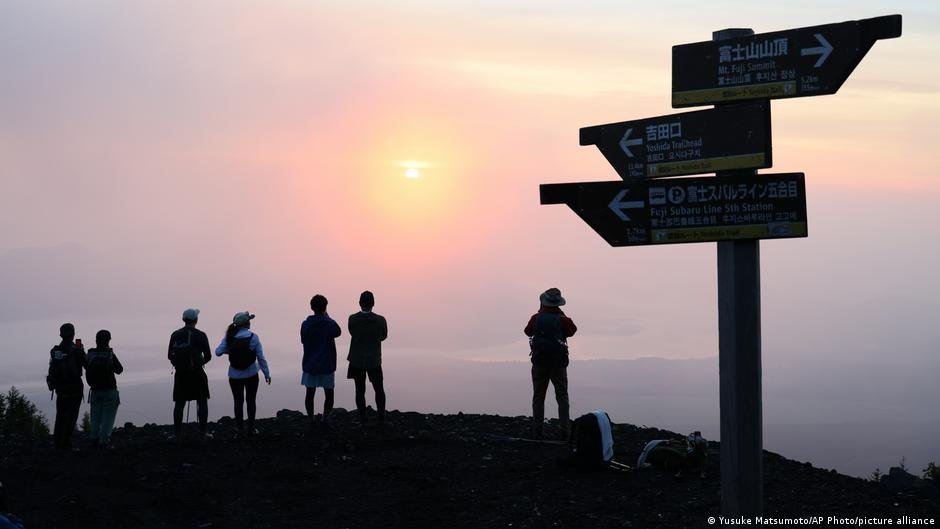
For many Japanese, Mount Fuji is more than a hiking destination — it is a place to express gratitude for life, embrace living in the moment, and stand in awe of nature.
Image: Yusuke Matsumoto/AP Photo/picture alliance
On July 1, in the morning of opening Mount Fuji, a man portraying a Shinto deity ceremonially cut a Shimenawa, a sacred rope that separates the ordinary world and the divine space. People dressed in white ceremonial robes watched over it in front of a Torii, an entrance gate to the sacred mountain.
Image: Kyodo/picture alliance
Japan’s highest peak at 3,776 meters (12,388 feet) stands on the border of Yamanashi and Shizuoka prefectures, in the country’s central region. This year’s yamabiraki, the mountain’s ceremonial opening to welcome climbers for the coming two months, was on July 1.
Image: Yusuke Matsumoto/AP Photo/picture alliance
At around 3 a.m., as the gate at the fifth station on the Yoshida trail in Yamanashi Prefecture opened, climbers began eagerly making their way toward the summit. Many set off before dawn in the hope of watching the sunrise from the top.
Image: Yusuke Matsumoto/AP Photo/picture alliance
In Japan, watching a sunrise from a high mountain such as Mount Fuji is known as Goraiko, or the “arrival of light,” and is considered a sacred experience. The term originates from the Buddhist belief that Amida Buddha descends from paradise illuminated by rays of light. Climbers raised their hands to welcome the sun as it crept over the horizon.
Image: Yusuke Matsumoto/AP Photo/picture alliance
As Mount Fuji becomes increasingly popular with visitors, including foreign tourists, challenges such as overtourism and safety concerns have been growing. Authorities have introduced restrictions, such as a 4,000 yen (€22) fee, while automated self-check-in at the Yoshida trail gate was installed for the first time this year to ease the customary long lines.
Image: Yusuke Matsumoto/AP Photo/picture alliance
For many Japanese people, Mount Fuji is more than just a hiking destination: it is a symbol of good fortune and prayer. The Japanese have a saying, “First Mount Fuji, second a hawk, third an eggplant,” which refers to the three luckiest things to dream of at New Year. Fuji is associated with the Japanese word “fushi,” meaning immortality or long life.
Image: Yusuke Matsumoto/AP Photo/picture alliance6 images1 | 66 imageshttps://p.dw.com/p/5GeQN







