NEA taps surveillance tech, video analytics to boost fight against rat infestations
As rats are nocturnal and tend to avoid humans, surveillance tools can help authorities better understand their behaviour and movement patterns, said the agency.
Fewer rat burrows have been detected as authorities intensify control efforts.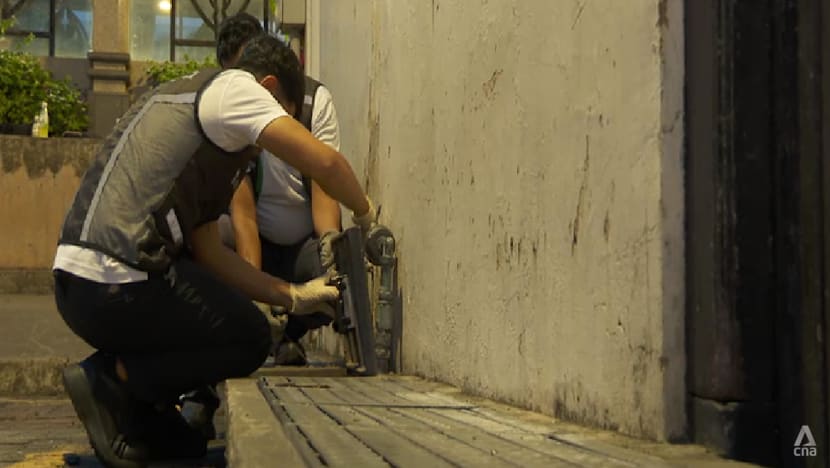
New: You can now listen to articles.

This audio is generated by an AI tool.



Read a summary of this article on FAST.
Get bite-sized news via a new
cards interface. Give it a try.
Click here to return to FAST
Tap here to return to FAST
FAST
SINGAPORE: The National Environment Agency (NEA) is exploring the use of more advanced technologies such as video analytics and machine learning to strengthen efforts against rat infestations.
The agency currently deploys thermal and passive infrared cameras to monitor rodent activity and identify hotspots.
Machine learning can cut down the manual work of reviewing footage to identify rats, said Mr Bernard Chiang, assistant manager at NEA’s rat control section.
“With this, we can actually (have) the manpower to deploy more passive infrared cameras and cover a wider area.”
This comes as rat infestations remain a public health concern in Singapore.
NEA deployed 40 thermal cameras from January to April this year, and is on track to exceed last year’s total of 84. The number of deployments per location varies according to site conditions and coverage requirements.
As rats are nocturnal and tend to avoid humans, these tools can help authorities better understand their behaviour and movement patterns, said Mr Chiang.
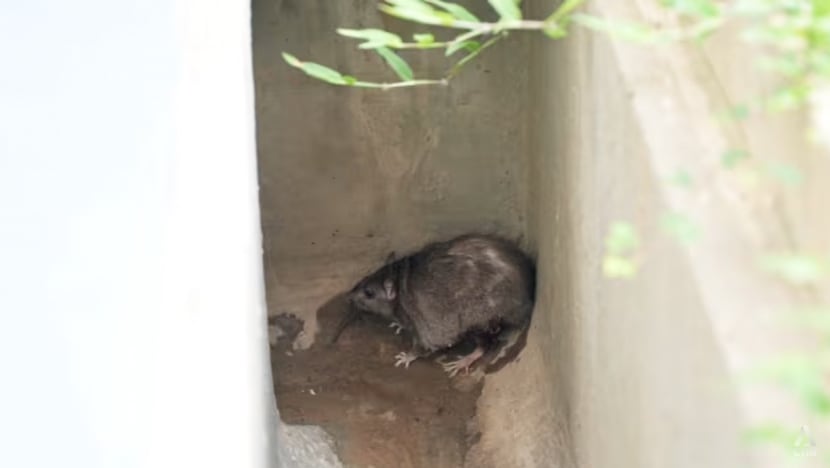
Data gathered over the past two years has shown that rats use features such as external air-conditioning units and pipes to access upper floors of buildings in search of food and nesting sites, he added.
MANAGING RAT INFESTATIONS
By tracking these routes at night, enforcement officers can better target inspections during the day.
In a media advisory on Mar 26, NEA said about 1,300 enforcement actions were taken against premise owners for rat-related lapses in 2025, up from over 1,000 in 2024.
Of these actions jointly undertaken by NEA and the Singapore Food Agency (SFA), about half – or 620 – were for poor refuse management.
Meanwhile, fewer rat burrows have been detected as authorities intensify control efforts, particularly in areas with dense food and commercial activity such as Little India, Holland Village, Geylang and Serangoon Gardens.
The average number of rat burrows recorded during each two-monthly surveillance cycle dropped from about 5,400 in the first half of last year, to around 4,200 in the second half.
SURVEILLANCE PAYS OFF
Rat activity in Little India, for instance, has dropped sharply since the first half of 2025, with no rat burrows detected in the area’s latest surveillance cycle.
In an update, NEA said data obtained from thermal and passive infrared camera deployments has shown that rat activity fell by 40 per cent on average across various locations within Little India between last October and March this year.
The agency added that no rat burrows were detected there between March and April this year, down from an average of 37 burrows found every two months last year.
NEA said the decline in burrow numbers is an encouraging sign that enforcement efforts are having an impact.
“But we cannot be complacent,” warned Ms Tay Wan Juan, vector control section manager at NEA.
“Rat populations can rebound quickly if good housekeeping and refuse management practices are not consistently maintained.”
She added that poor refuse management can provide rodents with a ready food source through food waste, while improperly discarded bulky items can create shelter.
“So the surveillance cameras that we’ve deployed allow us to monitor the ground situation and gather information and evidence, and then take enforcement actions against premise owners for the improper refuse disposal,” said Ms Tay.
Last year, authorities took enforcement action against food establishments in 233 cases involving rat-related lapses.


MAINTAINING GOOD PRACTICES
Some food operators said that while they can implement proper preventive measures, a single non-compliant outlet in their vicinity can trigger a surge in rat activity.
“What you need is just one black sheep among all the (food and beverage) entities here,” said Mr Louis Tay, owner of eatery Rainbow Rice House, which shares a back alley with at least 10 other F&B establishments along North Canal Road.
“That’s enough to generate a huge population of rats moving around in the back alley,” the 61-year-old noted.
“If everybody takes the subject of getting rid of these rodents very seriously and responsibly, I believe, on the whole, we can achieve a better result in trying to minimise their population.”
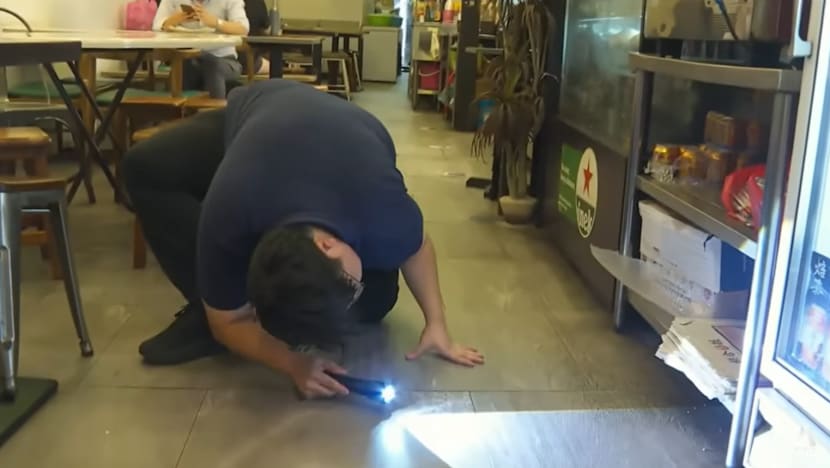
Like most eateries, Mr Tay engages a pest control firm to help keep rats at bay. The company conducts routine inspections for signs of rodent activity, such as droppings and gnaw marks on food packaging.
NEW PEST SOLUTIONS
But F&B operators said there is only so much they can do to keep the pests away.
“No matter how good their (standard operating procedure) is in terms of cleaning or pest control it is very largely affected by the environment,” said Mr Terry Neo, manager at All Out Pest Management, referring to the shared space between shops.
Mr Neo is looking to trial a new contraption that uses a vacuum system to trap rats.
The device, already used in countries such as the United States, is not yet available for sale in Singapore.
Peanut butter is used as bait to lure rats into the trap. Once a sensor detects movement, the vacuum is activated, sucking the rat into an enclosed chamber for disposal.
“What doesn’t work in F&B is baiting alone or mechanical traps, because the thing is that F&B largely deals with food. We cannot use baiting as it may cross-contaminate,” said Mr Neo.
“Also, if the rodent dies within the walls or the false ceiling, there’ll be a rotting smell and it’s going to be a big issue.”
Source: CNA/ca(lt)
Sign up for our newsletters

Get the CNA app
Stay updated with notifications for breaking news and our best stories
Get WhatsApp alerts
Join our channel for the top reads for the day on your preferred chat app

Get bite-sized news via a new
cards interface. Give it a try.
Click here to return to FAST
Tap here to return to FAST
FAST