Rescuers in the Himalayas are searching for survivors using helicopters, drones and their bare hands. Many families are still waiting for a sign of life from their loved ones.
Image: Navesh Chitrakar/REUTERS
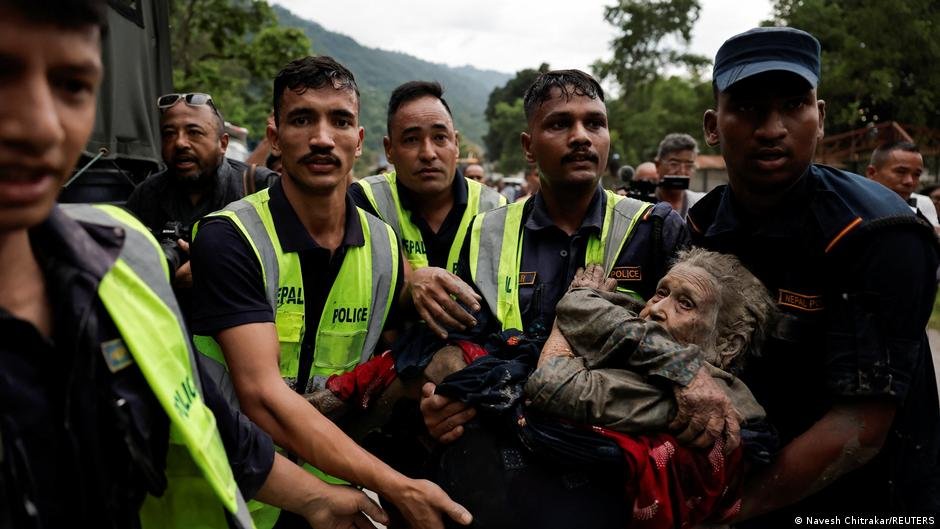
Following the flash flood in the Nepal-China border region, rescue workers are continuing round-the-clock efforts to find missing people. Survivors are being airlifted from remote villages, and police say around 1,500 injured residents and people stranded by the disaster have been rescued so far. Hundreds of those affected are currently being sheltered at military bases.
Image: Rajesh Kumar Singh/AP Photo/dpa/picture alliance
Many family members are still waiting for a sign of life from their missing relatives and friends. According to Nepalese authorities, about 1,400 people are listed as missing, including numerous foreign tourists and Hindu pilgrims. In China, the Gyirong border crossing, a key trade and tourism link between Tibet and Nepal, was also severely damaged.
Image: Athit Perawongmetha/REUTERS
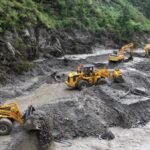
A massive flash flood of water, mud and debris had swept through Nepal for nearly 170 kilometers (105 miles) along two rivers, sweeping away entire villages in its path. To search for survivors in the nearly completely destroyed settlements, emergency responders are using drones, thermal imaging cameras and 3D models.
Image: Navesh Chitrakar/REUTERS
A woman covered in mud is brought to safety in a large excavator bucket. In some cases, rescue workers are even digging through mud and debris with their bare hands to search for survivors. The rescue efforts in the Himalayas remain a race against time, and every person rescued gives new hope to the rescue teams and the victims’ families.
Image: Navesh Chitrakar/REUTERS
Authorities have warned of possible further flooding in the disaster-hit region, where an estimated 2 million cubic meters of water have accumulated in a lake. Nepalese police say a dam may have burst on the Tibetan side, which prompted a temporary suspension of rescue operations there.
Image: Niranjan Shrestha/AP Photo/picture alliance
“It will still take some time before we have a complete picture of those missing, as the situation remains unclear at this time,” police spokesperson Abi Narayan Kafle told the German press agency, dpa. According to police, it is likely to take several more days to identify many of the deceased.
Image: Navesh Chitrakar/REUTERS
At the Trishuli camp for survivors of the disaster, female Nepalese soldiers are caring for twin babies. Nepal’s Prime Minister, Balendra Shah, visited the disaster area and pledged comprehensive support. Upcoming weather conditions could further complicate rescue efforts. According to forecasts, more rainfall is expected over the next three days.
Image: Prabin Ranabhat/AFP
International aid efforts are ramping up. Caritas International has pledged an initial €50,000 (c. $58,000) in emergency funding, while a WHO team is providing medical equipment, tents, and relief supplies for up to 10,000 people. Shipments from the World Food Programme and UNICEF are also en route. Amid the devastation, there is some hope: 116 people have been rescued from the village of Timure.
Image: Arun Sankar/AFP8 images1 | 88 imageshttps://p.dw.com/p/5JZew
About The Author